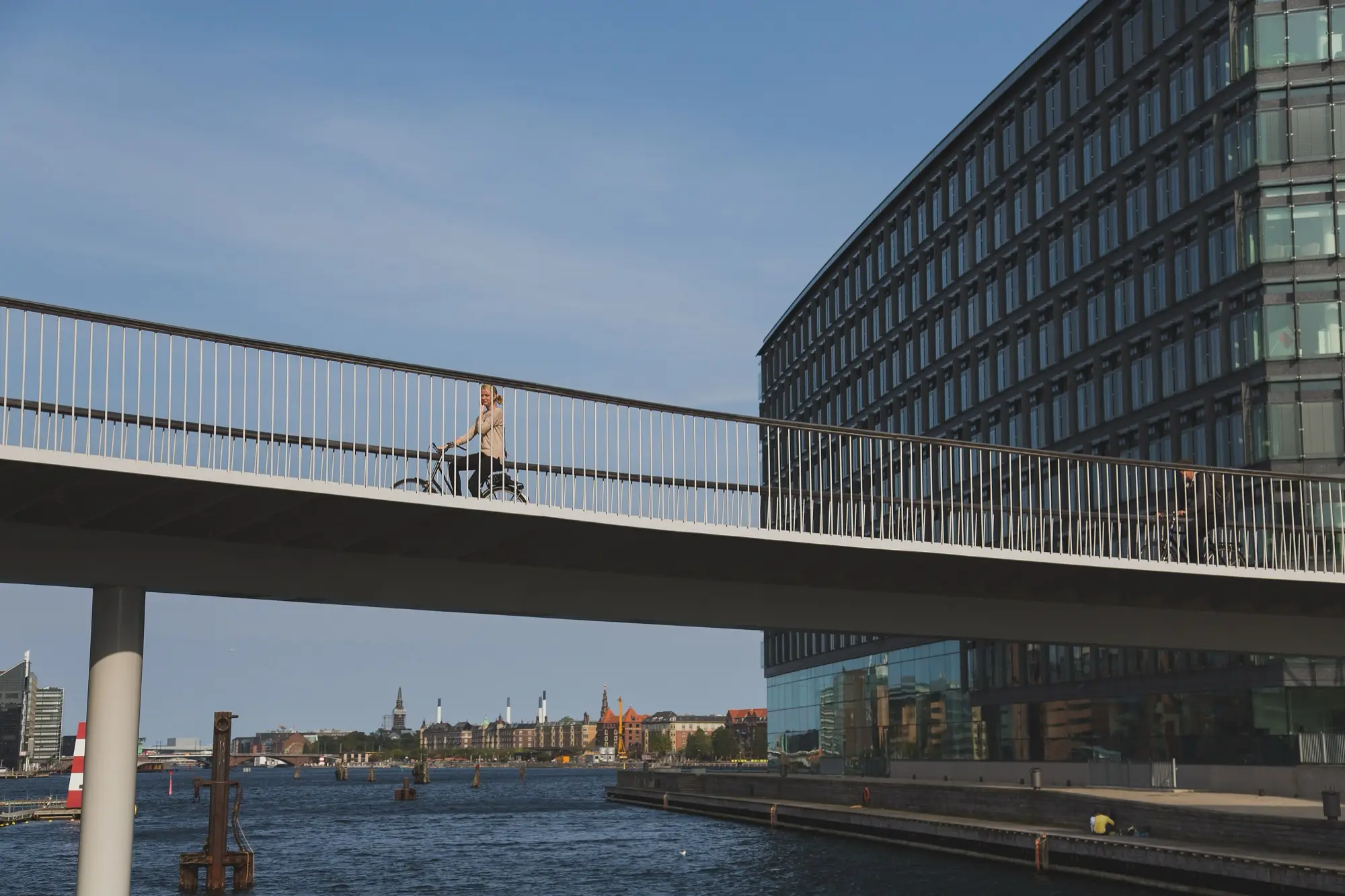

To cycle in Copenhagen, rent from a bike shop, your hotel or an app such as Donkey Republic. Keep right, use lights after dark, signal with your hands and turn left in two crossings. Avoid the rush hours. Bikes go on the metro with a bike ticket, but not on weekdays between 7:00 and 9:00 am or 3:30 and 5:30 pm.
A city that rides
VisitCopenhagen says Copenhageners cycle whether there is sun, rain or snow, to work, to school, to the shops and to see friends. In an article published in February 2020, VisitCopenhagen's bike culture guide said there were more bikes than inhabitants in Copenhagen and 382 kilometres of cycle tracks, with traffic lights coordinated in favour of cyclists in rush hour. VisitCopenhagen also says Copenhagen has been ranked the world's top cycling city several times.
In an article published in April 2020, VisitCopenhagen said 49% of all trips to work or school in Copenhagen were by bike. The same April 2020 article said three quarters of those who cycle keep going through the Danish winter. You can read more about things to do in Copenhagen across the city.
Renting a bike: shops, hotels and apps
VisitCopenhagen says many hotels offer bike rental, free or as an add-on, so it is worth asking yours. There are also app-based bike hire options if you want a bike in a hurry or the freedom to hop on and off.
With Donkey Republic you find a bike in the app at any hour, pick it up at hundreds of locations and lock and unlock it as often as you like. Donkey Republic says you end a trip by locking the bike at a Donkey drop-off shown in the app, parked so it does not block paths or entrances. Donkey Republic lets you pay per ride, per day, or by subscription.
VisitCopenhagen lists rental shops including:
- Baisikeli, a B Corp and social enterprise
- Rosenborg Cykler in the medieval centre
- Tropical Bikes, which also runs guided tours
At Family Bike you can rent different kinds of cargo bike for touring the city with children. Note that the bike-sharing service once run by bycyklen.dk is no longer available, the site itself says.
The rules: lights, hand signals and left turns
VisitCopenhagen says there are few but important rules for cycling in Copenhagen, and points to the rules of the Danish police and the Danish Road Safety Council. VisitCopenhagen's bike rules guide sets out what to do:
- Leave your phone in your pocket.
- Remember lights when it is dark.
- Unless you are passing, always keep right.
- To turn right, put your right hand out.
- To stop, raise your left hand.
- To turn left, put your left hand out.
- When turning left, use two crossings.
Donkey Republic asks riders to obey traffic laws, wear a helmet where required and mind pedestrians and other cyclists.
When to ride: avoid the rush hours
VisitCopenhagen advises avoiding the morning rush hour, 7.00 to 9.00, and the afternoon rush hour, 15.00 to 17.00. It also advises avoiding the larger streets and the inner city, where the bike lanes can be hectic.
Taking a bike on the metro
According to the Copenhagen Metro bike rules, you can take a bike or a larger scooter on the metro, but not on weekdays between 7:00 and 9:00 am and between 3:30 and 5:30 pm.
A bike on the metro needs a bike ticket, bought in the Rejsebillet app or with Rejsekort (travel card) at the station's extra card reader. You can find more detail on metro tickets and zones before you board. If your metro line is replaced by a metrobus, you cannot take your bike. Metro trains have flex areas with folding seats, shared by prams, wheelchairs, bicycles, scooters and large luggage.
Bridges built for bikes
Several bridges across the city harbour cater directly to riders:
- Lille Langebro, beside BLOX in central Copenhagen, is the city's newest cycling bridge.
- The Bicycle Snake (Cykelslangen) is an iconic modern bike bridge on the harbourside.
- The Inner Harbour Bridge (Inderhavnsbroen) is a pedestrian and bike bridge at Nyhavn.
- The Circle Bridge (Cirkelbroen) is a bridge and architectural landmark on the harbourfront.
- Bryggebroen is a swing bridge over the harbour.
- Dronning Louises Bro connects the inner city with Nørrebro, is one of the busiest bike routes in the city and is a popular place for locals to hang out.
How the cycle tracks work
The April 2020 article describes four kinds of cycling infrastructure in Copenhagen: traffic-calmed streets, painted bike lanes, separated cycle tracks and green routes. On a typical main street a curb-separated one-way cycle track runs on each side, with pedestrians on the pavement and cars and buses on the road. At many junctions cyclists have their own traffic lights, often with a head start of a couple of seconds before the cars.
Beyond central street tracks, the February 2020 article said cycle super highways already led riders in and out of the city from as far as 15 kilometres away, useful if you plan day trips from Copenhagen on two wheels.