
The Little Mermaid sits on a rock in the water off Langelinie pier, a 15-minute walk from Østerport station. Edvard Eriksen's sculpture was unveiled on 23 August 1913 as the brewer Carl Jacobsen's gift to the city, inspired by Hans Christian Andersen's 1837 fairy tale. The site is free and open all year.
The statue on the rock off Langelinie
Walking along Langelinie pier you find the Little Mermaid sitting on a rock in the water, looking out over the shore. VisitCopenhagen lists the Little Mermaid as open all year. VisitCopenhagen calls the Little Mermaid Copenhagen's most famous sculpture and lists it among the city's free things to do in Copenhagen.
The Copenhagen Metro describes the Little Mermaid on Langelinie quay, at the entrance to Copenhagen harbour, as one of Denmark's attractions and also one of the smallest.
Carl Jacobsen's gift and Edvard Eriksen's models
The Little Mermaid, sculpted by Edvard Eriksen, was unveiled on 23 August 1913 as a gift from the brewer Carl Jacobsen to the city of Copenhagen. Carl Jacobsen was moved by a ballet of The Little Mermaid at the Royal Danish Theatre and commissioned Edvard Eriksen to make the sculpture.
The face was inspired by the ballerina Ellen Price, who danced the lead role in 1909 but declined to model nude, so Eriksen's wife Eline posed for the body.
Hans Christian Andersen's fairy tale
The sculpture was inspired by Hans Christian Andersen's 1837 fairy tale about a mermaid who gives up her life under the water for love. VisitCopenhagen says the statue captures Andersen's mermaid, a figure shaped by quiet longing, love and the sacrifice at the heart of the story. The Copenhagen guide covers the city's other sights.
Vandalism and restoration
The Little Mermaid has been vandalised several times; she has lost her head twice, had an arm sawn off and been painted over, and each time she was restored to her place at the harbour.
VisitCopenhagen says the mermaid has become a global icon of Copenhagen despite repeated vandalism, and that her continual restoration reflects the city's commitment to preserving its cultural symbols.
Getting there on foot or by boat
The Little Mermaid is a 15-minute walk from Østerport station, which you reach by metro or S-train depending on where you start. Østerport is served by the M3 and M4 metro lines as well as S-trains and regional trains, and its metro station is at Oslo Plads.
VisitCopenhagen gives the statue's address as Langelinie, 2100 København Ø.
VisitDenmark says a canal tour from Nyhavn or near Christiansborg takes you past the Opera House, the Black Diamond library and the Little Mermaid on its rock. VisitCopenhagen suggests combining the statue with a harbour tour, and says she can be seen from the shore or from a passing boat.
Why Langelinie is busy
VisitCopenhagen says the Little Mermaid is one of Copenhagen's most photographed and visited monuments and draws millions of tourists each year. The Langelinie quay was built in 1894 when Copenhagen's harbour was expanded. The basin is deep enough for very large ships, and on average a new cruise ship arrives every other day. VisitDenmark says Langelinie is not only for tourists photographing the mermaid; many Copenhageners come for their Sunday walk, and the promenade has outlet stores.
The harbour front runs from the Gefion Fountain, which VisitDenmark calls the biggest fountain in Copenhagen, to the outer pier and the Dahlerup warehouse, and the mermaid sits around the middle of the promenade.
Kastellet next door
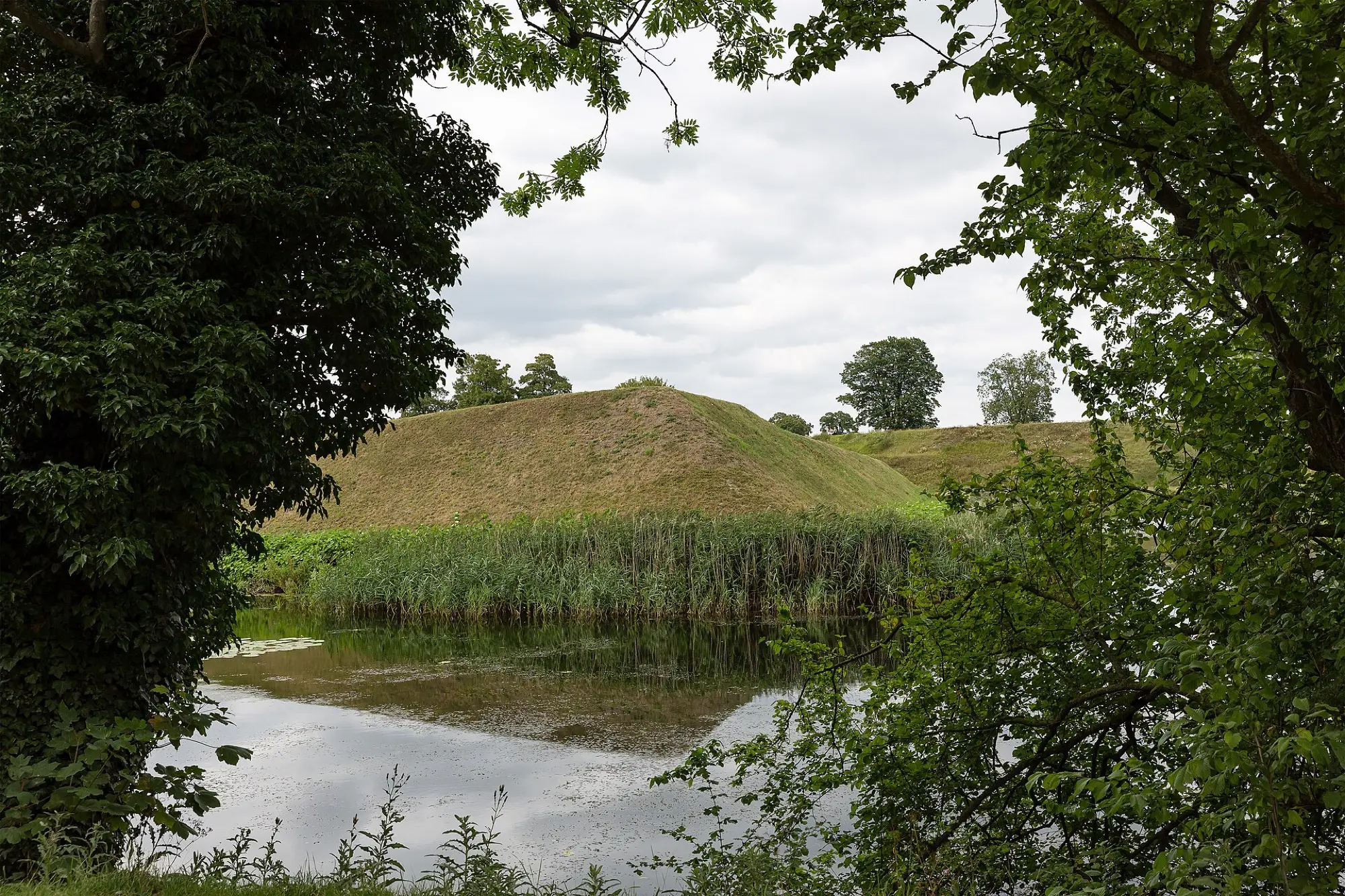
VisitCopenhagen says the Citadel and the National Gallery of Denmark are close to the Little Mermaid. The Citadel (Kastellet, the fortress) was founded by King Christian 4 in 1626 on the border of inner Copenhagen and Østerbro; its buildings are military barracks and offices, but the area is open to the public and a favourite place for a walk or jog on the ramparts.
Kastellet's opening hours:
- Kastellet is open 06:00-20:00 in the winter half of the year.
- Kastellet is open 06:00-22:00 in the summer half.
Entry to Kastellet is free according to Kastellet, and everyone is welcome on the roads and paths inside the fortress and on the ramparts. The Copenhagen Metro says Østerport metro station is a few minutes' walk from the old fortress of Kastellet.
Johann Friedrich Struensee was arrested on the night of 17 January 1772 after a masquerade ball and held at the Citadel until his trial on 21 February.
The other mermaid on the harbour
By the Dahlerups Pakhus warehouse, Bjørn Nørgaard's sculpture group The Genetically Modified Paradise stands in a 400-square-metre fountain, with a 40-ton triumphal arch and a nine-metre genetically modified Madonna at its centre.
One of the group's figures, the genetically modified Little Mermaid, sits on her own small island in the pool, only a few hundred metres from the original.