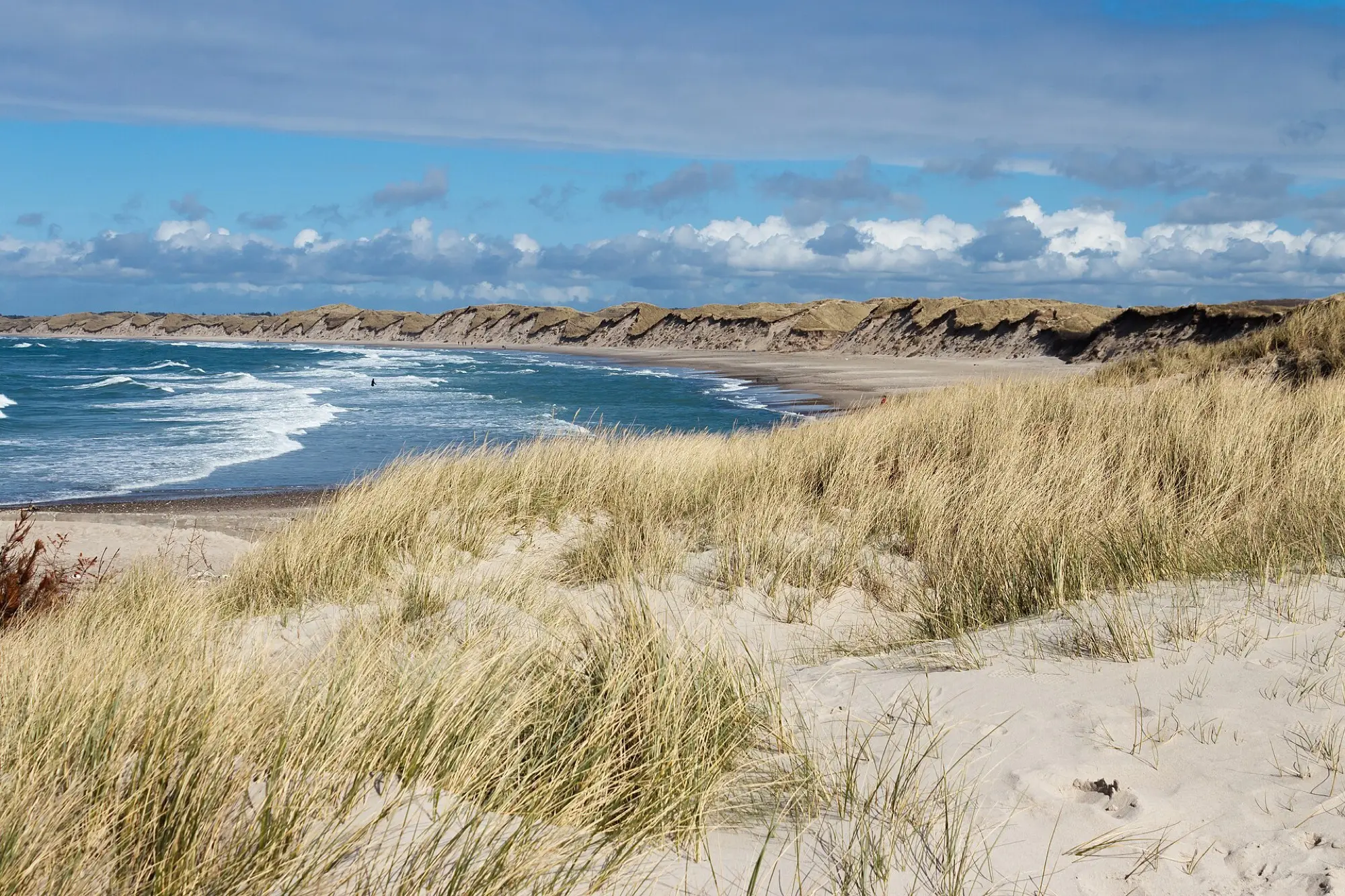

Denmark has five national parks under the 2007 national park act, Thy, Mols Bjerge, Vadehavet (the Wadden Sea), Skjoldungernes Land and Kongernes Nordsjælland (the Kings' North Zealand). They charge no entrance fee and are open all year. The Wadden Sea is the largest, and a sixth, Smålandsfarvandet, is only being studied.
How Danish national parks work
The Danish Parliament (Folketinget, the national parliament) passed the national park act on 24 May 2007, which made it possible to create national parks. According to the Danish Nature Agency's national park site, Denmark has five national parks, Thy, Vadehavet, Mols Bjerge, Skjoldungernes Land and Kongernes Nordsjælland.
A Danish national park is run by a self-governing state foundation that owns no land itself, so its work for nature is done through voluntary agreements with the landowners, private owners, the Nature Agency and the municipalities. People live in Danish national parks, which typically include small villages and scattered buildings in open country. The land can be owned by the state, private owners, municipalities and foundations. Mols Bjerge National Park says Danish national parks charge no entrance fee and are open year-round.
Denmark also has two older national parks, Rebild National Park from 1912 and Dybbøl Skanser from 1924, which predate the 2007 act, are not covered by it and cannot be compared with the new ones.
The five parks at a glance
| Park | Inauguration or designation | Area |
|---|---|---|
| Thy | Chosen 29 June 2007; inaugurated 22 August 2008 | 244 km² |
| Mols Bjerge | Opened 29 August 2009 | 180 km² |
| Vadehavet | Inaugurated 16 October 2010 | the largest (no area given) |
| Skjoldungernes Land | Established 2015; inaugurated 2015 | 170 km² |
| Kongernes Nordsjælland | Created 29 January 2018; inaugurated 29 May 2018 | the second largest (no area given) |
By its own account, Thy holds the largest concentration of dune heath in Europe. Mols Bjerge National Park covers forest, moor, dry grassland, lakes, coast and sea. Skjoldungernes Land was inaugurated as Denmark's fourth national park and the first on Zealand.
1. Thy: dunes, dune lakes and red deer on the North Sea
What to see
In Thy the high sand dunes stand closest to the sea, and behind them lies a patchwork of parabolic dunes, dune slacks, wetland and more than 200 dune lakes; the park calls itself Denmark's largest wilderness. The park stretches 60 km from Agger Tange to Hanstholm. At Agger Tange in the south of the park tens of thousands of migratory birds stop to rest. There are red deer in the Hanstholm wildlife reserve in the north; the park is home to 2,000 of them.
Thy has five visitor centres with maps and volunteer hosts, among them National Park Centre Thy, Lodbjerg lighthouse on the dune heath, the information centre at Stenbjerg landing place, the boathouse in Hanstholm and Svaneholmhus at the southern tip of Agger Tange.
How to get there
When travelling across Denmark by train, DSB gives Copenhagen to Thisted as approx. 5 hours and 34 minutes, or just under 5 hours and 27 minutes if you change to the express train in Struer. Thy is also listed among the best places to visit in Denmark.
2. Mols Bjerge: the ice age hills of Djursland
What to see
Mols Bjerge National Park lies on the Djursland peninsula in Syddjurs municipality. The park runs from the Kattegat coast in the east to the forests at Kalø in the west, over the moraine hills of Mols Bjerge, and includes the town of Ebeltoft as well as villages and holiday cottage areas. 80% of the area of Mols Bjerge National Park is private property.
The three Bronze Age mounds of Trehøje, 127 metres above sea level, give a view from Aarhus to Ebeltoft over four inlets. The Nature Agency's visitor centres at Karlsladen near Rønde, a barn with its oak structure from 1727, and at Øvre Strandkær near Ebeltoft are open daily from 9:00 am to 9:00 pm with free entry.
How to get there
The start and end points of the four stages of the Mols Bjerge Trail, in Rønde, Femmøller and Ebeltoft, are all connected by bus line 123. Molslinjen's ferry from Odden on Zealand docks at Aarhus or Ebeltoft in Jutland.
3. Vadehavet: tides, seals and the black sun
What to see
Vadehavet calls itself Denmark's only international national park, created in cooperation with the Netherlands and Germany, and it holds Denmark's largest UNESCO World Heritage area. The Danish part of the Wadden Sea joined the Wadden Sea World Heritage site in 2014; the German and Dutch parts have been on the list since 2009.
Black sun, when hundreds of thousands of starlings dance over the marsh before roosting, can be seen from early March to mid-April and from mid-August through October, typically about an hour before sunset for 30 to 45 minutes, with good chances in the Tønder marsh, northern Ballum marsh and around Ribe. Most seals in the Wadden Sea are harbour seals, and Fanø and Mandø give you the best chance of seeing them; the park asks you to keep your distance and use binoculars. Anyone may collect Pacific oysters for their own use; the season runs from 1 October to the first week of April, and the park says not to pick or eat them in May, June, July and August. On clear nights on Mandø you can see around 3,500 stars; the island is reached by the Låningsvejen road, which the tide floods twice a day, so check DMI's tide table first, or go by tractor.
How to get there
DSB gives Copenhagen to Esbjerg as approx. 2 hours and 36 minutes. From Esbjerg, Fanølinjen's ferry to Nordby on Fanø takes about 12 minutes.
4. Skjoldungernes Land: Roskilde Fjord and the legendary kings
What to see
Skjoldungernes Land lies in central Zealand in the municipalities of Roskilde, Lejre and Frederikssund; a third of its area is fjord and two thirds land, a landscape mainly formed in the last ice age. The park holds 99 km of coastline, 66 km of protected streams and 171 protected ancient monuments. Roskilde Fjord draws over 60,000 birds every autumn, white-tailed eagles breed in the surrounding landscape, and the islets and islands where birds breed are closed to the public from 1 April to 15 July.
At Gl. Lejre there is Harald Wartooth's mound, a long barrow from 3500 BC, and an 83-metre Viking Age stone ship, a grave of large stones set in the shape of a ship. In Roskilde the Viking Ship Museum displays 5 Viking ships found near Skuldelev that were sunk in Roskilde Fjord around the year 1060, and Bishop Absalon began building Roskilde Cathedral in 1170. 30 km of the Skjoldunge trail runs between the towns of Roskilde, Lejre and Hvalsø; it is a hiking trail, not for bicycles, wheelchairs or prams, and parts can be wet and muddy.
How to get there
You can plan visits as day trips from Copenhagen. DSB gives Copenhagen to Roskilde as approx. 22 minutes, with more than 50 departures. At Roskilde, Lejre and Hvalsø, you can get on and off trains and buses.
5. Kongernes Nordsjælland: forests, lakes and royal castles
What to see
Kongernes Nordsjælland includes Gribskov, one of Denmark's most extensive forests, the country's two largest lakes, Arresø and Esrum Sø, and two UNESCO World Heritage sites, Kronborg Castle and the par force hunting landscape in North Zealand. 82% of the land in Kongernes Nordsjælland is owned by the state, 14% by private landowners and 4% by municipalities.
Gribskov has Denmark's largest herd of wild fallow deer, and Holløse Bredning and other areas around Arresø have rare breeding birds and a population of beavers. Lake Esrum, Denmark's second-largest lake, is the largest by water volume, up to 22 metres deep, beside Fredensborg Palace, and white-tailed eagles and ospreys that breed in Gribskov are often seen over it. Melby Overdrev, the largest heath landscape on Zealand and a former target range, is a protected site with free access, and its heather turns it purple in July, August and September.
How to get there
Kronborg says the coastal line (Kystbanen), run by DSB, goes direct from Copenhagen Central Station to Helsingør about every 20 minutes and takes around 46 minutes. The Copenhagen Card says Frederiksborg Castle in Hillerød is about a 35-minute ride from Copenhagen on S-train line A, then about a 15-minute walk from Hillerød station.
A sixth park under study in Smålandsfarvandet
A preliminary study (forundersøgelse) is examining whether Smålandsfarvandet could become Denmark's largest national park; the Nature Agency's Storstrøm unit runs its secretariat. Landowners in the area under study were to be asked during summer 2026 whether they wanted their land to be part of the proposed park. The preliminary study is due to be finished in early summer 2027 and covers four themes, nature and geology, landscape and cultural history, outdoor life, and business and tourism.