
By region, the ideas are: Tivoli Gardens, Kronborg, Louisiana, Frederiksborg, the Viking Ship Museum, Møns Klint and Stevns Klint in Copenhagen and Zealand; Hans Christian Andersen's House, Egeskov and the South Funen Archipelago on Funen; LEGOLAND, LEGO House, ARoS, Den Gamle By, Moesgaard, Grenen, Råbjerg Mile, Ribe's night watchman, oysters and the black sun in the Wadden Sea, Jelling and Mols Bjerge in Jutland; Bornholm's round churches and Hammershus on Bornholm; and the Marguerite Route and cycling across the country.
Logistics, train connections and island ferries are covered in the best places to visit in Denmark.
1. Tivoli Gardens, Copenhagen: an amusement park welcoming guests since 1843
Tivoli Gardens has welcomed guests since 1843 and calls itself the second-oldest amusement park in the world. Located in central Copenhagen, Tivoli has 30 rides and more than 60 restaurants and eateries. Many events during its 257 opening days are included in the entrance fee. Christmas in Tivoli Gardens runs from 13 November to 3 January. Plan details with our guide to Tivoli Gardens tickets, hours and seasons.
2. Kronborg, Helsingør: Hamlet's castle and a UNESCO site
An adult ticket to Kronborg costs DKK 150, or DKK 135 bought online, children go free, and the ticket is valid for a year after purchase. Set in Helsingør on Zealand, Kronborg Castle is a UNESCO World Heritage site, part of the National Museum of Denmark, and presents itself as the home of Hamlet. Kronborg is one of the day trips from Copenhagen.
3. Louisiana, Humlebæk: modern art and a sculpture park by the sea
Adult entry to the Louisiana Museum of Modern Art costs DKK 145, students pay DKK 130, and under-18s go free. Located in Humlebæk on North Zealand, Louisiana is open 11:00 to 22:00 from Tuesday to Friday and 11:00 to 18:00 at weekends, and closed on Mondays. You need a valid ticket even to use the Louisiana café, shop or sculpture park.
4. Frederiksborg, Hillerød: a castle on three islands
Adults pay DKK 125 at Frederiksborg, and children and young people under 18 go free. Located in Hillerød on North Zealand, Frederiksborg Castle stands on three small islands in the Castle Lake. VisitDenmark calls Frederiksborg Denmark's most magnificent Renaissance castle, home to the Museum of National History.
5. The Viking Ship Museum, Roskilde: five ships from Skuldelev
An adult ticket to the Viking Ship Museum costs DKK 170 in the summer season and DKK 130 in the winter season, and children up to 17 go free. Located in Roskilde on Zealand, the museum is built around the five original Viking ships from Skuldelev. The museum is open every day of the year, but its sailing trips are closed during the winter.
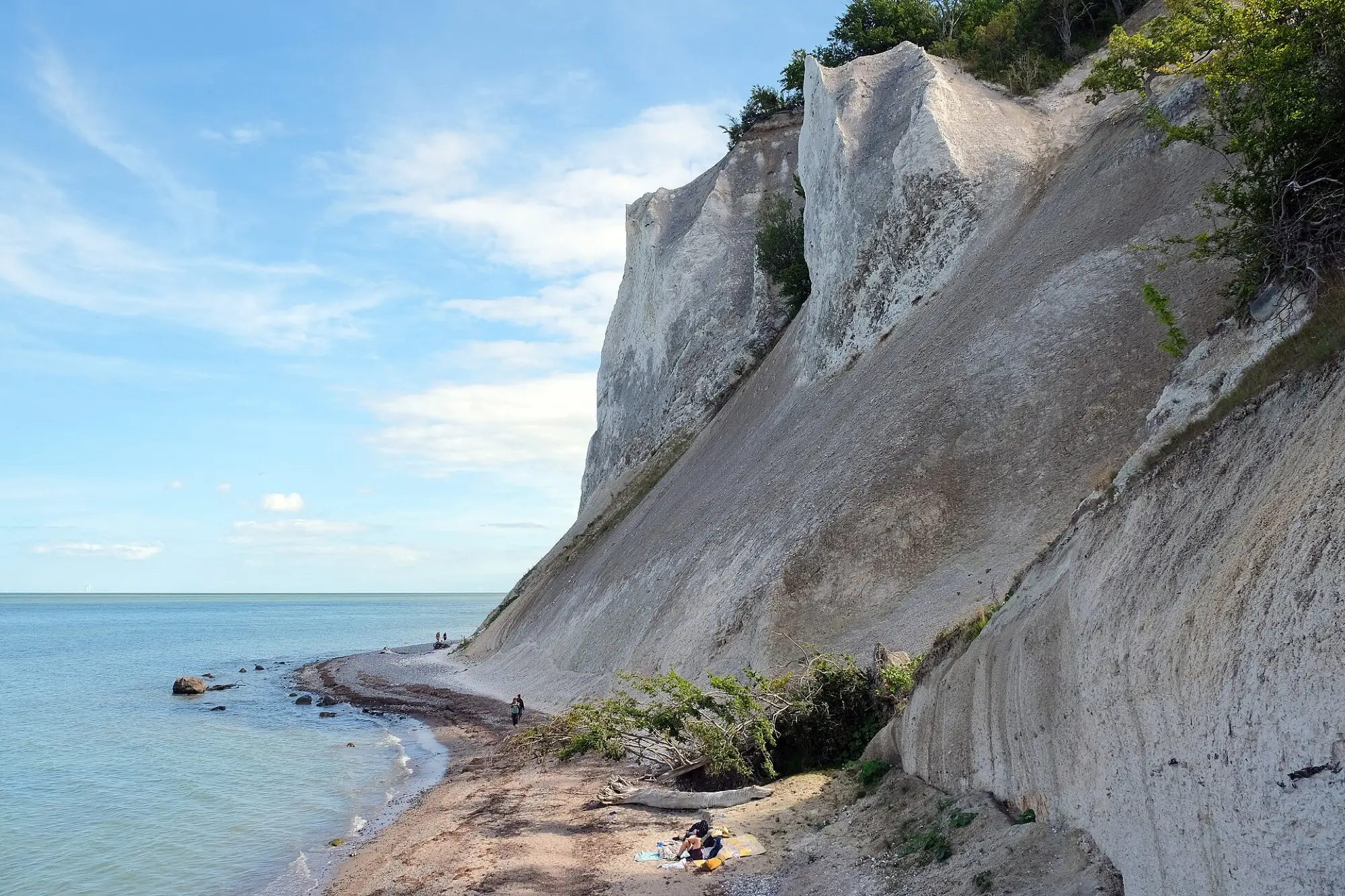
6. Møns Klint: chalk cliffs on the World Heritage List
In season a GeoCenter day ticket costs DKK 155 for adults and DKK 100 for children aged 3 to 11. Møns Klint on Zealand's neighbouring island of Møn was added to the UNESCO World Heritage List in 2025; the GeoCenter calls it the best place in the world to experience how the Ice Age glaciers shaped the landscape. GeoCenter Møns Klint, at the top of the cliffs, has an interactive exhibition covering 70 million years, with Cretaceous fossils and fossil hunting.
7. Stevns Klint: the layer that marks the end of the dinosaurs
A 21 km trail, Trampestien, runs along the cliffs of Stevns Klint on Zealand, past the lighthouse, the church and the harbours. At Stevns Klint Experience you learn the story of the asteroid that wiped out the dinosaurs 66 million years ago, in a landscape on the UNESCO World Heritage List; traces of the asteroid are visible in the cliff to the naked eye.
8. Hans Christian Andersen's House, Odense: entry by time slot
Admission to Hans Christian Andersen's House in Odense on Funen is in time slots, so the museum advises booking ahead to enter at the time you want. A ticket to Hans Christian Andersen's House also gives free entry to the childhood home within 30 days; on its own, the childhood home costs DKK 75. Andersen's childhood home, the small yellow half-timbered house in Munkemøllestræde he moved into at two, is about a 5-minute walk from the museum. Find more ideas in our guide to Odense.
9. Egeskov, Funen: a castle, a garden and a Christmas market
Egeskov publishes summer prices only for groups of more than 20, which buy at the ticket counter; for them the castle, garden, play areas and exhibitions cost DKK 225 for adults and DKK 145 for children aged 4 to 12. Children under 4 go free. Located on Funen, Egeskov is maintained and developed without any public funding. Bus route 170 (Nyborg, Ringe, Faaborg) stops in front of the entrance. Egeskov holds its Christmas market, with around 100 stalls, on the weekends of 7-8, 14-15, 21-22 and 28-29 November and 5-6 December, where admission is DKK 130 online or DKK 145 at the ticket office for adults, and DKK 80 online or DKK 95 at the ticket office for children aged 4 to 12.
10. South Funen: walking the long trail round the archipelago
The South Fyn Archipelago UNESCO Global Geopark covers 2,733 square kilometres, 1,304 of them sea, with 551 km of coastline and more than 55 larger and smaller islands. Øhavsstien, the Archipelago Trail, is 220 km long and divided into seven routes, so you can walk it in stages. One stage, Svendborg to Troense and Rudkøbing, is 26 km.
11. LEGOLAND, Billund: the park that opened in 1968
The LEGO Group opened LEGOLAND Billund in Jutland in 1968, expecting 300,000 guests; 625,000 had come by the end of the first season. LEGOLAND has more than 45 rides and 80 million LEGO bricks. Day tickets cost from DKK 269 bought online, and a season pass, from DKK 649, covers more than 200 opening days. Plan rides in our guide to LEGOLAND Billund.
12. LEGO House, Billund: 25 million bricks in the brick's home town
Tickets to LEGO House cost from DKK 169, and buying online saves DKK 30. Located in Billund in Jutland, the home town of the LEGO brick, LEGO House is filled with 25 million LEGO bricks in four experience zones.
13. ARoS, Aarhus: walking the rainbow on the roof
Your rainbow panorama by Olafur Eliasson, opened on the roof of ARoS in Aarhus, Jutland, in May 2011, is a circular glass walkway 150 metres long and three metres wide in all the colours of the spectrum. The walkway has a diameter of 52 metres and stands 3.5 metres above the roof, with a view of the city and the bay; there are stairs and a lift up to it. ARoS is closed on Mondays.
14. Den Gamle By, Aarhus: 80 old buildings in one museum town
Den Gamle By in Aarhus, Jutland, has 80 historic buildings from 25 towns and cities across Denmark, and covers Danish history since 1500. In 2026 Den Gamle By won the European Museum of the Year award. Den Gamle By is open 365 days a year and recommends 4 to 5 hours or more to see all of it. Visitors under 18 always get in free. On Christmas evenings, 6 pm to 9 pm, it opens after hours on 27 and 28 November and 4, 5, 11, 12, 18 and 19 December.
15. Moesgaard, Aarhus: meeting the Grauballe Man
Moesgaard Museum in Aarhus, Jutland, calls the Grauballe Man, in its Iron Age exhibition, the world's best-preserved bog body. The Grauballe Man was found in Nebelgaard bog in 1952 and lived around 390 BC; he was 34 when he was executed. Adults pay DKK 200 at Moesgaard, or DKK 190 online, and children and young people up to 17 go free.
16. Grenen, Skagen: where two seas meet
At Grenen, about 3 km from Skagen town centre in North Jutland, you stand at the northernmost tip of Jutland and watch the waves of the Skagerrak and the Kattegat collide. Swimming at Grenen is strictly prohibited because of dangerous currents. Sandormen, a tractor-drawn wagon from the car park to the tip, runs from Easter until week 43 and has carried visitors for over 50 years; tickets are bought on board, by cash or card.
17. Råbjerg Mile: a dune 40 metres high that moves every year
Råbjerg Mile in North Jutland is the largest migrating dune in Denmark. It is about 1 km wide, 1 km long and 40 metres high. Each year the dune moves around 15 metres towards the north-east, towards Grenen. Walking through Råbjerg Mile carries a risk of quicksand.
18. Ribe: walking the round with the night watchman
Ribe's night watchman starts his round in front of Restaurant Weis Stue in south-west Jutland at 8 pm from May to the end of October, and also at 10 pm from mid-June to mid-August; the walk takes about 45 minutes. The night watchman's tour is in Danish and English, free, and cannot be booked in advance.
19. The Wadden Sea: oysters in winter, the black sun in spring and autumn
The oyster season in the Wadden Sea National Park in south-west Jutland runs from 1 October to the first week of April; the national park says not to pick or eat oysters in May, June, July and August. Anyone may collect Pacific oysters on the mudflats for their own use, or join a guided safari. The black sun (sort sol), when hundreds of thousands of starlings gather over the marshes about an hour before sunset for 30 to 45 minutes, happens from early March to mid-April and from mid-August through October. The best chances are in the Tønder marsh, the northern part of Ballum marsh and around Ribe; the starlings move roost often, so guided tours use scouts to find them.
20. Jelling: the runestones of the Viking kings
In 1994 Jelling in Jutland became Denmark's first site on the UNESCO World Heritage List. At Jelling you see the runestones and monuments the Danish Viking kings raised 1,000 years ago, with an experience centre beside them. Kongernes Jelling is closed on Mondays and open 10:00 to 16:00 from Tuesday to Sunday; adult admission is DKK 60 and children go free.
21. Mols Bjerge National Park: an 80 km trail through the hills
The Mols Bjerge Trail is 80 km of hiking in the national park on the Djursland peninsula in Jutland, and is certified as a Leading Quality Trail - Best of Europe. There is no entrance fee and the park is open all year. Along the way are Bronze Age burial mounds, the Kalø castle ruin and the harbour town of Ebeltoft.
22. Bornholm's round churches: Østerlars and its three sisters
Østerlars Round Church on Bornholm probably dates from about 1150 and is regarded as the oldest of Bornholm's four round churches. It is the largest round church in Denmark, a place of worship and a former defensive building with more than 800 years of history; it is open all year. Like the others it served both for worship and for protection against raiders from the sea.
23. Hammershus, Bornholm: the castle ruin on the cliff
Hammershus, on the northern tip of Bornholm, is the largest castle ruin in Northern Europe, on a steep cliff above the Baltic Sea. Hammershus is open all year.
24. The Marguerite Route: a Danish route past more than 200 sights
The Marguerite Route (Margueritruten) is a Danish route past more than 200 of the country's largest and most interesting sights; it follows one continuous line and never uses the same road twice. The route is marked with square brown signs showing a yellow and white marguerite daisy. The route reaches most corners of Denmark, but not Bornholm or the islands in the Kattegat.
25. Cycling: 11 national routes and more than 16,000 km of cycle routes
Denmark has 11 national cycle routes. VisitDenmark says Denmark has more than 16,000 kilometres of dedicated cycle routes, and Danes make around 2.2 million bike trips every day.
Which ideas depend on the season
Several activities follow set seasonal opening times:
- GeoCenter Møns Klint: closed for the winter from 31 October 2026 to 20 March 2027.
- LEGOLAND: season pass covers more than 200 opening days.
- Sandormen at Grenen: runs from Easter until week 43.
- Ribe night watchman: walks at 8 pm from May to October, and 10 pm from mid-June to mid-August.
- Wadden Sea oysters: season runs from 1 October to the first week of April; avoid May to August.
- Wadden Sea black sun: early March to mid-April, and mid-August through October.
- Tivoli Gardens: Christmas season runs from 13 November to 3 January.
- Viking Ship Museum: sailing trips are closed during the winter.