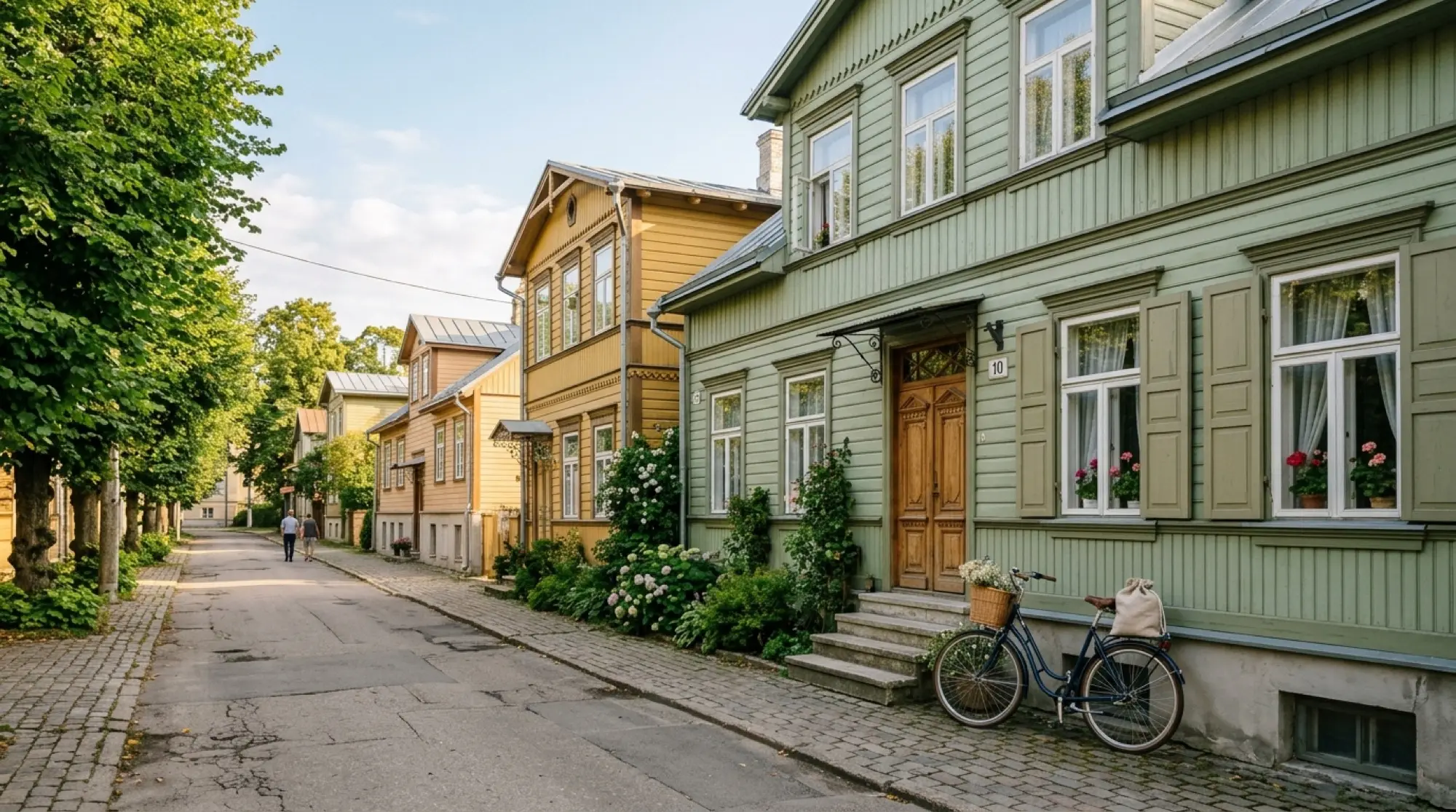
Moving to Estonia runs smoothly once you do the first three steps in the exact order Estonian state databases expect: secure your legal basis to stay, register your residential address in the Population Register (Rahvastikuregister), and collect your chipped physical ID or residence permit card from the Police and Border Guard Board (Politsei- ja Piirivalveamet, PPA). Everything else in daily Estonian life, from Smart-ID phone logins and local bank accounts to free municipal trams in Tallinn and choosing a family doctor, reads off that Population Register entry and 11-digit isikukood (personal identification code). Keep EU and non-EU timelines separate from day one, because the sequence is reversed.
How rules differ for EU citizens and non-EU nationals
If you hold citizenship of an EU, EEA state or Switzerland, you do not apply for a residence permit. Under the Police and Border Guard Board rules for EU citizens, you may enter and stay in Estonia for up to 3 months on a valid passport or national ID card. To stay longer than 3 months, you must register your Estonian place of residence at your local municipality within 3 months of arrival, which automatically grants a 5-year temporary right of residence and assigns your 11-digit isikukood. Within 1 month of registering that address, you must visit a PPA service office in person to apply for an Estonian ID card (€30 in PPA's self-service portal or €45 at an office, issued within 30 days).
Non-EU nationals establish their work or residence basis first; see every route and quota rule in our guide to work permits and the Digital Nomad Visa in Estonia. Most non-EU employees hired locally either start quickly on an employer-filed short-term employment registration (up to 365 days within 455 days, processed in up to 15 working days) paired with a €120 Type D long-stay visa, or apply for a Temporary Residence Permit valid for up to 5 years (decided in up to 2 months, plus up to 30 days to print the residence card). Once you arrive in Estonia on a Temporary Residence Permit (or receive it locally), you must register your residential address in the Population Register within 1 month.
Registering your address in the Population Register
Your first notice of residence (elukohateade) is filed in person at your local municipal office or Tallinn district government office, as you cannot log into rahvastikuregister.ee online until you already hold Estonian digital ID. Bring your passport or national ID card and documentary proof that you have the right to live in the flat.
Unless you own the property yourself, the municipality requires either a signed rental contract (üürileping) naming you as tenant or the property owner's separate written consent. Always confirm before signing a lease or paying deposits that your landlord permits Population Register registration; budget for move-in deposits and utility bills using our guide to cost of living and taxes in Estonia. If your registered address is inside Tallinn, registration immediately unlocks €0 travel on city buses, trams and trolleybuses once you buy a €2 Ühiskaart card, personalise it to your isikukood and carry ID, saving the €30 non-resident 30-day pass.
Collecting your card, banking and digital login
When you collect your Estonian ID card or non-EU residence permit card from PPA, you receive sealed envelopes containing PIN1 and PIN2 codes. Those codes let you log into state portal eesti.ee, sign contracts legally, and activate the free Smart-ID smartphone app so you do not have to plug in a USB card reader for everyday logins; our guide to the Estonian isikukood and ID card explains how PIN1, PIN2 and Smart-ID work. If you are settling in the capital, you can bundle early appointments at the International House of Estonia (Valukoja 8 in Ülemiste City), which brings PPA, Tallinn address registration, tax and relocation advisers under one roof by advance booking.
Estonia's four main retail banks for residents are LHV, Swedbank, SEB and Coop Pank. Opening an account is straightforward once you hold a local residence card and local employment or study ties, whereas non-EU nationals without prior local ties may face compliance review fees ranging from €0 to €250 depending on the bank and passport. Until your Estonian card is in hand, Estonian employers can legally pay your initial salary into an existing EEA euro IBAN such as Wise or Revolut.
Public healthcare through Tervisekassa and finding a family doctor
Public health insurance under the Estonian Health Insurance Fund (Tervisekassa) is tied to social-tax contributions rather than address registration alone. When an Estonian employer records you in the Employment Register (töötamise register) on an employment contract of at least 1 month and pays social tax, your Tervisekassa cover starts after a 14-day waiting period, and continues for 2 months after employment ends.
Once insured, register on the patient list of a local family doctor (perearst), who serves as your first point of care and writes referrals to specialists; Tervisekassa publishes which practices have open spaces for your street. Appointments with your perearst cost €0, while outpatient specialist visits carry a €20 statutory visit fee (reduced to €5 for children, pregnant patients and pensioners). Across Estonia, dial 112 for ambulance, rescue and police in Estonian, Russian or English, or call the 24-hour family doctor advice line on 1220 (+372 634 6630 from foreign numbers).
Free Settle in Estonia courses and everyday administration
During your first 5 years living in Estonia on a temporary right of residence or residence permit, you can enrol in the state Kohanemisprogramm (Settle in Estonia) orientation modules on work, business, family and study alongside beginner A1 and A2 Estonian language classes for €0. Finally, check your driving licence if you plan to drive: EU, EEA, Swiss and UK driving licences remain valid until expiry, whereas most non-EU driving licences must be exchanged at the Transport Administration (Transpordiamet, €26 online or €32 at an office) within 12 months of obtaining residence, sometimes requiring theory and practical driving tests. Newcomers commuting across the gulf can also check terminals and timetables in our Helsinki to Tallinn ferry guide.