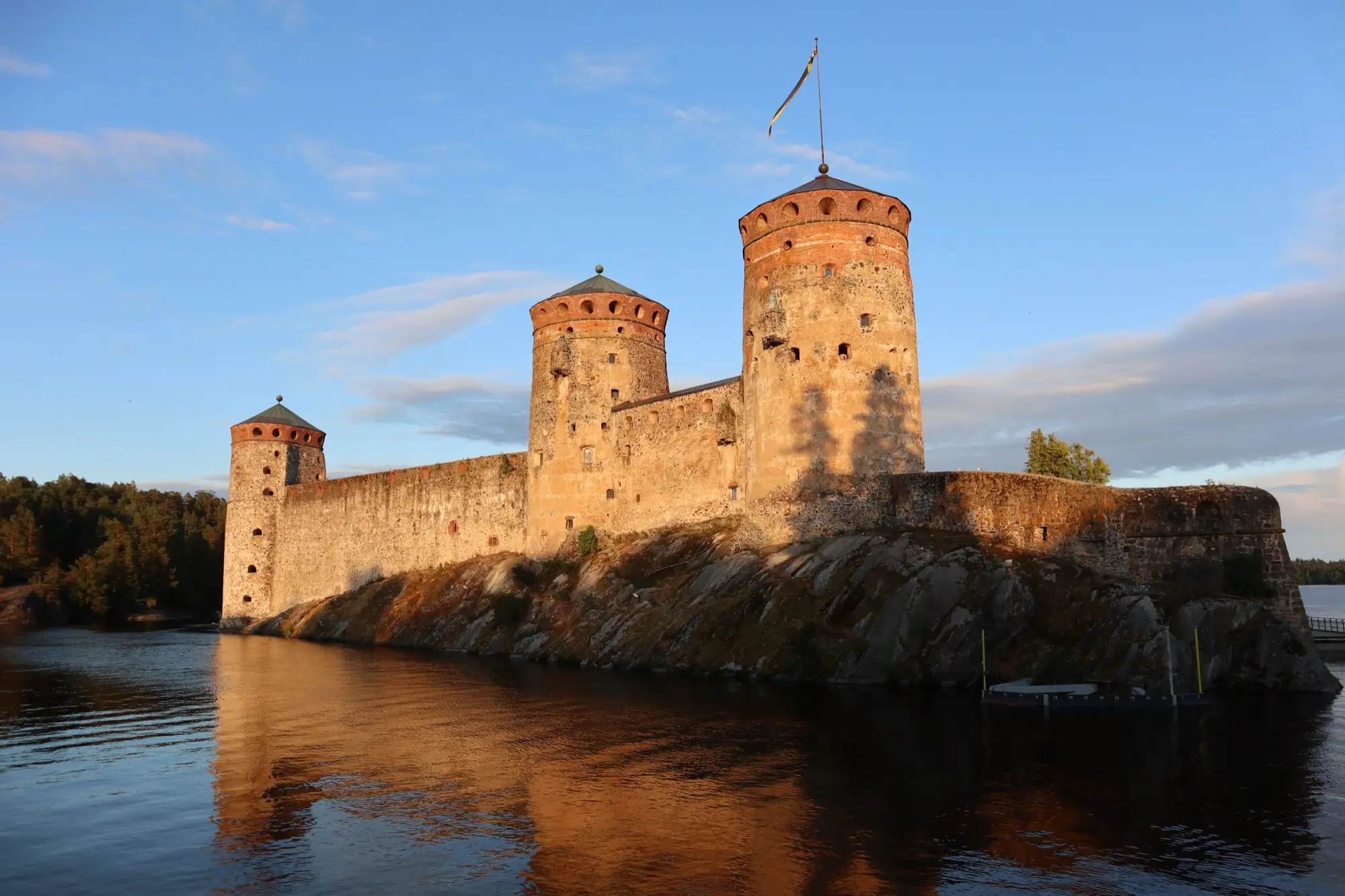

Finnish Lakeland is the largest lake district in Europe, Lake Saimaa is Finland's largest lake and the fourth largest natural freshwater lake in Europe, and the ten places to start are Olavinlinna castle, lake cruises, Linnansaari National Park, Kolovesi National Park, Punkaharju ridge, Lusto, Puijo tower, Jätkänkämppä smoke sauna, Lappeenranta, and Mikkeli and Astuvansalmi.
Finnish Lakeland and Lake Saimaa in one answer
Visit Finland describes Finnish Lakeland as a vast labyrinth of lakes, islands, rivers, and canals, forming the largest lake district in Europe. Within this region lies Lake Saimaa, which is the largest lake in Finland and the fourth largest natural freshwater lake across Europe. According to Visit Mikkeli, the wider Saimaa lake district comprises an intricate labyrinth of almost 120 lakes and 14,000 islands. Lake Saimaa is also the exclusive home of the endangered Saimaa ringed seal (saimaannorppa), recognized as one of the rarest species in the world.
1. Olavinlinna castle, Savonlinna: founded in 1475 on a rocky islet
Olavinlinna castle stands in the town of Savonlinna. It was founded in 1475 by the Danish knight Erik Axelsson Tott, positioned directly on a steep rocky islet where two waterways converge in a strong current. The National Museum of Finland identifies it as one of the best-preserved medieval castles in Finland. Today, the fortress operates as a museum and serves as the stage for an international opera festival. Visit Savonlinna also records Olavinlinna as the northernmost medieval castle in the world.
The soprano Aino Ackté organised the very first opera festival within the castle walls in 1912. The Savonlinna Opera Festival has since expanded into a month-long international event that draws approximately 70,000 guests each year. Performances take place directly in the castle courtyard inside a 2,264-seat covered auditorium. You can read more about planning around festival dates in our guide to the best time to visit Finland.
For general museum visits, tickets in 2026 cost 15 euros for adults, 7 euros for children aged 7 to 17, and 35 euros for a family ticket covering one to two adults and one to four children. Children under 7 enter free of charge, and the Finnish Museum Card (Museokortti) is valid. Last admission to the fortress is 45 minutes before closing time. Guided tours, a café, and a museum shop are located on site.
2. Lake cruises: 15 to 25 euros around Savonlinna, 12 hours by steamship to Kuopio
Scenic cruises depart Savonlinna harbour daily during the summer season, primarily operating from 1 June to 31 August. The fleet consists of modern passenger cruise ships, smaller motor vessels, and historic steamships. Visit Savonlinna notes that most scenic harbour loops run for an hour to an hour and a half and typically cost 15 to 25 euros per person. During the peak summer weeks, a boat departs roughly every 30 minutes between 10 am and 6 pm, with operators posting their next scheduled departure on signs along the quay.
For longer journeys, the steamship S/S Heinävesi, which has navigated these inland waterways since 1906, operates between Savonlinna and Kuopio through the Heinävesi canal route during June, July, and August. This route is officially recognized as one of Finland's national landscapes. Visit Finland lists tickets for the 12-hour steamship voyage starting from 159 euros.
Further north in Kuopio, passenger boats operate across Lake Kallavesi, with as many as 20 daily cruises running during the peak season. Several of these Kallavesi vessels, including the M/S Ukko, date from the late 19th century and carry almost 200 passengers.
3. Linnansaari National Park: home waters of the Saimaa ringed seal, an estimated 545
Linnansaari National Park is situated in Lake Haukivesi, a basin of Lake Saimaa, an hour's drive from Savonlinna. The park protects the core habitat of the Saimaa ringed seal, an animal found only in Lake Saimaa and nowhere else on earth. The state forestry body Metsähallitus estimates the total seal population at 545 individuals, with more than 90 pups born annually in recent years.
May and June represent the best months for spotting the seals, though organised boat excursions run from May until October. Joining an official guided tour is the recommended way to view the animals without disturbing them. Passenger boats travel to Linnansaari island daily during the summer season from the departure points of Oravi and Järvisydän. For full ferry timetables, water taxi details, and hiking routes, see our comprehensive Finland national parks guide.
4. Kolovesi National Park: paddling to a rock painting about 5,000 years old
Kolovesi National Park is located in Enonkoski, approximately 60 km and an hour's drive from Savonlinna. It is known for its rugged shoreline cliffs, sheltered island maze, and prehistoric rock art. Motorboating is strictly prohibited across most of the park, making it primarily a paddlers' reserve. Visitors can kayak independently or hire a local guide, with routes accessible directly from the village of Oravi.
The park's most prominent landmark is Ukonvuori hill, which features a distinct red human figure painted onto the vertical rock face roughly 5,000 years ago. Hiking and overnight stays are restricted to summer only, and campers must pitch tents exclusively within the nine small marked camping areas.
On the mainland, visitors can walk the demanding 3.3 km Nahkiaissalo nature trail or the 1.6 km one-way Hirviniemi trail. Over on Mäntysalo island, the park maintains the very demanding 3.8 km Mäntysalo trail.
5. Punkaharju ridge: protected since 1843
Punkaharju is celebrated for its glacial eskers (harju), narrow ridges that wind between the lakes. Tsar Nicholas I issued an order protecting the scenic area in 1843, and its protected status has remained continuous ever since. The forestry museum Lusto designates the Punkaharju nature reserve as one of the oldest protected areas in the world. Trails run straight along the crest of the narrow ridge, where the highest vantage point, Runeberg's hill, rises 25 metres above the water.
Starting from Hotel Punkaharju and Kruunupuisto, the illuminated Topelius nature trail runs for just over two kilometres, accommodating walkers in summer and snowshoers during the winter months. Nearby, an extensive arboretum within walking distance of Lusto features more than 100 tree species and hybrids, as well as the tallest recorded tree in Finland. For cyclists, the 65 km Lake Pihlajavesi cycling route circles the surrounding waters and incorporates a 1-hour boat crossing through bays where seals are frequently observed.
6. Lusto, the Finnish Forest Museum: 18 euros for adults, open all year
Lusto, the Finnish Forest Museum, is the national museum of forest culture, situated in Punkaharju roughly 7 km from the village centre and 30 km from Savonlinna on road 14. Housed inside a distinctive circular building completed in 1994, the exhibition space is open to visitors throughout the year.
Admission tickets cost 18 euros for adults, 16 euros for seniors and students, 9 euros for children aged 7 to 15, and 40 euros for families. The Museum Card is accepted. Opening hours are Tuesday to Sunday from 10 am to 5 pm between September and April, and daily from 10 am to 5 pm from May to August. Lusto closes completely from 21 to 25 December 2026, and closes for annual maintenance between 4 and 25 January 2027. The local train halt sits approximately 100 metres from the entrance.
Punkaharju also houses Retretti, an exhibition centre carved into underground bedrock that first opened in 1985. Retretti operates only during designated exhibition seasons and events, requiring travellers to verify current dates on its website before arriving.
7. Puijo tower, Kuopio: 75 metres tall, 224 metres above Lake Kallavesi
Puijo tower, erected in 1963 on the Puijo hill in Kuopio, stands 75 metres tall. The tower top sits 224 metres above the surface of Lake Kallavesi and 306 metres above sea level. Puijo tower opens every day of the year, housing an observation deck, a café, and a souvenir shop. Vehicle parking across the Puijo recreation zone is free. The hill surrounding the tower encompasses a protected old-growth forest traversed by dozens of kilometres of nature trails.
Kuopio is also known for its busy lakeside market life. Kuopio's market hall stands on Finland's biggest market square, where stalls sell regional specialities such as fried or smoked vendace (muikku) and kalakukko, a traditional rye loaf baked with a filling of fish and pork fat. You can read more about these regional dishes in our overview of Finnish food. Kuopio also ranked as the municipality with the highest number of summer cottages in Finland in 2020, totalling 10,500 properties.
8. Jätkänkämppä smoke sauna, Kuopio: 17 euros, every Tuesday
Jätkänkämppä is an authentic 1950s lumberjack lodge situated beside Lake Kallavesi, 600 metres from Spa Hotel Rauhalahti. The operator calls it "the world's largest" smoke sauna (savusauna), holding a verified record of 108 simultaneous bathers. Lake swimming is possible here during all seasons.
Public sauna sessions take place on Tuesdays throughout the year, with additional sessions scheduled on Thursdays during the summer months. The smoke sauna remains hot from 16:00 to 21:00. Prior booking is required. Entry to the smoke sauna costs 17 euros per adult and 8.50 euros for children aged 4 to 12. A combined package covering the sauna and a traditional buffet dinner costs 47 euros. Local bus number 7 connects Kuopio city centre directly to Rauhalahti. To learn how a traditional smoke bath works, read our guide to the Finnish sauna.
9. Lappeenranta: a fortress town from 1649 on the Saimaa canal
Lappeenranta fortress (Linnoitus) marks the original settlement of the city, founded in 1649 under Swedish administration. Most surviving defensive earthworks and timber structures date from the subsequent Russian period between 1741 and 1917. Inside the ramparts stand three distinct regional museums: the Lappeenranta Art Museum, the South Karelia Museum, and the Cavalry Museum, alongside the oldest Orthodox church in Finland.
Down at the city harbour, sculptors have constructed the biggest sandcastle in Finland every summer since 2004. In 2026, the Lappeenranta sandcastle welcomes visitors from 6 June to 30 August. The harbour also acts as the boarding terminal for cruises onto the Saimaa canal, a shipping channel measuring almost 43 km in length. Along the shoreline, walkers and runners can access the 14.8 km Rantaraitti lakeside route at various access points near the city centre.
10. Mikkeli and Astuvansalmi: more than 80 rock paintings above Lake Saimaa
From Mikkeli, boat excursions running onto Lake Yövesi take visitors to the Astuvansalmi rock paintings, which feature a cliffside gallery displaying more than 80 ancient red-ochre images. Visit Saimaa classifies Astuvansalmi as one of the most significant prehistoric rock art sites in northern Europe, and taking a guided boat tour is the recommended viewing method.
During the Second World War, Mikkeli served as the supreme headquarters of the Finnish armed forces. Today, that history is presented at Muisti, the Centre of War and Peace, an interactive museum focusing on the human realities and experiences of wartime conflict. Visit Saimaa notes that the Mikkeli district is positioned less than 3 hours from Helsinki by car, with several daily trains and buses running straight from central Helsinki and Helsinki Airport.
Further west, Lake Päijänne
West of the Saimaa basin lies Lake Päijänne, the second largest lake in Finland, connecting the cities of Jyväskylä and Lahti. Reaching a maximum depth of 95 metres, it is the deepest lake in Finland and provides the primary tap water supply for the greater Helsinki metropolitan region.
Päijänne National Park safeguards the central lake archipelago, where visitors can hire canoes, rent kayaks, or take scheduled boat excursions between uninhabited islands. At the southern edge of the lake, the Pulkkilanharju route provides an 8 km scenic roadway crossing a series of narrow eskers and islands linked by bridges, alongside a dedicated walking trail traversing the ridge crest.
How to get to Lakeland from Helsinki
Savonlinna sits 330 km northeast of Helsinki, which translates to a drive of just under four hours. The town is accessible by passenger train, regional bus, scheduled domestic flights, or private vessel along the Saimaa waterways. Direct flights between Helsinki and Savonlinna operate on weekdays, with the local airport located 13 km outside Savonlinna market square.
Kuopio lies approximately 390 km north of Helsinki, served by direct daily train services and intercity bus routes operating all year round. Kuopio airport is situated 17 km north of the city centre, offering scheduled domestic flights to Helsinki.
Punkaharju is located roughly 350 km from Helsinki. Lusto station operates as a scheduled passenger halt with multiple daily trains stopping right outside the museum, making a day trip by rail entirely viable from the capital.
When to go, and what is open in winter
While summer scenic cruises on Lake Saimaa run predominantly from June to August, Visit Savonlinna confirms that autumn sailings continue operating as long as lake channels remain open, with private charters available for group bookings.
During the winter months, Olavinlinna castle remains open for museum visits. Around Finnish Independence Day on 6 December, the castle exterior is illuminated by a decorative light curtain that stays lit until the St Thomas Day fair in mid-December. The Olavinlinna Christmas market takes place on 12 December 2026. Lusto forest museum and the Puijo observation tower in Kuopio also maintain standard year-round visitor hours, while Jätkänkämppä heats its lakeside smoke sauna every Tuesday through the winter.
Outdoor winter recreation centres around the frozen lake surfaces. A maintained tour skating and winter walking route connects Oravi to Järvisydän via the islands of Linnansaari National Park. In Kuopio, the city hosts the annual Finnish Ice Marathon, maintaining a dedicated 12.5 km skating track across the Kallavesi lake ice between January and March, subject to local ice conditions.