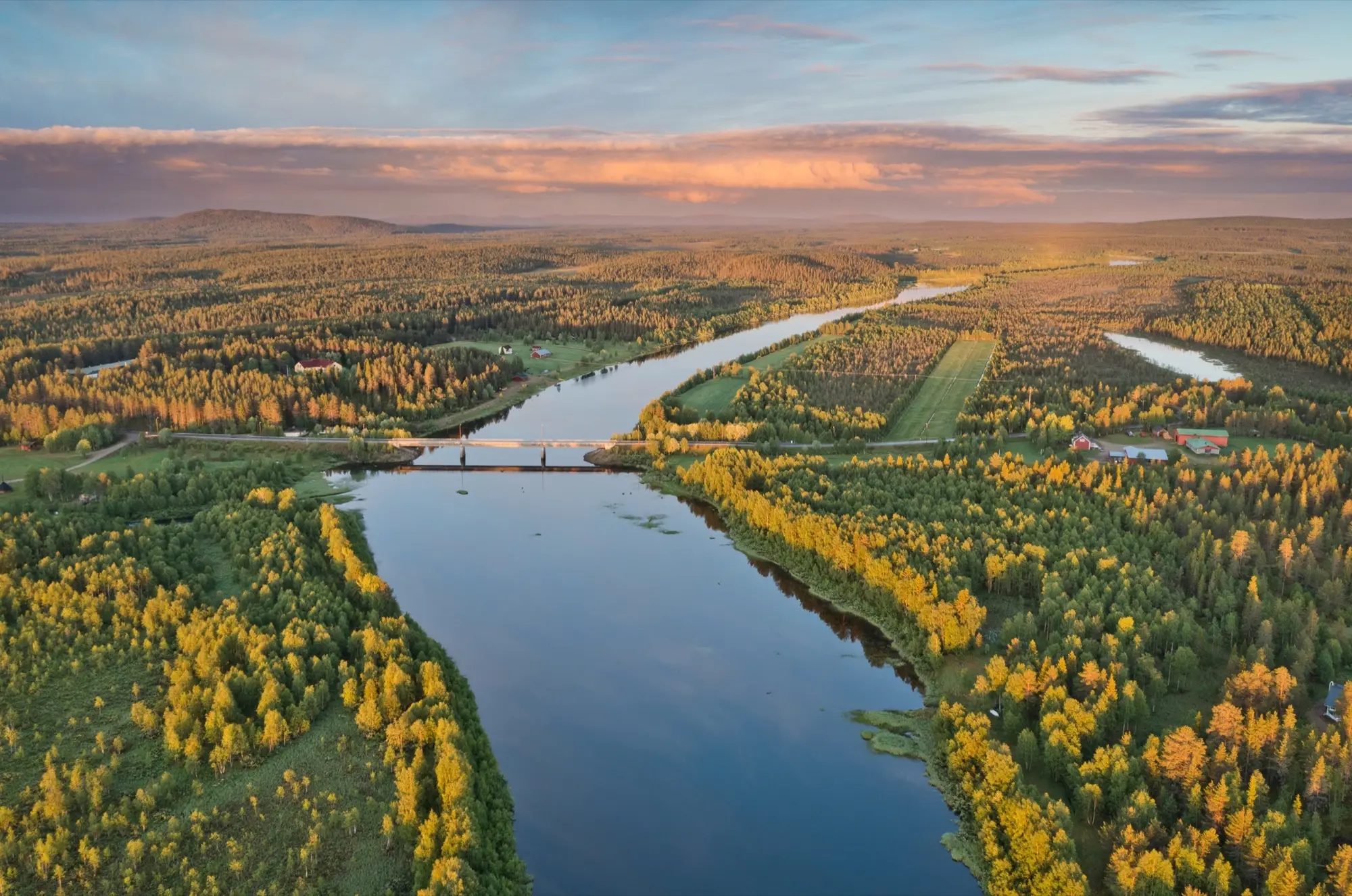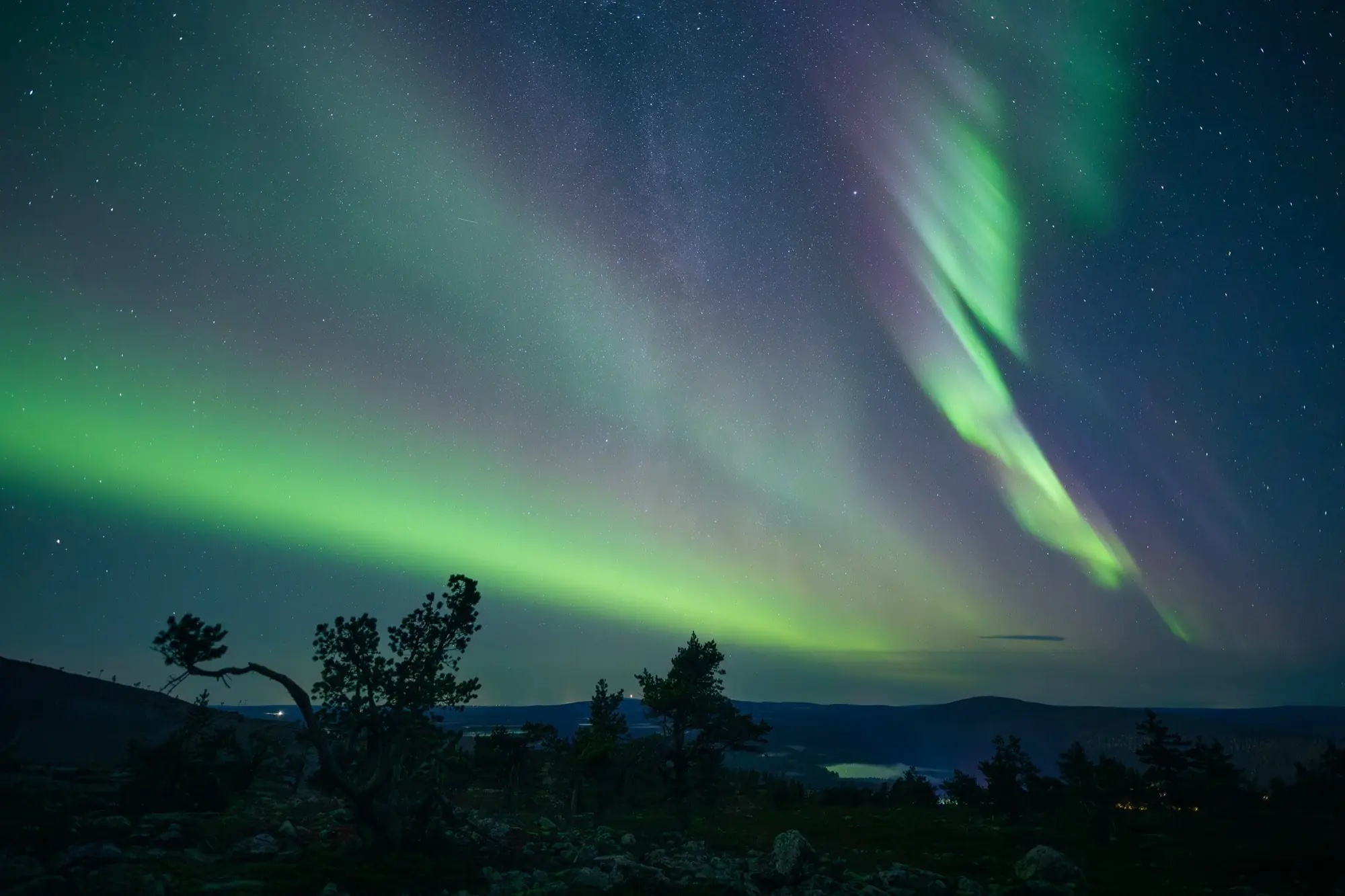
September is when Lapland gets its nights back. It does not have them at the start of the month.
The number that matters for the northern lights is not sunset. It is astronomical darkness — the sun more than 18° below the horizon — which is when the sky is dark enough for a faint auroral arc to show against it. The surprise for almost everyone planning a September trip is that Rovaniemi has none of it on 1 September. The sun sets, the sky turns deep blue, and it remains deep blue until it gets light again.
When darkness actually returns
Calculated for this year, the first night with any astronomical darkness at all is:
| Place | First astronomical darkness | How much, that night |
|---|---|---|
| Helsinki | 22 August | about 1 hour |
| Rovaniemi | 8 September | 38 minutes |
| Levi | 12 September | about 1¼ hours |
| Utsjoki | 17 September | 48 minutes |
A trip to Saariselkä in the first week of September is a trip with no aurora window in it. Not a poor chance — no window. That is worth knowing before you book, and it is the sort of detail a tour operator's calendar will not tell you.
Then it arrives quickly
Rovaniemi throughout the month:
| Daylight | Astronomically dark | |
|---|---|---|
| 1 September | 14h 50m | none |
| 15 September | 13h 08m | 3h 40m |
| 30 September | 11h 20m | 6h 34m |
That is 210 minutes of daylight lost across the month — a little over seven minutes a day. This is the fastest change of the year, faster than in March, because the sun's path is steepening rather than flattening. Over a week's stay, you can see it happening.
So: is September a good time for the aurora?
The second half of the month is. It has two advantages that December does not.
The equinox effect is real. Geomagnetic activity peaks around the equinoxes in late September and late March because of how the Earth's magnetic field is angled towards the solar wind at those times of year. Statistically, September is one of the two best months for auroral activity.
The ground is not yet frozen. Standing outside for two hours at +4 °C is a different proposition from two hours at −25 °C, and it changes how long you are willing to wait. The lakes are still liquid, which gives you reflections. And ruska, the autumn colour, peaks in Lapland during the first half of the month — which is exactly the fortnight with no dark sky, meaning the two do not overlap as neatly as the brochures imply.
By place, in late September
Latitude determines this, and it does so in the direction most people do not expect. Astronomical darkness on 28 September:
| Place | Latitude | Astronomically dark |
|---|---|---|
| Helsinki | 60.2°N | 7h 32m |
| Rovaniemi | 66.5°N | 6h 14m |
| Levi | 67.8°N | 5h 50m |
| Saariselkä | 68.4°N | 5h 38m |
| Utsjoki | 69.9°N | 5h 02m |
This looks backwards, but it is not. The far north has fewer dark hours than the south in September because the sun's path there is shallower — it takes longer to travel from the horizon down past 18°. The north overtakes the south in October and then never looks back: on the winter solstice, Utsjoki has no daylight at all, whereas Helsinki still has five hours and forty-eight minutes.
The trade-off in September is straightforward. The south has more dark hours; the north has a far better chance of anything happening during them.
Tonight, rather than in general
Every figure above is what the sky does on a date. For tonight specifically, with cloud cover and geomagnetic activity included, see aurora tonight — six places, one straight answer each, and every number stamped with the time it was read. For the rest of the season, month by month and place by place, see the northern lights in Finland guide.