These are 11 Norwegian outdoor clothing brands a newcomer will meet: Norrøna, Bergans, Helly Hansen, Swix, Devold, Ulvang, Aclima, Janus, Kari Traa, Skogstad, and Stormberg. Most of these brands run an outlet shop at Norwegian Outlet at Ålgård outside Stavanger, alongside their other locations across Norway.
How Norwegians dress for winter
Visit Oslo quotes the Norwegian saying that there is no bad weather, only bad clothing. According to DNT (the Norwegian Trekking Association), mountain weather in Norway is so changeable that the best mountain clothing is the same summer and winter, and it must carry moisture away from the body. DNT advises dressing in layers: first underwear, then one or more intermediate layers, then an outer layer, and always taking spare clothing on a trip.
DNT says the innermost layer should be snug wool (ull, wool) or synthetic, and that a wool garment can absorb moisture equal to 30% of its weight and still insulate. DNT says to avoid cotton underwear, which holds moisture and insulates poorly when damp. The intermediate layer can be wool or fleece, and for ski touring you should carry a spare wool sweater in your pack. DNT says the outer layer should keep the wind out but let warmth and moisture escape; membrane garments such as Gore-Tex are windproof and water repellent but can feel clammy in winter. DNT says to regulate warmth as you move, using a collar, wrist bands and a cap, so that you are neither sweaty nor cold.
Ingun Grimstad Klepp, professor of clothing and sustainability at OsloMet, says wool next to the skin is best for most people, except during hard exercise with heavy sweating, when a moisture-wicking synthetic layer under the wool is better. Klepp says the most common mistake is cotton or viscose underpants under the base layer, and that jeans make a poor middle layer. Klepp says that when it is very cold there is no rain or wet snow, so the outer layer need not be waterproof, and a thin anorak and over-trousers work as well or better than a shell. Klepp says a lot of heat is lost through the feet, head, neck and hands, so those need covering well.
Visit Tromsø gives Tromsø's winter average as -4 °C, but says anyone doing Arctic activities or chasing the northern lights should be ready for -25 °C to 5 °C. If you plan a trip to Tromsø in winter, Visit Tromsø advises dressing in layers, taking one off when active and adding one when you stop, because you cool down quickly. For September to April, Visit Tromsø says to start with wool base layers next to the skin, then warm, dry jumpers and jackets, plus warm footwear, gloves, scarves and hats. Visit Tromsø says shoes should be big enough for an extra pair of wool socks, and hand warmers help in gloves and footwear. Many activity providers lend clothing for excursions, such as thermal suits, boots, hats and mittens. Dressing properly is part of managing your everyday cost of living in Norway.
| Brand | Founded | Known for | Example item and price | Own stores or outlet |
|---|---|---|---|---|
| Norrøna | 1929, Oslo | First Gore-Tex jacket prototype in Europe (1977) | Men's Trollveggen down800 hood jacket: listed at NOK 6499 | Flagship Store Oslo, Norrøna House at Lysaker, 39 stores, concept stores, Ålgård outlet |
| Bergans | 1908, Tønsberg / Christiania | Rucksacks, outdoor clothing, repairs in the Oslo flagship | Men's Lunnan pile fleece jacket: listed at 1 699 kr | Oslo flagship, stores in Bergen, Stavanger, Trondheim, Tromsø; outlets at Vestby and Ålgård |
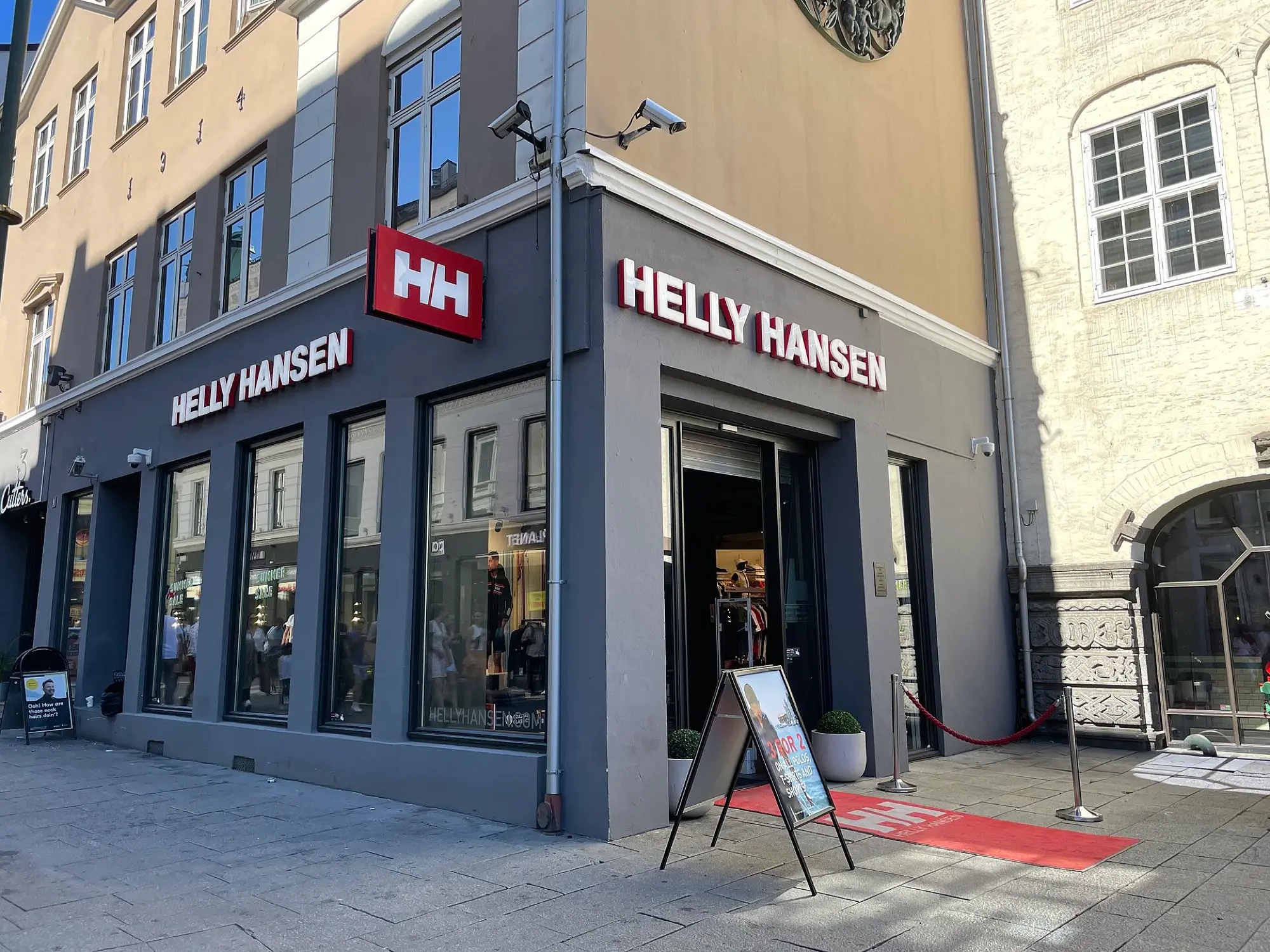
| Helly Hansen | 1877, Moss | Rainwear for sailors, fleece fabrics, LIFA technical base layers | Children's Junior Marka HT winter boot: listed at 839 kr (ordinary price 1 199 kr) | Ålgård outlet |
| Swix | 1946, Sweden | Ski wax, poles, sports clothing | Men's Focus down jacket: listed at 3 000 NOK | Blåswixbutikken in Lillehammer; outlets at Vestby and Ålgård |
| Devold | 1853, Langevåg | Wool base layers | Men's Expedition Merino 235 shirt: listed at 1 199,- | Brandstore Oslo, factory outlet in Langevåg, Ålgård outlet |
| Ulvang | 1995, Norway | Thin wool socks, wool underwear, Rav sweater | Women's Alltime Graze half-zip wool sweater: listed at 2600,- | Sold to XXL in 2026; Swix outlet in Vestby sells Ulvang |
| Aclima | 1939, Drammen | Wool felt insoles, WoolNet wool mesh underwear | Women's WoolNet Original crewneck: listed at 770 kr (ordinary price 1 100 kr) | Warehouse sales in Krøderen |
| Janus | 1895, Espeland | Merino wool underwear and mid layers knitted at Espeland | Women's Classic Merino 215 top: listed at 699 NOK (ordinary price 999 NOK) | Shops at Espeland, Lillehammer, Voss; listed shops in Bergen, Oslo, Tromsø |
| Kari Traa | 2002 (founder grew up in Voss) | Rose wool base layer | Rose half-zip 100% merino wool top: listed at 1 199 NOK | Intersport, Sport 1, Ålgård outlet |
| Skogstad | 1937, Innvik | Sports and leisure clothing for the whole family | Women's Haugland down coat: listed at 1 499 kr (ordinary price 2 999 kr) | Stores in Innvik, Førde, Stryn, Olden, Lom, Gol, Lillehammer, Lillestrøm, Drammen |
| Stormberg | 1998, Kristiansand | Outdoor clothing, shoes and equipment for Nordic conditions | Men's Svalbard down parka: listed at 1 299,- (ordinary price 2 499,-) | Stores from Kristiansand to Tromsø, Oslo, Bergen; Ålgård outlet |
1. Norrøna: technical mountain clothing from Oslo
Norrøna is described by Store norske leksikon as a Norwegian family group, run since 2005 by the fourth generation, with Jørgen Jørgensen as chief executive. Jørgen Jørgensen started J.J. Norrøna Sporting Goods and Leather Factory in Oslo on 29 April 1929; the logo is a birkebeiner, a symbol of mountain endurance. In 1977 Norrøna made the prototype of the first Gore-Tex jacket in Europe, according to Store norske leksikon.
Norrøna's own Norwegian shop listed the men's Trollveggen down800 hood jacket at NOK 6499 and calls it its warmest down jacket. Prices were read when this page was checked in November 2026 and change, and several shops were in their Black Week or Black November sales then.
Norrøna says it has 39 stores of its own in Norway, Sweden, Finland, the USA, Germany, Switzerland and France. The Norrøna Flagship Store Oslo is at Akersgaten 30, open Monday to Wednesday and Friday 10-18, Thursday 10-19 and Saturday 10-17. Norrøna House, its other flagship store, is at Vollsveien 13H at Lysaker, open Monday to Friday 10-20 and Saturday 10-18. Norrøna has concept stores in Norwegian towns including Bergen, Tromsø, Trondheim, Stavanger, Alta, Bodø and Lillehammer, and an outlet store at Ålgård.
2. Bergans: the rucksack maker of 1908
Bergans dates itself from 1908, when Ole F. Bergan from Tønsberg, on a hunting trip, bent a juniper branch to the shape of his back; he registered his rucksack frame patent on 18 December 1909. The textile wholesaler Sverre Young founded A/S Bergans Meis og Rypesæk on 7 February 1911, with its own factory in Kirkegata 17 in Christiania, today's Oslo. Bergans has had its head office in Asker since 2020. After its factory in Nord-Odal closed in 1990, almost all Bergans production moved to China and Vietnam.
Bergans' own Norwegian shop listed the men's Lunnan pile fleece jacket, a warm pile fleece for a middle or outer layer, at 1 699 kr in November 2026.
The Bergans flagship store is by Oslo City Hall at Kronprinsesse Märthas plass 1, 0116 Oslo, open Monday to Friday 10.00-20.00 and Saturday 10.00-18.00. The flagship has its own systue (sewing room) for repairs and alterations, and sells used Bergans products, takes returns and rents out equipment. Bergans also has brand stores at Strandgaten 18 in Bergen, Nygata 9 in Stavanger, Nordre gate 12 in Trondheim and Samuel Arnesens gate 5 in Tromsø, alongside outlets at Vestby and Ålgård.
3. Helly Hansen: rainwear for sailors since 1877
Helly Hansen was founded in Moss in 1877 by Helly Juell Hansen and began by making rainwear for sailors; its head office is in Oslo. Helly Hansen says it invented the first supple waterproof fabrics more than 130 years ago, made the first fleece fabrics in the 1960s and introduced its LIFA technical base layers in the 1970s. Helly Hansen has had foreign owners since 1997 and was bought in 2025 by the American group Kontoor Brands; most production is in Asia.
Helly Hansen's own web shop could not be read for this page. The Helly Hansen outlet at Ålgård listed the children's Junior Marka HT winter boot at 839 kr, against an ordinary price of 1 199 kr, when checked in November 2026.
Helly Hansen runs an outlet at Norwegian Outlet in Ålgård.
4. Swix: ski wax, poles and cross-country clothing
Swix was founded in Sweden in 1946 by the pharmaceutical company Astra to make ski wax. Swix wax was made in Lørenskog from 1948 and all production moved to Norway in 1964; Swix became Norwegian-owned in 1978 and production moved to Lillehammer in 1986. Swix Sport AS changed its name to Brav in 2018; Brav owns Swix, Toko, Lundhags, Helsport and Hard Rocx, and the Swix name is also used for sports clothing.
Swix's own Norwegian shop listed the men's Focus down jacket, made for winter and cross-country skiing, at 3 000 NOK when checked in November 2026.
Blåswixbutikken, the Swix concept store at Blåswixvegen 5 in Lillehammer, in the same building as its main warehouse, has the full range plus a café, a waxing hut and a museum. The Swix flagship store next to Snø at Lørenskog is permanently closed. Swix runs outlets inside Oslo Fashion Outlet at Vestbyveien 155 in Vestby, also selling Ulvang, Lundhags and Helsport, and another inside Norwegian Outlet at Ålgård.
5. Devold: wool base layers from Langevåg
Devold of Norway is one of the country's oldest textile companies; its head office is in Langevåg, where Ole Andreas Devold set up a factory in 1853. Devold no longer makes its goods in Norway; its factory is in Lithuania, and from 2025 the Swedish group Fenix Outdoor owns 65 per cent of the shares. Traditional sweaters are covered on the Norwegian sweaters guide.
Devold's own Norwegian shop listed the men's Expedition Merino 235 shirt, a two-layer wool base layer made for extreme weather and tested on polar expeditions, at 1 199,- in November 2026.
Devold Brandstore Oslo is at Operagata 43, 0194 Oslo, at Munch Brygge in Oslobukta, and carries the full collection. Devold Outlet Langevåg, at the factory at O. A. Devold-vegen 16, 6030 Langevåg, sells past collections and seconds, open Monday to Friday 10:00-19:00 and Saturday 10:00-18:00. Devold also has an outlet at Norwegian Outlet in Ålgård.
6. Ulvang: wool from a cross-country skier's name
Ulvang started in 1995, when Jon Inge Gullikstad approached the skier Vegard Ulvang with the idea of using his name on thin wool socks; the Ulvang Spesial sock came on the market that year. Vegard Ulvang grew up in Kirkenes in Finnmark in the 1960s. Ulvang began making wool underwear in 1996 and sweaters and hats in 1997, and launched the Rav sweater in 2005; most of its wool is merino from Australia. In 2026 Brav sold the Ulvang brand to the sports chain XXL.
XXL's Norwegian shop listed Ulvang's women's Alltime Graze half-zip wool sweater at 2600,- when checked in November 2026.
The Swix outlet in Vestby also sells Ulvang products.
7. Aclima: the WoolNet mesh from Drammen
Aclima says its story started in Drammen in 1939, when Eivind Johansen had the idea of making insoles from wool felt. Aclima is known for its WoolNet wool mesh underwear, which uses the fact that trapped air insulates; Store norske leksikon says Aclima was first with wool mesh. Aclima says all its production is in Europe, most of it at its own factory in Estonia, and nearly all its wool comes from merino sheep in New Zealand; its business address is Krøderen.
Aclima's own Norwegian shop listed the women's WoolNet Original crewneck at 770 kr, against 1 100 kr, when checked in November 2026.
Aclima holds warehouse sales of samples, seconds and outgoing models at Sundvollhovet industriområde, 3535 Krøderen; its 2026 dates ran from August to December, the last on 3 and 4 December, 11:00-18:00, card and Vipps only, and goods cannot be exchanged.
8. Janus: merino knitted outside Bergen
Janus was founded at Espeland outside Bergen in 1895 by Anton Stephansen, who used the power of the Espelandsfossen waterfall; the Janus trademark was registered in 1909. Janus specialises in merino wool underwear and mid layers. Janus says its factory at Espeland, run on renewable hydropower, knits 90% of its garments.
Janus's own shop listed the women's Classic Merino 215 top, a warm 100% merino wool top, at 699 NOK, marked down from 999 NOK, when checked in November 2026.
Janus has its own shops at the factory at Stephansens veg 35 in Espeland, in Lillehammer (Storgata 69) and Voss (Vangsgata 14). Janus's store page also lists shops in Bergen, Oslo (Bogstadveien 4) and Tromsø selling its wool. Janus's store page lists 6 shops in all.
9. Kari Traa: women's base layers from Voss
The Kari Traa brand was started in 2002 by Skigutane, with the freestyle skier Kari Traa one of four founders; the first hats came out in 2003. Kari Traa grew up in the mountain village of Voss and became Olympic mogul champion in 2002; she crocheted and knitted her own hats in training. Kari Traa is best known for its Rose wool base layer, whose pattern comes from a rug on the Traa family's farm at Voss.
Kari Traa's own Norwegian shop listed the Rose half-zip 100% merino wool top at 1 199 NOK when checked in November 2026.
Kari Traa is sold through selected shops across Norway, including the Intersport and Sport 1 chains, and runs an outlet at Norwegian Outlet in Ålgård.
10. Skogstad: family clothing from Nordfjord
Skogstad was founded in 1937 in Innvik in Nordfjord by the tailor Halstein Skogstad, and its head office is still in the same place. Skogstad says it is 100% owned by the Skogstad family, now in its third generation, and makes sports and leisure clothing for the whole family.
Skogstad's own shop listed the women's Haugland down coat at a sale price of 1 499 kr, against an ordinary price of 2 999 kr, in a Black Week campaign ending on 30 November 2026.
Skogstad's own stores are mostly in western and inland Norway, including Førde, Stryn, Olden, Lom, Gol, Lillehammer and Innvik, with others at Lillestrøm and Drammen (Gulskogen); each store has its own range, so call before you go.
11. Stormberg: outdoor clothing at family prices
Stormberg was established in 1998 by Steinar J. Olsen; it has its head office and warehouse in Kristiansand and designs outdoor clothing, shoes and equipment for Nordic conditions at what it calls family-friendly prices. Store norske leksikon says Stormberg was founded by Steinar J. Olsen and has made its clothes in China since the start. Stormberg's articles of association commit one per cent of its turnover to humanitarian and community projects for children.
Stormberg's own shop listed the men's Svalbard down parka, one of its warmest down jackets, at 1 299,- in a sale running to 30 November 2026, against 2 499,-, which Stormberg says was the lowest price in the previous 30 days.
Stormberg has stores from Kristiansand in the south to Tromsø in the north, including Storgata 5 in Oslo, Bergen Storsenter and Jekta in Tromsø, and an outlet at Ålgård.
Outlets and sales
Norwegian Outlet, a brand outlet village at Ålgård just outside Stavanger, says every brand has its own shop there and everything is 30-70% off the ordinary price. Norrøna, Bergans, Helly Hansen, Kari Traa, Devold and Stormberg run outlet shops at Norwegian Outlet in Ålgård, and the Swix outlet at Ålgård is inside Norwegian Outlet Stavanger at Ole Nielsens vei 13.
In eastern Norway, Bergans runs an outlet at Vestbyveien 155 in Vestby (Oslo Fashion Outlet). Swix also runs an outlet inside Oslo Fashion Outlet at Vestbyveien 155 in Vestby, which sells Ulvang, Lundhags and Helsport alongside Swix. Devold Outlet Langevåg, at the factory at O. A. Devold-vegen 16, 6030 Langevåg, sells past collections and seconds, open Monday to Friday 10:00-19:00 and Saturday 10:00-18:00.
A reflector, ice grips and the rest
Statens vegvesen, the roads authority, says a driver on dipped headlights at 50 km/h has only 2 seconds to see a pedestrian without a reflector (refleks, reflector) and 10 seconds to see one with a reflector, and says those 8 seconds can save a life; most pedestrian accidents happen in the dark. Statens vegvesen advises wearing two reflectors so you are seen from both sides, and walking on the correct side of the road.
Statens vegvesen says a reflector should hang at knee height. Reflectors that move work best. Scratched reflectors and washed vests reflect less, so a vest in regular use should be replaced every year. Approved reflectors are marked EN 13356; Statens vegvesen warns that giveaway reflectors, for example ones that come with sweets, may not work properly.
Visit Tromsø says paths and streets in Tromsø can be slippery in winter, in town too, and ice grips or spikes help prevent falls. In Tromsø they are sold in shoe shops, sports shops and at the tourist information. For the rest of a newcomer's first purchases, read our guide to setting up a home in Norway.