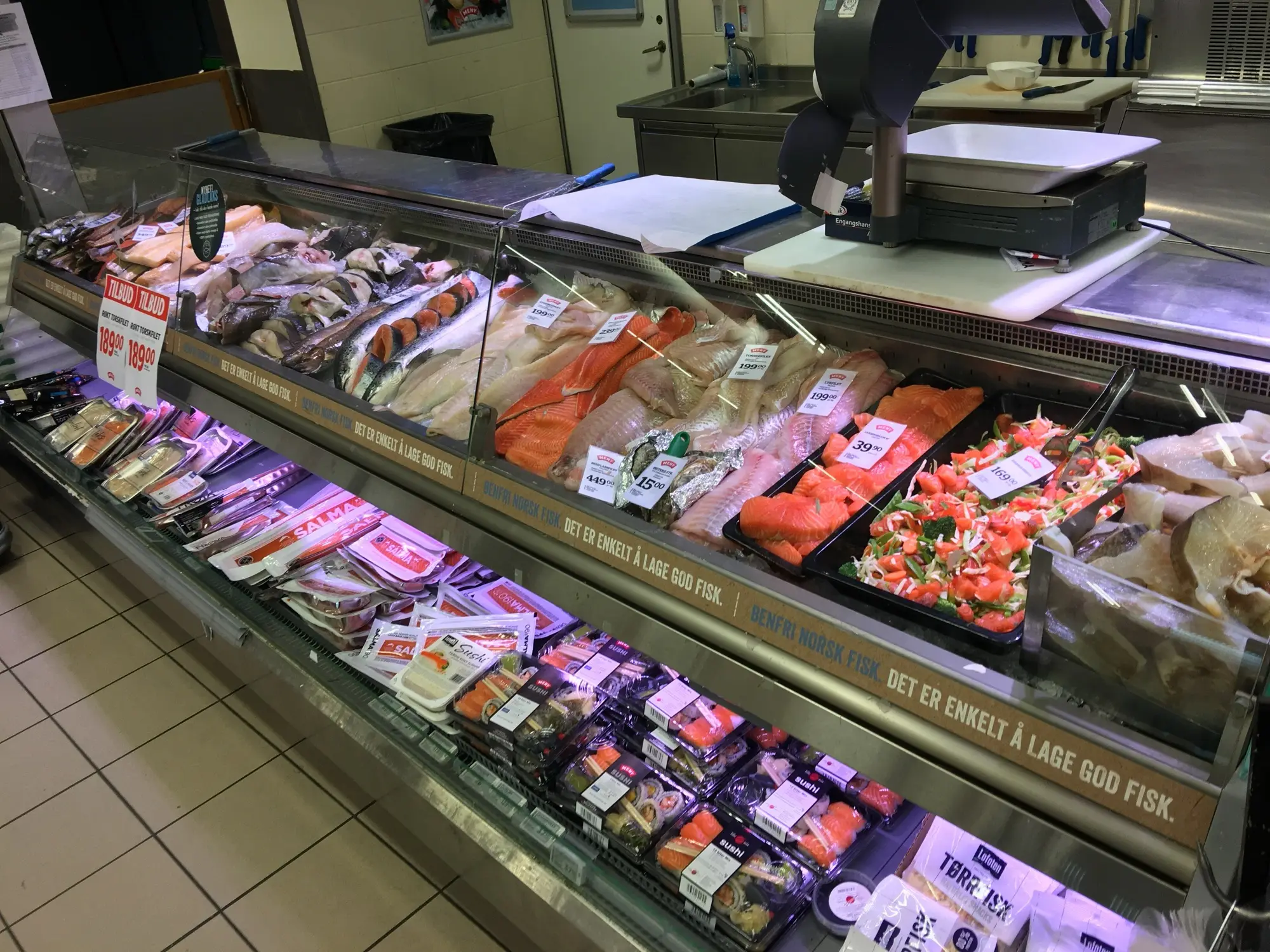

Norway is more expensive than the European Union average, but it is not the most expensive destination in Europe. Food, soft drinks and alcohol sit at price levels above those in any EU country. Practical options like the Oslo Pass, drinking tap water, the right to roam, DNT cabins and the VAT refund scheme help manage expenses during a visit.
How expensive Norway is compared with the rest of Europe
In Eurostat's 2025 comparison of price levels for household consumption, Norway stood at an index level of 129, with the EU average set at 100. This places Norwegian price levels above those of neighbours such as Finland and Sweden, which both measured 121. If you are weighing up a holiday between different destinations across the wider region, our overview of the Nordics and our guide, asking is Finland expensive?, show how these costs sit side by side.
Norway is not the most expensive country on the continent. Denmark had the highest price level inside the European Union in 2025, sitting 40% above the EU average, while Bulgaria recorded the lowest at 37% below the average. Outside the EU, Iceland (174) and Switzerland (171) were the most expensive countries in the comparison, far exceeding Norway. The figures come from Eurostat's comparative price levels, based on surveys covering more than 2,000 consumer goods and services across 36 European nations. Eurostat published these numbers in June 2026, with the next update planned for December 2026.
Where the money goes - food, drink and eating out
Visitors feel Norway's prices most acutely in the food and beverage sector. All countries belonging to the European Free Trade Association (EFTA), including Norway, had higher price levels for food than any EU member state. Meat, dairy products and vegetables were likewise dearer across all EFTA countries than anywhere in the EU.
Norway was the only country surveyed with higher prices for non-alcoholic drinks than every EU country. Together with Iceland, Norway was also dearer for alcohol than any EU country. Eurostat notes that prices for alcohol and tobacco differ more between European countries than any other consumer category, primarily due to varying rates of national taxation.
Value added tax (merverdiavgift, commonly shortened to MVA) forms part of these costs:
- 25% standard rate: Applies to most goods and general services.
- 15% reduced rate: Applies to foodstuffs.
- 12% low rate: Covers passenger transport, the letting of rooms for accommodation, entry to cinemas, sporting events, amusement parks, activity centres and public broadcasting.
You do not need to spend money on bottled water while travelling. Tap water in Norway is of excellent quality and safe to drink anywhere unless you are expressly told otherwise.
Buying alcohol - Vinmonopolet and supermarket beer hours
Alcohol sales are strictly regulated by national law. Norwegian legislation categorises alcoholic drinks into three distinct strength bands:
- Group 1: Over 2.5% and at most 4.7% alcohol by volume.
- Group 2: Over 4.7% and under 22% alcohol by volume.
- Group 3: 22% to 60% alcohol by volume.
Age limits apply to purchase and service: group 1 and group 2 drinks (such as standard beer and wine) have a minimum age limit of 18, while group 3 drinks (spirits) may not be sold or served to anyone under the age of 20.
Retail sales of group 2 and group 3 drinks – which include all wine, spirits and stronger beers – are exclusively reserved for Vinmonopolet, the monopoly retailer. Standard supermarkets and grocery shops may not sell group 2 or 3 drinks.
Opening and sale hours
Alcohol purchase times are constrained by statutory cut-offs:
- Vinmonopolet: May trade between 08:30 and 18:00 on weekdays, and from 10:00 to 16:00 on the day before a Sunday or public holiday. Vinmonopolet is closed on Sundays, public holidays, 1 May, 17 May (Grunnlovsdagen, Constitution Day) and Christmas Eve. Individual branches set their own hours within this legal framework, so check your local shop before visiting.
- Supermarkets and shops: Ordinary shops may not sell group 1 beer after 20:00 on weekdays or after 18:00 on the day before a Sunday or public holiday. There are no retail beer sales in shops on Sundays, public holidays, 1 May or 17 May. Municipalities across Norway determine their own sales hours within this national frame.
- Oslo grocery stores: In the municipality of Oslo, grocery shops may sell beer from 08:00 to 20:00 on weekdays and from 08:00 to 18:00 on Saturdays. They are not permitted to sell beer on Sundays or public holidays.
Paying, tipping and the currency
The currency of the country is the Norwegian krone (NOK). Cash is rarely needed in Oslo. Payment cards, including Visa, Mastercard, Diners Club and American Express, are accepted almost everywhere, and locals prefer card transactions to cash.
Tipping is not required in Oslo. While leaving a tip for excellent service is appreciated, it is never expected.
If you track exchange rates via Norges Bank, note that its published figures represent mid-rates between buying and selling positions in the interbank market. These serve only as an indication and do not represent the exact consumer exchange rates offered by commercial banks or card issuers. Norges Bank publishes these daily rates for roughly 40 currencies at about 16:00 CET.
The Oslo Pass
For sightseeing in the capital, the Oslo Pass involves a single upfront payment that covers admissions and public transport. It grants free entry to more than 30 museums and attractions alongside unlimited public transport across the local network, including travel to and from Oslo Airport Gardermoen.
Prices depend on validity duration and age:
- Adults: NOK 580 (24 hours), NOK 845 (48 hours), NOK 995 (72 hours).
- Seniors: NOK 465 (24 hours), NOK 675 (48 hours), NOK 795 (72 hours).
- Children: NOK 290 (24 hours), NOK 420 (48 hours), NOK 495 (72 hours).
Free and cheap nights outdoors - the right to roam and DNT cabins
Norway's right to roam (allemannsretten, the public right of access) allows everyone to walk freely and stay where they like in uncultivated land (utmark), regardless of who owns the land. Homes and farmed fields are excluded. Under the right to roam, you may pick wild berries, mushrooms and flowers, and fish in saltwater. Saltwater fishing is freely permitted, but freshwater fishing and hunting are not included in the right to roam.
When camping in uncultivated land, you may camp at least 150 metres from the nearest inhabited house or cabin. You may camp for up to 2 days in the same place. You can stay longer in high mountain areas or regions remote from settlements, though some specific destinations enforce local camping restrictions.
For shelter along hiking routes, cabins managed by Den Norske Turistforening (DNT, the Norwegian Trekking Association) are open to everyone:
- Self-service and no-service cabins: These facilities are locked with the standard DNT key. Members borrow this key against a deposit, which means at least one member of your party must hold a DNT membership.
- Pricing: A night at a self-service or no-service cabin typically costs NOK 250 to 350 according to figures published by DNT. Full board at a staffed DNT lodge is approximately NOK 1300 for members.
- Discounts: DNT youth members pay half price, while child members aged 0 to 12 stay free of charge at most self-service and no-service cabins.
Getting the VAT back when you leave
Only individuals resident outside Norway can claim a refund on the value added tax charged on goods purchased in the country and exported in personal luggage. Norwegian Customs (Tolletaten) does not issue the refund payout directly; you must process the claim through the retailer or an affiliated tax refund service.
Two distinct routes exist, depending on where you reside and the refund scheme the shop uses:
The commercial refund services (Global Blue, Planet, Pie VAT)
If you buy from a shop affiliated with a commercial refund scheme, you must spend over NOK 315 on eligible goods. Residents of Norway, Sweden, Denmark and Finland are not eligible for this service. You must export the items within 30 days of purchase, and you must have the goods validated at an airport refund counter before checking them in as hold luggage.
The customs export route
If claiming directly through the retailer, the minimum purchase amounts depend on your country of residence:
- Residents of Denmark, Finland or Sweden: Must buy an individual item with a price of at least NOK 1,000 excluding VAT. You must declare the item upon arrival in your home country and subsequently reclaim the Norwegian VAT from the seller.
- Residents of countries other than Sweden, Denmark and Finland: Must have an invoice totalling at least NOK 250 excluding VAT.
- Timing and border requirements: Under the customs route, no more than one month may elapse between receiving the goods and leaving Norway, and you must depart via a manned border crossing.
For more practical information on getting around the country, read our breakdown of the scenic Oslo to Bergen train route, explore our guide to the best time to visit Norway, or consult the wider Norway hub to organise your itinerary.