
For a first visit stay in Norrmalm (the city centre, next to Central Station, where the Arlanda Express arrives) or Gamla stan (the medieval old town). Södermalm suits bars and shops, Östermalm upscale dining, Vasastan and Kungsholmen quieter residential streets, and Djurgården the big museums and green space.
Stockholm's districts at a glance
Stockholm spreads across islands and mainland districts, each with a different layout, history and set of sights. Your arrival point matters when choosing where to base yourself. If you plan your Arlanda to Stockholm airport transfers, the Arlanda Express train runs between Arlanda Airport and Stockholm Central Station in 18 minutes, placing you directly in the commercial core.
The table below sets all seven central districts side by side so you can match your plans to the right part of town before exploring the 20 top attractions in Stockholm.
| District | What it is | What is there | Who it suits |
|---|---|---|---|
| 1. Norrmalm | Commercial centre | Stockholm Central Station, Sergels torg, Kulturhuset, Concert Hall, Royal Opera, Nationalmuseum | Travellers wanting direct airport train access, major transport connections and central cultural venues |
| 2. Gamla stan | Medieval old town on an island | Royal Palace, Stockholm Cathedral, Nobel Prize Museum, cobbled streets, summer visitor centre | Visitors seeking historic architecture, royal landmarks and walkable medieval alleys |
| 3. Södermalm | Former working-class island district | Shops, restaurants, bars, Fotografiska, City Museum, view walks, ferry connections | Travellers wanting dining, evening drinks, independent shopping and views over the city |
| 4. Östermalm | Affluent eastern inner-city district | Fashion boutiques, fine dining, smart bars, Östermalmshallen food hall, Royal Library | Visitors looking for high-end shopping, luxury dining and quiet park surroundings |
| 5. Vasastan | Northern inner-city residential area | Early 20th-century residential architecture, Stockholm Public Library, Astrid Lindgren's home | Travellers looking for a quieter residential setting close to public transport |
| 6. Kungsholmen | Western residential island | Stockholm City Hall, park spaces, skatepark, summer cinema, dining streets | Visitors seeking residential waterfront walks and access to the City Hall |
| 7. Djurgården | Royal island park | Vasa Museum, Skansen, Nordiska museet, Gröna Lund, ABBA The Museum, parkland | Travellers planning long days at major museums, historic collections and family attractions |
1. Norrmalm: the city centre
Norrmalm, or just City (the city centre), is the centre and one of Stockholm's busiest areas. Much of it was developed in the 1950s-'70s, when Sergels torg public square and T-Centralen metro station opened. Because Stockholm Central Station sits on its western edge, this district is the primary arrival hub for regional trains and the airport link.
Major cultural venues concentrate within this commercial core. Kulturhuset cultural centre stands at Sergels torg, providing exhibition halls, libraries, a cinema and the City Theatre's main stage. The Stockholm Concert Hall, which hosts the Nobel Prize ceremony, is situated here as well.
Two of the country's prominent national institutions are also in Norrmalm. The Royal Opera, founded by King Gustav III, is one of the oldest opera companies in the world. Near the waterfront, Nationalmuseum holds more than 700,000 objects of art, furniture, porcelain and design.
2. Gamla stan: the old town
Gamla stan, the old town, is Stockholm's oldest district, located on an island in the middle of town. The first settlement dates from the Middle Ages, though most buildings standing today are from the 16th and 17th centuries.
Its narrow, winding cobbled streets are often called a living museum. Västerlånggatan and Österlånggatan serve as the two main streets running through the island. In summer a visitor centre in Gamla stan gives personal tips to travellers; it is open only in the summer months. You can follow our guide to Gamla stan: walking Stockholm's old town to explore the island stop by stop.
The district contains a high density of historical landmarks. You will find the Royal Palace and major museums within walking distance of each other: Stockholm Cathedral, the Medieval Museum, the Jewish Museum, the Nobel Prize Museum and the Royal Armoury are all here. You can weigh your sightseeing costs with our guide on whether the Stockholm Pass is worth it.
3. Södermalm
Södermalm lies directly south of Gamla stan across the water. Once a poor district of workers' housing in the early 20th century, it is now Stockholm's trendiest neighbourhood, filled with shops, restaurants and bars.
Several cultural institutions and historic industrial sites are based on the island. Fotografiska photography centre, the City Museum of Stockholm and K.A. Almgren, Sweden's only remaining silk mill, are on Södermalm. In the western neighbourhood of Hornstull, Bio Rio operates as one of the few 1940s single-screen cinemas left.
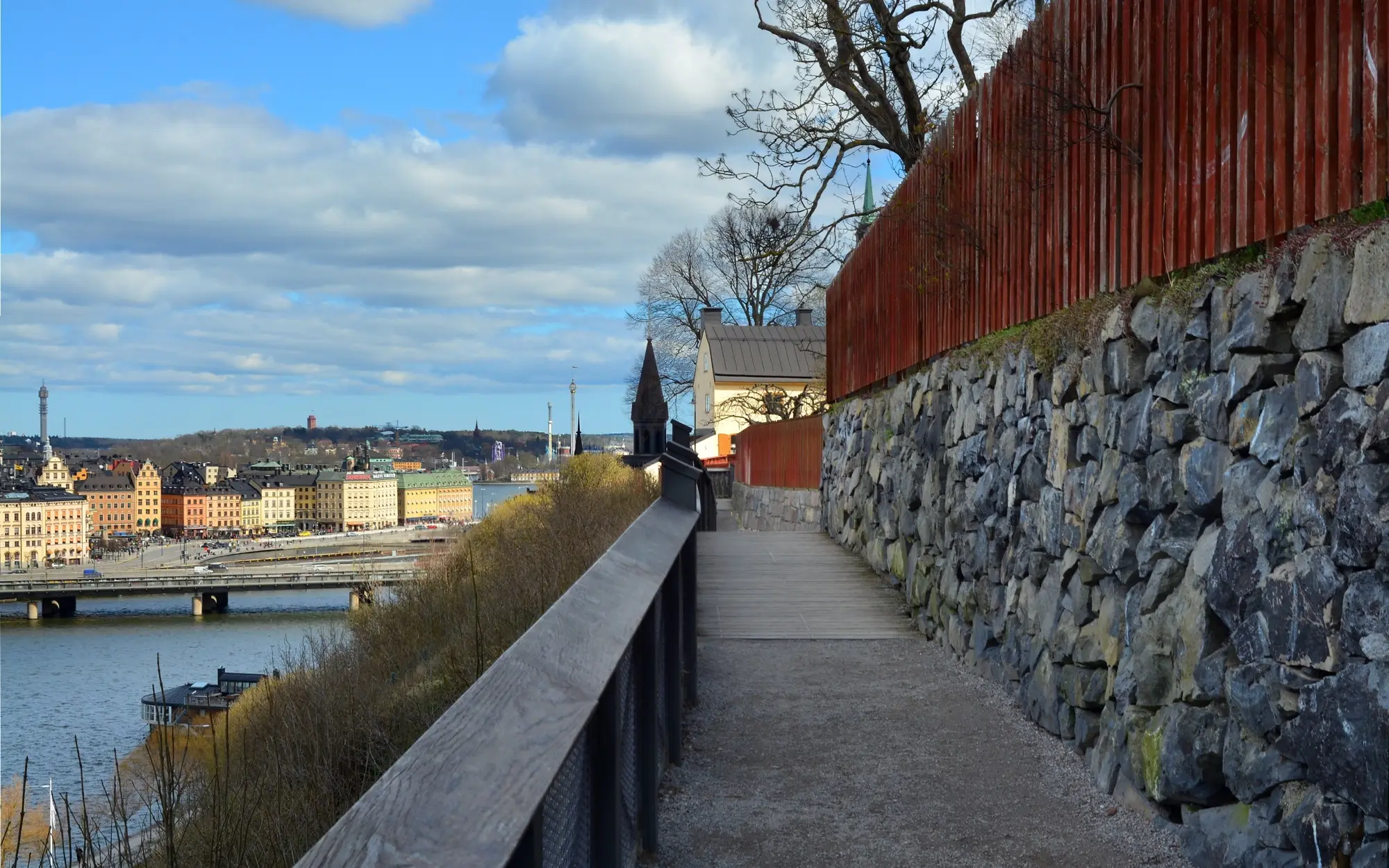
Walking paths offer panoramic viewpoints across Stockholm's central waterways. Fjällgatan and Monteliusvägen on the north side are walking routes with views over the city. On the small adjacent island of Långholmen, a short walk from Hornstull, the old prison, used until 1975, is now a hostel and museum. For onward travel to other sights, ferries to Djurgården leave a short walk from the Slussen transport node.
4. Östermalm
Östermalm is in the east of the inner city, positioned between Sveavägen and Valhallavägen. It took its name when it was redeveloped in the 1880s, replacing Ladugårdslandet, which translates as "the field of barns".
Today, the area is known for high-end shopping, fine dining, smart bars and nightclubs and cultural institutions. The streets of Biblioteksstan form a dedicated district for Swedish and international fashion and design brands.
Food and literature anchors define the neighbourhood. Vendors in Östermalmshallen market hall have sold fish, vegetables, meat and cheese since the late 19th century. In the centre of the district, the Royal Library, one of the world's largest, is located inside Humlegården park.
5. Vasastan
Vasastan sits at the northern edge of the inner city between Kungsholmen and Östermalm. It is mostly residential, with buildings largely dating from the early 20th century.
The district is closely associated with prominent Swedish cultural figures and civic architecture. Astrid Lindgren lived in Vasastan for 60 years, at Dalagatan 46. The district also houses Gunnar Asplund's Stockholm Public Library, which opened in 1928; the building closed for renovation in June 2024 and is due to reopen in 2027.
6. Kungsholmen
Kungsholmen is mainly a residential island situated west of Norrmalm. It offers everyday neighbourhood amenities, with restaurants, bars and cafés running along Hantverkargatan and Fleminggatan.
The island's primary landmark is the City Hall (Stockholms stadshus), completed in 1923, featuring a 106-metre tower open in summer. The world-famous Nobel banquet is held inside its Blue Hall (Blå hallen). You can read more about visiting the building in our practical guide to Stockholm City Hall: tours and the tower.
Outdoor public life centres on the island's green areas. Rålambshovsparken, known locally as Rålis, has a skatepark, children's playgrounds, an open-air amphitheatre and an August summer cinema.
7. Djurgården
Djurgården, officially Kungliga Djurgården (the royal game park), has been a royal hunting ground since King John III established it in 1579. Today, it forms part of the National City Park, which is the first national park of its kind in the middle of a city.
This island gathers the highest concentration of prominent museums in Stockholm. The Vasa Museum, Skansen, Nordiska museet, Liljevalchs, Spritmuseum, ABBA The Museum, the Viking Museum and Vrak are all located on Djurgården.
Beyond traditional galleries, the island accommodates broad leisure attractions. Skansen open-air museum includes a Nordic zoo and two aquariums, while Gröna Lund amusement park and the children's cultural centre Junibacken are situated along the same shoreline.