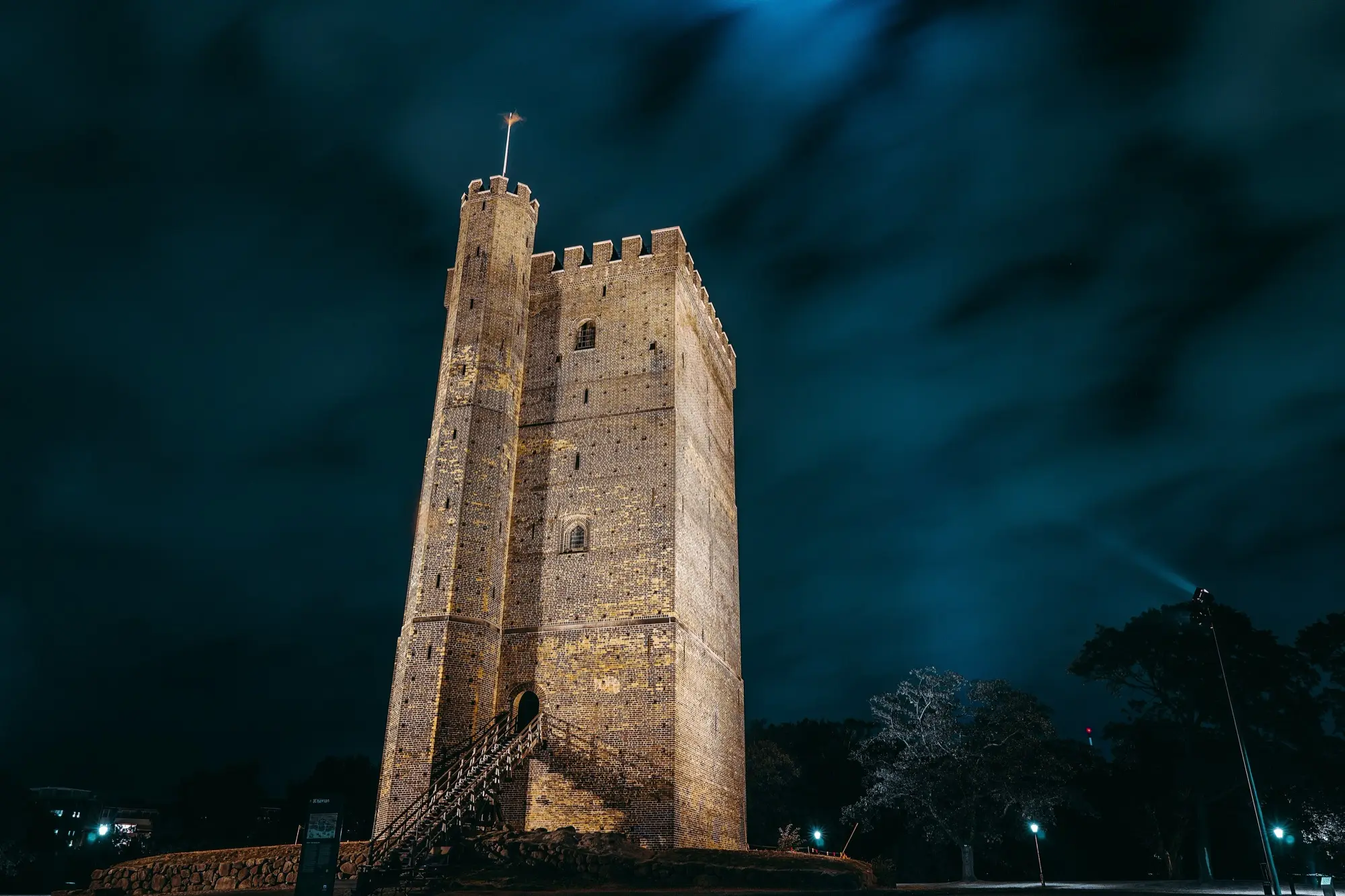

Helsingborg, Skåne's second city, sits on the narrowest part of the Öresund, 20 minutes by ferry from Helsingør in Denmark; see Kärnan, the 14th-century castle tower, St Mary's Church, the town hall, Sofiero Palace's 10,000 rhododendrons, Dunkers and Fredriksdal, then swim at the cold baths or cycle Kattegattleden.
Helsingborg in short
Helsingborg is Skåne's second-largest city after Malmö and the ninth-largest in Sweden. Located at the narrowest section of the Öresund sound separating Sweden and Denmark, the urban area is often described as "two countries, one destination". You can combine a visit here with trips further south, such as taking the Copenhagen to Malmö train or exploring Lund. It also serves as a base for touring wider Skåne.
| Sight | What it is | Key fact |
|---|---|---|
| Kärnan | Medieval tower | Built under Danish rule in the early 14th century |
| St Mary's Church | Parish church | Dates from the 12th century and rebuilt in Gothic style |
| Town hall | Civic building | Neo-Gothic design with a tall clock tower and stained glass |
| Sofiero Palace | Former royal summer residence | Home to more than 10,000 rhododendrons |
| Dunkers Kulturhus | Cultural centre | Designed by Kim Utzon |
| Fredriksdal | Open-air museum | Features historic farmsteads and costumed guides |
| Wallåkra | Stoneware factory | Produces pottery from local clay in a wood-fired kiln |
The ferry to Helsingør
Denmark is visible directly across the water from the waterfront. The passenger and vehicle ferry across the strait to Helsingør takes 20 minutes and runs frequently.
For centuries, Kronborg Castle in Helsingør and Helsingborg's castle guarded the narrow passage of the strait together. Today the crossing forms an easy international transit, popular for visitors taking day trips from Copenhagen through southern Sweden.
Kärnan, St Mary's and the town hall
Kärnan is a medieval brick tower that represents all that remains of the original Helsingborg Castle. It was built under Danish rule in the early 14th century. You can climb its internal spiral stairs to reach views overlooking the town roofs and the sea.
In the streets below, St Mary's Church (Sankta Maria kyrka) dates from the 12th century and was later rebuilt in the Gothic style. Nearby stands the neo-Gothic town hall (rådhus), marked by its tall clock tower and decorative stained glass windows.
Sofiero Palace
Sofiero Palace is a former royal summer residence located ten minutes from the centre of Helsingborg by bus. The estate includes landscaped gardens, indoor exhibitions, a restaurant, and an outdoor venue for summer concerts.
Every spring, more than 10,000 rhododendrons flower across the grounds of Sofiero, forming one of Europe's largest collections of the plant.
Dunkers, Fredriksdal and the ceramics district
Dunkers Kulturhus sits on the harbourfront. Designed by architect Kim Utzon, the facility holds exhibitions of art, photography, and local history, as well as spaces for live performance. Further inland, the Fredriksdal open-air museum preserves regional agricultural heritage through historic farmsteads, gardens, and costumed guides.
North-west Skåne is known as Sweden's ceramics district. At the Wallåkra stoneware factory, pottery is still made from local clay and fired on site in a traditional wood-fired kiln.
Beaches and cold baths
Helsingborg has a selection of central swimming areas. The city beaches include a palm-fringed sandy stretch directly in the centre and Fria Bad, which features an offshore water swing.
Year-round sea swimming is supported by three open-air cold bathhouses (kallbadhus): Pålsjöbaden, Kallis, and Rååbaden. The city hosts an official cold bath week each year in January.
Cycling and walking
Long-distance cycle infrastructure connects directly to the town centre according to Visit Sweden:
- Kattegattleden: Sweden's first national cycle route starts in Helsingborg and runs 395 km north along the west coast to Gothenburg.
- Sydkustleden: A regional cycling path covering 260 km, heading south towards Simrishamn.
For walking, Kullaberg nature reserve is located 40 km north of the city. The coastal reserve features rocky cliffs, sea caves, and marked hiking trails.
When to go
Each season brings different regional conditions:
- Spring: Arrives early in southern Sweden, bringing flowering yellow rapeseed fields across the surrounding countryside and rhododendron blooms at Sofiero.
- Summer: Peak season for using the city beaches, swimming at the baths, and attending open-air events.
- Autumn: The harvest period across local farms and regional vineyards.
- Winter: Characterised by quiet sea dips from the cold bathhouses followed by time spent in local cafés.
Coffee
Coffee company Zoégas has roasted coffee in Helsingborg since the 19th century. In the centre, Café 1886 has traded on the exact same spot for over a hundred years.