To get a CPR number in Denmark, you must arrive in the country, secure a place to live, and plan to stay for more than three consecutive months. You cannot receive a number before you arrive, and you must hold your residence permit or EU residence document before your municipality can register you. Once registered, your yellow health card follows by post with an assigned general practitioner, giving you access to public healthcare and digital ID.
Readers comparing identity systems across the Nordics will find that Denmark's civil registration number operates much like the Finnish personal identity code.
What a CPR number is and how it is built
Everyone who lives in Denmark must have a civil registration number, known as a CPR number (personnummer). The CPR number is needed for all contact with Danish authorities and other public and private institutions. A CPR number based on residence gives access to public healthcare.
According to the City of Copenhagen, the CPR number consists of ten digits. The first six digits represent your date of birth in the day-month-year format (DDMMYY), and the last four digits form a unique personal identification number. The final digit indicates gender: it is an even number for women and an odd number for men.
Who can get one, and when
To be registered in the CPR registry as a resident, you need a place to live and to stay for more than three months. Non-Nordic nationals also need a residence permit or registration certificate from the immigration authorities. You cannot be given a CPR number before you arrive in Denmark, even if you need one to open a bank account, rent a student room, or enrol in school.
Your formal registration date depends on when your permit was granted:
- If you hold a residence permit granted before entry and have a place to live, you are registered from the date of your entry into Denmark.
- If your permit is issued after entry, you are registered from the date the permit was issued.
Rules differ slightly for European citizens. International House Copenhagen states that an EU citizen can stay for up to six months without CPR registration and must apply for it after six months. However, the EU residence document is a separate step: an EU citizen expecting to stay for more than three months must apply for the EU residence document before those three months expire. A jobseeker has up to six months from entry to apply for the EU residence document.
If you will not live in Denmark but must pay tax there, you do not get a residential CPR number. Instead, you get a number from the Danish Tax Agency (Skattestyrelsen). If you later move to Denmark, that number is kept.
The order of steps, with the permit or EU document first
You must complete your immigration paperwork before you can register for a CPR number. The required order depends on your citizenship:
Non-EU citizens
A non-EU citizen needs a residence document or approval letter from the Danish Agency for International Recruitment and Integration (SIRI) or the Danish Immigration Service (Udlændingestyrelsen), a place to live, and a plan to stay for more than three consecutive months. You cannot begin the municipal CPR registration step without that permit in hand.
EU, EEA, and Swiss citizens
An EU/EEA/Swiss citizen must hold an EU residence document issued by SIRI before CPR registration. Applying for an EU residence document is not the same as applying for CPR registration. To get the document, you must first fill in the OD1A form before attending your SIRI appointment. On the day of your CPR appointment, the EU residence document must be no older than six months. This requirement applies to every EU citizen in the family, including children.
International House step-by-step guides require you to follow these steps strictly in order: assemble your documents, obtain your EU residence document, submit your online CPR application, and attend your in-person CPR appointment.
Where to register
When you move to Denmark, your municipality of residence (kommune) assigns your CPR number through its Citizen Service Office (Folkeregister or Borgerservice). Denmark has 98 municipalities. The national CPR administration does not assign CPR numbers itself.
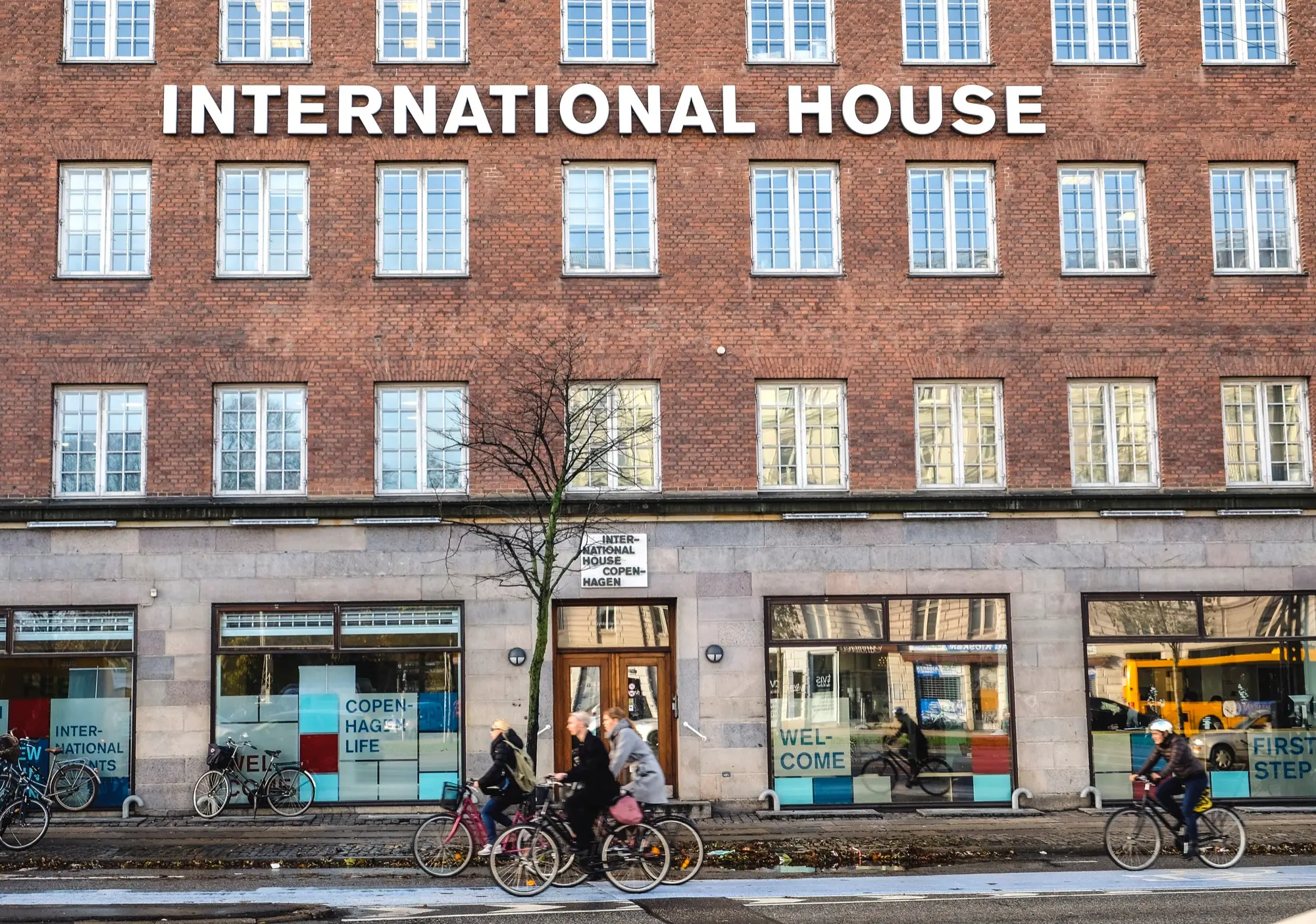
In Copenhagen and 37 partner municipalities, CPR registration for international citizens is handled by International Citizen Service (ICS East) at International House Copenhagen. Under International House Copenhagen rules, you cannot submit your CPR application earlier than four weeks before you arrive in Denmark. The municipality may require you to appear in person before registration takes place to verify that you have actually taken up residence.
Documents you need
When submitting your application, you must upload specific supporting documents:
- Non-EU applicants: The photo page of your passport, proof of accommodation in Denmark, and your valid work or residence permit.
- EU applicants: The photo page of your passport or both the front and back of your national identity card, your EU residence document, and proof of accommodation.
Proof of address must be a rental contract or a housing confirmation (boligbekræftelse). The document must be filled in completely with the full address, dated, and signed. If you are staying in a hotel for one month or more, you must provide the receipt along with a housing confirmation stating your room number.
If you are married, divorced, or widowed, you must submit the relevant certificate along with an official translation into Danish, English, or a Nordic language.
Families moving with children aged 0 to 17 face additional documentation requirements. A child moving with only one parent requires the other custodial parent's consent. A child moving to Denmark alone requires the consent of both parents.
How long it takes
International House states that the online application process may take two to three weeks. Once your application has been processed, you will receive an email containing a personal link to book your in-person CPR appointment. One appointment covers the whole application, and everyone included in the same case must attend together.
For non-EU citizens, the physical residence card is usually issued from the date of CPR registration. If your residence card has not arrived within six weeks, contact SIRI or the Danish Immigration Service.
The yellow health card and your doctor
Once you are registered in the CPR system, a health card (sundhedskort), commonly called the yellow health card, is sent to you automatically. The physical yellow card takes two to four weeks to arrive by post from your CPR registration date. If it does not arrive after four weeks, contact your local Citizen Service Centre.
Because the card is sent by standard post, your surname or a care-of (c/o) name must be clearly displayed on your letterbox. The card will not be delivered to an unnamed box.
+-------------------------------------------------------------+
|  SUNDHEDSKORTET                                             |
|                                                             |
|  CPR: DDMMYY-XXXX                                           |
|  Name: FIRSTNAME LASTNAME                                   |
|  Address: STREET NAME 1, APARTMENT                         |
|           POSTCODE CITY                                     |
|                                                             |
|  Læge / GP: DR. FIRSTNAME LASTNAME                          |
|             CLINIC ADDRESS, PHONE NUMBER                    |
+-------------------------------------------------------------+
Your yellow card displays your name, address, CPR number, and your doctor's name and clinic address. It serves as proof that you can get public medical treatment and is required to obtain MitID. You are automatically assigned a general practitioner (praktiserende læge) when you register for your CPR number. Because the GP is allocated the moment CPR registration is complete, you can see a doctor before the physical card arrives in your letterbox.
Once you have MitID, you can activate the 'Sundhedskortet' app on your phone, which serves as a fully valid digital health card. You can choose to use only the app.
If you wish to choose another doctor in Copenhagen, changing to a new doctor costs a fee of DKK 40. A replacement card costs DKK 40 in 2026. The card remains valid for as long as you live in Denmark and its printed details remain unchanged. If you live in the Capital Region and need non-emergency medical care on weekdays after 4 pm or at weekends, you must call the medical helpline at 1813.
What follows, your digital ID and an account for public payments
After you receive your CPR number, you need to set up digital access and state payments:
MitID
With your CPR number, you can create MitID yourself in the MitID mobile app if you have a phone capable of scanning passport chips and a biometric passport (or an EU/EEA identity card) bearing the gold camera symbol.
If your phone or ID cannot scan the chip, you must book an appointment at Citizen Service, bring physical ID, and answer security questions. International House Copenhagen also books MitID appointments. For residents who have lived in Denmark for less than three years, Copenhagen recommends bringing an attesting witness. This witness must be at least 18 years old, carry photo ID, and hold a MitID created at least 30 days prior.
NemKonto
NemKonto is the designated bank account into which Danish public authorities transfer money, such as tax refunds. A NemKonto is simply an ordinary bank account that you already hold. You decide which of your accounts serves as your NemKonto. You can view or change this selection yourself in the online self-service using MitID, or request that your bank assign it.
For more on settling into the country, explore our guide to living in Denmark.
Previous numbers, tax numbers and a forgotten CPR number
Several rules cover previous stays and alternative administrative numbers:
- Returning to Denmark: Having lived in Denmark in the past does not reactivate your CPR number automatically. You must submit a fresh application for CPR registration upon your return.
- Administrative CPR numbers: An administrative CPR number assigned by SIRI or the Danish Immigration Service is used solely to process a permit application. It only becomes an active residential CPR number once you register at a Danish address with a municipality.
- Tax numbers: A personal tax number issued to short-term workers or cross-border commuters serves tax purposes only. If you subsequently relocate your home to Denmark, that tax number is converted into a CPR number.
- Bank accounts: The CPR Act provides no legal basis for assigning a CPR number solely to open a bank account. You must prove your identity to financial institutions using other documentation.
If you have forgotten your CPR number, it can be found on your physical health card, inside your tax documents, or directly on the Borger.dk portal if you have active MitID access. In Copenhagen, obtaining physical proof of your CPR number from Citizen Service costs 95 kroner in 2026. If you request this certificate from abroad, it is sent by post within three weeks.