Denmark does not issue a standalone work visa. If you come from outside the Nordic countries, the EU/EEA or Switzerland to work, you must apply for a combined residence and work permit before you start. Your permit is linked directly to your job offer and the specific scheme under which you qualify.
There is no separate work visa - what you apply for
If you want to work in Denmark or stay for longer than 90 days, you must apply for a residence permit. Citizens of countries outside the Nordic countries, the EU/EEA and Switzerland must apply for a residence and work permit. Citizens of the Nordic countries, the EU/EEA and Switzerland do not need to apply for a residence and work permit.
An EU Blue Card from another EU country does not exempt you; you must still apply for a Danish residence and work permit. The Danish Agency for International Recruitment and Integration (Styrelsen for International Rekruttering og Integration, or SIRI) calls anyone from outside the Nordic countries, the EU/EEA and Switzerland a third-country citizen, and living in Denmark requires a valid residence permit of the correct type. Readers looking at other Nordic destinations will find a different system outlined in the guide to the Finland work permit.
Who handles your case
You apply through either the Danish Immigration Service (Udlændingestyrelsen) or SIRI. SIRI issues residence permits to foreign nationals who want to work or study in Denmark, and it processes residence and work permit applications from third-country citizens. Applications for permanent residence, asylum and family reunification are processed by the Danish Immigration Service, not SIRI.
SIRI publishes service goals for maximum case processing times on New to Denmark. On 24 April 2026, the Danish embassy in Kenya reported that the case processing of agricultural-sector work permits had been temporarily suspended for applicants educated in Kenya, Uganda and Tanzania.
The pay limit scheme - a salary of DKK 552,000 or more (2026)
The Pay Limit Scheme (Beløbsordningen) requires a job offer with an annual salary of at least DKK 552,000 for 2026; this amount is adjusted annually on 1 January. The Pay Limit Scheme does not require specific educational qualifications or a job in a particular field. Those comparing high-earner pathways across the region can review the Finland EU Blue Card and specialist permit.
Only a cash salary, including fixed supplements, labour-market pension contributions from the employer and employee, and paid holiday allowance, counts towards the pay limit. Benefits such as a paid canteen, a free car, a phone, internet access or housing do not count towards the pay limit.
The salary must be paid into a Danish bank account in your own name, which must be opened within 180 days of the permit being granted (or of entering the country, if you enter after it is granted). Under the Pay Limit Scheme, employment of 4 years or more normally results in a permit valid for 4 years; shorter employment results in a permit valid for the duration of the employment. If you apply from abroad, you can receive a permit valid from 1 month before you start work, provided you declare you can support yourself and any accompanying family; otherwise, it is valid from 14 days before.
The supplementary pay limit scheme - DKK 446,000 or more
The Supplementary Pay Limit Scheme requires a job offer of at least DKK 446,000 a year for 2026, which is adjusted annually on 1 January. This is a separate scheme with conditions that do not apply to the main Pay Limit Scheme.
The job must have been posted on both Jobnet and the EURES portal for at least 2 weeks before you apply; other job sites do not count. The job must not have been posted more than six months before you apply, and the employer must declare the posting under oath, which SIRI spot-checks.
You must not have received a fine of DKK 3,000 or more under the Criminal Code, the Aliens Act and certain other laws in the 2 years before applying, or afterwards. The supplementary scheme requires full-time work, which is typically 37 to 40 hours a week. Under this scheme, employment of 5 years or more normally results in a permit valid for 5 years.
The positive lists - jobs Denmark is short of
Denmark operates two lists of shortage occupations: one for higher education and one for skilled work.
Positive list for people with a higher education
The Positive List for People with a Higher Education includes professions experiencing a shortage of qualified personnel; a job offer in one of these professions allows you to apply. Your educational background must meet the requirements stated for the job title and be relevant to the role. Job titles on the higher-education list include Medical Doctor, Nurse, Software Backend Developer and Electrical Engineer, each with a date until which it remains on the list.
The higher-education list is updated based on labour-market monitoring on 1 January and 1 July, and by regional councils and unemployment funds, normally on 1 April and 1 October. Job titles added by a Regional Labour Market Council apply only in the municipalities covered by that council. A job title cannot be removed from the list until at least two years after it was added.
Positive list for skilled work
The Positive List for Skilled Work includes skilled professions experiencing a shortage of qualified personnel in Denmark. Job titles on the skilled-work list include Electrician, Chef, Hairdresser and car mechanic. The skilled-work list is updated twice a year, on 1 January and 1 July.
For the skilled-work list, SIRI checks the salary against Statistics Denmark's wage register, and a collective agreement alone does not inherently prove it meets Danish standards. In addition, the employer must have fulfilled its obligations to train apprentices.
Fast-track - when your employer is certified
The Fast-track scheme makes recruiting faster and more flexible for SIRI-certified companies, and it allows you to work both in Denmark and abroad. To use this scheme, you need a job with a company that is registered in Denmark and certified by SIRI. Under Fast-track, your employer handles the application using a power of attorney provided by you.
Fast-track has five tracks: pay limit, supplementary pay limit, short-term, researcher and educational. The pay limit track uses the same minimum salary of DKK 552,000 (2026) as the Pay Limit Scheme.
Fast-track's Quick Job Start feature allows you to begin working before SIRI would normally issue a decision; SIRI states this process typically takes 10 days:
- If you do not require a visa, SIRI can issue a provisional work permit at an appointment shortly after your employer applies.
- If you require a visa, SIRI typically makes a decision about 10 days after receiving a complete application. You must have your biometrics recorded at the nearest Danish mission or visa application centre no later than 14 days after your employer applies.
The Fast-track short-term track allows a maximum of 90 days of residence within the past 365 days, which can be split across several stays.
Fees and processing times by scheme
SIRI's processing fee is DKK 6,810 for the Pay Limit Scheme, the Supplementary Pay Limit Scheme, both Positive Lists and Fast-track.
Processing times vary across the different schemes:
- Pay Limit Scheme: The normal processing time is 1 month, or up to 3 months if more information is needed.
- Supplementary Pay Limit Scheme: The normal processing time is 2 months, or up to 5 months if more information is needed.
- Higher-education Positive List: The normal processing time is 1 month, or up to 3 months if more information is needed.
- Skilled-work Positive List: The normal processing time is 3 months, or up to 4 months if more information is needed.
- Fast-track: The normal processing time is 1 month, or up to 2 months if more information is needed.
- Fast-track supplementary pay limit track: The normal processing time is 2 months, or up to 4 months if more information is needed.
Applying step by step - case order ID, fees and biometrics
Once you have submitted your application and paid the fee to the Danish Immigration Service or SIRI, you will receive a case order ID, which you must provide along with your documents and biometrics. Every residence or work permit application requires documentation and biometrics. If you are outside Denmark, you must also pay a fee to the Danish mission handling your application, as detailed on the Ministry of Foreign Affairs portal.
If you applied online, you must present a printout of the confirmation showing the case order ID, your passport, a photograph and the receipt for the embassy fee at your appointment. Applicants in Denmark must book an appointment with SIRI to submit an application or have their biometrics recorded, bringing the reference number and confirmation email from the online form. You must present your original passport, which must remain valid for three months beyond your intended stay.
The embassy fee for a residence permit application, such as a work permit, is DKK 1875. This is paid via the Ministry of Foreign Affairs webshop and is in addition to the fee charged by SIRI or the Danish Immigration Service. Since 1 January 2025, Turkish nationals covered by the Association Agreement are exempt from the embassy fee. Submitting your application at a Visa Application Centre (VFS) incurs an additional service fee on top of the SIRI or Immigration Service fee and the embassy fee. In locations where Norway represents Denmark, the Norwegian fee is higher than the Danish fee and cannot be paid via the webshop. The mission may request further documents or a personal interview after you have submitted your application.
Waiting for the decision and travelling to Denmark
Processing times at the Danish Immigration Service or SIRI vary depending on the type of residence permit applied for. Once a decision has been made, the Danish mission or the Visa Application Centre will contact you on behalf of the authorities.
If you apply from outside Denmark, you must normally have been granted the permit before you travel. If you are not a visa-free national and require a D-visa to enter, you cannot travel to Denmark until both the permit and the D-visa have been granted. If an application submitted within Denmark is refused, the applicant is responsible for their own travel and associated costs.
Changing or losing your job
A pay limit permit is linked to your job, and you must always inform SIRI if you lose or change your job. Under the Pay Limit Scheme, a promotion or a change of workplace within the same company does not require a new permit, provided your salary remains at or above the pay limit. However, taking a job with a new employer requires a new permit, and a secondary job requires a separate permit. If you find a new job while working in Denmark, you can begin working as soon as the new application is submitted, before SIRI has made a decision.
If you lose your job through no fault of your own, you can apply for an additional 6-month job-seeking permit no later than two days after your employment ends; however, you are not permitted to work while holding this permit. Job-seeking permits are not available following a permit under Fast-track's short-term track or supplementary pay limit track.
Your permit will lapse if you give up your Danish address or stay abroad for more than 6 consecutive months, unless you are granted a dispensation. The permit allows you to stay in the Schengen area for up to 90 days within any 180-day period, but it does not entitle you to work in other Schengen countries.
Bringing your family
A work permit allows your spouse, registered or cohabiting partner and children under 18 living at home to obtain permits as well. Unmarried partners must have lived with the sponsor for at least 1.5-2 years before applying. Family members must live at the same Danish address as the sponsor.
A permit for an accompanying family member of an employee generally includes the right to work, meaning no separate work permit is required. SIRI's processing fee for an accompanying family member of an employee is DKK 3,080. The normal processing time for accompanying family members is 2 months, or up to 3 months if more information is needed. SIRI's family page states that certain applications from family members of herdsmen and farm managers are currently suspended.
Short work trips without a permit
Since 17 November 2023, employees of overseas companies affiliated with a Danish company have been able to work in Denmark for short periods without a work permit. The company in Denmark must have at least 50 employees, as recorded in the CVR register (the central business register).
The employee can work for two separate periods within 180 days, each lasting a maximum of 15 working days. They must stay outside Denmark for at least 14 days between these two periods, and any unused days do not carry over. In the specific industries named in the rules, this exemption covers only management work or roles requiring knowledge at the highest or intermediate level; it does not apply to skilled or unskilled manual work.
After you arrive - CPR number and residence card
To register for a CPR number as a non-EU citizen, you need a residence document or approval letter from SIRI or the Danish Immigration Service, a place to live and a planned stay of more than three consecutive months. For the CPR application, you must upload your passport's photo page, proof of accommodation in Denmark and your valid work or residence permit.
The residence card is usually issued from the date of your CPR registration; if it has not arrived within six weeks, you should contact SIRI or the Danish Immigration Service. You must support yourself and your family, and you may not receive benefits under the Active Social Policy Act (Lov om aktiv socialpolitik); claiming such benefits can result in the revocation of your permit.
EU/EEA, Swiss and Nordic citizens
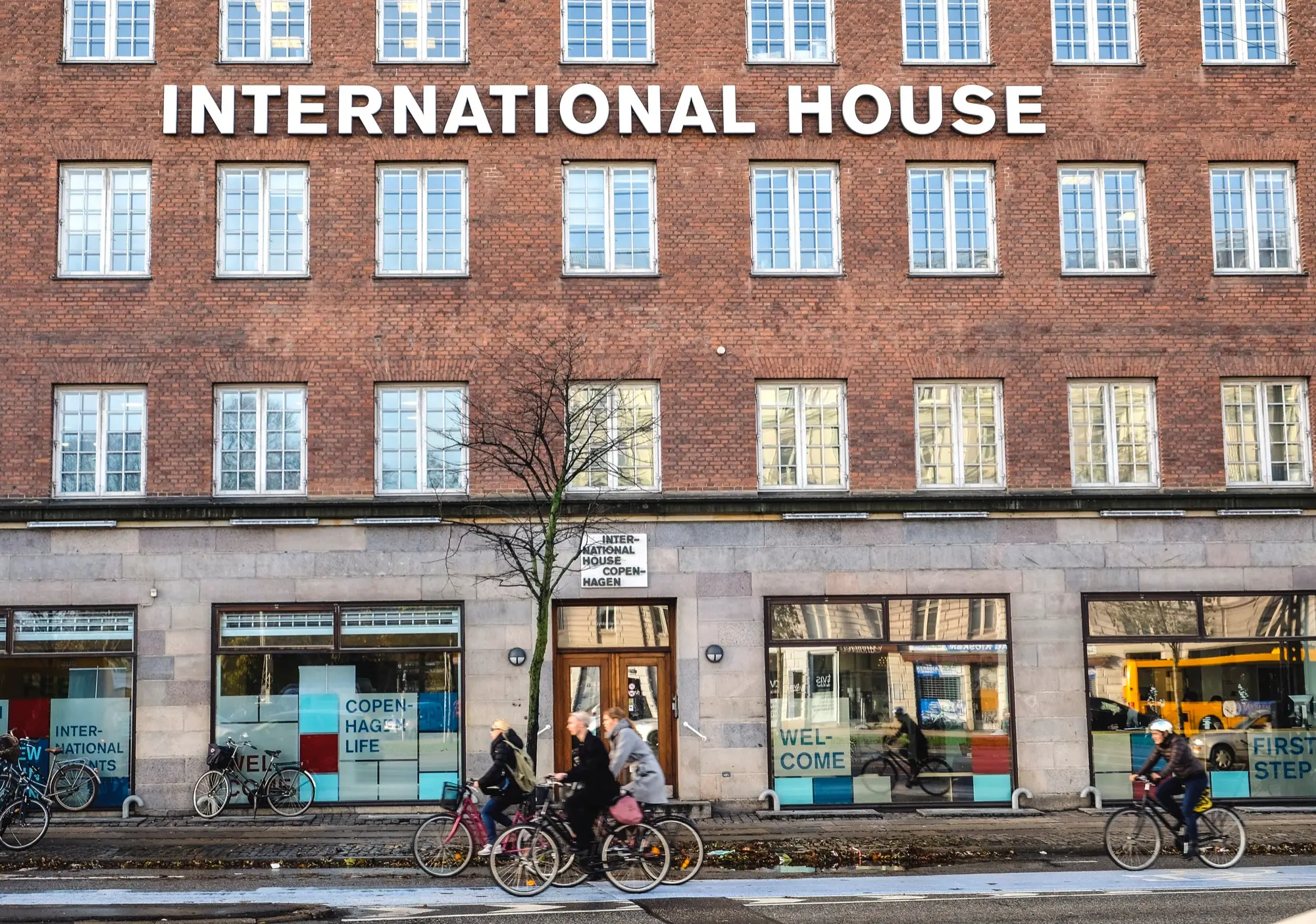
EU, EEA and Swiss citizens can stay for up to 3 months without a residence document; for a longer stay, they must apply for an EU residence document before these three months expire. An EU job seeker can stay for up to 6 months from the date of entry before having to register. You can apply for the EU residence document by booking an appointment with SIRI at its main office or at International House Copenhagen.
Employers may legally hire EU citizens who are not yet registered with a CPR number, and documented employment is one of the conditions for registering as a worker under EU law. If you are exploring employment options, Workindenmark is the official Danish website for international recruitment and job seeking, available in English. For wider context on life in the region, consult our overview of the Nordic countries.