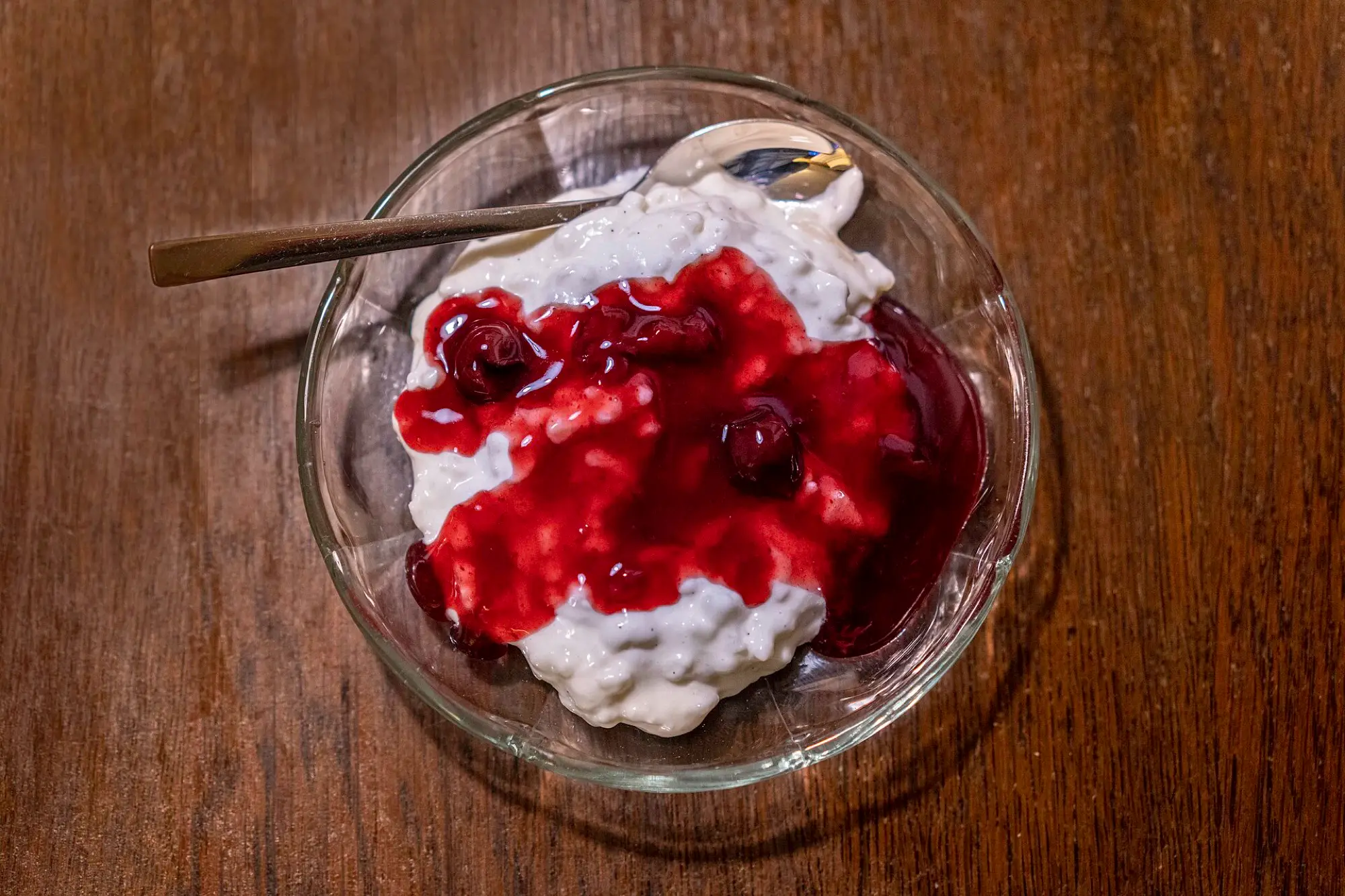

Christmas in Denmark happens on Christmas Eve, 24 December, with roast pork and duck, risalamande (a rice pudding topped with cherry sauce) with one whole almond, and the family dancing round a tree lit with real candles before the presents. The season starts on J-dag in November and runs through julefrokost lunches, the advent candle, and Lucia on 13 December.
November: J-dag and Mortensaften
J-dag, short for julebrygsdag (Christmas brew day), was introduced by the Tuborg brewery in 1990 to launch its Christmas beer. It falls on the first Friday of November every year, starts at 8:59 pm, and more or less starts the Christmas season, in bars and pubs across the country. According to VisitCopenhagen, more than 220 Danish breweries make around 350 Christmas beers, including non-alcoholic and light ones.
Danes mark Saint Martin's Eve, Mortensaften, on 10 November with roast goose, or more often roast duck, potatoes and gravy.
Advent: the candle, the calendars and the baking
VisitDenmark says Danes often burn an advent candle for one hour a day through December. This advent calendar candle counts down the days to Christmas Eve. DR's Christmas calendar for 2026 is Den Store Julefortælling; DR's drama chief says the julekalender (Christmas calendar) gathers children and families around one shared story through the whole month.
Old family recipes come out for baking such as brunkager and klejner. Outside the home, Danes walk through Christmas markets with gløgg (hot mulled wine) and a plate of at least three æbleskiver (little fried doughnuts with icing sugar). Other Christmas foods listed by VisitDenmark include æbleskiver, Christmas beer, gløgg, and candied almonds.
December: julefrokost
December calendars fill with julefrokost (Christmas lunch) gatherings for friends, colleagues and family, sometimes starting as early as November. During these meals featuring traditional Danish food, smørrebrød (open sandwiches) and snaps are the stars.
13 December: Lucia
On 13 December, Lucia processions can be seen all over the country. Santa Lucia comes on 13 December, dressed in white with a crown of candles, leading a procession of girls in white. Instead of nativity plays, children take part in the parade at school or locally.
Historical records from the National Museum of Denmark note that the Lucia procession is a relatively new custom in Denmark. It was brought from Sweden and took off in the years just after the occupation, using the same melody sung in both countries. Lucia's name is linked to lux, the Latin word for light, and until the calendar reform of 1700 the night before Lucia's day was the longest of the year.
The Christmas seal and the Christmas hearts
The Christmas seal, or julemærket, was the idea of the postal clerk, later postmaster, Einar Holbøll in 1903. The world's first Christmas seal came out the year after, and it first cost 2 øre. The 2026 Christmas seal is number 123 in the series issued every year since 1904. Drawn by Martin Jørgensen, it shows 46 children holding hands around a classic Christmas heart made of two hands woven together. The seal is sold online and in most Danish supermarkets and bookshops, and the profit goes to the work with children at the Christmas seal homes. The Christmas seal foundation says its homes have helped vulnerable children in Denmark for more than 100 years, with the first two homes opening in 1912.
The National Museum says paper roses of tissue paper were popular, and woven hearts, baskets and cones for the sweets were indispensable. According to Museum Odense's Andersen site, the oldest known woven Christmas heart was made by Hans Christian Andersen for the Christmas tree at H.C. Ørsted's home. Andersen's city is Odense.
The tree: real candles, and red and white
The custom of decorating a spruce first came to Denmark in 1811, and it took decades before a tree at home became common. Andersen published his fairy tale The Fir Tree (Grantræet) in 1844. The decorated tree came from Germany and at the start of the 1800s was kept mostly by the nobility and the middle classes, spreading to ordinary homes during the century. Glass decorations from Nuremberg were exported to Denmark on a large scale.
After the war of 1864, when South Jutland came under German rule and the Danish flag was banned, Danish-minded families there decorated their trees in red and white, with paper roses, small paper Danish flags and red and white ribbons. VisitDenmark says the Christmas tree is a spruce decorated with real candles.
24 December: Christmas Eve in order
The evening of 24 December follows a set sequence:
- Dinner: Families sit down for an elaborate meal that lasts a good few hours, serving roast pork and duck, boiled potatoes, red cabbage and gravy.
- Dessert and the almond: The meal ends with risalamande, a rice pudding topped with cherry sauce that hides one whole almond. Whoever finds it gets a prize or an extra present, which is usually a marzipan pig.
- Dancing round the tree: After dinner, everyone goes to the living room to dance round the tree singing carols, each person choosing one, while holding hands. Some families do this before dinner instead.
- Presents: Presents are opened afterwards, often late into the night. Father Christmas is known as julemanden, helped by nisser (a sort of naughty elf). He brings the children's presents on 24 December and is usually a member of the family dressed in red.
If you are in Denmark for Christmas
Visitors spending December in Copenhagen should note that Christmas Eve, 24 December, is the main family celebration in Denmark. Many shops, restaurants, museums and attractions close early or stay closed. More places reopen on 25 and 26 December, though open restaurants may need booking ahead.
For example:
- The National Museum of Denmark is closed on 24, 25 and 31 December.
- Rosenborg Castle is closed on Thursday 24 and Friday 25 December 2026, and open 10.00-16.00 on Saturday 26 December.
Outside of closure dates, the National Museum's Christmas exhibition, The Dream of Christmas, sets two Danish living rooms side by side, one from 1976 and one from 2026, each with a family at a traditional Christmas dinner, and has a nisse hideaway for small children behind a giant advent calendar. The exhibition's café serves æbleskiver, warm gløgg and risalamande. The phrase for merry Christmas in Danish is god jul.
New Year's Eve: the King's speech and the jump
The King gives his New Year address every year on 31 December at 6 pm, broadcast live on television and radio from Frederik VIII's Palace. Christian X gave the first New Year speech broadcast on radio on 1 January 1941.
VisitCopenhagen says the evening often begins with the King's speech at 6 pm, which many Danes watch at home before dinner. Later, people gather round the television for the New Year's Eve broadcast from Copenhagen's City Hall Square, toast the new year with champagne and eat kransekage (a Danish marzipan cake). Danes stand on chairs just before midnight on New Year's Eve and jump into the new year as the clock strikes 12, since forgetting is said to bring bad luck.