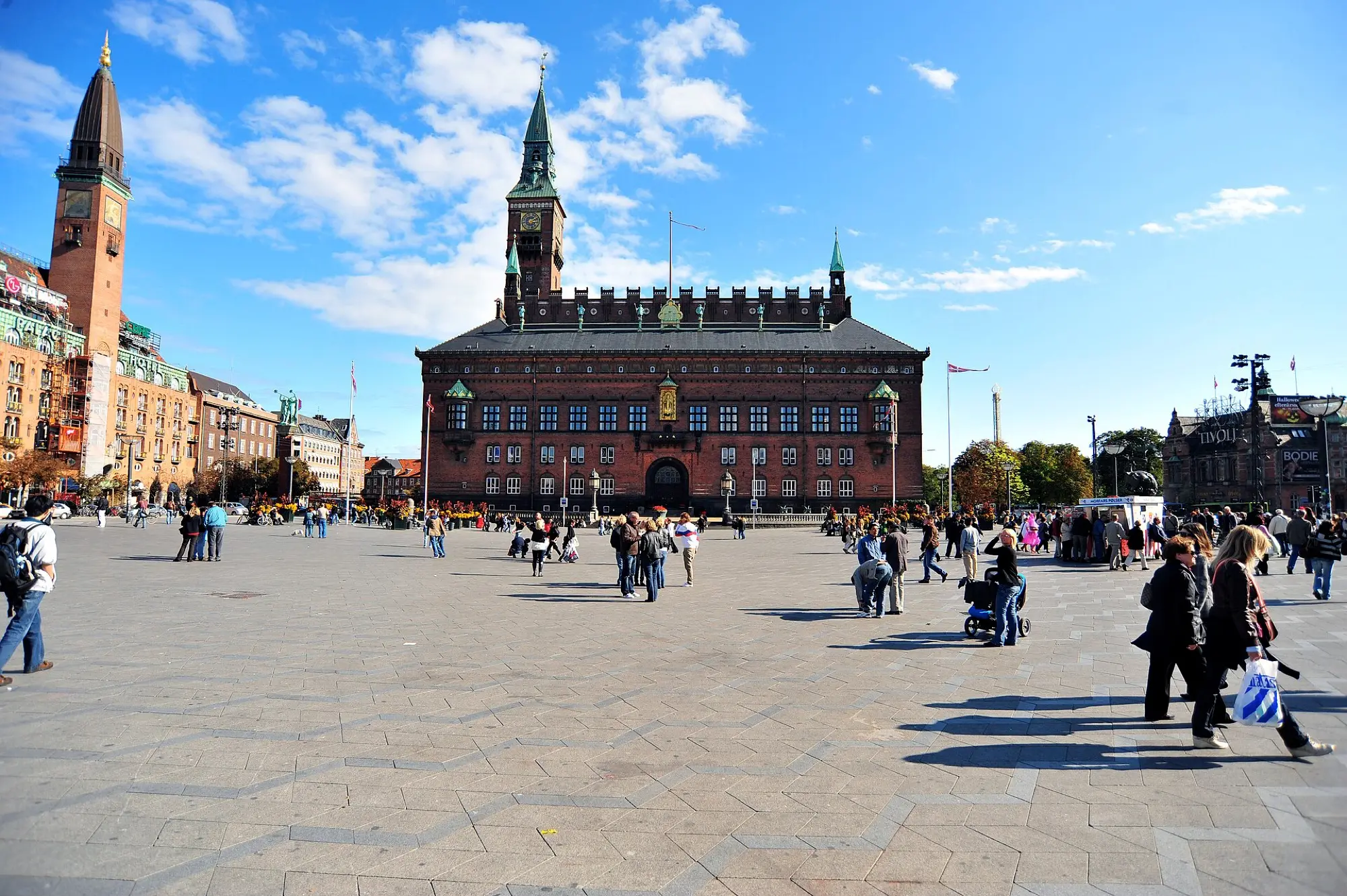

Yes, by the official accounts. The UK Foreign Office calls crime levels generally low, with pickpockets and bag-snatchers operating in crowded parts of Copenhagen. The US rates Denmark level 2 (exercise increased caution) because of terrorism, and PET puts the terror threat at significant, level four of five. Most risk to a visitor is theft, traffic and the sea.
What the official advice says
Visit Copenhagen, the city's official tourism organisation, says Copenhagen is in general a safe city to visit but that you should take the same precautions as in any other city.
The UK Foreign Office says crime levels in Denmark are generally low, but pickpockets and bag-snatchers operate in crowded areas, mainly in Copenhagen. The UK Foreign Office's travel advice for Denmark, which also covers the Faroe Islands and Greenland, was last updated on 11 August 2026.
Crime in the official figures
Statistics Denmark counts 448,740 reports of criminal offences to the police in 2025, and 155,398 reports in which charges were laid. The count covers criminal-code and special-act offences reported to the police, not only crimes against people. Statistics Denmark last updated the reported-offences figures on 19 February 2026 and plans the next update for 19 February 2027; the data come from the police's central register.
Statistics Denmark counts 37,343 female and 28,670 male victims of reported offences against the person in 2025, that is crimes where the victim was in direct contact with the offender.
Pickpockets and trick thieves in Copenhagen
The FCDO names Copenhagen Central Station, Nørreport station, Strøget, Christiania, Nyhavn, Kongens Nytorv and Copenhagen Airport as places where pickpocketing and bag-snatching are common, and says thieves also work hotel lobbies, cafés, restaurants and crowded public transport.
Visit Copenhagen says to watch for pickpockets around Copenhagen Central Station, City Hall Square and the start of Strøget, and that every summer the municipality and the Copenhagen Police run a campaign against pickpockets.
In May 2024 the Copenhagen Police said its figures show that pickpocketing happens every single day, in parks, queues, shops, shopping streets and at public transport stops. On 16 June 2026 the Copenhagen Police said trick thefts usually rise a little in the summer months, that thieves often target tourists, and that its English flyer for tourists warns about the paper trick and the dance trick.
The Copenhagen Police said in May 2024 that some pickpockets work in pairs, one distracting you while the other steals, and that it has seen thieves press the emergency stop on station escalators and steal in the confusion.
The Copenhagen Police's advice:
- Keep pockets and bags closed and valuables in an inside pocket or a zipped bag.
- Shout if you notice a theft, which often scares the thief off.
- At a café, watch your phone and belongings, because thieves come up with a card or a sheet of paper to distract you so they can steal valuables lying on the table.
- Be wary of anyone who insists on dancing with you, hugging you or carrying your luggage.
If you are the victim of a trick theft or pickpocketing, the Copenhagen Police ask you to call the police straight away on the service number.
Scams to know
Visit Copenhagen says that on a few rare occasions tourists have been scammed by fake police officers who demanded on-the-spot fines or frisked and robbed them. If a police officer approaches you, ask to see identification, and you can always call the police on 114, or 112 if it is urgent.
The Copenhagen Police advise you always to cover your PIN when you pay by card.
The FCDO advises keeping an eye on your luggage, including in the overhead rack, on trains on the Copenhagen Airport to the city route.
At night
Visit Copenhagen says Strøget, City Hall Square and Gothersgade can be crowded at night, especially at weekends.
The FCDO advises taking extra care in Christiania and Nørrebro, particularly late at night, because there have been some instances of gang violence there. You can read more about these areas by day in our guide to Copenhagen neighbourhoods.
Christiania and Pusher Street
Visit Copenhagen says illegal drug dealing in Christiania has raised safety concerns for visitors, and that the community and the authorities have worked together to improve safety; it advises against going to Christiania for illegal substances.
On 6 April 2024 Christiania's residents dug up the cobblestones of Pusher Street, which Visit Copenhagen describes as a symbolic gesture to mark the end of the open drug market there.
VisitDenmark says importing, exporting, selling, buying, receiving, making and possessing drugs are all criminal offences in Denmark, and cannabis counts as a drug. The FCDO says illegal drugs, cannabis included, are strictly prohibited even in small quantities, and you should expect long jail sentences of up to 10 years and heavy fines.
The terror threat
In its assessment published on 29 May 2026, the Danish Security and Intelligence Service (PET) said the terrorist threat to Denmark remains at the level of significant, which is level four out of five. PET said state actors, especially Iran, have had a growing impact on the terrorist threat, using criminal networks, and that the threat landscape in Denmark may change at very short notice.
The FCDO safety and security advice says terrorist attacks in Denmark cannot be ruled out and could be indiscriminate, including in places foreigners visit.
On the date this page was checked, the US Embassy in Denmark showed the State Department's travel advisory for the Kingdom of Denmark at level 2, exercise increased caution, due to terrorism.
Laws that catch visitors out
VisitDenmark says you may carry a knife in public only for a recognised work or leisure use; a pocket knife on a picnic is legal, but the same knife on a night out or in crowded public places is not.
VisitDenmark says self-defence sprays such as CS gas are illegal in Denmark.
The FCDO says it is illegal to wear clothing that conceals your face in a public place in Denmark, with exemptions such as face masks for health reasons; the fine is 1,000 krone and can rise if you do it again.
Traffic and cycling
Statistics Denmark counts 2,473 road traffic accidents with personal injury and 143 people killed in road traffic accidents in Denmark in 2025.
The FCDO says many bicycle accidents happen when pedestrians do not give way to bicycles, and that electric scooters are subject to road traffic rules, so riding one under the influence of alcohol can be prosecuted as drink-driving. For drivers, the FCDO says cyclists often have the right of way, so always check cycle lanes before turning right.
The Danish Road Safety Council says bike lights are required from sunset to sunrise and when fog, rain or snow reduce visibility, and must be clearly visible from at least 300 metres and from the side. The Danish Road Safety Council gives the fine for cycling without lights as DKK 700.
Beaches and swimming
VisitDenmark says many Danish beaches have lifeguards in the summer months, in a network of towers run by the Tryg Foundation, local authorities and others and staffed by the Danish Swimming Federation's lifeguards.
TrygFonden's lifeguards say a red and yellow flag means the lifeguard post is open, and two red and yellow flags at the water's edge mark the area they recommend you swim between; some beaches use a green flag for the same thing. A yellow flag means take extra care because of waves, current, offshore wind or jellyfish; a red flag means the lifeguards advise against swimming because conditions can be life-threatening.
TrygFonden's lifeguards say a rip current (revlehul) is a gap in the sandbars where water flows back out to sea; it does not pull you down, it can form anywhere on the Danish coast where there are sandbars, and you can often spot one by fewer or no breaking waves and foam.
If you are caught in a rip current, do not fight it, stay calm and swim sideways along the beach before heading in; if you see someone else in one, do not swim out, but alert a lifeguard or, if there is none, call the emergency number, and throw them something that floats.
Most Danish beaches have a green sign with a unique rescue number to give the emergency call centre if there is an accident, and 67 beaches have safety signs that warn of rip currents or water that gets deep quickly. TrygFonden's five bathing rules: learn to swim, never go in the water alone, read the wind and the water, get to know the beach, and never lose sight of children; offshore wind quickly carries inflatables and paddleboards out to sea.
Emergency numbers
- 112: Denmark's number for life-threatening emergencies (police, ambulance and fire). The Danish police list 112 as the alarm number.
- 114: For the police when it is not an emergency. The Danish police list 114 as the service number.
- Medical services: VisitDenmark says that for injuries or sudden illness you can speak to a nurse or doctor or go to a hospital emergency department, and lists the regional numbers 1813 for the Capital Region (Copenhagen) and 1818 for Region Zealand.