
Unusual places to stay in Denmark include a one-room hotel in an old harbour crane, a one-room hotel above a coffee shop, treetop cabins, a castle with ghosts, two prison hotels, a floating hotel, glamping beside a safari park's elephants, a lighthouse cabin on Møn, an Iron Age camp and Denmark's wild shelters.
A one-room hotel in a harbour crane
VisitDenmark notes that Copenhagen's Nordhavn harbour has possibly the world's first one-room design hotel built inside an old coal crane. Named TheKrane, it offers a car, bicycles and a spa for its guest.
One room above a coffee shop in Vesterbro
Hotel Central, which VisitDenmark calls the smallest hotel in the world, is a one-room hotel set above a tiny coffee shop in the Vesterbro neighbourhood of Copenhagen. Because the entire property consists of just a single bedroom, VisitDenmark advises booking in advance to secure a stay.
Løvtag treetop cabins
Løvtag treetop cabins sit high in the trees in North Jutland and on the island of Bornholm. To locate these areas within the wider country, you can consult a map of Denmark. VisitDenmark says the cabins offer views over Mariager Fjord. The structures are built mainly of heat-treated wood and are designed around living trees.
Dragsholm Castle and its ghosts
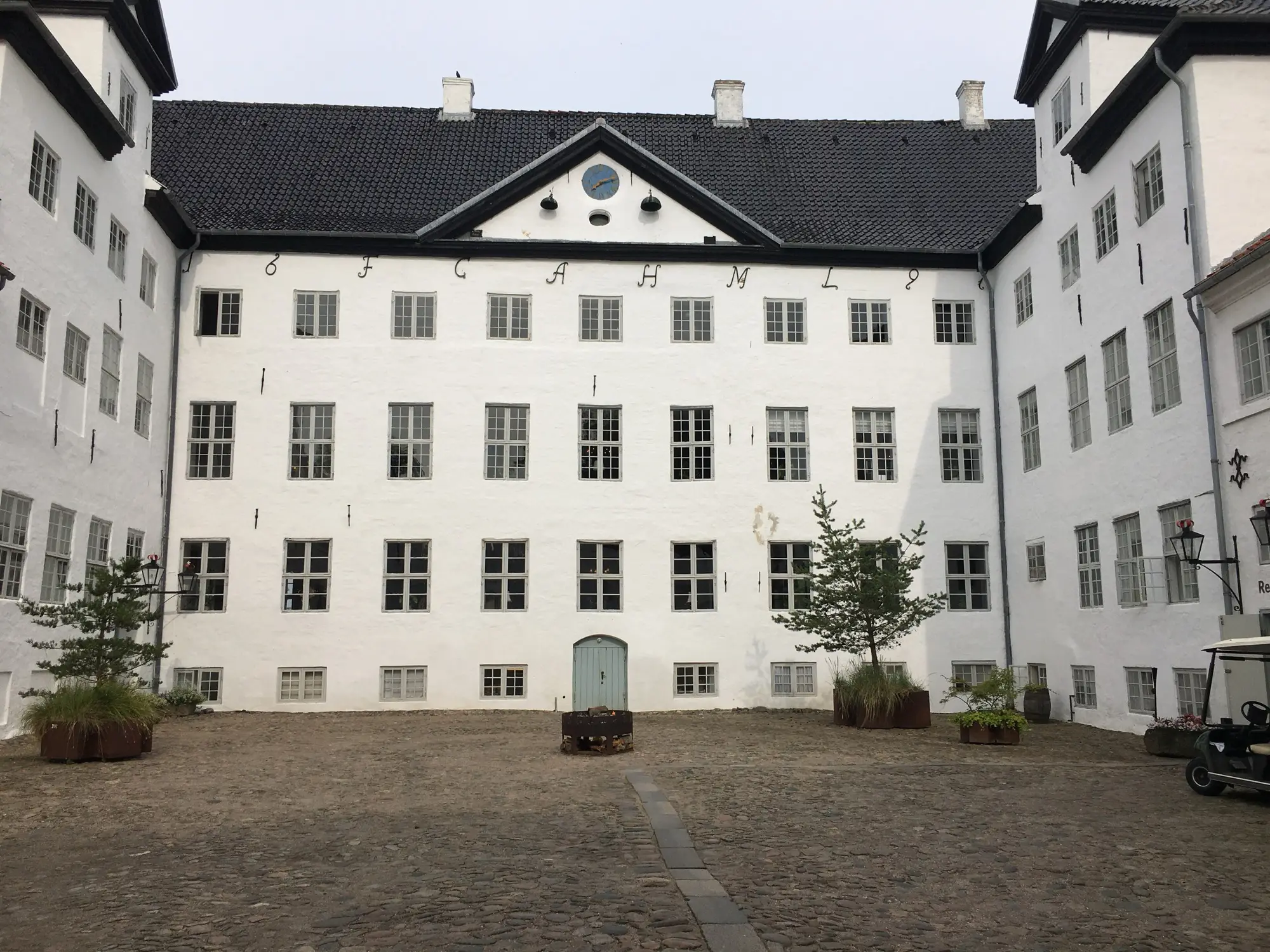
Dragsholm Castle near Odsherred in west Zealand is run as a boutique hotel. Dragsholm Slot describes itself as a castle with 800 years of history. According to VisitDenmark, the property has three ghosts, including one known as the Grey Lady.
Two prison hotels: Ribe and Horsens
Historic cells have been converted into guest accommodation in two different towns:
- In Ribe, which VisitDenmark calls Denmark's oldest town, the cells of the old jailhouse have been turned into modern hotel rooms.
- At Sleepin Fængslet (the prison) in Horsens, you can stay in one of 22 original jail cells. The rooms retain prisoner graffiti on the walls, and the original cell radios are still working.
CPH Living, a floating hotel
CPH Living is a floating hotel moored in the centre of Copenhagen's harbour. All 12 double rooms have panoramic views of the harbour and the city centre. The side of each room facing the water is a glass wall. Guests share a large rooftop terrace with views of the skyline and harbour, and the entire hotel is non-smoking.
Also on the water in the capital is Kaj Hotel. VisitDenmark says Kaj Hotel is a wooden boathouse floating on two pontoons, complete with its own private boat berth.
Glamping with elephants, wolves and bears
Several animal parks across the country offer overnight stays:
- At the Knuthenborg estate, which VisitDenmark calls Scandinavia's largest safari park, you can stay in a luxury tent with a private porch looking over the savannah. Four former circus elephants live on this savannah ground. Knuthenborg Safari Park also offers overnight stays in Knuthenborg Camp.
- At the Scandinavian Wildlife Park near Aarhus, you can sleep in a lavvu (a traditional Sámi tipi). Overnight visitors wake to the sound of the wolves and bears, which are housed in a different part of the park.
A lighthouse cabin on the cliffs of Møn
At the top of the chalk cliffs on the island of Møn, a small lighthouse features a cabin converted into a retreat. VisitDenmark says you can hire this cliffside accommodation, which includes its own private hot tub.
Smukfest's beer cans and other festival nights
Smukfest, which VisitDenmark calls Denmark's most beautiful festival, takes place every August near Skanderborg and dates back to 1979. During the event, festival guests can sleep in giant furnished beer cans built for two people.
An Iron Age camp and a prairie wagon
Historic and mobile living options exist in the countryside outside the capital:
- At the Land of Legends open-air museum near Roskilde, families can stay in the Iron Age village during the summer, living as people did in the Iron Age.
- VisitDenmark says you can hire a traditional prairie wagon to travel along country lanes, stopping in local villages along the route.
Wild shelters and glass huts
Basic shelters designed for people travelling by kayak, bicycle or on foot cost from free up to around 100 kr a night. The price depends on whether the site is run by the Danish Nature Agency (Naturstyrelsen), a local municipality or a private operator. Some shelters can be booked in advance, while others operate on a first come, first served basis. These sites can be found and booked on Book en Shelter, Ud i Naturen and the Danish Nature Agency's own site.
VisitDenmark says Denmark has over 1,000 wild camping areas, where you may sleep a maximum of one night at each location, and around a third of these areas have shelters. Architectural and scenic variations of outdoor accommodation include:
- On the southern tip of Fyn, you can camp in shelters designed by the architecture firm Lumo, bringing your own food and sleeping bag.
- In the Lolland countryside, a glass hut gives clear views of the surrounding fields, forest and sky directly from the bed.