
The Danish Wadden Sea on the southwest coast of Jutland is a national park and, since 2014, part of the UNESCO World Heritage Site that UNESCO calls the largest unbroken system of intertidal sand and mud flats in the world. You come for the black sun starling murmurations in spring and autumn, oyster picking at low tide from October to April, seals, and the islands of Rømø, Mandø and Fanø.
What the Wadden Sea is
UNESCO describes the Wadden Sea as the largest unbroken system of intertidal sand and mud flats in the world. The World Heritage property covers 1,143,403 ha across the Netherlands, Germany and Denmark, stretching across 500 km and three countries. The Danish part of the Wadden Sea became UNESCO World Heritage on 23 June 2014. You can see where this coastal landscape lies in relation to the rest of the country on our map of Denmark.
VisitDenmark says the tides move 1,000,000,000 m3 of water back and forth twice a day. According to UNESCO, an average of 10-12 million migratory birds pass through the Wadden Sea each year.
The black sun
VisitDenmark says that in spring and autumn you can see millions of starlings at dusk in the national park as they flock together to roost, the black sun. Flocks of hundreds of thousands of starlings dance in the evening sky or settle into the reeds, seen in many places along the Wadden Sea during these seasons, according to Destination Vadehavskysten. VisitDenmark also notes that around 12 million migratory birds pass through the national park on their way to breeding and wintering grounds.
Picking oysters at low tide
At low tide the seabed is exposed, and picking oysters is a pastime for locals and visitors from October until April. Destination Vadehavskysten notes that the Wadden Sea holds thousands of tons of oysters, mussels, clams and other seabed animals. VisitSønderjylland states that the oysters picked from the seabed are the invasive Pacific oyster. For what else Danes eat, see Danish food.
Destination Vadehavskysten recommends going with a local guide, who knows the best spots and the safety rules. Its specific rules are:
- Start on the ebbing tide and stay only until just after the tide turns.
- Dress for the weather.
- Carry a charged phone.
- Expect oysters sharp enough to cut bags, clothing and wellies.
Organised options include oyster tours by tractor bus with Mandøbussen and a local guide across the seabed, trips on the tour boat Mandøpigen, and oyster safaris run by the Wadden Sea Centre.
Seal safaris
Destination Vadehavskysten says seals, Denmark's largest predators, rest and give birth in the Wadden Sea. Strict observation rules protect the animals:
- Seals and porpoises should be watched from 50 metres away by boat.
- Seals and porpoises should be watched from 150 metres away on foot.
- Feeding wildlife is not permitted in Denmark.
- Guides spend at most 30 minutes with the seals and leave pups alone.
If you want to observe them inland, the sealarium at the Fisheries and Maritime Museum in Esbjerg trains and feeds its seals every day at 11.00 and 14.30.
Rømø
Rømø is the southernmost and the largest of the Danish Wadden Sea islands, while the national park also takes in Fanø and Mandø. For routes across other coastal waters, see Danish islands by ferry or bridge. The island lies nearly 10 kilometres off the coast and is reached by the Rømø causeway.
Different activities divide across the island's coastline:
- Lakolk is the beach for swimming, featuring shallow pools for small children.
- Sønderstrand is the beach for blokarts, beach sailing and riding.
While visiting Rømø, you can go on seal and oyster safaris and look for amber on the beach. More than 400 guided trips a year start from Naturcenter Tønnisgård on Rømø. The island also houses the National Museum's Kommandørgård, a captain's farmhouse from 1748 that displays the skeleton of a sperm whale. For a family day elsewhere in Jutland, see Legoland Billund.
Mandø at low tide
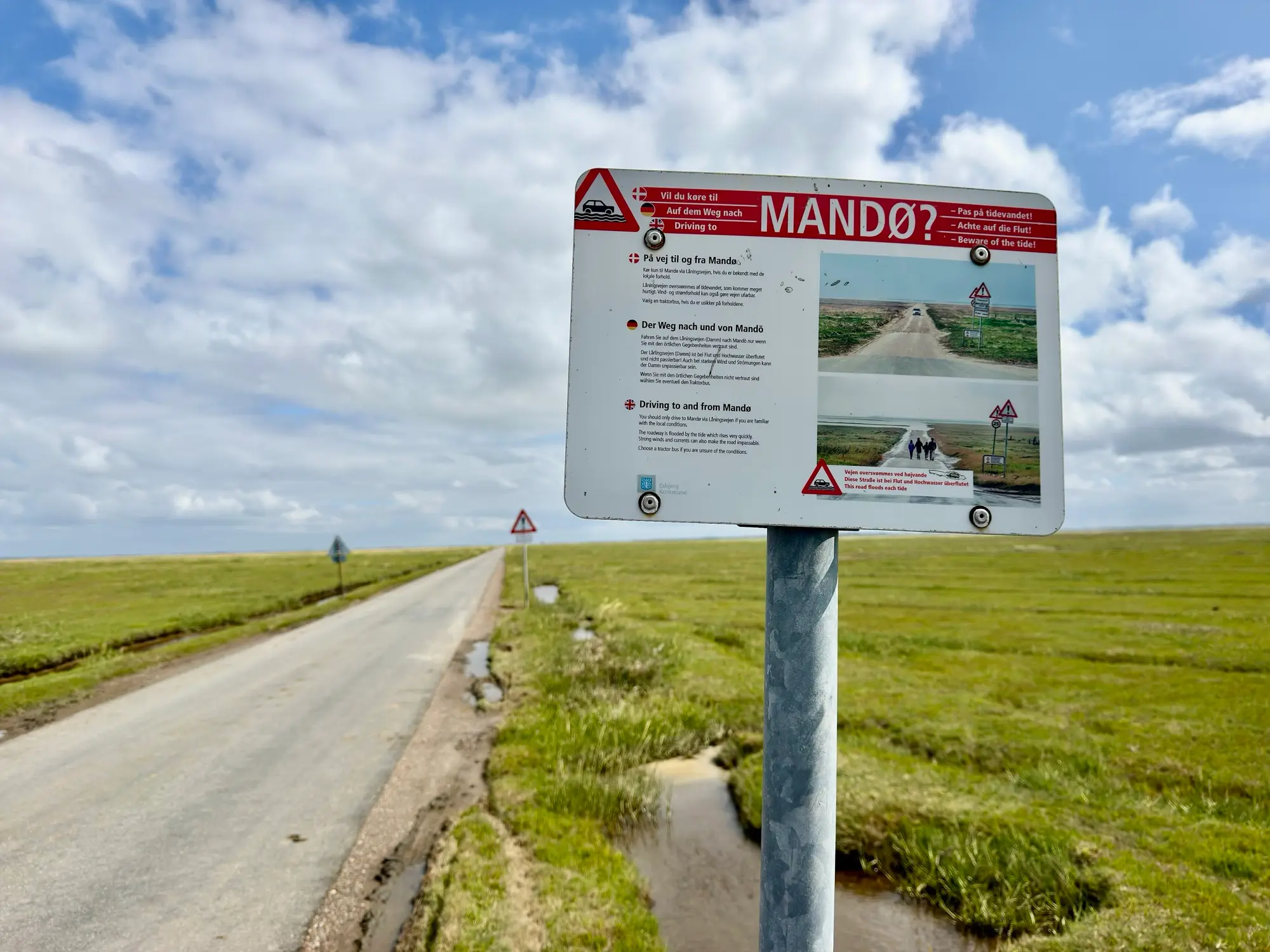
Mandø can only be reached at low tide. The public road, Låningsvejen, is raised above the seabed but still flooded by the tide twice every day.
Fanø and the kite festivals
VisitDenmark says Rømø and Fanø hold international kite festivals, with some kites as big as cars. Outside the festivals, the wide beaches on both islands are used for sand buggying.
Ribe, at the edge of the national park
VisitDenmark calls Ribe officially Denmark's oldest town. The town is 1300 years old and features a Viking museum, a Viking centre and a cathedral tower. Destination Vadehavskysten suggests starting your visit to the wider area at the Wadden Sea Centre near Ribe.