Picking strawberries in a Finnish field is one of the most common first jobs people do in the country, and one of the most misunderstood. It is paid work under Finnish labour law, requires the right permit before you arrive, and is physically hard. Recruiters who describe it as a paid summer holiday are describing something else.
What the work is like
Strawberries are grown across the south and centre of the country; the Savo town of Suonenjoki is the name most Finns associate with them. The strawberry harvest runs for roughly six to eight weeks in the summer. Many farms follow it with peas or raspberries, and in May, before the berries ripen, they hire people to plant vegetables and berry plants. If you want a longer season, ask the farm about these jobs when you apply.
The day starts early, often at six, so the picking is done before the worst of the afternoon heat, and it continues in rain as well as sun. Pay is usually piece rate: you are paid by the box or the kilo, sometimes with a bonus for quantity or quality. Your earnings depend on your speed and on how good the field is that year, and the first week is always the slowest.
Which permit you need
Seasonal work in agriculture, forestry, tourism and wild-berry picking has its own permit system. EU and EEA citizens need none of this. Everyone else needs one of three documents, depending on their passport and how long they stay:
| Your situation | What you apply for | Fee, as checked |
|---|---|---|
| Visa-free nationality, under three months | Seasonal work certificate from Migri | €200 online, €300 on paper |
| Visa-required nationality, under three months | Seasonal work visa from a Finnish embassy or consulate | Set by the mission |
| Any non-EU nationality, three to nine months | Residence permit for seasonal work from Migri | €530 online, €630 on paper (first permit) |
A few details that catch people out:
- The certificate does not extend your visa-free stay. It allows you to work for up to 90 days in any 180-day period, but you still need to have enough visa-free days remaining.
- You must not start work before the decision. Migri aims to make a decision within 90 days of receiving a complete application, so apply as soon as you have a contract.
- Both the certificate and the permit name your employer. Working for a second farm means applying to add that employer first.
- For six to nine months, the authorities check whether the job could be filled from the local or EU labour market first.
- Family members cannot get a residence permit on the basis of a seasonal worker's permit.
Applications go through Migri's Enter Finland service. Along with your passport, you need an employment contract or the employer's confirmation, a terms of employment form completed by the employer, and proof of accommodation.
Wild berries and mushrooms
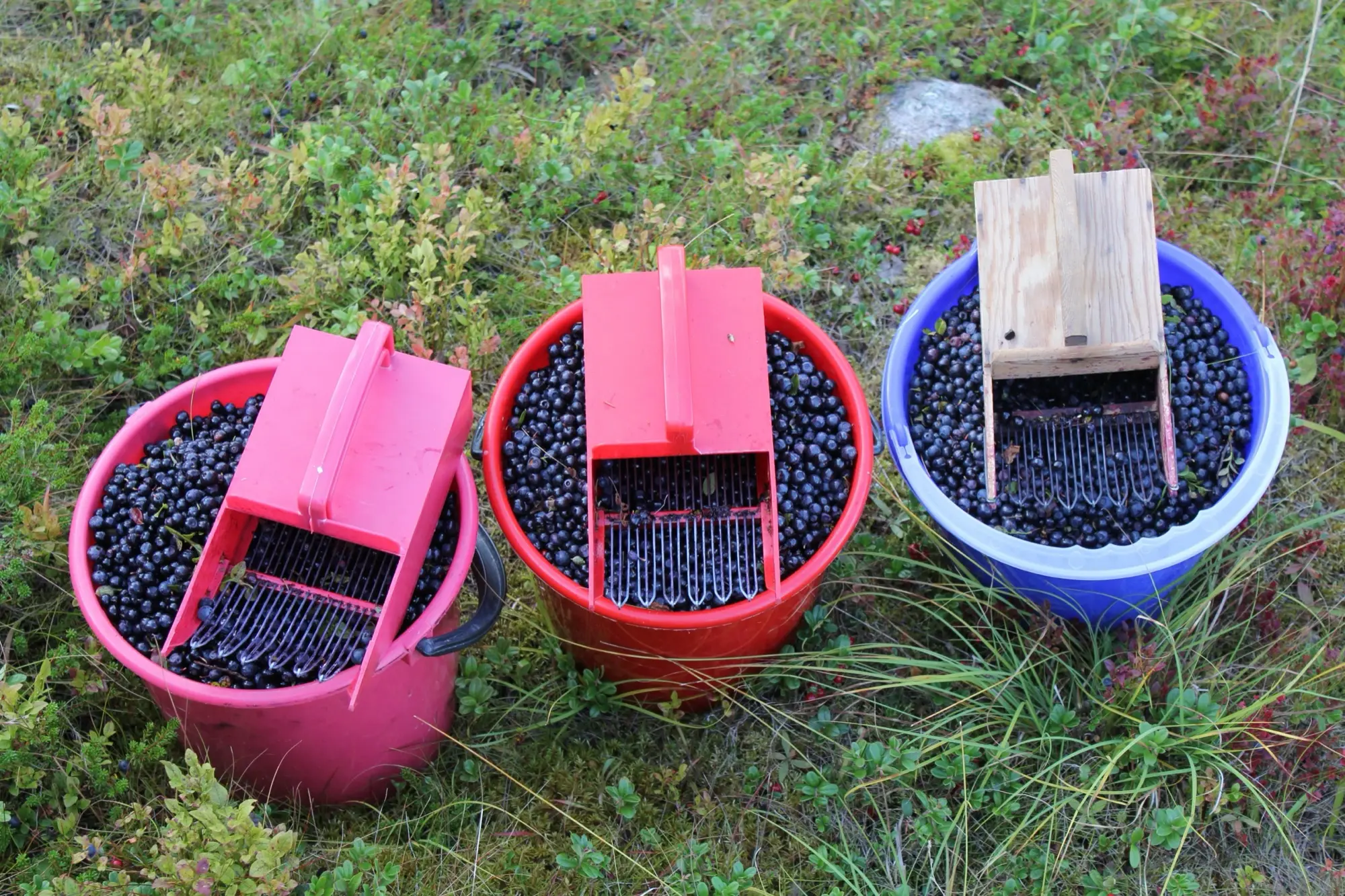
For years, pickers who came to gather wild bilberries, lingonberries and cloudberries for buying companies entered on an ordinary tourist visa and were paid based on what they sold. That changed on 17 February 2025. Foreign wild-berry pickers coming from abroad must now be employed by the company that brings them and hold a seasonal work permit or visa, which provides them with the minimum pay and working conditions of an employee.
The change does not affect anyone who already lives in Finland. Residents can still pick wild berries and mushrooms under everyman's right and sell them to whoever they like; see berry and mushroom picking under everyman's right.
Pay and hours
The Occupational Safety and Health Administration publishes the rules for seasonal farm work in several languages. The main rules are:
- Minimum wage. From 1 May 2026, the agricultural minimum wage is €10.18 an hour. During an induction period, it can be 10 per cent lower.
- Piece rate. At a normal working pace, piece-rate work must pay at least 20 per cent more than the hourly wage, and you never receive less than the hourly minimum, even on a poor day at the end of the season.
- Where no collective agreement applies, the seasonal work permit requires pay of at least €1,463 a month in 2026.
- Hours. Regular working time is up to 8 hours a day and 40 hours a week. Longer hours are paid at a higher rate, and you can refuse them.
- Breaks. A working day of at least six hours includes an unpaid meal break of at least 30 minutes. In addition, you get two paid 12-minute breaks during an eight-hour day, or one during a shorter day.
- Deductions. Tax and statutory social insurance are deducted from your pay. Nothing else can be deducted without your agreement.
Keep your own record of the hours you work and the boxes you pick. This is the simplest way to check your payslip.
Contract and housing
The employer must provide a written contract in a language you understand, signed by the employer, stating how long the job lasts, the working hours and the pay. If a recruiter will not show you one before you travel, do not travel.
If the employer provides housing, it must be warm and fire-safe, with adequate toilets, washing facilities, hot water and enough room to sleep. The rent must not be excessive. Do not pay anyone to find you a job: in Finland, employment services are free of charge for the worker.
Finding the jobs
Farm vacancies appear on Job Market Finland, the public employment service's job board, and many farms recruit directly through their own websites every spring. Our guide to finding a job in Finland covers the wider job market.
If something goes wrong
Contact the authorities early rather than late. The Occupational Safety and Health Administration's advice line is +358 295 256 808; Victim Support Finland answers on +358 40 632 9293, and the national assistance system for victims of human trafficking on +358 295 463 177.
For what comes after the season, if you decide to stay, start with moving to Finland and the general living in Finland section.