Finland lets anyone walk into almost any forest and fill a bucket. The principle is called jokaisenoikeudet — everyman's right, or everyone's rights — and it covers anyone who is in Finland, not only residents or citizens. You do not need the landowner's permission, you do not need a licence, and you do not pay anything. What you must not do is cause harm or disturbance: to the landowner, to the way the land is used, to nature or to other people.
What you can and cannot do
The Ministry of the Environment's short version:
You may
- walk, ski and cycle in the countryside — forests, natural meadows, bogs
- stay and camp temporarily wherever you are allowed to walk
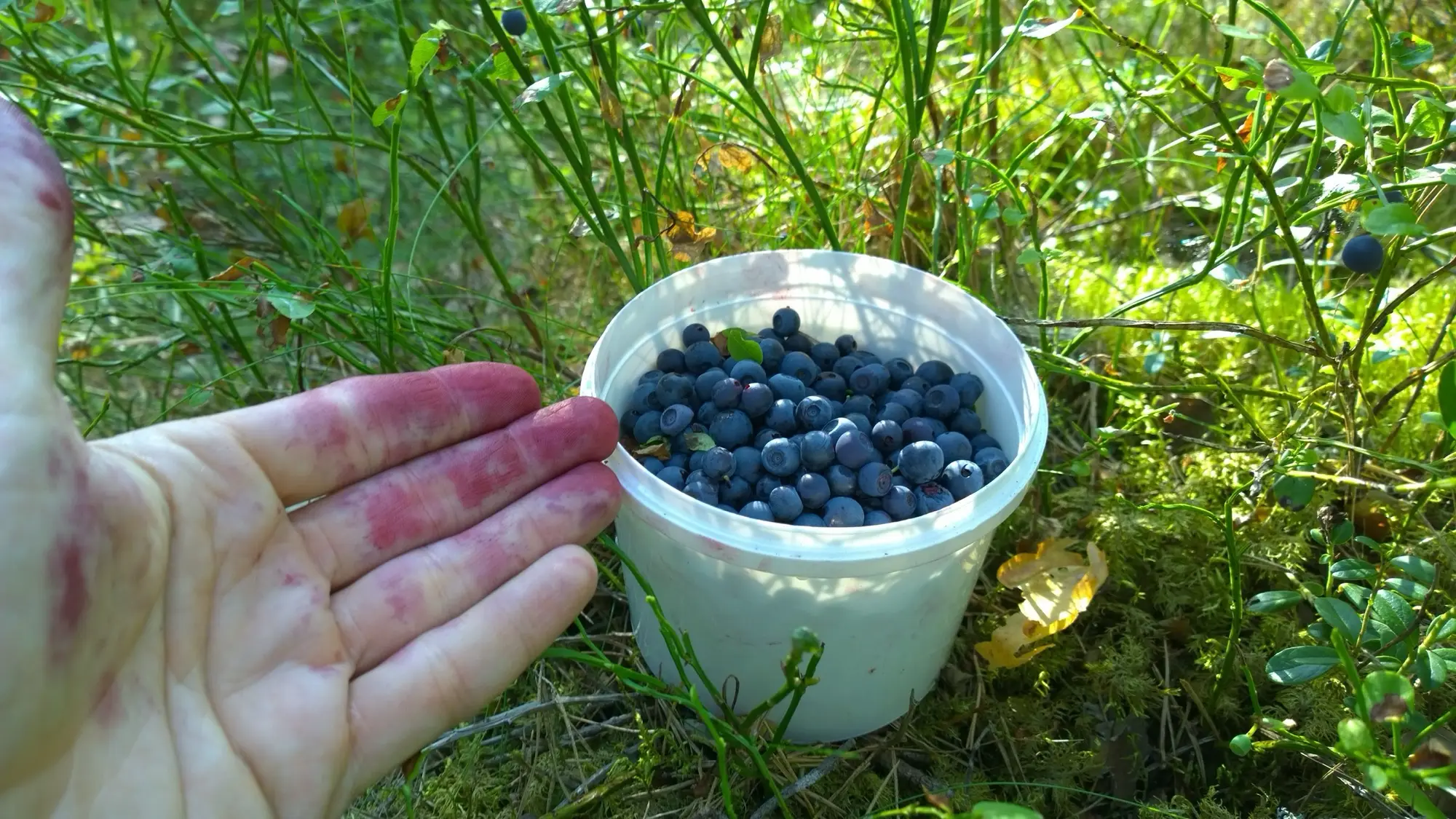
- pick wild berries, mushrooms and plants that are not protected
- go boating, swimming and walking on the ice
- fish with a rod and line, and ice fish
You may not
- enter gardens and yards (pihapiiri), plantings, cultivated fields or other land in special use
- fell or damage growing trees, or take dead or fallen wood
- take moss, lichen or soil
- light an open fire on someone else's land
- disturb people's privacy, for instance by camping too close to a house or making noise
- leave litter, or drive a motor vehicle off-road
- disturb birds and other animals or their nests
- fish or hunt without the relevant permits
- let a dog off the lead in built-up areas, on fitness trails or on someone else's land, or anywhere at all between 1 March and 19 August
In practice, the forest is open and anything that looks like somebody's garden is not. A berry patch fifty metres from a summer cottage is a judgement call; move on.
Chaga
Chaga (pakurikääpä), the black growth on birch trunks, is the exception people get wrong. It grows on living trees, and damaging growing trees is outside everyman's right, so you need the landowner's permission to take it. On state nature conservation land, Metsähallitus grants chaga permits only for research.
National parks and nature reserves
Protected areas have their own rules, which override everyman's right. In national parks, picking berries and mushrooms is allowed, and so are rod fishing and ice fishing. Collecting other plants or parts of plants in protected areas generally needs a permit. Strict nature reserves (luonnonpuisto) have the strictest rules: you may only enter them with a permit from Metsähallitus. The rules for each area are on its page at luontoon.fi.
What grows and when
The most common berries are bilberry, lingonberry and cloudberry; among mushrooms, the chanterelles, milk caps and boletes. The seasons, as given by Arktiset Aromit, the Finnish natural products association:
| What | Finnish | When |
|---|---|---|
| Cloudberry | lakka, hilla | from mid-July in the south, from early August in the north; on bogs |
| Bilberry | mustikka | late July to early September |
| Lingonberry | puolukka | end of August to early October |
| Porcini | herkkutatti | midsummer to the end of September |
| Funnel chanterelle | suppilovahvero | September to November |
Harvests vary considerably from year to year, and the north is a couple of weeks behind the south. Arktiset Aromit also runs the berry observation and harvest map services that pickers use to find out where the crop is good this year. For how the light changes through the season, see the daylight in Helsinki page; a September evening in the forest ends sooner than you think.
Mushroom safety
Pick only what you can identify with certainty. Finland has deadly poisonous species that look like edible ones, and 'it looked like the picture' is not an identification. Arktiset Aromit's species pages are a good start; a local mushroom-picking course or an experienced picker is better. When in doubt, leave it in the forest.
Selling what you pick
Income from wild berries, mushrooms and other natural products you pick yourself is tax-exempt, and you do not report it on your tax return. The same applies to wild tree cones, and to plants collected for food or medicine. The legal basis is section 89 of the Income Tax Act. Two conditions matter:
- It must not be wages. If you pick for an employer and are paid a salary, that is taxable pay like any other. The seasonal work is covered in seasonal berry-picking work.
- It must be sold as it is. Cleaning and boxing do not count as processing, but freezing, drying or sweetening do, and income from processed products is taxable.
Buying prices change every season with the harvest and demand. Buyers announce them at the start of the season and decide for themselves what they accept and at what price.
Related
Everyman's right is also what lets you walk out under the northern lights on someone else's land. For everything else about settling in, start at living in Finland.