If you hold a skilled worker residence permit and lose your job, the Norwegian Directorate of Immigration (UDI) allows you to stay in Norway for up to six months to look for work. You must notify the police where you live within seven days of your employment ending. This six-month allowance never extends beyond your current permit's expiration date.
The short answer
UDI says that if you lose your job on a skilled worker permit, you can stay in Norway for up to six months to look for a new job. You must notify the police where you live within seven days of losing the job. UDI tells you to contact the police for guidance on how to deliver the notice.
Your residence permit must still be valid for the whole job-seeking period, so the six months never run past the permit's own expiry date. Your decision letter from UDI states what type of work you can do and, if relevant, which employer you will work for. Always check that decision letter to understand the specific conditions attached to your stay.
| Situation | What you must do | Deadline |
|---|---|---|
| Lost job | Notify the police where you live | Within seven days of losing the job |
| Temporarily laid off (permittert) | Stay while your permit is valid | No report to UDI or the police |
| New job (same type of position) | Notify the police where you live | Within seven days after you start |
| New job (new type of position) | Apply for and receive a new residence permit | Before starting the position |
What your permit is tied to – a type of work, not always one employer
The residence permit for skilled workers (faglærte) is regulated under section 6-1 of the Immigration Regulations (utlendingsforskriften), where a permit under its first paragraph covers a particular type of work, while some other permits under the same section cover a particular job for a particular employer. You can read more about these standards in the guide to the Norway work permit.
If you change employers but work in the same type of position, you do not need to apply for a new residence permit. With a new employer, the pay and working conditions must still be no worse than normal in Norway, and you must still meet the skilled worker requirements.
If you are going to start in a new type of position, you must apply for a new residence permit, whether you stay with the same employer or change employers. You cannot start in the new type of position until you have the new residence permit. Note that you are not allowed to work remotely unless remote work is part of the job your permit was granted for. In addition, on a skilled worker permit with an employer in Norway, you are not allowed to start your own company.
If you lose your job – the six months and the police notice
Section 6-11 of the Immigration Regulations lets a worker with a section 6-1 first paragraph permit stay to look for work for up to six months after the employment ends, as long as the original permit does not expire. It is a condition that you notify the police within seven days of the employment ending, and again within seven days if you start a new job. For instructions on how to submit this notification, UDI points you directly to the local police.
Otherwise, under the same section, a permit can be revoked under the ordinary rules of administrative law when the employment ends. As noted above, the job-seeking window cannot outlast the validity of your current permit, meaning your permit must remain valid throughout this entire period.
If you find a new job
If you get a new job in the same type of position as before, you do not need a new residence permit, but you must notify the police where you live within seven days after you start. Resources on finding a job in Norway as a foreigner can help you locate vacancies in your field.
If the new job is a different type of position, you must apply for a new residence permit and cannot start that job until it is granted. According to UDI's fee schedule, the UDI application fee for a residence permit for work for applicants over 18 is NOK 6 300, and the same fee applies to renewals.
If you are temporarily laid off (permittert)
UDI says that if you are temporarily laid off (permittert), you can stay in Norway as long as your skilled worker permit is valid. A temporary lay-off does not need to be reported to UDI or the police.
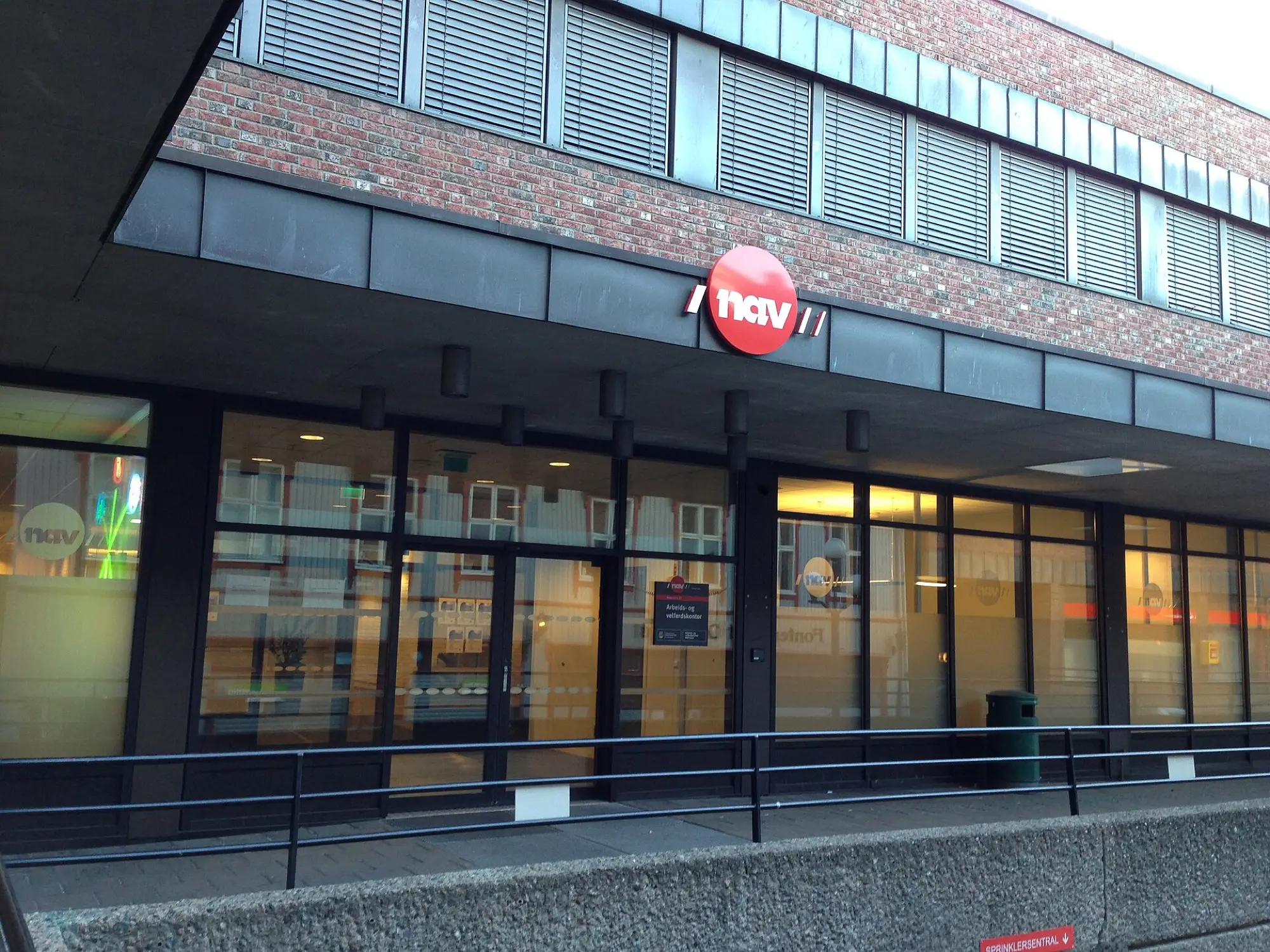
NAV says that if you are temporarily laid off, your employer generally pays your wages for the first 15 working days, and unemployment benefit (dagpenger) can follow after that paid period. In any 18-month period, an employer can lay you off for at most 26 weeks, and the employer-paid days at the start come on top of those weeks.
A temporary rule from the covid-19 pandemic on stays for laid-off skilled workers (section 6-11a) was repealed with effect from 13 February 2026, so guides that still describe it are out of date.
Dagpenger while you hold a permit
Unemployment benefit is financial support from NAV that you may get if you are unemployed or temporarily laid off. You can review the requirements in the 2026 dagpenger guide. Anyone who resides legally in Norway has the right to register as a jobseeker with NAV, and you can apply for dagpenger once registered. Membership of the National Insurance Scheme requires that your stay in Norway is legal.
To get dagpenger you must apply, register as a jobseeker, be resident in Norway with Norwegian national insurance coverage, send a meldekort (employment status form) every 14 days and be a genuine jobseeker. You must have lost at least 50 percent of your total working hours, and your income must have stopped or been reduced.
According to NAV's rules on unemployment benefits, in 2026 you must have earned at least NOK 204,824 (1.5 G) in the last 12 months, or at least NOK 409,647 (3 G) in the last 36 months. Dagpenger can be up to 62.4 percent of your past income, and income above 6 G, NOK 819,294 in 2026, is not counted. If you quit without reasonable cause, or were dismissed for reasons you were personally responsible for, you get no dagpenger for the first 18 weeks.
What job loss or a lay-off does to permanent residence
Work immigrants need three years of continuous residence in Norway, on a permit that forms the basis for permanent residence, to apply for permanent residence. To count as continuous residence you must not have been without a valid residence permit for more than three months in total, counted from the date a permit expired to the date you submitted a new application.
UDI says one of the requirements for permanent residence is that you have met the conditions of your temporary permit throughout the residence period. UDI's example is that a skilled worker permit may require full-time work, so if you lose your job and receive unemployment benefits you no longer meet the permit's conditions, and so do not meet the requirements for permanent residence. UDI applies the same reasoning to a lay-off: if you lose your job or are laid off, you are no longer working full-time and do not meet the conditions of a skilled worker permit that requires it.
You must meet the conditions of your temporary permit on the day the police or UDI decide your permanent residence application, not only on the day you applied, so a skilled worker without a full-time job at decision time does not qualify. In addition, time spent in Norway on a job seeker permit does not count towards the three-year residence requirement for permanent residence as a skilled worker. You can check the details on the permanent residence conditions. The decision letter for your temporary permit shows which conditions apply and what you must do if you lose your job.
Seasonal workers and permits tied to one employer or contract
Workers who do not meet the skilled worker conditions can get a permit of up to six months for seasonal work or as a holiday stand-in, under section 6-3 of the Immigration Regulations. A seasonal permit covers a particular job for one or more named employers, and it does not form the basis for permanent residence; the six-month job-seeking rule in section 6-11 is written for skilled worker permits under section 6-1, not for it.
You can have more than one seasonal employer if you have a concrete offer from each, but you cannot stay in Norway as a seasonal worker for more than six months out of twelve. Time on a seasonal worker permit does not count towards the residence period for permanent residence.
Some permits are stricter than the standard skilled worker permit. For religious leaders and teachers, UDI says you must apply for a new permit to change jobs or employers. On a permit for an assignment under a contract, you must apply for a new permit to carry out other assignments or to work for another enterprise.
EU/EEA citizens follow different rules
EU/EEA citizens follow the EEA rules in the Immigration Act instead of the permit rules above; under those rules they keep worker status when involuntarily unemployed after more than one year of paid work and registered as a jobseeker with NAV, and after a fixed-term contract of under a year, or a job lost in the first twelve months, the status lasts six months.
A checklist for the first weeks
- Check your decision letter from UDI to see what type of work you can do and, if relevant, which employer you will work for.
- Notify the police where you live within seven days of losing the job.
- Register as a jobseeker with NAV, which you have the right to do as long as you reside legally in Norway, and submit an application for dagpenger.
- If you get a new job in the same type of position as before, notify the police where you live within seven days after you start.
- If the new job is a different type of position, apply for a new residence permit and wait until it is granted before starting that work.