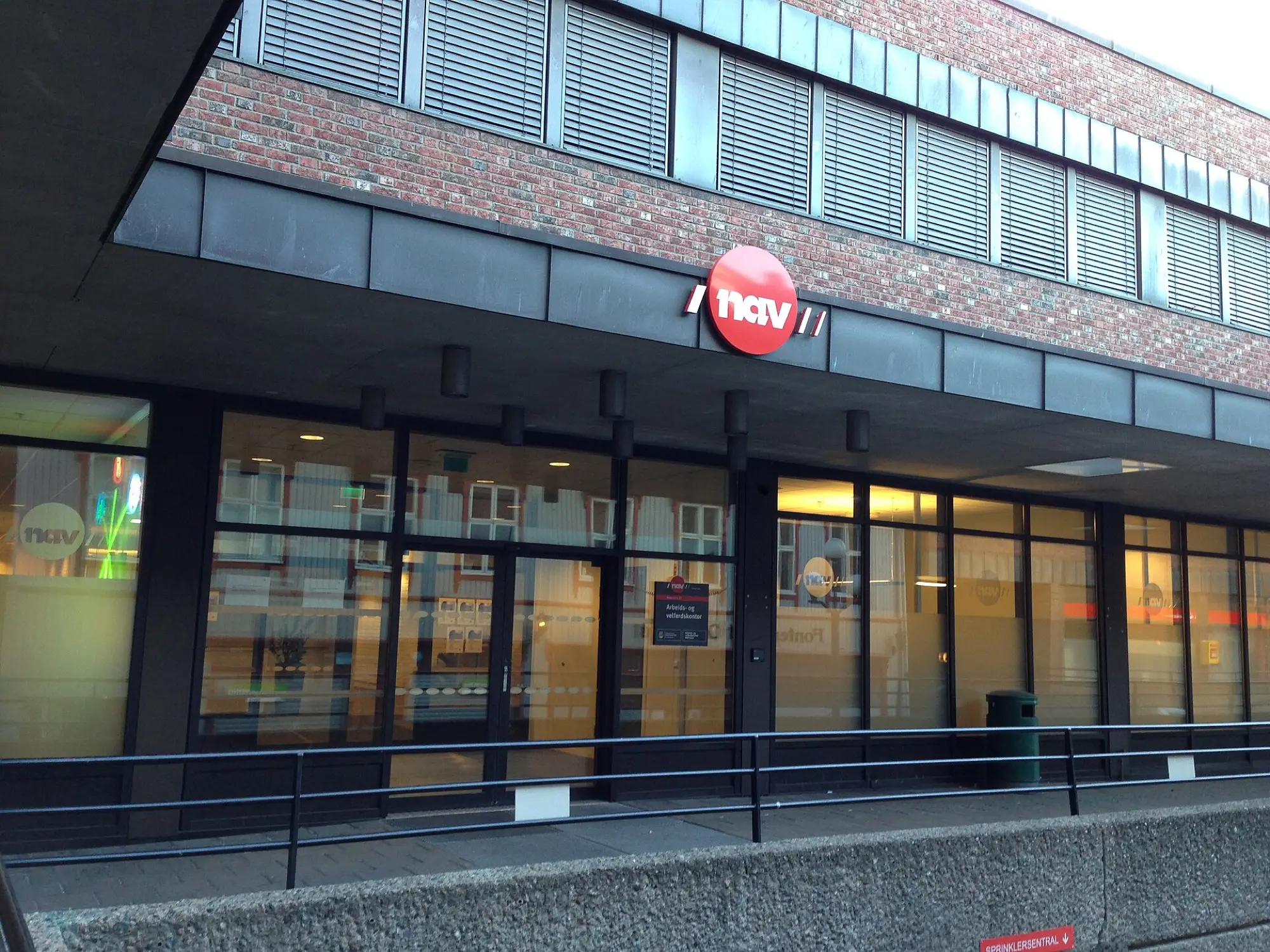
Unemployment benefit (dagpenger) from NAV covers part of your lost income if you lose your job or are laid off in Norway. The main qualification conditions are losing at least 50 percent of your working hours and having earned at least NOK 204,824 (1.5 G) in the past 12 months or NOK 409,647 (3 G) in the past 36 months. The benefit pays up to 62.4 percent of your past income, capped at 6 G, for either 52 or 104 weeks.
Dagpenger in short, and the 2026 basic amount
Unemployment benefit is financial support from NAV that you may get if you are unemployed or temporarily laid off. All benefit thresholds are calculated as multiples of the National Insurance basic amount (grunnbeløpet, commonly referred to as G). The basic amount is NOK 136,549 from 1 May 2026, as noted on NAV's grunnbeløpet page. G is updated on 1 May every year and decided by the Storting after the annual benefit settlement.
| Threshold | Multiplier | Amount from 1 May 2026 |
|---|---|---|
| Minimum income, last 12 months | 1.5 G | NOK 204,824 |
| Minimum income, last 36 months | 3 G | NOK 409,647 |
| Income threshold for 104-week period | 2 G | NOK 273,098 |
| Maximum income basis ceiling | 6 G | NOK 819,294 |
To get dagpenger you must apply, register as a jobseeker, be resident in Norway with Norwegian national insurance coverage, send a meldekort (employment status form) every 14 days and be a genuine jobseeker. You count as resident, and as a rule a member of the National Insurance Scheme, when your stay in Norway is meant to last at least 12 months, and the stay must be legal. Anyone who resides legally in Norway has the right to register as a jobseeker with NAV, and you can apply for dagpenger once registered. Our guide to NAV benefits in Norway explains membership of the National Insurance Scheme and the other benefits.
Who qualifies - lost hours, past income and age
To qualify for dagpenger according to NAV's unemployment benefit rules, the main conditions are:
- Lost working hours: You must have lost at least 50 percent of your total working hours, and your income must have stopped or been reduced. With several jobs, the 50 percent counts across all of them; someone working 30 hours a week in two jobs must have lost at least 15 of those hours.
- Past income: In 2026 you must have earned at least NOK 204,824 (1.5 G) in the last 12 months, or at least NOK 409,647 (3 G) in the last 36 months. Under the National Insurance Act, NAV counts gross pay received in the last twelve completed calendar months before you apply (1.5 times G) or in the last 36 completed calendar months (3 times G), using the G in force when you apply.
- Eligible income type: Salary counts toward qualifying, as do parental and pregnancy benefits paid to you as an employee. Self-employment income, the work assessment allowance (arbeidsavklaringspenger or AAP) and dagpenger you received before do not count. Income from a sole proprietorship does not count as salary, so losing self-employment income does not qualify you, though salary from an employer in the last 12 or 36 months still can.
- Age: You must be under the age of 67.
Why the job ended matters
If you quit without reasonable cause, or were dismissed for reasons you were personally responsible for, you get no dagpenger for the first 18 weeks. You should still apply first, and NAV decides. Examples of reasonable cause are health problems that stop you continuing in the job, or bullying or harassment at work, and you must be able to document it.
If you are temporarily laid off (permittert), your employer generally pays your wages for the first 15 working days, and dagpenger can follow after that paid period. In any 18-month period an employer can lay you off for at most 26 weeks, and the employer-paid days at the start come on top of those weeks.
If your employer went bankrupt, you can get an advance on wage guarantee funds paid as dagpenger for up to one month, by ticking a box in the application.
How much dagpenger pays in 2026
NAV works out the amount from your income in the last 12 months, or the average of the last 36 months, whichever is better for you. You can get up to 62.4 percent of your past income, and income above 6 G, NOK 819,294 in 2026, is not counted.
By law dagpenger is paid for five days a week, and the daily rate is 2.4 per mille of the basis for the benefit (dagpengegrunnlaget). A daily rate of 2.4 per mille, paid five days a week for 52 weeks, is where the 62.4 percent comes from. For a basis at the 6 G ceiling of NOK 819,294, the daily rate comes to about NOK 1,966.31 before tax, or about NOK 19,663.10 for the 10 weekdays in one 14-day meldekort period.
If you provide for children under 18, you get a child supplement of NOK 38 per child, 5 days a week, which is NOK 190 a week per child. The child does not have to live with you, but must live in Norway, another EEA country, Switzerland or Great Britain; more than 90 days outside these in 12 months ends the supplement.
Dagpenger including the child supplement, but not the holiday supplement, can never be more than 90 percent of your basis. Dagpenger is taxed, and NAV advises updating your tax card when your monthly payments are lower than your pay was. See our guide on income tax in Norway for details on updating tax deductions. If you received dagpenger for more than 8 weeks last year, you get holiday pay of 9.5 percent of last year's dagpenger, as a rule in June, without applying.
The deductible, the first payment and payment days
NAV subtracts a deductible equal to 3 days of dagpenger from your first payment, and pays nothing until the whole deductible has been subtracted. In the law the deductible (egenandel) is three times your daily rate, including any child supplement.
NAV's processing time for an application is currently 6 weeks, and you are paid back from the day you were entitled. Dagpenger is paid every 14 days, 1 to 3 business days after you send the meldekort.
How long you can get it - 52 or 104 weeks
The duration depends on your previous earnings:
- With income of NOK 273,098 (2 G) or more in the last 12 months, or on average over the last 36 months, you can get dagpenger for up to 104 weeks.
- With income under NOK 273,098, you can get dagpenger for up to 52 weeks.
If you had dagpenger within the last 52 weeks, you continue the period you were granted then; if you have worked 12 weeks or more since, NAV recalculates the payment. When the period runs out, you may qualify for a new period if you have worked while on dagpenger, but you have to apply again.
Applying, step by step
Apply 2 weeks before the last day your employer pays you; at the earliest, dagpenger runs from the day you apply and register as a jobseeker.
- Register as a jobseeker online. This requires an electronic ID such as BankID, Buypass or Commfides. Our guide to opening an account and getting BankID explains how to get BankID from a Norwegian bank. If you cannot get an electronic ID, you register in person at your local NAV office.
- Submit the application digitally. The digital application takes about 20 to 30 minutes and is in Norwegian.
- Provide documentation. NAV needs your employment contract and, if you resigned or were dismissed, the notice. You can send what you have and forward the rest within 14 days.
If you think a decision is wrong, you complain to the NAV unit that made it. If it disagrees, it sends the complaint on to the NAV Appeals Management Unit; NAV gives 7 weeks as the expected time at the unit.
The meldekort every 14 days
Each meldekort covers 14 days and should be sent as soon as the period ends. As explained on NAV's meldekort guidance page, the final deadline to avoid deductions is the Monday one week after the period ended, and you must keep sending it while you wait for a decision.
Sending the meldekort one day after the final deadline costs a deduction of 6 weekdays. If more than 20 days pass since your last one, you are removed from the jobseeker register and dagpenger stops.
Every hour worked in the 14 days goes on the meldekort, paid or unpaid, including Saturdays and Sundays.
The activity duty and what stops payments
Being a genuine jobseeker means applying for jobs, going to interviews, keeping your CV updated, taking part in labour market schemes such as courses, accepting any kind of job anywhere in Norway, being able to start at short notice and being healthy enough for at least a 50 percent job. Accepting any job can mean a lower salary or a longer commute, and you must be open to both full-time and part-time work.
You may get an exception from the any-job rule if you are over 60, have health issues, care for a close family member or have a child under 1 in your care, among other cases; ask for it in the application.
You must reply to NAV's messages and other inquiries, and if NAV cannot reach you it may stop your payments. Turning down a job offer, refusing or leaving a labour market scheme, or quitting a job costs 18 weeks of dagpenger. If it happens more than once within 12 months, you may lose 26 weeks. Keep sending the meldekort during that time. If you are more than 50 percent on sick leave, dagpenger stops, but you may be entitled to sickness benefit instead.
Working, travelling, Norwegian courses and starting a business
You may work while on dagpenger. Working within 50 percent of your regular hours reduces the payment for each hour on the meldekort, and working more than 50 percent on 3 meldekort in a row stops dagpenger.
The main rule is that you stay in Norway. Days on holiday abroad are not paid, being away only on Saturday and Sunday does not matter, and for a job interview in an EEA country you can stay up to three days if you tell NAV before you travel.
Norwegian language and social studies tuition for adult immigrants can be combined with dagpenger for up to 1 year if it is approved and follows the official curriculum; you must apply, and should do so before you start. You can also apply to keep dagpenger for up to 12 months while you start your own business, and it is approved only from the day NAV finishes processing.
EEA rules - work abroad that counts, and taking dagpenger with you
Work in another EEA country, Switzerland or the UK can count toward Norwegian dagpenger if you lost that job and worked in Norway after coming back. NAV needs details of the last 36 months, documented with a PD U1 form. If you quit a job abroad to move to Norway with a spouse or cohabitant who has found a job here, you may get dagpenger without having become unemployed in Norway.
If you lived and worked in Norway and move back to your home EEA country, you apply for unemployment benefit there. A PD U1 confirms your Norwegian work, and NAV's processing time for one is currently 5 weeks. If you live in another EEA country and travel home at least once a week, you can get Norwegian dagpenger when temporarily laid off or partly unemployed, but if you become fully unemployed you apply in the country where you live.
You may keep Norwegian dagpenger for up to 3 months while you look for work in another EEA country. To take dagpenger with you, you must be fully unemployed on the day you leave and apply for a PD U2 before leaving Norway; NAV recommends applying at least 4 weeks ahead. In the other country you register with its employment service; register within 7 days of arrival and you are paid back from the day you left Norway, later and you are paid only from the day you registered.
Under the Immigration Act an EEA citizen keeps worker status when involuntarily unemployed after more than one year of paid work and registered as a jobseeker with NAV. After a fixed-term contract of under a year, or a job lost in the first twelve months, the status lasts six months.
Losing your job on a skilled worker permit
The skilled worker permit is the residence permit for skilled workers (faglærte) in the Immigration Regulations, and the permit itself is explained in our guide to the Norway skilled worker permit.
A skilled worker whose job ends may stay in Norway to look for work for up to six months, as long as the original permit does not expire in that time. It is a condition that you notify the police within seven days of the job ending, and again within seven days of starting a new job. Otherwise a permit for work can be revoked when the employment ends. Check your specific permit terms and situation directly with UDI and the police.