NAV is the Norwegian Labour and Welfare Administration, and membership of the National Insurance Scheme is the key to accessing its support. Which payments a newcomer can receive depends on employment, previous earnings and time spent in the scheme. Cash-for-care benefit and the work assessment allowance (AAP) both need five years of membership as the main rule, so newcomers often cannot claim them in their first years. Financial assistance is the municipality's last-resort help, not a NAV insurance benefit.
What NAV is and what it does
NAV is the Norwegian name for the Norwegian Labour and Welfare Administration. In NAV the state and the municipalities cooperate to give one gateway into public labour and welfare services; the state runs employment, benefits and pensions, and the municipalities run social services, according to NAV's own description.
NAV is responsible for more than 60 financial support schemes, among them unemployment benefit, sickness benefit, work assessment allowance, disability benefit, retirement pension, parental benefit, cash-for-care benefit and child benefit. NAV administers around a third of the state budget.
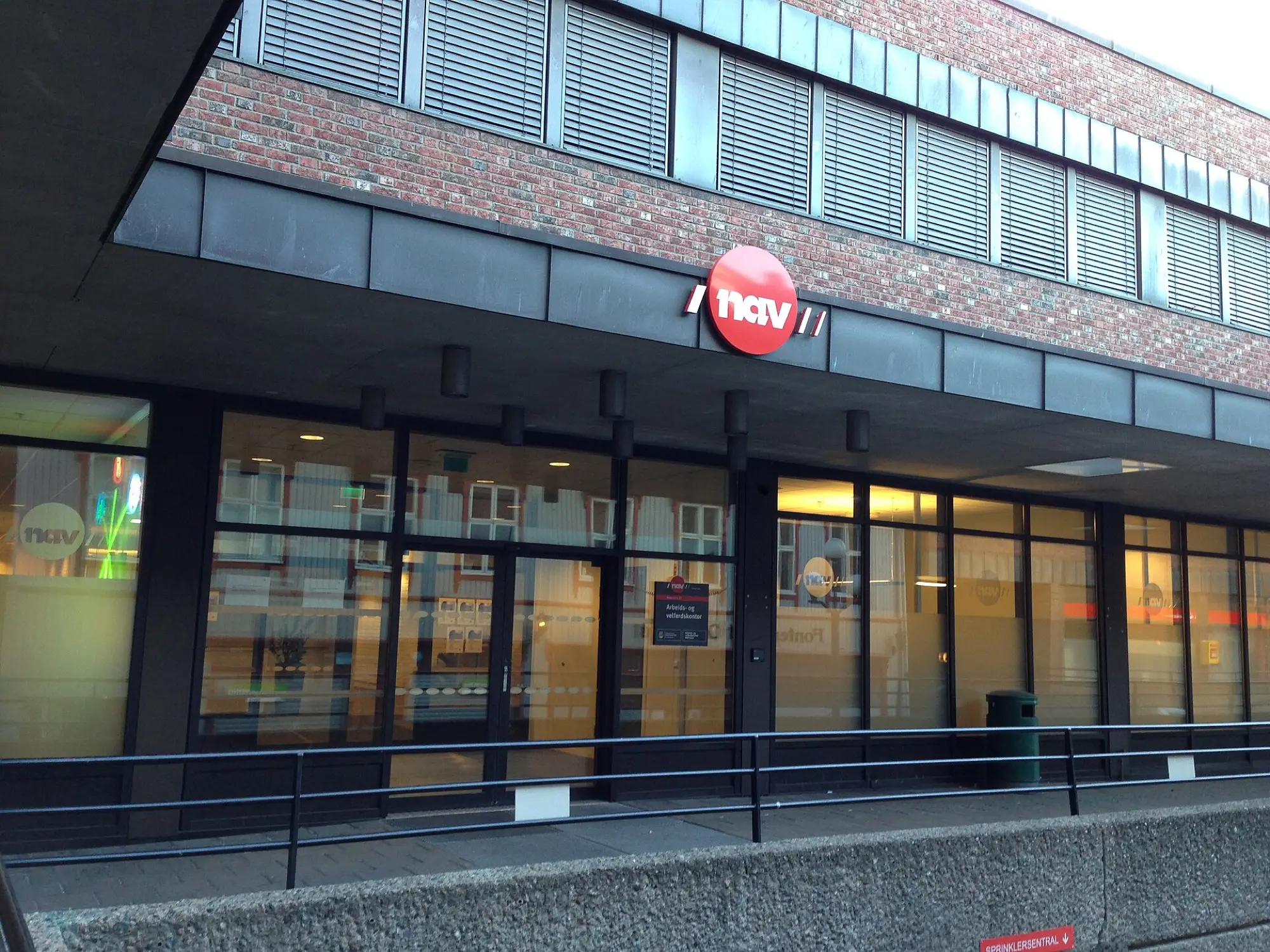
The municipalities provide social services at NAV offices, and every municipality must offer financial assistance, the qualification programme, advice and guidance (including financial advice), temporary accommodation and individual plans. NAV offices are the physical point of contact, where state and municipal staff work together in municipalities and districts across the country.
First, are you a member of the National Insurance Scheme
Membership of the National Insurance Scheme (folketrygden) is the key to rights to services from NAV, and it can be based on residence or on work. Membership is decided by the National Insurance Act or a social security agreement, not by citizenship, registration in the National Population Register or paying tax in Norway.
If you live in Norway you are as a rule a member, and to count as resident your stay must last, or be intended to last, at least 12 months. If you move to Norway to stay for at least 12 months, you are a member from the date you enter Norway. Membership requires that your stay in Norway is legal. If you come from outside the EU/EEA to work, the Norway work permit guide covers the residence permit that usually comes first.
Even if you do not live in Norway, working in Norway or on the Norwegian continental shelf makes you a compulsory member. If you will stay in Norway for less than 12 months, will not work and have strong ties to Norway, you may be able to get voluntary membership.
If you are not a member of the National Insurance Scheme, you have no rights under the National Insurance Act, and you do not pay the national insurance contribution. In 2026 the national insurance contribution is 7.6% on salary income and sickness benefit for people aged 17 to 69 in the income year. When checking how income tax works in Norway, note that in 2026 no national insurance contribution is due below a personal income of NOK 99,650.
EEA, Nordic and treaty countries
Norway's most extensive social security agreements are with the EEA countries, and the EEA rules on social security take precedence over Norwegian law and over Norway's other agreements. The Nordic Convention on Social Security is a separate agreement between Denmark, Finland, Iceland, Norway and Sweden.
Norway also has bilateral social security agreements with the United States, Canada, Australia, India, the United Kingdom, Bosnia-Herzegovina, Chile, Israel, Montenegro, Serbia, Turkey and the province of Quebec. Under these agreements you are as a rule covered by social security in only one country, so you do not pay contributions to both.
NAV International answers on +47 21 07 37 00, including for people in Norway who have social security rights in a country Norway has an agreement with.
G, the number behind most amounts
The national insurance basic amount (grunnbeløpet, G) is NOK 136,549 from 1 May 2026. G is used to calculate many of NAV's payments; it is updated on 1 May every year and set by the Storting after the annual benefits settlement. Sickness benefit is granted on income up to NOK 819,294, which is 6G.
The main benefits at a glance in 2026
| Benefit | Main condition | 2026 amount or rate |
|---|---|---|
| Sickness benefit | Worked at least four weeks; annual income of at least half of G | 100 percent of income up to NOK 819,294 (6G) |
| Unemployment benefit | Lost at least 50 percent of hours; earned at least NOK 204,824 in the last 12 months or at least NOK 409,647 in the last 36 months | Up to 62.4 percent of past income up to 6G |
| Parental benefit | Income in at least 6 of the last 10 months; earned at least NOK 68,275 | 49 weeks at 100 percent or 61 weeks and 1 day at 80 percent up to NOK 819,294 |
| Lump sum grant | Given if you lack income for 6 of the last 10 months | NOK 92,648 per child |
| Child benefit | Child lives in Norway; paid until the month before the child turns 18 | NOK 2,012 a month per child (plus NOK 512 Finnmark and Svalbard supplement, also some northern Troms municipalities) |
| Cash-for-care benefit | Child aged 13 to 19 months not in full-time kindergarten; 5 years scheme membership | Up to NOK 7,500 per month |
| Work assessment allowance (AAP) | Work capability reduced by at least 50%; usually 5 years continuous membership | 66% of income up to 6G, at most NOK 540,734; minimum NOK 278,697 a year from age 25, NOK 185,798 a year under 25 |
| Financial assistance | Inability to support yourself; all other options exhausted | Indicative subsistence rates (single person NOK 8,300) |
If you are ill - sickness benefit
Sickness benefit compensates for your income when you are unable to work because of illness or injury. To get sickness benefit you must have national insurance coverage (or be an EU/EEA citizen working in Norway), be under 70 and have a sick leave certificate from a physician, dentist, chiropractor or manual therapist. The sick leave must cover at least 20 percent of your regular working hours.
An employee must have worked at least four weeks before the sick leave to qualify for sickness benefit from NAV. An employee also needs an annual income of at least half of G, worked out from average income over the last three months. Your employer pays sick pay for the first 16 days of sick leave (the employer liability period); NAV pays after that.
NAV says sickness benefit is the only benefit that compensates 100 percent of income, up to 6G. Sickness benefit is calculated from your income in the last three months before you fell ill. Under the age of 67, the maximum sickness benefit period is 52 weeks, whether the sick leave is full or partial.
If you lose your job - unemployment benefit (dagpenger)
Unemployment benefit (dagpenger) is financial support you may get if you are unemployed or temporarily laid off. You must have lost at least 50 percent of your total working hours and lost your income or had it reduced. You must have earned at least NOK 204,824 (1.5G) in the last 12 months, or at least NOK 409,647 (3G) in the last 36 months, and you must be under the age of 67.
You must apply, register as a job seeker, be resident in Norway with Norwegian national insurance coverage, send an employment status form (meldekort) every 14 days and be a genuine job seeker. Unemployment benefit can be up to 62.4 percent of your past income, and income over 6G (NOK 819,294) is not counted.
With income of NOK 273,098 (2G) or more in the last 12 months, or on average over the last 36 months, you may get unemployment benefit for up to 104 weeks. With less than that, the period is up to 52 weeks. NAV subtracts a deductible equal to 3 days of unemployment benefit, normally from the first payment.
If you provide for children under 18, you get a child supplement of NOK 38 per child, 5 days a week, which is NOK 190 a week per child. Unemployment benefit is paid every 14 days, 1 to 3 business days after you send the employment status form.
The digital application for unemployment benefit is in Norwegian; if you cannot log in, you can fill in the form, print it and send it by post. If you move home and claim unemployment benefit in another EEA country, a PD U1 certificate confirms that you have worked in Norway and may give you a right to unemployment benefit there.
Having a baby - parental benefit and the lump sum grant
Parental benefit (foreldrepenger) replaces your income when you stay at home with a child after birth or adoption. To get parental benefit you must have had income for at least 6 of the last 10 months before the benefit period starts. You must also have earned at least half of G a year, which is NOK 68,275 converted to annual income. You must be a member of the National Insurance Scheme; people resident in Norway usually are.
For one child the parental benefit period is 49 weeks at 100 percent or 61 weeks and 1 day at 80 percent, and the total paid is about the same either way. Parental benefit covers your usual income up to NOK 819,294 (six times G).
If you have not had income for at least 6 of the last 10 months, you can get a lump sum grant instead, NOK 92,648 per child for births and adoptions from 1 January 2023; tax is not deducted from it.
Children - child benefit and cash-for-care benefit
From 1 February 2026 ordinary child benefit is NOK 2,012 a month per child aged 0 to 18. From 1 February 2026 a Finnmark and Svalbard supplement of NOK 512 per child is added if you and the child live on Svalbard, in Finnmark or in Karlsøy, Kvænangen, Kåfjord, Lyngen, Nordreisa, Skjervøy or Storfjord. Child benefit is paid through the month before the child turns 18, and can be paid back up to 3 months from the date you apply. For a child born in Norway you usually do not need to apply; child benefit is paid automatically to the mother.
The child must live in Norway, which means staying in Norway continuously for at least 12 months; separate rules apply to EEA citizens. A foreign worker whose whole family lives in Norway and will stay more than 12 months may qualify, if resident, registered in the National Population Register and with a residence permit or other legal residence. An EEA citizen (or family member of one) who works in Norway may qualify for child benefit even if the stay will be shorter than 12 months.
Cash-for-care benefit (kontantstøtte) is NOK 7,500 per month at 100 percent, if the child does not attend kindergarten at all; part-time kindergarten gives 20, 40, 60 or 80 percent. Cash-for-care benefit is paid for children aged 13 to 19 months, for a maximum of 7 months.
You must have been a member of the Norwegian National Insurance Scheme, or a similar scheme in another EEA country, for at least 5 years, and if the child lives with both parents both need 5 years. Only EEA citizens and third-country nationals counted as family members of EEA citizens can add periods from other EEA countries; for periods from another Nordic country, Austria, Luxembourg or the Netherlands, citizenship does not matter.
Long-term illness - work assessment allowance (AAP)
Work assessment allowance (arbeidsavklaringspenger, AAP) gives you an income in periods when illness or injury means you need help from NAV to get back to work. Your work capability must be reduced by at least 50% because of illness or injury, for all work you are qualified for, and you must be between 18 and 67.
The main rule is that you have been a member of the National Insurance Scheme continuously for at least five years when you apply. There are two exceptions to the five-year rule, both needing at least 1 year of continuous membership before you apply, and membership earned in an agreement country such as an EU/EEA country may count.
AAP is 66% of your income up to 6G, which corresponds to at most NOK 540,734. With little or no income, the minimum rate is NOK 278,697 a year from age 25 and NOK 185,798 a year under 25. AAP is generally paid for up to 3 years, and NAV can assess an extension of up to 2 years.
Financial assistance from the municipality
Financial assistance (økonomisk sosialhjelp) is temporary help when you cannot support yourself financially. Everyone may apply and have their case assessed individually, but you must normally have legal residence in Norway to qualify. You cannot get financial assistance while you are abroad.
Financial assistance comes only when all other ways of getting income, such as work, your own savings and other financial rights, have been used and are not enough. The state's indicative rates for subsistence valid from 1 January 2026 are: single person NOK 8,300; married or cohabiting couple NOK 13,800; person in shared accommodation NOK 6,950; child aged 0 to 5 NOK 4,050; child aged 6 to 10 NOK 4,150; child aged 11 to 17 NOK 5,400. Municipalities may use their own rates.
The rates are a starting point and cover basic needs such as food, clothing, communication, household items and hygiene; rent and electricity come in addition. Emergency assistance covers bare essentials such as food for a limited time; if you have nowhere to sleep in the next 24 hours you can also ask for temporary accommodation. NAV may ask for your tax return, pay slips, bank statements for all your accounts, your lease, proof of identity and a valid residence permit.
How to apply - electronic ID, Min side and the NAV office
An electronic ID gives access to public digital services, and to get one you must have a Norwegian national identity number or D number. With a D number you can order a MinID; the activation letter takes a few days by post to your registered address. BankID is the most commonly used electronic ID; you order it once you have access to your online bank, and it is up to the bank whether you can get BankID with a D number. The bank account and BankID guide covers opening the account.
To use a digital sick leave certificate and apply for sickness benefit online you need BankID, Commfides or Buypass; without one you use part D of the paper certificate. Applying digitally is the easiest and fastest way and you will be asked to log in; a paper form you print and post needs no login.
NAV posts tasks and statements on Min side, your personal page on nav.no, for example a reminder to send missing documents. You can also pick up and hand in a paper application for financial assistance at your NAV office. NAV's call and service centre is on +47 55 55 33 33; press 9 for the English menu.
Financial assistance, permanent residence and citizenship
The Immigration Act makes it a condition for permanent residence that you have supported yourself for the last twelve months. The Immigration Regulations on Lovdata say the self-support condition applies from 18 to 67 and is met if for the last 12 months you have had at least 2.5 times G through work or business income, pensions, sickness, pregnancy or parental benefit, retirement pension, unemployment benefit, AAP, Lånekassen loans or grants, introduction benefit, or a mix of these; financial assistance is not on the list.
The self-support condition must be met when you apply or be met in the period up to the decision. The Citizenship Act requires an applicant to meet the conditions for permanent residence in section 62 of the Immigration Act at the time of the decision, so the same self-support rule applies to Norwegian citizenship. You should check your own case with UDI.