Everyone who works in Norway must have a tax deduction card and a Norwegian identification number. If you do not have a tax deduction card, your employer must deduct 50 percent of your income. You apply online with an electronic ID, use form RF-1209 by post or at an ID check, or ask your employer to apply for you.
What the tax deduction card is
Everyone who works in Norway must have a tax deduction card (skattekort) and a Norwegian identification number, a D number or a national identity number. If you do not have a tax deduction card, your employer must deduct 50 percent of your income.
The tax deduction card is an electronic document that shows how much tax your employer must deduct before paying your salary; the amount deducted is called a tax deduction, withholding tax or advance tax payment. A tax deduction card applies for one income year, which is a calendar year.
You are told which card you have in a tax deduction notice, which you do not have to give your employer; the employer retrieves the card electronically with your identification number, and online users get an email or SMS when that happens. An employer can only retrieve the card of someone it pays salary, pension or other taxable benefits to, and sees only the table number or percentage, not how much you are expected to earn.
On a salary at the 2026 PAYE ceiling of NOK 725 050, 50 percent withholding without a card would take NOK 362 525 over the year, against NOK 181 262.50 at the 25 percent PAYE rate.
First an identification number and an ID check
You cannot apply for a D number or a national identity number yourself; the Tax Administration orders a D number for you if you need a tax deduction card and have no Norwegian identification number. If you are going to live in Norway for at least 6 months or more permanently, you are issued a national identity number; a D number also has 11 digits and is issued only to foreign citizens. You can read more about how these numbers work in our guide to the D-number and national ID number in Norway.
An ID check is an identity and identification check, and you must attend in person and show your identification document. Documents required depend on citizenship:
- An EU, EEA or EFTA citizen shows a passport or national ID card with a photograph and information about citizenship and gender; a citizen moving from another Nordic country may also use a valid driving licence with a recent population register printout.
- A citizen of a country outside the EU, EEA and EFTA shows a passport.
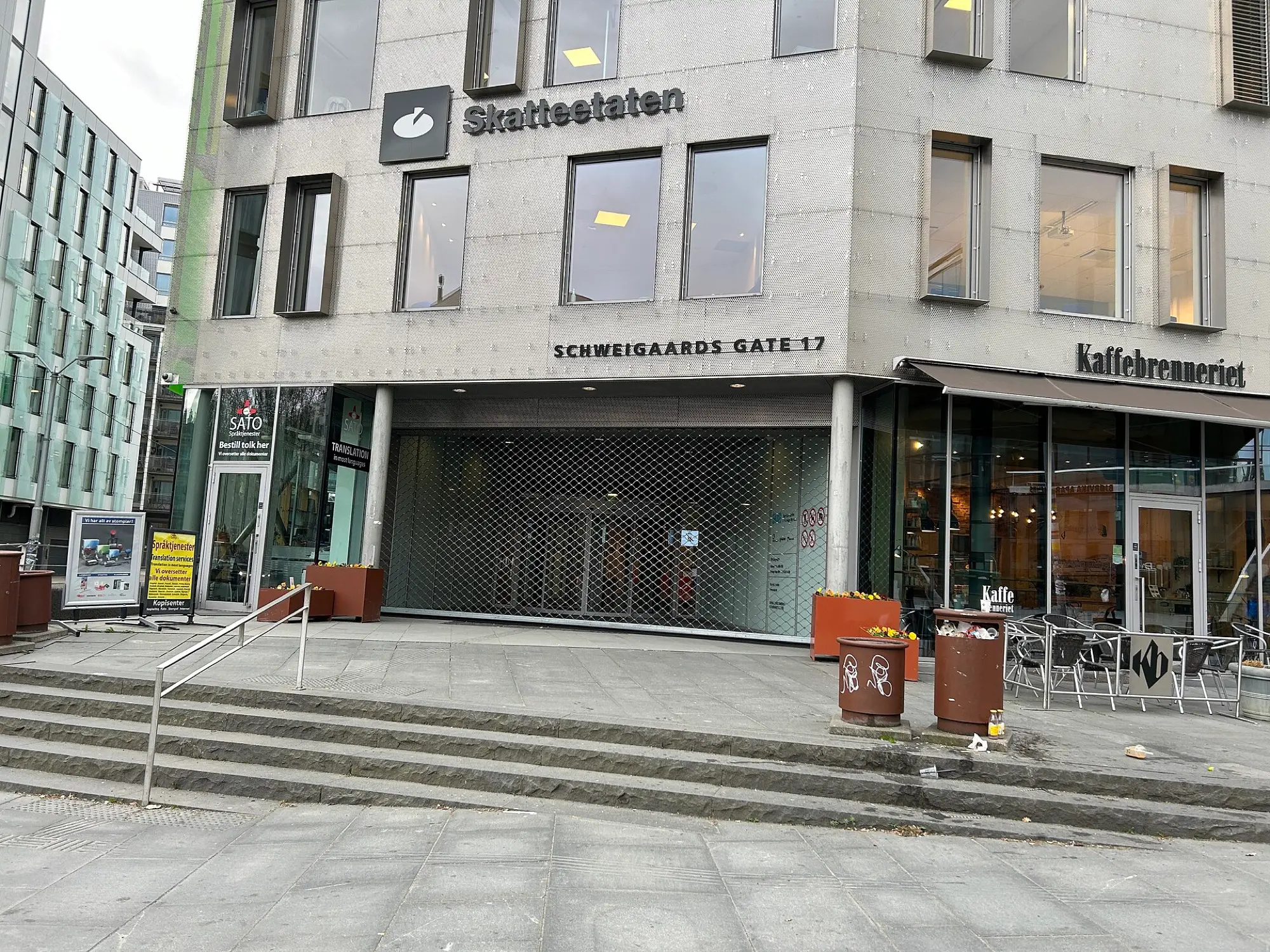
The Tax Administration offers ID checks in 42 selected tax offices, and you must book an appointment before you show up. You can only book an appointment for services that need you in person, such as ID checks, and if you turn up without an appointment the Tax Administration may not be able to help you.
How to apply as a foreign worker
If you have an electronic ID such as BankID, you log in and apply online for a tax deduction card for a foreign employee.
Without an electronic ID, you complete form RF-1209, the tax deduction card form for foreign workers, and once you have a national identity number or D number you send it by post to Skatteetaten, Postboks 9200 Grønland, 0134 Oslo. If you have neither a national identity number nor a D number, you book an appointment for an ID check and bring form RF-1209, completed before the visit.
You can also ask your employer to apply for the card for you, but your employer cannot opt you out of PAYE; you can do that yourself later. Work permit requirements are covered in the guide to the Norway work permit: skilled worker rules and pay.
The card is normally ready within five working days, after which you receive a notice saying which card you have and your employer retrieves it electronically. Skatteetaten says applications from foreign workers often take more time, partly because of the ID check.
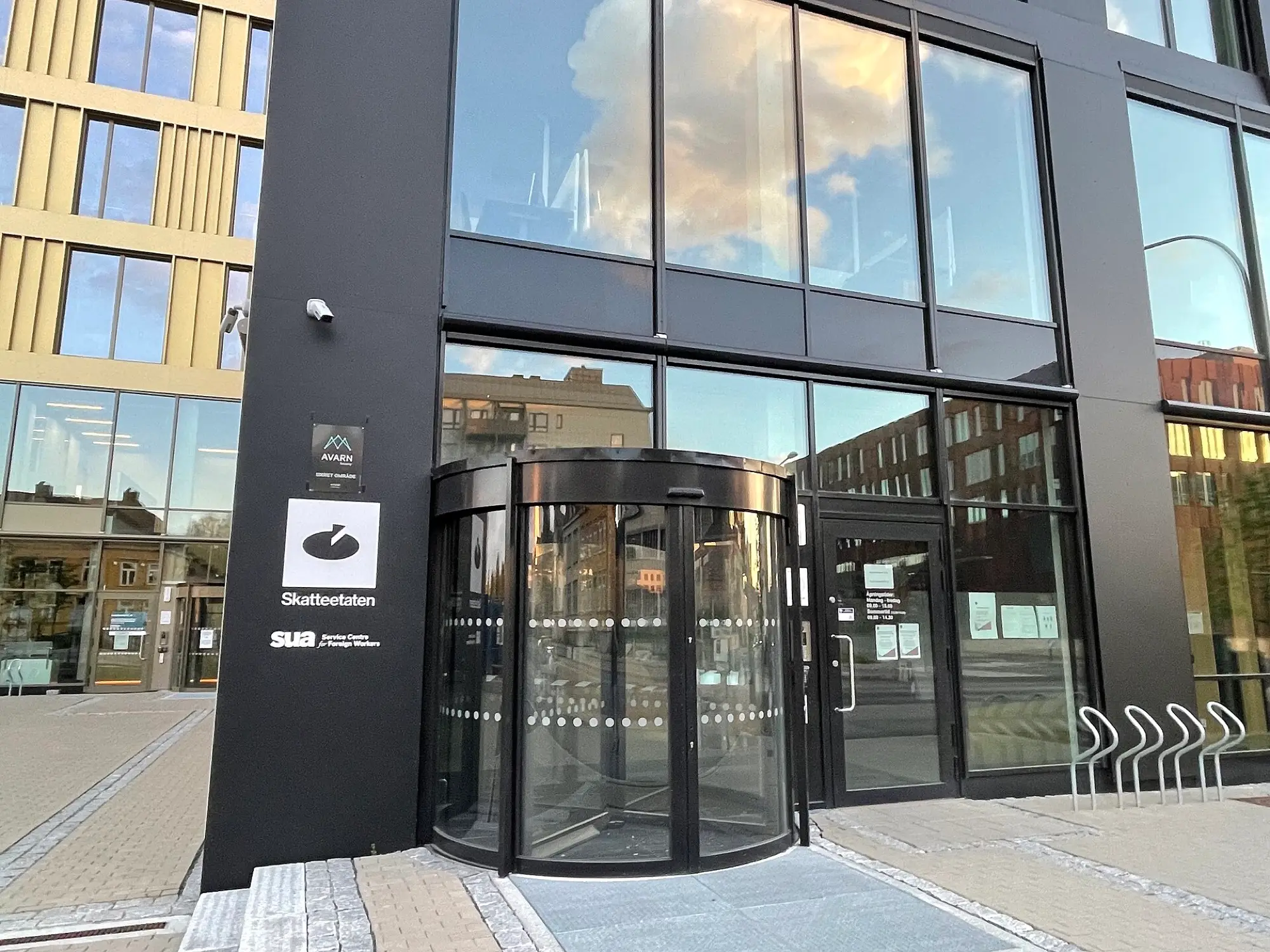
The Service Centre for Foreign Workers (SUA), run by the police, the Tax Administration, the Labour Inspection Authority and UDI, has offices in Oslo, Stavanger, Bergen, Trondheim and Kirkenes where you can apply for a tax deduction card.
PAYE, the 25 percent scheme
When you are new in Norway and apply for a tax deduction card, you join the voluntary PAYE (pay as you earn) scheme automatically, and your employer deducts a fixed percentage from your salary. You can join PAYE for your first year as a tax resident in Norway, or, if you come for short work stays of less than 183 days in a 12-month period or less than 270 days in a 36-month period, every time you apply for a card.
You can join PAYE if you earn less than NOK 725 050 in 2026; for 2025 the threshold was NOK 697 150. Under PAYE for foreign workers you pay 25 percent tax on your salary, or 17.4 percent in 2026 if you are exempt from paying Norwegian national insurance contributions.
You cannot be on PAYE once you have been a tax resident in Norway for more than a year, or if you have other taxable income such as Nav sickness, unemployment or parental benefit, business income in Norway, income taxable to Svalbard or capital income exceeding NOK 10 000.
PAYE can be combined with withholding tax on share dividends from Norwegian companies and on Norwegian pensions, and with wealth such as real property in Norway.
On PAYE the tax is already deducted when you are paid, you cannot claim any deductions, and you get no tax return and no tax assessment notice.
PAYE or the general rules
Under the general taxation rules the tax percentage varies with how much you earn in the year and with your deductions, and the following year Skatteetaten checks the amount, so you may get a refund or owe underpaid tax. Under the general rules there is no income limit and you can claim deductions, for example for commuter expenses and interest payments. General rates and worked examples can be compared in our guide to the Norway tax rate and deductions in 2026.
Skatteetaten says you must check how much tax you would pay under each scheme; for the 2024, 2025 and 2026 income years its tax calculator can compare the two. If you are not sure whether you will earn more than the threshold, you can start with PAYE and opt out later; if you expect to earn more, you must tick the box for the general taxation scheme when you apply.
You can opt out of PAYE at your ID check appointment, when you apply for a tax deduction card, or after you have applied; the deadline is 31 December three years after the income year. For the 2026 income year you could opt out from 16 December 2025, and the deadline is 31 December 2029.
Once you opt for the general rules you cannot rejoin PAYE for the same income year, whatever the reason, but you can rejoin for the next income year if you meet the conditions; tax already deducted is counted in your new card, return and assessment. You must opt out of PAYE yourself; your employer cannot do it for you.
Table card or percentage card
There are two kinds of card:
- Table card: With a table-based card your employer deducts tax according to a table, more tax is deducted the higher your income, and the card also has a percentage part used where the table does not apply. Only your main employer, the one who pays you the most, should use the table; other employers use the percentage part, and for this purpose Nav counts as an employer.
- Percentage card: A percentage card deducts the same percentage even if your income changes, so earning more than the card assumed means too little tax is deducted, and earning less means a refund; under PAYE the percentage is the final tax.
Skatteetaten says a percentage card suits you if you have several employers, salary plus commission or bonuses, large swings in salary, or a high monthly wage over a short work period such as a summer job or seasonal work; a table card suits one permanent employer.
Everyone who pays tax in Norway is taxed in tax class 1. If you want more tax deducted than your card shows, you do not need a new card; ask your employer, Nav or your pension provider, who must deduct more if you request it.
Changing your card when your income changes
If the numbers in your card are wrong you may end up with underpaid tax, so Skatteetaten asks you to log in, check and if necessary change them; you enter the total you expect to earn from all employers. You are responsible for checking that the correct tax is deducted; the card is not updated automatically when your salary, interest or other circumstances change. Underpaid tax (restskatt) means you paid too little during the year and must pay it back the next year.
When you update the card, your employer retrieves the new one automatically; it arrives shortly, but can take up to 5 working days if Skatteetaten needs to look closer, and without an electronic ID it is posted to your registered address.
When you change the numbers, Skatteetaten recalculates whether you get a table or a percentage card; the later in the year you change, the less likely a table card, and a change at the end of the year gives a percentage card. To order or change a card on paper instead, you download form RF-1102, print it and send it by post.
Low earnings and the exemption card
If you earn NOK 100 000 or less in the year you do not have to pay tax, and anyone over 13 receives an exemption card automatically. The exemption card can only be used by people staying in Norway through a full year. If you expect to earn more than NOK 100 000, you must change to a tax deduction card, or tax is taken at a rate of 50 percent.
The card for next year
You must have a new tax deduction card every year; most people get one automatically in December, and if you do not, you or your employer must order one on Skatteetaten's website. Skatteetaten's tax calendar for persons lists 15 December as the day dispatch of information about your tax deduction card starts.
The card sent in December is filled in with what Skatteetaten thinks you will earn, based on last year's income adjusted upwards, so you should change it if you expect to earn more or less. If your work runs over the new year and you have not received a new tax deduction notice by 20 January, you should apply for a new card.
A D number becomes inactive five years after it was assigned; you need an active D number to get a tax deduction card, so next year's card needs it reactivated, which for someone coming to work means a new ID check with a valid passport or national ID card.
After the year, the PAYE receipt or the tax return
What happens after the income year depends on which scheme applied to you:
- On PAYE: You receive a receipt for PAYE tax in June showing how much salary and tax your employer reported for the work you did the year before.
- Under the general rules: Skatteetaten sends a pre-filled tax return every year in March or April, covering what you earned and owned the year before in Norway and abroad. The deadline for the tax return is 30 April; a return not submitted by then counts as submitted with the pre-filled information.
Most people get their tax assessment notice between April and June, others in the autumn, and everyone before 1 December; it shows whether you get a refund or owe tax. More on filing, refunds and underpaid tax is covered in the guide to the Norway tax return: deadline, refund and changes.