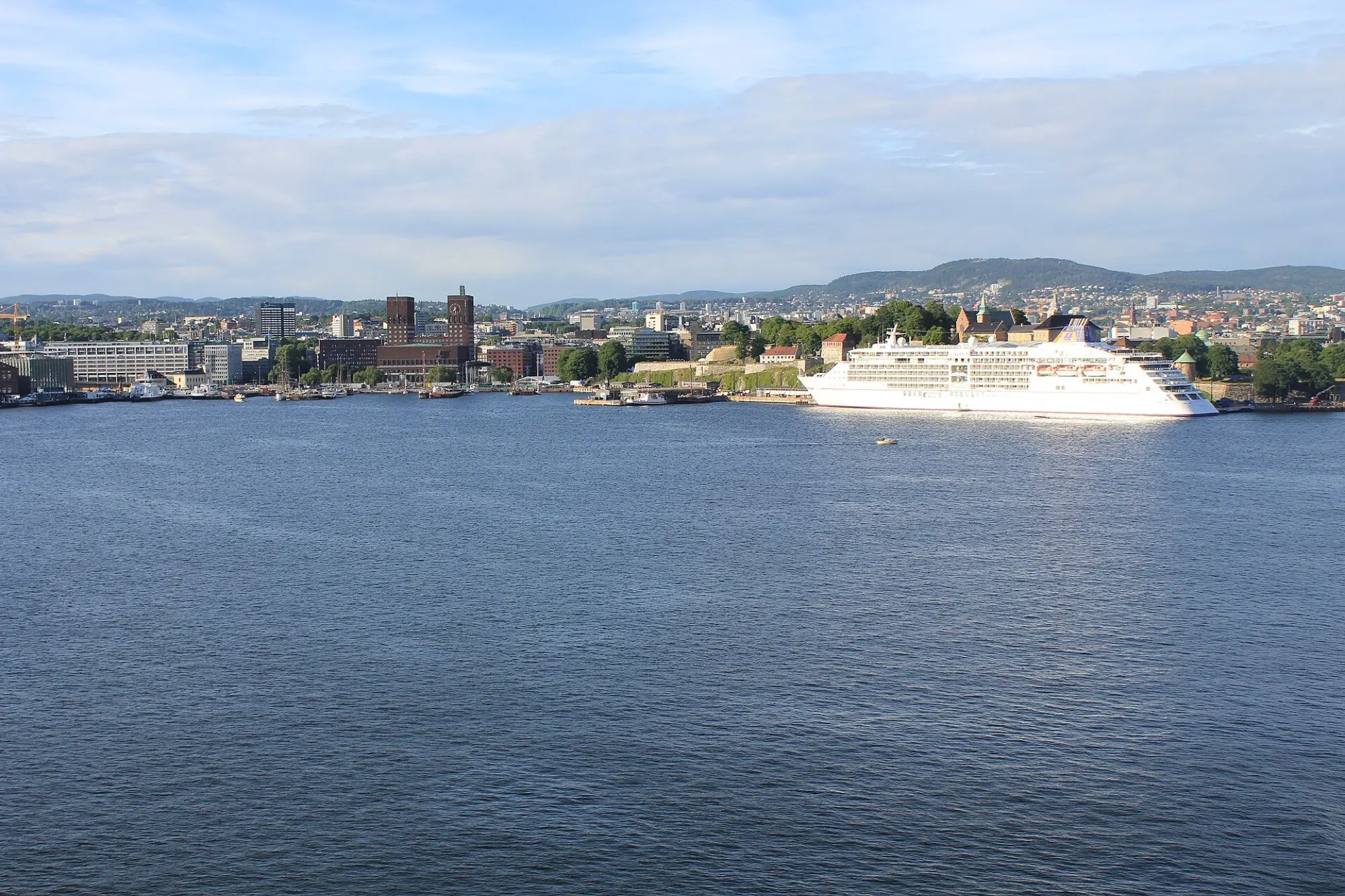

A one-day itinerary covers Oslo Central Station, the Opera roof, MUNCH, Akershus Fortress, City Hall, the Nobel Peace Center, and Aker Brygge. Run day 1 from Tuesday to Saturday, keep day 2 off a Monday from October to April, and run day 3 on any day of the week. Adding Bygdøy and Vigeland Park makes two days, while Holmenkollen and Frognerseteren or the fjord islands complete three days.
Which day to do which route
To make this schedule work without meeting closed doors, match your itinerary to the days of the week. The stops follow a fixed hourly schedule:
- Day 1: 10:00 (Oslo S and the Opera roof), 11:00 (MUNCH), 13:00 (Akershus Fortress), 14:45 (City Hall), 15:30 (Nobel Peace Center), and 16:30 (Aker Brygge and Tjuvholmen).
- Day 2: 10:30 (ferry or bus 30 to Bygdøy), 11:00 (Norsk Folkemuseum), 13:30 (Fram, Kon-Tiki, and the Maritime Museum), and 16:30 (Vigeland Park).
- Day 3: 10:00 (metro line 1 from Nationaltheatret, or boat B1 from Aker Brygge), 10:45 (Holmenkollen), and 13:00 (Frognerseteren).
Day 1 requires a Tuesday to Saturday. City Hall is open Monday to Saturday from 09:00 to 16:00 and closed on Sundays. From 1 September to 31 December the Nobel Peace Center is closed on Mondays and open Tuesday to Sunday 11:00 - 17:00, Wednesday until 20:00 (from 1 June to 31 August it opens every day 10:00 - 18:00). The Astrup Fearnley Museum on Tjuvholmen is closed on Mondays, opening Tuesday, Wednesday and Friday 12:00-17:00, Thursday 12:00-19:00, and Saturday and Sunday 11:00-17:00. Outside of May to August, Akershus Castle opens only on Saturdays and Sundays from 12:00-17:00 (from May to August it opens Monday to Saturday 10:00-16:00 and Sunday 12:00-16:00). Saturday is therefore the only day when every day 1 interior is open all year round.
Day 2 must not be run on a Monday from 5 October to 30 April. During this period, Norsk Folkemuseum opens Tuesday to Sunday 11.00 - 16.00 and closes on Mondays (from 1 May to 4 October it opens every day 10.00 - 17.00). The Norwegian Maritime Museum is closed on Mondays from 5 October to 31 March, opening Tuesday to Sunday 11.00 - 16.00 (from 1 April to 4 October it opens every day 10.00 - 17.00). The Vigeland Museum is closed on Mondays all year, opening Tuesday to Sunday 12 pm - 4 pm, with last admission at 3:45 pm (from June to August it opens Tuesday to Sunday 10 am to 5 pm). The Fram Museum and the Kon-Tiki Museum open every day. If you visit over a Saturday, Sunday, and Monday, schedule day 1 on Saturday, day 2 on Sunday, and day 3 on Monday, because the day 3 route works on any day of the week.
Be aware that many venues close on Mondays or hold shorter hours over Christmas, Easter, and public holidays, and there is no compensation if an attraction is closed while your pass runs.
Day 1, 10:00 Oslo S and the Opera roof: free and open all year
Arriving from the airport, Flytoget's direct trains take 19 minutes from Oslo Airport to Oslo Central Station (Oslo S), and every Flytoget train stops there. You can read more about route options in our guide on how to get from Oslo airport to the city centre. While the Oslo Pass covers Vy's local trains to the airport, it does not cover Vy buses, Flytoget (the Airport Express Train), or Flybussen (the Airport Express Bus).
Start at 10:00 at Oslo S. Walking toward the water brings you past Deichman Bjørvika, Oslo's main library, located at Anne-Cath. Vestlys plass 1 midway between Oslo S and the Opera House. The Norwegian National Opera & Ballet sits directly on the harbour, inviting visitors to climb its roof for panoramic views of Oslo and the fjord free of charge, all year round. The Opera foyer opens Monday to Saturday 11-16 and Sunday 12-16, or until the end of the performance. An Oslo Pass provides 15% off the guided tour. In its season announcement of 4 May 2026, the opera stated that because the stage machinery needs a technical upgrade after almost 20 years of daily use, the main stage will be closed from April to October 2027, and the opera house will be closed in summer 2027 for maintenance. The announcement does not say whether the roof stays open in summer 2027.
Day 1, 11:00 MUNCH: NOK 220, open every day
Admission to MUNCH costs NOK 220 for adults, NOK 100 for visitors under 25, and is free for children aged 0-17. The museum opens Sunday to Tuesday 10-18 and Wednesday to Saturday 10-21.
Located at Edvard Munchs plass 1 in Bjørvika, MUNCH is a 10-minute walk from Oslo Central Station. It houses 13 floors of art, and a version of The Scream is always on display. Visitors using an Oslo Pass receive free entry; MUNCH is the only museum on the pass that issues 15-minute timeslots, which are allocated on site with no need to book ahead. General admission is free on the first Wednesday of each month from 18:00 to 21:00, except in July, August, and September. Outside the Opera House and MUNCH lies the Oslo Badstuforening sauna village at Sukkerbiten, a 7-8 minute walk from Oslo Central Station.
Day 1, 13:00 Akershus Fortress: free grounds, and a castle open at weekends outside summer
The fortress grounds are free to enter every day, while tickets for Akershus Castle cost NOK 160 for adults (aged 18 and over) and NOK 80 for children aged 6-17. Akershus Castle is open on Saturdays and Sundays 12:00-17:00 from September to December and from January to April; from May to August it opens Monday to Saturday 10:00-16:00 and Sunday 12:00-16:00.
The fortress main entrance in Kirkegata is about a 15-minute walk from Oslo Central Station. The main gate opens daily 06:00-21:00 and the side gates 07:00-18:00. First built in the late 13th century, the fortress has never been taken by force by a hostile foreign army in over 700 years. Castle tickets are sold only on site, and entrance is free with the Oslo Pass. Note that the castle can close to the public at short notice for events, and it closes after 13 December, reopening on Saturday 9 January 2027.
From April to September, His Majesty the King's Guard and the armed forces' bands march guard parades through central Oslo; the parade leaves Akershus Fortress at about 13:15 with mounted police in front. The parade now leaves from Kontraskjæret and goes up Akersgata, past Egertorget and onto Karl Johans gate, then up to the Royal Palace and Palace Square. The armed forces' bands' page, updated on 10 September 2026, says the remaining guard parades of 2026 were cancelled because of court mourning.
Day 1, 14:45 City Hall: free, closed on Sundays
Oslo City Hall opened in 1950 and is open to everyone. It is the seat of the city council and administration. The building opens Monday to Saturday from 09:00 to 16:00 and is closed on Sundays.
Every visitor passes a security check, so expect a queue. The carillon features 49 bells that chime every hour between 7 a.m. and midnight. From 30 June to 27 August, free 45-minute guided tours run on Tuesdays, Thursdays, and Saturdays at 12:00 pm and 2:00 pm with no advance booking required. Oslo City Hall closes to visitors on specific dates: for the remainder of 2026, it is closed on 20 November, 3 December, from 12:00 on 4 December, from 5 to 11 December, and on 24, 25, 26, and 31 December.
Day 1, 15:30 Nobel Peace Center: NOK 180, and closed on Mondays from September
Full admission to the Nobel Peace Center costs NOK 180 for an adult, NOK 100 for a student, and is free for children aged 0-17 as well as Oslo Pass holders. The museum opens every day 10:00 - 18:00 from 1 June to 31 August. From 1 September to 31 December, it closes on Mondays, opening Tuesday to Sunday 11:00 - 17:00 (Wednesday until 20:00).
Located on City Hall Square at Brynjulf Bulls plass 1, the museum showcases the history of the Nobel Peace Prize. From 7 September to 12 December, tickets are half price while new second-floor exhibitions are prepared; the Medal Chamber and the Nobel Field remain closed during this time. The building is closed entirely on 9 and 11 December.
Day 1, 16:30 Aker Brygge and Tjuvholmen: the harbour at the end of the day
Walking through Aker Brygge and across to Tjuvholmen is free, while the Astrup Fearnley Museum costs NOK 200 for adults, NOK 130 for seniors, NOK 100 for students, and is free for under-20s and Oslo Pass holders. The museum is closed on Mondays, opening Tuesday, Wednesday, and Friday 12:00-17:00, Thursday 12:00-19:00, and Saturday and Sunday 11:00-17:00.
The Nobel Peace Center is located 100 metres from the Aker brygge tram stop (line 12) and ferry terminal, and 700 metres from Nationaltheatret station. From here, the harbour promenade runs west through Aker Brygge and joins via a bridge to Tjuvholmen, an island lined with galleries, sculptures, and dining spots. Between temporary exhibition installations, adult admission to the Astrup Fearnley Museum drops to NOK 130. For sauna visits on the water, KOK operates floating saunas at Aker Brygge facing Akershus Fortress, alongside its facility at Langkaia facing the Opera House. For accommodation across the capital, see our guide on where to stay in Oslo.
Day 2, 10:30 to Bygdøy: the ferry from 14 March to 4 October, bus 30 the rest of the year
Reaching the Bygdøy peninsula costs nothing extra with an Oslo Pass, which covers both the seasonal ferry and the city bus. Without a pass, the ferry costs NOK 73 one way or NOK 120 for a day pass at the pier ticket office (NOK 79 one way on board). Ruter public transport tickets are not valid on the Bygdøy ferry.
The Bygdøy ferry runs from City Hall pier 3 (Rådhusbrygge 3) between 14 March and 4 October 2026. Sailings depart every 20 minutes, taking 10 minutes to cross the harbour. The boat calls first at Dronningen, which is a 10-minute walk from Norsk Folkemuseum, before continuing to Bygdøynes for the Fram Museum, Kon-Tiki Museum, and Norwegian Maritime Museum. Outside the ferry season, or if you are using regular transit passes, take bus 30 from Jernbanetorget. Bus 30 runs every 10 minutes all year round, takes 15 minutes from the city centre, and drops passengers directly at Folkemuseet and Bygdøynes.
Day 2, 11:00 Norsk Folkemuseum: NOK 200, closed on Mondays from 5 October
Adult entry to Norsk Folkemuseum costs NOK 200, while children aged 0-17 enter free. From 1 May to 4 October, the site is open daily 10.00 - 17.00. From 5 October to 30 April, it opens Tuesday to Sunday 11.00 - 16.00 and is closed on Mondays.
Norsk Folkemuseum is the open-air museum at Museumsveien 10 on Bygdøy, about 5 km from the city centre. Admission is fully covered by the Oslo Pass.
Day 2, 13:30 Fram, Kon-Tiki and the Maritime Museum at Bygdøynes
At the Bygdøynes quay, individual adult tickets cost NOK 180 for the Fram Museum, NOK 180 for the Kon-Tiki Museum, and NOK 180 for the Norwegian Maritime Museum. All three are free with the Oslo Pass. You can purchase a combined two-museum ticket for Fram and Kon-Tiki on site for NOK 325, or a three-museum ticket covering Fram, Kon-Tiki, and the Maritime Museum for NOK 485 (valid for 2 days). For children, Fram charges NOK 70 (also NOK 70 for students), Kon-Tiki charges NOK 70 (ages 6-17), and the Maritime Museum admits ages 0-17 free.
Operating hours differ slightly across the three sites:
- The Fram Museum opens 10:00-17:00 from 1 October to 30 April, and 09:30-18:00 from 1 May to 30 September, every day of the year. Visitors can board the polar exploration ship Fram and walk through the cabins, cargo hold, engine room, galley, and saloons.
- The Kon-Tiki Museum opens every day: 10:00 - 17:00 from September to April, 10:00 - 18:00 in May, and 09:30 - 18:00 from June to August. It displays the original Kon-Tiki raft that Thor Heyerdahl and his crew sailed across the Pacific in 1947.
- The Norwegian Maritime Museum at Bygdøynesveien 37 opens every day 10.00 - 17.00 from 1 April to 4 October. From 5 October to 31 March, it opens Tuesday to Sunday 11.00 - 16.00 and is closed on Mondays.
Please note that the Viking Ship Museum is closed while the new Museum of the Viking Age is prepared. The opening is scheduled for 2028 with no precise date announced, and tickets are not yet on sale. Artefacts from the Viking Age are currently exhibited at the Historical Museum in the city centre.
Day 2, 16:30 Vigeland Park: free and always open
Vigeland Park is free to enter and remains open 24 hours a day. The indoor Vigeland Museum costs NOK 120 for adults, NOK 70 for visitors aged 18-25, and is free for children aged 0-17 and Oslo Pass holders. The museum opens Tuesday to Sunday 12 pm - 4 pm (last admission 3:45 pm), expanding to 10 am to 5 pm from June to August; it is closed on Mondays.
To travel between Bygdøy and Vigeland Park, take bus 30 back toward the city centre, then transfer to tram 12 or bus 20 to Frogner plass. Because the museum shuts its doors by 16:00 outside summer, an arrival at 16:30 means visiting the outdoor sculpture park rather than the museum gallery.
Day 3, 10:00 Holmenkollen and Frognerseteren on metro line 1
Riding the metro requires a standard Ruter zone 1 transit ticket (NOK 46 for a single fare). Walking the Holmenkollen grounds is free, while a combined ticket for the Holmenkollen Ski Museum and jump tower costs NOK 200 for adults and NOK 100 for children aged 6-17 (free with the Oslo Pass). Holmenkollen opens daily 10:00 - 16:00 from January to April and October to December, and 10:00 - 17:00 from May to September.
Metro line 1 departs from Nationaltheatret and takes 35 minutes to reach Frognerseteren. For the ski jump, alight earlier at Holmenkollen station, followed by a 10-minute steep walk up to the arena. A paid ticket is only necessary if you enter the museum, access the top of the ski jump tower, or ride the zipline.
At 13:00, reboard line 1 up to the terminus at Frognerseteren, where signs direct you to the restaurant and café, first opened in 1891. The café, Kafe Seterstua, is open Monday to Saturday 11:00 - 22:00 and Sunday 11:00 - 21:00 (the Finstua restaurant opens Monday to Friday 12:00 - 22:00); both close on 24 and 25 December.
In snowy winter conditions, the toboggan track Korketrekkeren runs for roughly 2,700 metres with a 255-metre vertical drop from Frognerseteren down to Midtstuen metro station. A non-stop descent takes 8 to 10 minutes. Sledging is free if you bring your own sled, and helmets are recommended. The run operates only when snow coverage allows. Akeforeningen rents sledges from Holmenkollveien 200 directly below the restaurant from 09:00 to 21:00 daily, and line 1 takes 16 minutes to bring riders back from Midtstuen up to Frognerseteren.
Day 3 instead: the islands by Ruter boat from Aker Brygge
Public ferry boats to the islands depart from Aker Brygge and operate within standard public transport pricing. Regular Ruter tickets and the Oslo Pass are valid on all routes.
Line B1 sails year-round, linking Aker Brygge to Hovedøya, Lindøya, Gressholmen, Bleikøya, and Nakkholmen. Hovedøya sits nearest the city centre, with crossings taking eight minutes. On Hovedøya, you can explore ruins of a Cistercian monastery founded in 1147, two cannon batteries from 1808, military gunpowder depots, and forest walking tracks. During the summer, the island's café, Klosterkroa, opens most days of the week selling sandwiches, waffles, and ice cream.
Gressholmen and Bleikøya are managed as nature reserves. On Gressholmen, the seasonal restaurant Gressholmen Kro opens during the summer serving dishes such as oysters, prawns, and mussels.
From 16 May through August, Ruter schedules additional departures across the fjord. Between 4 July and 30 August, the standard B1 route omits stops at Hovedøya and Gressholmen between 10am and 9pm. During this summer period, route B1X provides service to Hovedøya every 20 minutes, while route B2 serves Gressholmen every 30 minutes.
The dark-season version, November to February
Visiting during late autumn and winter requires adjusting for shorter hours and daylight. On 1 November, Oslo sees 8h 40m of daylight, with sunrise at 07:41 and sunset at 16:21. By 1 December, daylight drops to 6h 28m (sunrise 08:53, sunset 15:20), and on the winter solstice on 21 December, daylight reaches 5h 52m (sunrise 09:18, sunset 15:11). Detailed daylight schedules can be reviewed on our daylight in Oslo page.
During winter, keep several closures in mind:
- Akershus Castle shuts after 13 December and does not reopen until Saturday 9 January 2027.
- City Hall closes to guests on 20 November, 3 December, from 12:00 on 4 December, 5 to 11 December, and 24, 25, 26, and 31 December.
- The Nobel Peace Center closes on 9 and 11 December, with half-price tickets from 7 September to 12 December while new second-floor exhibitions are prepared.
- Frognerseteren café and restaurant close on 24 and 25 December.
- Korketrekkeren provides sledging runs once snowfall is adequate.
- Vigeland Park remains open freely around the clock.
The summer version, June to August
Oslo experiences long daylight hours during summer. On the summer solstice on 21 June, the sun rises at 03:53 and sets at 22:43, providing 18h 50m of daylight.
Summer travellers can take advantage of seasonal activities and extended museum schedules:
- From April to September, His Majesty the King's Guard and the armed forces' bands march guard parades through central Oslo, leaving Akershus Fortress at about 13:15 with mounted police in front; the armed forces' bands' page, updated on 10 September 2026, says the remaining guard parades of 2026 were cancelled because of court mourning.
- City Hall provides free 45-minute guided tours at 12:00 pm and 2:00 pm on Tuesdays, Thursdays, and Saturdays from 30 June to 27 August.
- The Nobel Peace Center opens every day from 10:00 to 18:00 (1 June to 31 August).
- The Vigeland Museum operates longer hours, open Tuesday to Sunday 10 am to 5 pm.
- MUNCH does not offer its free Wednesday evening admission during July, August, or September.
- From 16 May through August Ruter adds extra boat routes and departures on the fjord; from 4 July to 30 August, B1 does not stop at Hovedøya and Gressholmen between 10am and 9pm, when B1X runs to Hovedøya every 20 minutes and B2 serves Gressholmen every half hour, with island dining open at Klosterkroa on Hovedøya and Gressholmen Kro.
Does the Oslo Pass pay for 1, 2 or 3 days
The Oslo Pass offers admission to over 30 attractions and unlimited public transport including to and from Oslo Airport Gardermoen. The pass runs on consecutive hours (24, 48, or 72 hours) from the moment of activation and cannot be paused. Fares are structured as follows:
- 24 hours: adult NOK 580, senior NOK 465, child NOK 290
- 48 hours: adult NOK 845, senior NOK 675, child NOK 420
- 72 hours: adult NOK 995, senior NOK 795, child NOK 495
Ruter sells single fares for NOK 46, 24-hour passes for NOK 137 (NOK 69 for seniors/children), and 7-day passes for NOK 379 (NOK 190 concessions). Ruter period tickets last a day, a week or a month, with no 48- or 72-hour ticket.
24-hour pass verdict
Subtracting a NOK 137 Ruter 24-hour ticket from the NOK 580 pass leaves NOK 443 in entry values required to break even. Following the Day 1 itinerary, the charging sites are MUNCH (NOK 220) and Akershus Castle (NOK 160), totaling NOK 380 at the gate. This falls NOK 63 short of breaking even. However, if you include the Nobel Peace Center at full adult price (NOK 180), total entry values reach NOK 560, which is NOK 117 more than the break-even target.
48-hour pass verdict
Because Ruter does not offer a two-day ticket, compare the NOK 845 pass against two 24-hour transit tickets (NOK 274). The pass requires NOK 571 in sight entries to pay off. Visiting three major sites (MUNCH at NOK 220, Fram at NOK 180, and Norsk Folkemuseum at NOK 200) totals NOK 600, exceeding the target.
During the ferry season, doing Days 1 and 2 includes the Bygdøy ferry day pass (NOK 120), Norsk Folkemuseum (NOK 200), the Fram and Kon-Tiki combined ticket (NOK 325), and MUNCH (NOK 220). These come to NOK 865 at the gate, which is NOK 294 above the required NOK 571.
Outside ferry season, using bus 30 under standard transit leaves museum entries totaling NOK 745 (NOK 200 for Folkemuseum, NOK 325 for Fram and Kon-Tiki, NOK 220 for MUNCH), which is NOK 174 above the break-even threshold. The 48-hour pass pays off in both seasons.
Squeezing the entries of all three days including Holmenkollen into 48 hours produces even higher returns. In July, paying gate prices for the ferry day pass (NOK 120), Folkemuseum (NOK 200), Fram and Kon-Tiki (NOK 325), MUNCH (NOK 220), Holmenkollen (NOK 200), plus two 24-hour transit passes (NOK 274) totals NOK 1,339. The 48-hour Oslo Pass costs NOK 845, yielding a saving of NOK 494. The identical itinerary in late October by bus totals NOK 1,219 without the pass, providing a saving of NOK 374.
72-hour pass verdict
Comparing a 72-hour pass (NOK 995) to Ruter's cheaper 7-day ticket (NOK 379, rather than three 24-hour passes at NOK 411) leaves NOK 616 to recover in admissions.
Completing all three days via Holmenkollen tallies gate entries of NOK 1,065 during ferry season and NOK 945 out of it, beating the NOK 616 threshold by NOK 449 and NOK 329 respectively. Opting for the fjord islands instead of Holmenkollen results in Day 1 and 2 admissions totaling NOK 865 (ferry season) or NOK 745 (out of the ferry season), as island ferry boats are already included in standard Ruter transport. These totals still exceed the required entry sum by NOK 249 and NOK 129, meaning the 72-hour pass pays off for both Day 3 alternatives.