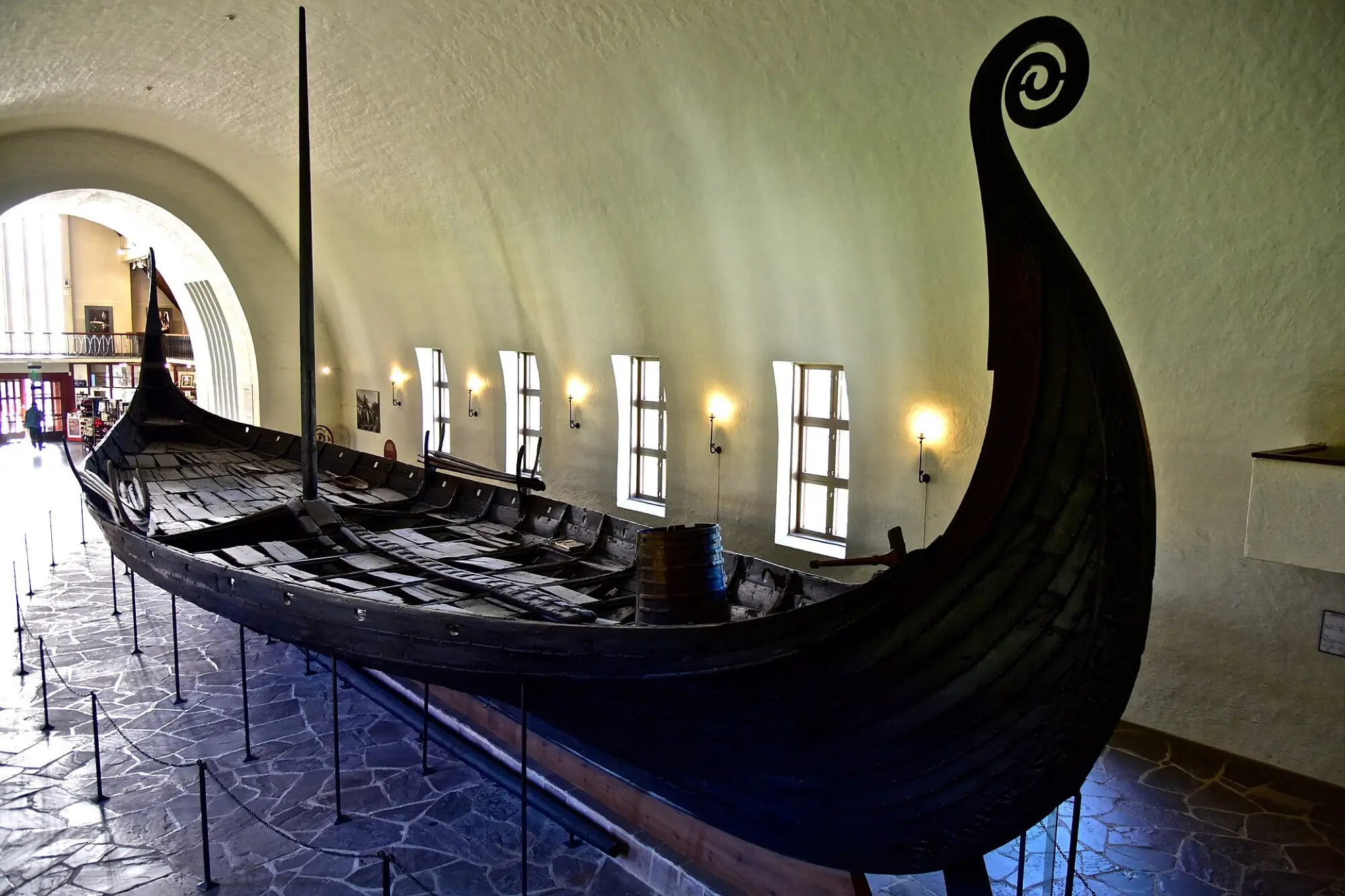

The Viking Ship Museum at Bygdøy has been closed since 2021. The new Museum of the Viking Age, built onto it, will open in 2028 with no date set yet. Until then, Viking Age finds on show in Oslo are at the Historical Museum in the city centre.
Is the Viking Ship Museum open at the moment?
The Viking Ship Museum at Bygdøy was open to the public from 1926 until its redevelopment. The Museum of the Viking Age says it is set to open in 2028, and that the exact opening date has not yet been decided. Ticket sales for the Museum of the Viking Age have not started; tickets will go on sale closer to the opening.
Why the opening moved to 2028
On 23 November 2026 the museum announced that a complete rehabilitation of the 100-year-old museum building pushes the opening of the Museum of the Viking Age into 2028. The museum director, Aud V. Tønnessen, said the work is so extensive that the museum cannot open in 2027 and the opening date is not yet known.
In the revised national budget for 2026, NOK 135 million was moved to rehabilitating the old Viking Ship Museum building. The building will be restored inside and out before the museum opens, including the roof, floors, attic, walls and windows; in return the museum avoids having to close for maintenance shortly after opening. The museum is discussing with Statsbygg, the government's construction and property agency, when the whole new building will be handed over, and will set the opening date once that is settled. In 2022 the project turned out more expensive than expected; construction was put on hold while it was redesigned, which caused delays.
What the new museum will show
The museum calls the Oseberg, Gokstad and Tune ships the best-preserved Viking ships of our time; all three were used at sea before they became burial ships. The ships will be shown with 5,000 other Viking Age artefacts, among them swords and weapons, jewellery, decorated sleighs, textiles, tools and coins. The museum will have two large halls and several smaller exhibition spaces, and many of the objects will be on public display for the first time.
On 30 April 2026 the museum reported that all the Viking ships and the sledges from the Oseberg burial were in place in the new museum building. More than 5,000 artefacts are being moved from storage to the new museum; the first shipment reached Bygdøy in September 2026. The new Museum of the Viking Age will be three times the size of the former Viking Ship Museum, and will have a restaurant, a lecture hall, a museum shop and a museum park. The new museum is built as an extension of the former Viking Ship Museum at Bygdøy, joined to the old building by a glass structure. The old museum building, designed by Arnstein Arneberg, will be the main entrance, in the same place as before, with ticket sales, an auditorium, a museum shop and cloakrooms.
The Oseberg, Gokstad and Tune ships
The Oseberg ship is 21.5 metres long and 5 metres wide, with 15 oar holes on each side, and carried a crew of 32. It was built of oak in south-western Norway in the 820s. After 14 years at sea it was hauled ashore and used as the burial ship for two women in 834. The reconstructed Oseberg ship is about 90 per cent original timber. The ship was found in 1903 at the Oseberg farm near Tønsberg, and was shown at the old Viking Ship Museum from 1926 to 2021. The serpent head on the Oseberg ship is a replica; the original will be shown next to the ship, and is on display at the Historical Museum in Oslo for now.
The museum calls the Gokstad ship the world's largest preserved Viking ship, built for the open sea. It was found in 1880 at Gokstad farm in eastern Norway. The Gokstad ship is 23 metres long and about 5 metres wide, with 16 oar holes on each side. It was probably built around 890 in the Oslo Fjord region, and around 900 it was used as the burial ship for a powerful man. The Gokstad ship was at Bygdøy from 1929, and in October 2025 it was moved into the new Museum of the Viking Age.
The Tune ship was a fast sea vessel; around 910 it was hauled ashore and used as a burial ship. It was excavated at Rolvsøy in eastern Norway in 1867, the first ship excavated in Norway. It was probably about 18.7 metres long and 4.2 metres wide, with room for about 26 men. The Tune ship is less well preserved than the other two, but the museum calls it the most authentic in its collection because it has never been reconstructed.
Getting to Bygdøy once it opens
The museum is about 15 minutes by bus from central Oslo; bus 30 Bygdøy/Bygdøynes stops outside, at the stop Vikingskipene. The Dronningen-Bygdøynes ferry runs from Aker Brygge to Bygdøy, and from the pier it is a ten-minute walk to the museum; Ruter has the timetables. Parking is limited and the museum recommends public transport; there are spaces for visitors with reduced mobility. The museum will publish ticket prices closer to the opening. For other attractions across the city, see our guide to things to do in Oslo.
Where to see Viking finds in Oslo now
The Historical Museum in central Oslo has exhibitions on Norwegian history from the Stone Age to the Viking Age and the Middle Ages, and one of the two best-preserved Viking helmets in the world. The VÍKINGR Viking Age exhibition at the Historical Museum runs until December 2026; its objects then move to the new Museum of the Viking Age. Some VÍKINGR objects are off display at times for conservation before the move. VÍKINGR, designed by Snøhetta, includes the Langeid sword, found in Setesdalen in 2011 and decorated with signs inlaid with gold.
The original serpent head from the Oseberg ship is on show for the first time, in Miðgarðr, a family exhibition on Norse mythology designed for children aged 8 to 12. The serpent head and the other objects in Miðgarðr stay at the Historical Museum for a few years before moving to the new museum at Bygdøy. From 20 November 2026 to 28 March 2027 the museum shows the first coins from the Mørstad hoard, Norway's largest Viking Age coin find, in the Oslo Coin Cabinet; the hoard of 5,500 silver coins was buried around 1046 or 1047.
The Historical Museum is at Frederiks gate 2, at Tullinløkka in the middle of Oslo city centre, near the Nationaltheatret stop where buses, trams, the metro and trains meet. Trams 11, 17 and 18 stop right by the museum, at Tullinløkka. For planning your days, refer to our Oslo itinerary.
Historical Museum: hours and tickets
Opening hours by season at the Historical Museum:
| Period | Monday | Tuesday to Wednesday | Thursday | Friday to Sunday |
|---|---|---|---|---|
| 1 October to 30 April | Closed | 11-16 | 11-20 | 11-16 |
| 1 May to 30 September | Closed | 10-17 | 10-18 | 10-17 |
The hours for 1 October to 30 April also apply in the school autumn and winter holidays. Over Christmas the museum is open 11-16 on 22, 23, 27, 29 and 30 December, and closed on 21, 24, 25, 26, 28 and 31 December and 1 January.
| Ticket | Price |
|---|---|
| Adult | NOK 160 |
| Student | NOK 100 |
| Senior | NOK 120 |
| Children under 18 | Free |
Holders of the Oslo Pass get free admission when they show the pass. From October to April, tickets are half price on the last Saturday of every month. You can buy tickets at the ticket office at the entrance or in advance online.
Viking sites outside Oslo
The Oseberg and Gokstad mounds, where two of the ships were found, and Borre park are in Vestfold, reached on the Vestfold line. The Oseberg mound is in Slagendalen, just outside Tønsberg; when it was excavated in 1904 it held the Oseberg ship and two women buried in AD 834. You can visit the Oseberg mound on your own; a gravelled heritage trail leads to it from the car park at Romsveien.
The Gokstad mound is on Helgerødveien, about two kilometres from the centre of Sandefjord, where the Gokstad ship was excavated in 1880. The Gokstad mound is a small heritage park with information boards and parking by the entrance, and you can explore it without a guided tour.
Borre park, just south of Horten, is one of northern Europe's largest collections of burial mounds from the late Iron Age and Viking Age, with more than 50 mounds and cairns recorded. Borre park is free to visit all year. Midgard Viking Centre is right next to the Borre mounds in Horten. Midgard closes for the season from 14 December and reopens on 13 January. Vestfold line trains from Oslo stop at Skoppum (for Borre), Tønsberg and Sandefjord, among other towns. Read our guide to Viking sites in Norway for details on these locations.