
To experience Sámi culture in Norway, head to Karasjok or Kautokeino on the Finnmark plateau, attend Sámi Week in Tromsø, or visit the Riddu Riđđu festival in Kåfjord. Key dates to plan around include Sámi Week at the beginning of February, the Sámi Easter festival in Kautokeino, and Riddu Riđđu in July. Other focal points include the Sámi Parliament in Karasjok, Saemien Sijte in Snåsa, and museums in Tromsø and Oslo.
Sápmi and the Sámi in Norway today
Sápmi is the traditional homeland of the Sámi people. It stretches across the north of Norway, Sweden, and Finland and onto the Kola Peninsula in Russia, with no formal national borders dividing the cultural region. According to Visit Tromsø, Sámi culture is a living and evolving part of modern society. Sámi people today work in a wide range of professions while keeping and developing their traditions and languages.
Reindeer herding has been an important livelihood and cultural tradition for many Sámi communities for generations and still is, although Sámi culture extends far beyond it. Kautokeino (Guovdageaidnu) and Karasjok (Kárášjohka) on the Finnmark plateau are the most Sámi communities in Norway. In both places, almost everyone speaks Sámi, and old crafts sit side by side with contemporary culture. Visitors will have no trouble using English there.
The Finnmark plateau is the reindeer's winter grazing land; in spring the reindeer move to the coast for the summer grass. The kofte (traditional Sámi clothing) outfits worn in the Sámi homelands are a costume tradition that is constantly evolving, with colours and patterns always changing.
When to go - the Sámi year for visitors
Sámi National Day marks the first Nordic Sámi meeting, held in Trondheim in 1917, and is celebrated in four countries. Sámi Week in Tromsø runs from 31 January to 7 February 2027, around Sámi National Day on 6 February. The main gatherings of the Sámi year for visitors fall in early February, during Easter week, and in July, which can help when choosing the best time to visit Norway.
Easter has long been a time to meet on the Finnmark plateau, before the spring movement of the reindeer herds, and it has grown into Easter festivals in both Kautokeino and Karasjok. The Sámi Easter festival is held in Kautokeino every year during Easter week, and the dates follow Easter. The festival's 2027 programme is still to be announced.
In summer, Riddu Riđđu 2027 is on 7-11 July. For reindeer activities in Tromsø, Tromsø Arctic Reindeer's winter season runs from 31 October 2026 to 4 April 2027. Prices and dates across all regions are as published for the seasons named; check before you go.
Karasjok - the Sámi Parliament
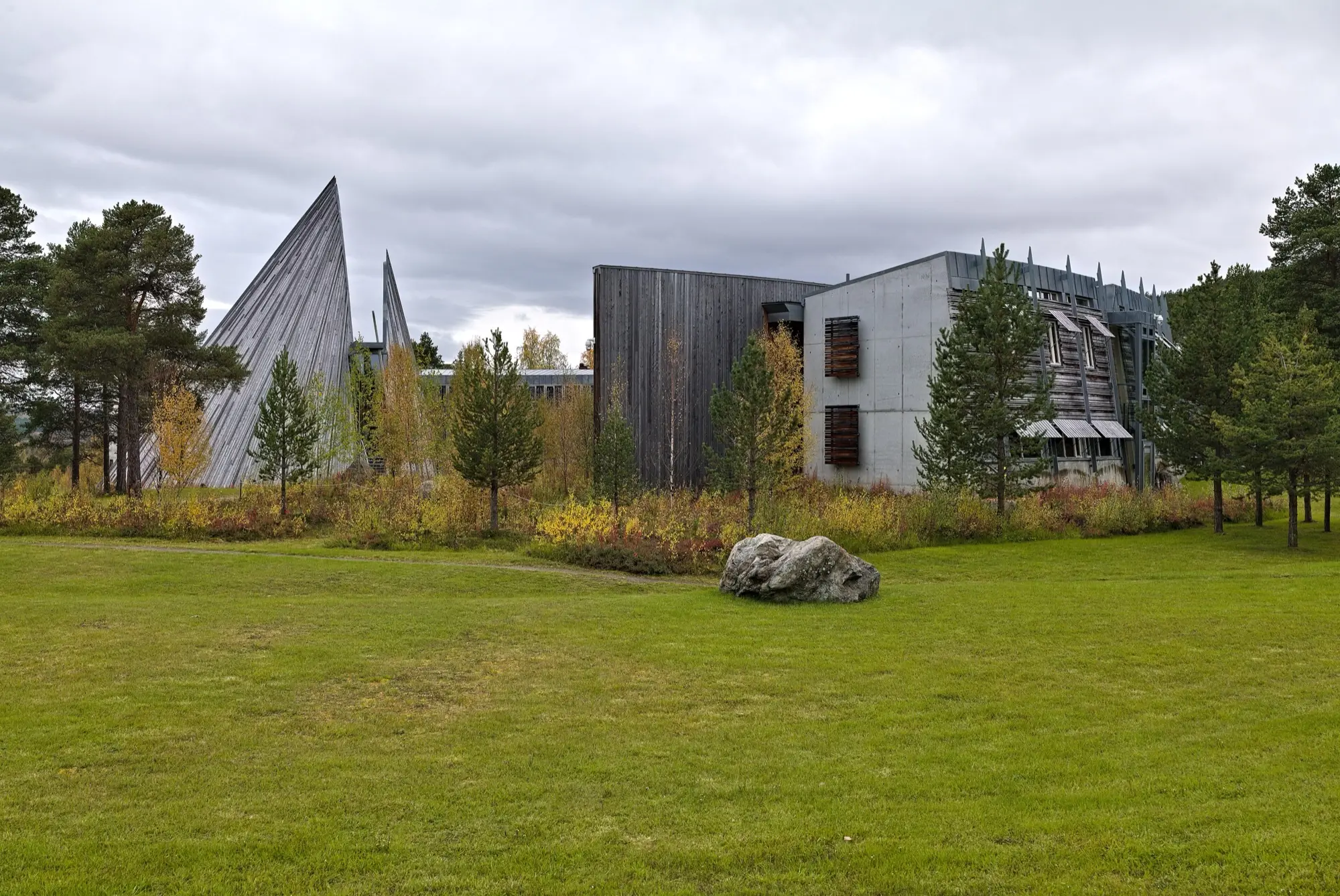
The Sámi Parliament (Sámediggi) in Karasjok runs free drop-in guided tours on Tuesdays, Wednesdays, and Thursdays at 13:00. No booking is needed. The parliament is closed at weekends. Large groups, or anyone wanting another time, email the parliament directly. The Sámi Parliament has 39 representatives elected from seven constituencies and is located at Ávjovárgeaidnu 50 in Karasjok.
The building, clad in Siberian larch, was opened by King Harald in 2000. The plenary hall's shape recalls a lavvu. Its library of 30,000 volumes is Norway's largest collection on the Sámi languages and Sámi subjects, and it is open to everyone.
There are no guided tours in the weeks of committee meetings and plenary sessions. The last such weeks in 2026 are 16-20 November and 30 November-4 December. In 2027 the meeting weeks without tours are:
- 22-26 February
- 8-12 March
- 24-28 May
- 7-11 June
- 27 September-1 October
- 11-15 October
- 15-19 November
- 29 November-3 December
Karasjok - Sápmi Park, the Sámi museum's open-air site and the old church
Sápmi Park in Karasjok, run by Scandic, presents Sámi culture and history through the Magical Theatre, reindeer feeding, joik (a traditional vocal style), lasso throwing, Sámi crafts, and a souvenir shop with its own silversmith. Most of the activities run in the summer months.
In the winter season, 24 August 2026 to 31 May 2027, Sápmi Park is open Monday to Friday 10 am to 4 pm and Saturday 11 am to 3 pm, but the café, cinema, and outdoor area are closed. The summer season in 2026 ran from 1 June to 23 August, Monday to Saturday 10 am to 5 pm. The park is closed on public holidays. Sápmi Park with the Magical Theatre and outdoor guide costs NOK 230 for an adult, NOK 115 for a child, and NOK 550 for a family. The park's Storgammen restaurant, built of four turf huts (gammer), serves Sámi food in summer, including reindeer, fish, game, and berries.
The Sámi Museum in Karasjok, founded in 1972 as the first Sámi cultural institution in Norway, holds the country's largest museum collection of Sámi cultural history, with over 5,000 objects. The museum's indoor exhibitions are closed permanently as the collection is being moved; the open-air museum is open, with a digital guide to its buildings. It sits a couple of minutes' walk from Sápmi Park.
Karasjok's old church, built in 1807, was the only building in Karasjok to survive the destruction of the Second World War. Both Karasjok and Kautokeino are also covered in our guide to the northern lights in Norway.
Getting to Karasjok and Kautokeino
Karasjok has no airport. The usual way in is to fly to Lakselv and take a bus or hire a car. From Finnish Lapland, Eskelisen Lapin Linjat runs buses to Karasjok; tickets are sold through Matkahuolto or on the bus by cash or card. Across the border, Saariselkä and Inari forms the Sámi centre on the Finnish side.
Kautokeino is reached by car or bus. The nearest airports are Alta, 130 km away, and Gällivare in Sweden, 230 km away. Snelandia's regional buses run from Alta to Kautokeino; tickets are cheapest in the Snelandia Mobillett app and can also be bought on board.
Kautokeino - the municipal museum, Juhls' silver gallery and the Sámi Easter festival
Kautokeino Municipal Museum (Guovdageainnu gilišillju), at Boaronjárga 23, is open from autumn to summer Tuesday to Friday 10:00-15:00 and closed Saturday to Monday. Entry costs NOK 150 for an adult, NOK 90 for students and pensioners, and NOK 250 for a family; children under 15 enter free. A joint ticket for all the RiddoDuottarMuseat museums costs NOK 300 for an adult and NOK 500 for a family. Many of the museum's exhibitions are about the traditional clothing of Kautokeino, and a guided tour tells more of the village's history.
Juhls' Silver Gallery, set in a building on the hill above Kautokeino, shows traditional Sámi silver alongside modern silver design. It is the life's work of Frank and Regine Juhls.
The Sámi Easter festival programme includes concerts with both traditional joik and modern Sámi music, alongside reindeer racing, exhibitions, theatre, a duodji (handicraft) market, outdoor activities, and the Sámi Grand Prix. A joik concert held in the school gym in 1971 made joik an annual part of the Easter event, and the first Sámi Grand Prix was held in 1990. Festival tickets are sold online or at the festival office during festival week.
Tromsø - the museum, Sámi Week and the reindeer camps
For travellers spending time in Tromsø in winter, the city offers several accessible ways to learn about Sámi history and modern life. The Arctic University Museum of Norway has several Sámi exhibitions, including «Sápmi - becoming a nation», on the modern Sámi movement and the struggle for rights, and «Rávdnji - the strong current», on Sámi heritage around Tromsø and the consequences of Norwegianisation.
From 16 August to 14 June the museum is open Monday to Friday 10:00-16:30 and at weekends 11:00-16:00. From 15 June to 15 August, it opens weekdays 10:00-18:00 and weekends 11:00-17:00. Adult entry is NOK 130, while children under 18 enter free. A guided tour of the Sámi exhibitions runs every Friday at 13:00 from September 2026 to May 2027; booking ahead is recommended. The museum is at Lars Thøringsveg 10, about 2.5 km from the centre; bus 40 stops at Tromsø museum.
Sámi Week, run by the Midnight Sun Marathon foundation since 2004, features lectures, concerts, exhibitions, and Sámi crafts. On 6 February the day starts with a communal breakfast in the city. The Norwegian lasso throwing championships are on Saturday 6 February 2027; the lasso is a work tool in reindeer herding, and the event is open to everyone who registers by 1 February 2027. The Norwegian reindeer racing championships follow on Sunday 7 February 2027 on Storgata. Reindeer pull drivers on skis over a 201-metre sprint and can reach up to 60 km/h. Tickets for the reindeer racing cost NOK 250 for adults, free for children under 16, and are sold at Tromsø Kulturhus.
Many Tromsø experiences are hosted by Sámi families and reindeer herders who share their own knowledge and their view of contemporary Sámi life. Many combine reindeer with traditional food, storytelling, and joik, a distinctive Sámi vocal tradition. Some hosts serve bidos (a traditional Sámi reindeer stew) around a fire inside a lavvu. Most reindeer experiences are outside the city centre; some include return transport from Tromsø and others need you to reach the meeting point yourself.
Tromsø Arctic Reindeer is run by a Sámi reindeer-herding family. Its camp is 30 minutes from Tromsø and transport is included. Tours start from NOK 990 per adult for the shortest reindeer feeding visit (about 3 hours) and from NOK 2,090 for the 4-hour visit with a 25-30 minute sled ride.
Riddu Riđđu in Kåfjord
Riddu Riđđu is an international Indigenous festival held every year in Manndalen in Kåfjord, mostly outdoors, with music, performing arts, literature, a children's festival, a youth camp, seminars, art, and film. Riddu Riđđu 2027 is on 7-11 July. It began in 1991, when young people in Kåfjord decided to be proud of their Sea Sámi background and, through music and culture, to turn shame into pride.
The nearest airport is Tromsø, and the drive from Tromsø to Manndalen takes about two hours. Buses run from Tromsø to Manndalen every day except Saturdays, stopping at Løkvoll; timetables are on Svipper.
Camping is free on the festival's two campsites: a festival camp for over-18s and a quieter family camp. Bring your own tent. In 2026 a full festival pass cost NOK 2,300 for an adult, NOK 950 for ages 14-17, and NOK 850 for children aged 3-13. Tickets are not refundable.
Snåsa - Saemien Sijte and the south Sámi
Saemien Sijte in Snåsa is the only South Sámi museum and has national responsibility for South Sámi culture, in an area from Saltfjellet in the north to Engerdal in the south. Its new building at Horjemstangen, Snåsavegen 340, opened in June 2022.
The museum is open Tuesday, Wednesday, and Friday from 11 to 15 and Thursday from 12 to 20. Entry to the exhibitions costs NOK 100, or NOK 80 for seniors and students; children up to 15 enter free. Its restaurant puts Sámi traditional food and local produce first, and the shop sells Sámi literature, crafts, and design. Snåsa station is on the Nordland Line, with trains running towards Trondheim and Bodø.
Only in Oslo - the Sámi exhibition at Norsk Folkemuseum
Visitors who do not make it north can still see Sámi heritage at Norsk Folkemuseum on Bygdøy in Oslo. The Sámi culture exhibition shows daily life in Sámi communities from the end of the 19th century towards the middle of the 20th, with the emphasis on hunting, fishing, farming, and reindeer pastoralism. A large collection of garments from North, East, Lule, and South Sámi areas shows the diversity of Sámi culture.
A separate section covers recent times, including the Alta controversy around 1980, the founding of the Sámi Parliament in 1989, and new Sámi literature, music, film, and theatre. Under the Bååstede project, ownership of more than 1,600 objects passed to the Sámi museums in 2019, and many objects in the exhibition are being returned to them.
Entry to Norsk Folkemuseum costs NOK 200 for an adult; children aged 0-17 enter free. From 5 October to 30 April the museum is open Tuesday to Sunday 11.00-16.00 and closed on Mondays. From 1 May to 4 October, it is open every day 10.00-17.00.