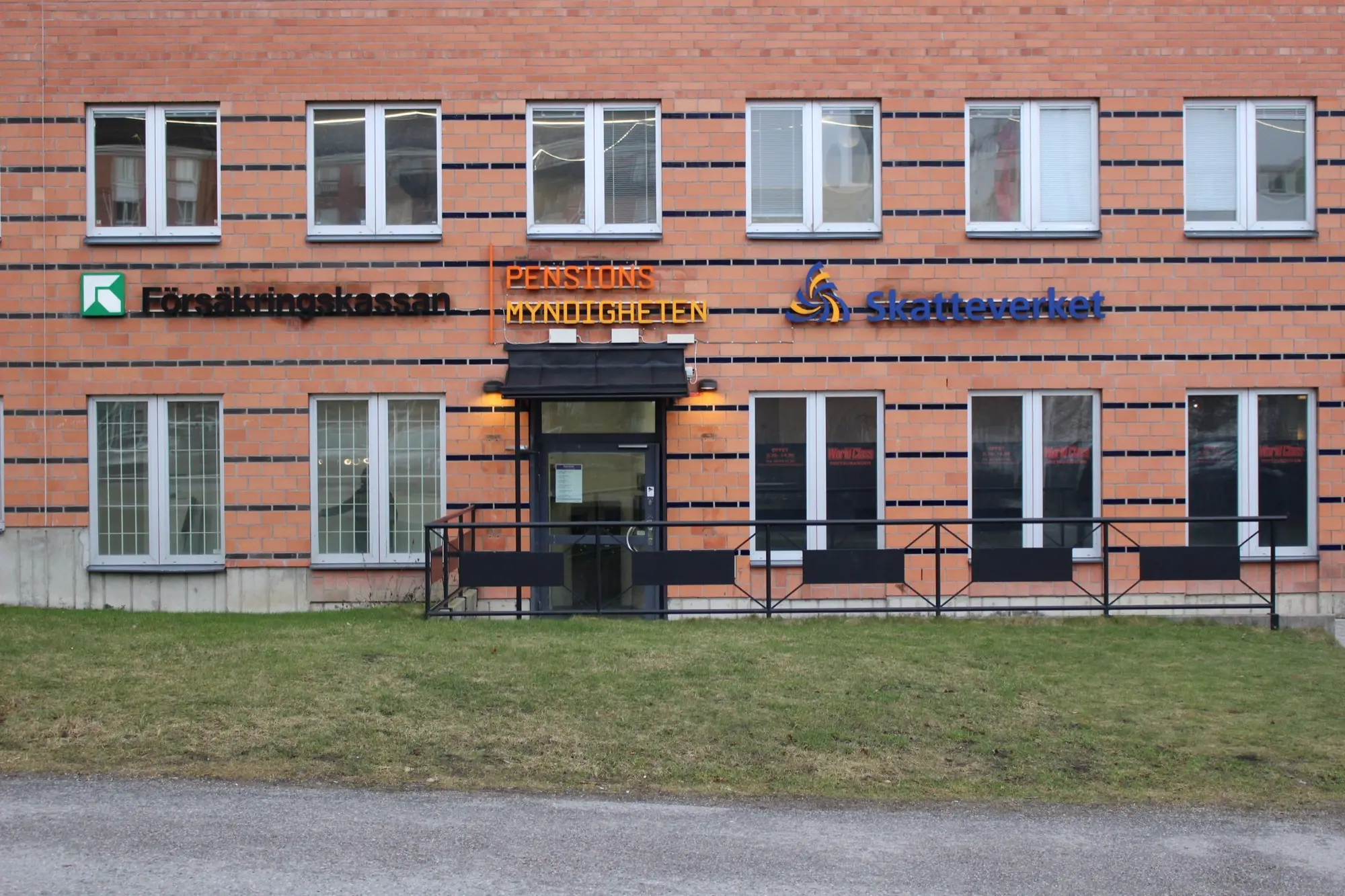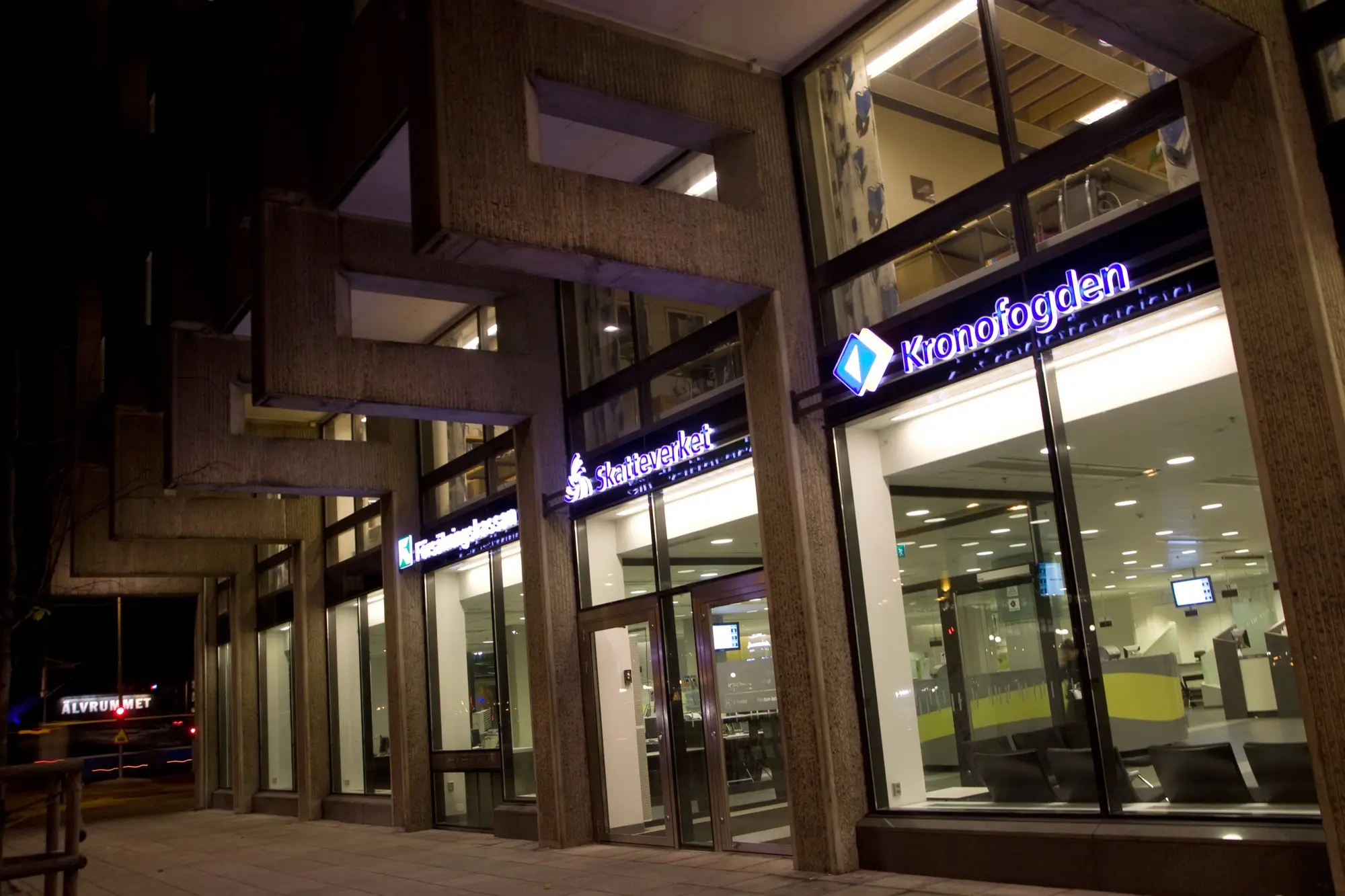
What you must do first when moving to Sweden depends on the passport you hold. EU, EEA, and Nordic citizens do not need a permit, while non-EU/EEA citizens must have a Swedish residence permit to be registered. For work, the general rule is that the permit must be granted before entering Sweden. Once you arrive for a stay of a year or more, being listed in the Swedish Population Register by the Swedish Tax Agency (Skatteverket) is the single step that unlocks your personal identity number, identity card, and local banking.
Before you move — the route your passport decides
Your nationality determines your legal right to enter Sweden and start work.
Citizens of the European Union and the European Economic Area (EEA) have the right of residence (uppehållsrätt). This gives EU/EEA citizens the right to live, work, run a business, or study in Sweden without a residence permit. You may stay for up to three months using a valid national ID card or passport. If you stay longer than three months, you must be employed, self-employed, studying, or have sufficient funds to support yourself. As long as you meet these conditions, you do not need to contact the Swedish Migration Agency (Migrationsverket). You can begin your job or course on arrival, and you acquire the permanent right of residence after at least five years.
Citizens of Denmark, Finland, Norway, and Iceland do not need any permit to move to Sweden. However, they must report their move and be registered if they plan to stay for one year or longer.
If you hold a passport from a country outside the EU, EEA, or Switzerland, you must have a Swedish residence permit to be registered as living in Sweden. For work, you need both a work permit and a residence permit. The main rule is that you must apply for and receive your work permit before entering Sweden. You can check the application process in our guide to the Sweden work permit requirements and fees.
Several rules for work permits changed during 2026:
- Salary requirement: Since 1 June 2026, work permit applicants must earn at least 90 per cent of the Swedish median salary. From 16 June 2026, the official median salary figure is SEK 38,300, which means your gross monthly pay must be at least SEK 34,470.
- Insurance: The new rules include a requirement for comprehensive health insurance.
- Permit categories: Specific minimum salary levels apply to seasonal and Intra-Corporate Transferee (ICT) permits.
- Good-conduct checks: Since 13 July 2026, stricter good-conduct (vandel) assessments apply to residence permit applicants. These checks look into unpaid debts and verify that you have provided accurate information when applying for benefits.
Arriving and registering — folkbokföring and the personal identity number
If you move to Sweden and plan to live in the country for one year or more, you should, in most circumstances, be listed in the Swedish Population Register (folkbokföring). Registration is compulsory under Swedish law, and avoiding it is a criminal offence. Although the Population Registration Act requires anyone who moves from abroad and must be registered to notify Skatteverket within one week of having stayed in Sweden for three months, you should not wait: the personal identity number unlocks almost everything, and Skatteverket takes about 5 weeks before a case is even assigned to an administrator.
To begin, submit a notification through the Skatteverket Moving to Sweden e-service (Flytta till Sverige), which is available in English, Swedish, Arabic, and Ukrainian. You can submit this at the earliest 14 days before your move. Every moving family member needs a separate submission.
Once you arrive, you must complete the process in person:
- Attend an identity check: You and every family member moving with you must visit a state service centre in person for an identity check. You must book this identity check in advance at selected centres.
- Provide your documentation: Non-EU/EEA citizens must show a valid residence permit card from Migrationsverket. A residence permit issued by another EU or EEA state is not valid for registration in Sweden; you must hold a Swedish permit.
- Provide your residential address: You must state the exact address where you live and sleep, including your official four-digit apartment number. Your name must be placed on the door or postbox. Skatteverket does not accept care-of (c/o) addresses.
Skatteverket states that it takes about 5 weeks for a moving case to be assigned to an administrator. Cases are handled in order of receipt.
When you are entered into the register, Skatteverket records your name, residential address, date of birth, and civil status, and issues your Swedish personal identity number (personnummer). If you are employed in Sweden but will live here for less than a year, you should not be registered in the Population Register; you will receive a coordination number (samordningsnummer) instead. You can read how these systems differ in our guide to the personnummer and samordningsnummer.
On 17 June 2026, the Swedish Parliament (Riksdagen) approved legislation granting Skatteverket expanded powers in population registration. These changes take effect on 1 December 2026 and introduce a new criminal offence for promoting incorrect registration, alongside expanded authority to collect and use biometric data.
ID card, bank account, BankID and paying without cash
Once your personal identity number is issued, you can apply for an identity card, open a Swedish bank account, obtain an electronic identity (e-ID), and set up the Swish mobile payment service. A bank account is necessary for receiving salary payments and paying domestic bills.
Currently, to get a Skatteverket ID card, you must already be registered in the Population Register with a personal identity number, prove your identity, and pay a SEK 400 fee before your appointment. From 1 December 2026, anyone applying for a new ID card should go to the Swedish Police Authority (Polismyndigheten) rather than Skatteverket.
A legal resident of Sweden or another EU/EEA country has a legal right to a payment account with basic functions. The bank must make this decision within ten business days. However, BankID and Swish are not part of the basic functions.
There are three main e-IDs used in Sweden:
- BankID: Issued directly by your Swedish commercial bank.
- Freja+: Accessed through the Freja eID mobile app.
- Skatteverket ID card: Contains an electronic identity stored on the card chip.
To use the mobile payment service Swish, you need a Swedish bank account, a BankID, and a Swedish mobile telephone number. Daily commerce in Sweden relies heavily on digital payments. According to an official Riksbank survey, only 5 per cent of respondents used cash for their most recent in-store purchase, and roughly one in three who attempted to pay with cash had it refused by a retailer.
Healthcare and social insurance — before and after you are registered
Once registered in the Population Register, you can access medical and dental care on the same terms as other residents, paying standard regional patient fees (patientavgift).
Your healthcare coverage prior to registration depends on where you are insured:
- Insured in the EU, Liechtenstein, or Switzerland: You pay standard Swedish patient fees before registration if you present a European Health Insurance Card (EHIC) ordered from the country where you are insured.
- From outside the EU, EEA, or Switzerland: Anyone has the right to emergency care in a medical crisis. However, most non-EU/EEA residents who are not yet covered in Sweden must pay the full medical cost themselves for emergency, necessary, or planned treatment.
In a life-threatening emergency, call 112. For non-urgent health advice, you can dial 1177 to reach the national healthcare advice line, which is staffed by registered nurses 24 hours a day.
Social insurance is administered by the Swedish Social Insurance Agency (Försäkringskassan). Coverage is based on whether you live or work in the country; nationality alone does not decide eligibility. If you move to Sweden with children under the age of 16, Försäkringskassan will contact you directly following your population registration. If you move without children under 16, you provide your details online or by using form 5456 when you apply for an EHIC or a benefit.
Learning Swedish
Municipalities provide free language tuition through Swedish for Immigrants (Svenska för invandrare, or SFI). You are entitled to SFI from 1 July of the calendar year you turn 16, provided you lack basic Swedish language skills and are or will be registered in the Population Register. If you are an EU citizen who has not yet received a personal identity number, you can ask your municipality about enrolling.
SFI courses are organised by your local municipality (kommun). You can study either full-time or part-time to accommodate a work schedule. Time limits apply to SFI courses:
- Anyone enrolling after 1 January 2026 must complete their studies within three years.
- Students who enrolled before 1 January 2026 must complete the course by 31 December 2028.
- A municipality may grant an extension beyond these limits in individual cases.
The Swedish Public Employment Service (Arbetsförmedlingen) notes that finding a job without basic Swedish is difficult, and most positions require fluency. While English is often the working language in some highly skilled sectors, learning Swedish remains central to entering the wider labour market.
Work, pay, tax and driving
Open vacancies throughout the country are advertised on Platsbanken, the official job portal managed by Arbetsförmedlingen and the largest employment site in Sweden.
Sweden has no statutory minimum wage set by law. Instead, wage floors and working terms are negotiated through collective bargaining agreements (kollektivavtal) between trade unions and employer associations. You can read more about typical wage structures in our guide to the Swedish minimum wage and average salaries.
If you work in Sweden, your employer deducts income taxes directly from your payslip. Residents pay municipal income tax, the rate of which varies depending on the municipality where you live. Workers above a specific income threshold also pay a national state tax. See our guide to income tax in Sweden for regional breakdowns and allowances, or review overall costs in our overview of the cost of living in Sweden.
If you plan to drive, the validity of your current licence depends on where it was issued:
- EEA driving licences: Remain fully valid for driving in Sweden.
- Non-EEA driving licences: Stop being valid once you have been listed as a registered resident in the Population Register for more than one year.
- Licence exchanges: Only driving licences issued by the United Kingdom, the Faroe Islands, Switzerland, and Japan can be exchanged directly for a Swedish licence without retaking driving tests.
Staying long term — what changed in 2026
Stricter requirements for Swedish citizenship came into effect on 6 June 2026. These rules apply immediately to all applicants, with no transitional arrangements for applications that were already submitted and pending on that date.
Under the updated Swedish Citizenship Act:
- Residence periods: The standard continuous residence requirement is at least eight years. Nordic citizens must have lived in Sweden for at least two years. Spouses or cohabiting partners of Swedish citizens must have resided in the country for at least seven years.
- Maintenance requirement: Applicants aged 18 to 67 must show financial self-sufficiency. You must earn a minimum of three income base amounts (inkomstbasbelopp) before tax, which equals SEK 250,200 for 2026 (or SEK 20,850 per month).
- Conduct: Stricter rules include having lived an orderly life.
- Language and civic knowledge: Applicants must demonstrate knowledge of both the Swedish language and Swedish society. On 30 September 2026, Migrationsverket reported that the Swedish Council for Higher Education (UHR) recommended postponing the introduction of the official Swedish language test. While that specific test is delayed, the legal language requirement remains in force and can be satisfied by other evidence, such as a passing grade from the highest tier of SFI. The society test continues as planned.
- Application fee: The application fee is SEK 2,900.