
You can reach Drottningholm, Birka, Uppsala, Sigtuna, Mariefred and Gripsholm, Skokloster, Rosersberg, Vaxholm, Fjäderholmarna, Sandhamn and Grinda, Södertälje, and Trosa with Tullgarn easily from central Stockholm. Most lie within 90 minutes by commuter train, bus, or boat across Lake Mälaren and the Baltic archipelago. Plan departures ahead, as boat services vary between seasons.
Day trips from Stockholm at a glance
Several destinations, including Uppsala, Mariefred and Sigtuna, are towns within 90 minutes of central Stockholm by car. While planning things to do in Stockholm, remember that public transport links many regional stops directly. SL commuter boats from Nybroviken and Slussen run to Djurgården and Hammarby Sjöstad, and your standard SL card covers travel from Slussen. Before booking outer island accommodation or deciding where to stay in Stockholm, use the table below to compare travel options across the region.
| Place | How to get there | Travel time | Best for |
|---|---|---|---|
| Drottningholm Palace | Bus from Brommaplan, summer ferry, or ferry line 89 | 45 minutes by ferry (winter takes 30 minutes more) | Royal history and gardens |
| Birka | Boat across Lake Mälaren | 2 hours | Viking archaeology |
| Uppsala | Train or car | Within 90 minutes by car | Oldest university building and botanical garden |
| Sigtuna | Car or regional transit | 1 hour by car | Medieval churches and rune stones |
| Mariefred and Gripsholm Castle | Train or car | 1 hour by train; about 1 hour by car | Historical portraits and royal rooms |
| Skokloster Castle | Public transit or car | About 1 hour from Stockholm Central | Baroque collections and art |
| Rosersberg Palace | Train to Rosersberg station, then walk | Not specified (2-km walk from station) | Royal interiors and textiles |
| Vaxholm | Bus from Tekniska högskolan or archipelago boat | Not specified | Gateway to the archipelago |
| Fjäderholmarna | Fjäderholmslinjen boat | About 20 minutes | Quick island dining and art |
| Sandhamn and Grinda | Waxholmsbolaget boat (some routes need land transfers) | Not specified | Outer island visits |
| Södertälje | Commuter train from T-Centralen | Not specified | Science museum and open-air history |
| Trosa and Tullgarn Palace | Car | 90 minutes by car | Coastal town and royal summer palace |
1. Drottningholm Palace
Drottningholm Palace was inaugurated in 1730 and has served as the official residence of King Carl XVI Gustaf since 1981. It features a Baroque garden, a palace theatre, and a Chinese Pavilion. As noted by Visit Stockholm's world heritage overview, it is one of the city's three UNESCO World Heritage Sites, alongside Birka and the Woodland Cemetery. Buses run regularly from Brommaplan, and a ferry runs in summer. Alternatively, SL commuter ferry line 89 from Klara Mälarstrand near City Hall runs to Tappström on Ekerö in 45 minutes (taking 30 minutes more in winter) for a standard metro fare, offering views of the palace from the water. For more details on routes and admission, see the guide to Drottningholm Palace.
2. Birka, the Viking town
Birka was an active Viking trading outpost established around 750 AD. Located in Lake Mälaren, the entire settlement is preserved as an open archaeological site accompanied by an on-site museum. You reach Birka by taking a boat excursion across Lake Mälaren, which takes two hours each way. The site provides a direct look into early Scandinavian trade and settlement, making it a classic excursion for visitors interested in Sweden's pre-medieval past.
3. Uppsala
Uppsala is Sweden's fourth-largest city and sits along the banks of the Fyris river. It is celebrated for its historic university seat. The city's main sights include the Gustavianum (the university's oldest surviving building) and the Linnaeus botanical garden. You can reach Uppsala by car within 90 minutes from Stockholm, or by regular rail lines. It works well as an independent full-day trip focused on academic architecture, botanical collections, and riverside walking. You can read more about planning an Uppsala day trip from Stockholm.
4. Sigtuna
Founded in the 10th century, Sigtuna stands as one of Sweden's oldest towns. It served as a royal seat into the 13th century and sits an hour's drive north of central Stockholm. Around the modern town, you can explore preserved medieval church ruins and numerous historic rune stones. Its compact layout along Lake Mälaren makes it simple to explore entirely on foot once you arrive by car or connecting local transit.
5. Mariefred and Gripsholm Castle
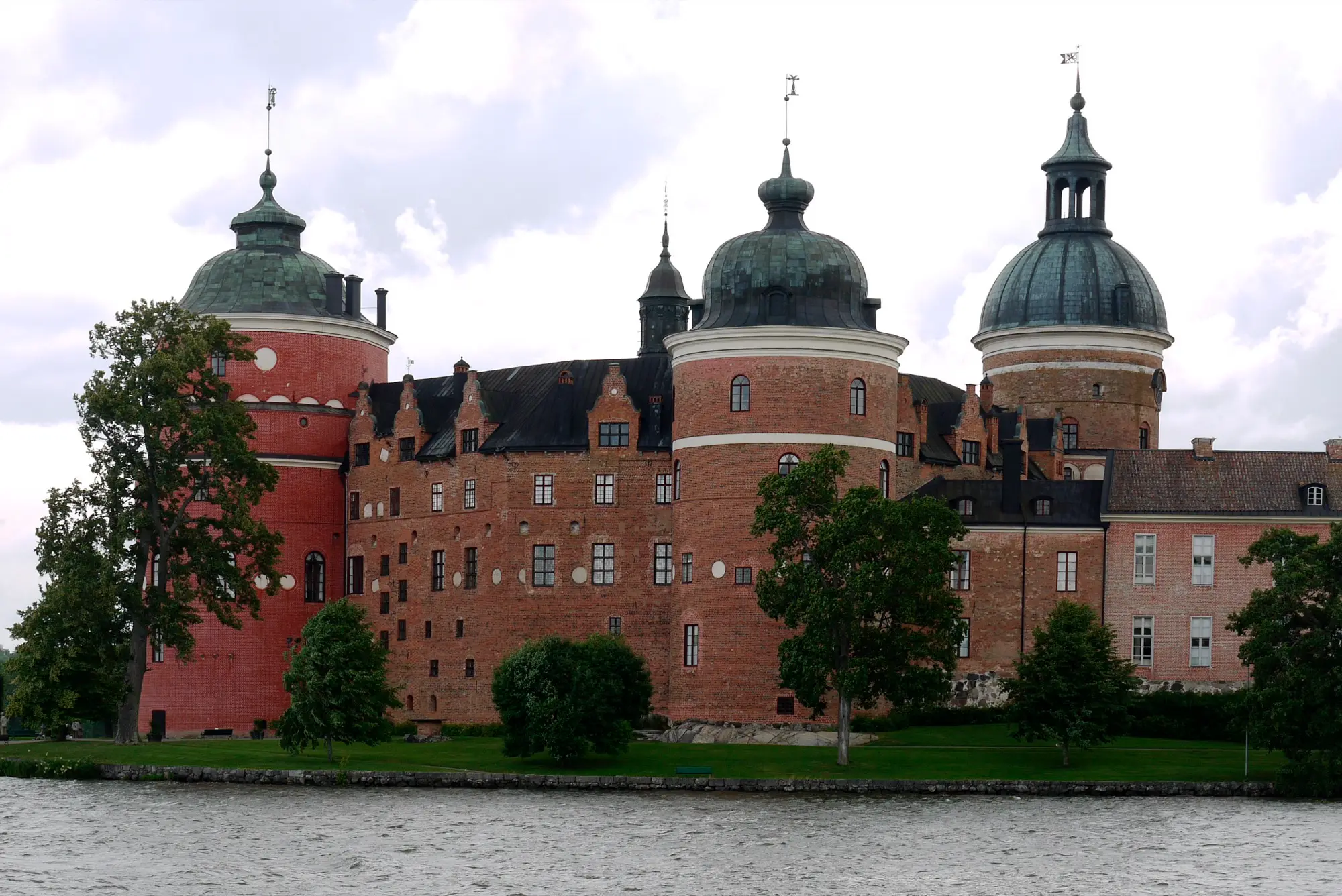
Mariefred sits on Lake Mälaren, has 7-8,000 inhabitants, and is about an hour's drive from Stockholm. Gripsholm Castle, located here, is accessible in an hour by train from the capital. Built for King Gustav Vasa in the 1500s, it preserves rooms from that era, along with Gustav III's later palace theatre. Visit Stockholm's historic castles guide highlights that the castle houses the National Portrait Gallery's 4,700 portraits of Swedes dating back to the 16th century. Its best-loved exhibit remains Leo, an 18th-century stuffed lion created by a taxidermist who had probably never seen one.
6. Skokloster Castle
Skokloster Castle was built in the early 1600s and ranks as Sweden's largest private castle. It has been under state care since 1967. The interior houses notable collections, including famous paintings by Giuseppe Arcimboldo such as Vertumnus. The castle sits about an hour from Stockholm Central. Because it preserves seventeenth-century craftwork and intact state apartments, it provides one of the clearest windows into Sweden's period as a great European power.
7. Rosersberg Palace
Rosersberg Palace was constructed in the 1630s and has remained in royal care since 1762. The estate retains its original interiors and furnishings from the era of Karl XIV Johan and Queen Desideria, alongside an extensive historic textile collection. To reach the palace using public transport, take the commuter train out to Rosersberg station, from which the estate grounds are an easy 2-km walk.
8. Vaxholm
Vaxholm serves as the primary northern gateway to the archipelago. Buses heading out towards Roslagen, Vaxholm, and Norrtälje depart from the bus terminal at Tekniska högskolan in central Stockholm. In addition, Waxholmsbolaget runs year-round archipelago passenger boats directly to Vaxholm from city piers. The town offers coastal fortifications, waterfront paths, and connections onwards to smaller outer islands.
9. Fjäderholmarna
Fjäderholmarna is among the closest archipelago islands to central Stockholm. You can reach the island group in about 20 minutes by boarding the dedicated Fjäderholmslinjen boat service. Because the transit time is very short, it is ideal for an afternoon escape. The island features waterfront restaurants, craft studios, and art exhibitions, giving you a fast introduction to the Stockholm archipelago without requiring long maritime travel.
10. Sandhamn and Grinda
Waxholmsbolaget operates archipelago passenger vessels all year to Sandhamn, Grinda, Möja, Nämdö, Utö, and many other islands. Exploring the outer reaches is especially popular when spending Midsummer in Sweden on the water. If you travel during the low season, an SL period ticket is valid for travel on Waxholmsbolaget's boats. Some island routes require an initial train or bus journey before changing from land transport to a boat, so plan your route connections carefully before setting out. Consult our guide to the Stockholm archipelago and how to get there when planning specific island crossings.
11. Södertälje
Södertälje lies just south of Stockholm and can be reached directly by commuter train from T-Centralen. A customary food to try here is the local pretzel, known as a södertäljekringla, which you can sample at the Torekällberget open-air museum. For families, the interactive Tom Tits science museum provides experimental galleries and demonstrations that specifically suit children.
12. Trosa and Tullgarn Palace
Trosa is a former fishing hamlet located 90 minutes south of Stockholm by car. It has served as a seaside holiday retreat since the late 1800s and maintains an active guest harbour. Nearby stands Tullgarn Palace, which is said to have been King Gustav V's favourite royal residence. He regularly spent his summers at Tullgarn hunting, fishing, and playing tennis on his private court.