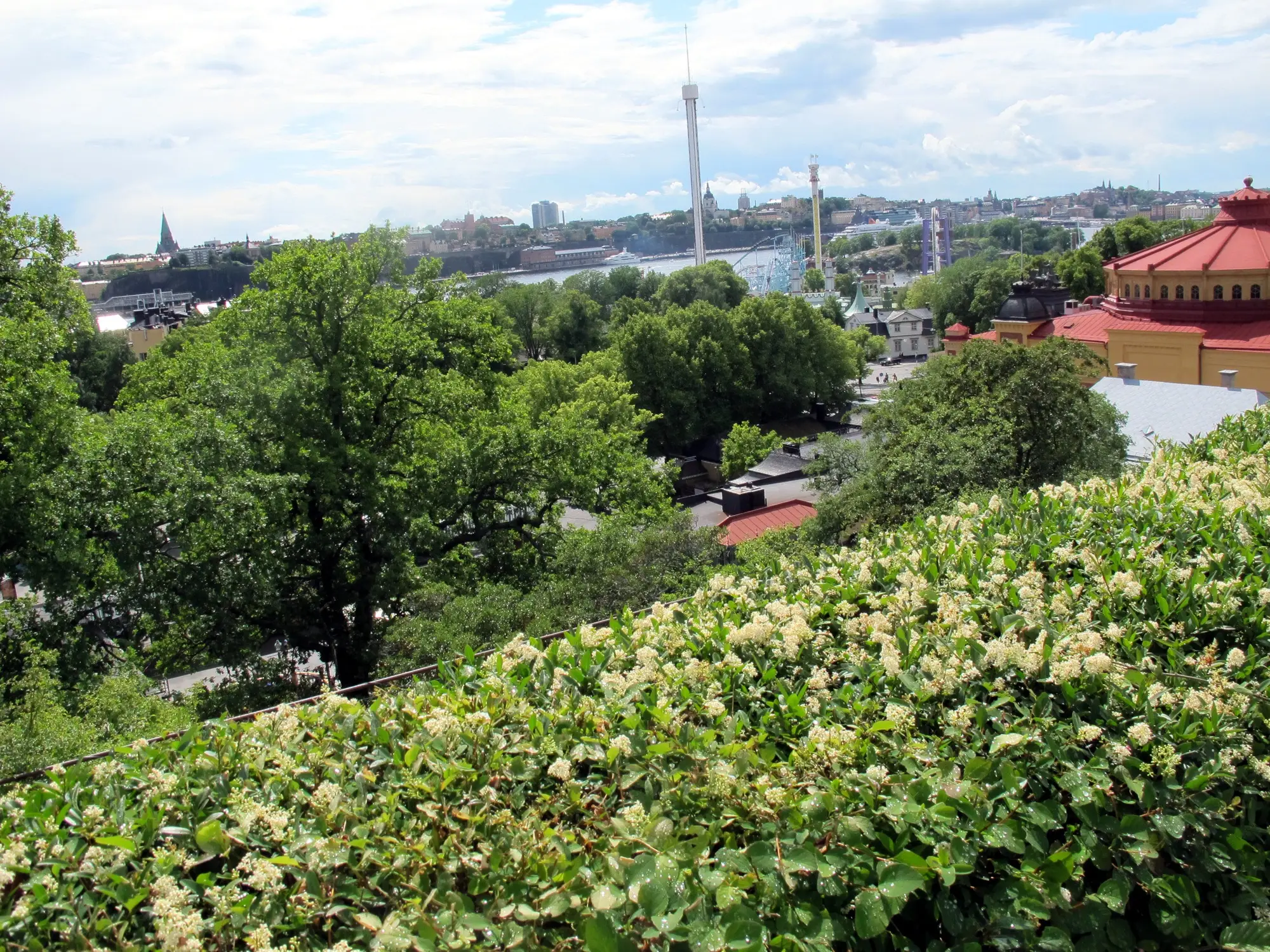

Skansen on Djurgården, opened by Artur Hazelius on 11 October 1891, is the world's oldest open-air museum, with historic houses from all over Sweden and Nordic animals. Children aged 0 to 15 enter free, and tickets are cheapest online. In winter, Skansen opens 10.00 to 15.00 on weekdays and 10.00 to 16.00 at weekends, and the Christmas market runs Friday to Sunday from 27 November to 20 December 2026.
Opening hours, 2026 and 2027
Skansen adjusts its operating times throughout the year. The schedule below sets out the late 2026 dates and the complete 2027 timetable published by the museum.
| Period | Opening hours |
|---|---|
| 28 September 2026 to 10 January 2027 (standard winter) | Weekdays 10.00-15.00, weekends 10.00-16.00 |
| 27 November to 20 December 2026 (Christmas market days) | Friday and Saturday 10:00-17:00, Sunday 10.00-16.00 |
| 24 December 2026 (Christmas Eve) | 10:00-14:00 |
| 25 December 2026 to 10 January 2027 (holiday season) | 10:00-16:00 daily |
| 11 January to 24 March 2027 | Weekdays 10.00-15.00, weekends 10.00-16.00 |
| 25 March to 29 April 2027 | Daily 10.00-16.00 |
| 30 April 2027 (Walpurgis Night) | 10.00-21.00 |
| 30 April to 30 May 2027 | Daily 10.00-17.00 |
| 31 May to 29 August 2027 (standard summer) | Daily 10.00-18.00 |
| 6 June 2027 (National Day) | 10.00-20.00 |
| 25 June 2027 (Midsummer Eve) | 10.00-22.00 |
| 30 August to 3 October 2027 | Daily 10.00-17.00 |
| 4 October to 7 November 2027 | Daily 10.00-16.00 |
The 2027 summer, holiday and autumn hours above reflect the official 2027 schedule Skansen publishes.
Tickets
A standard one-day ticket covers admission to Skansen, the Baltic Sea Science Center, and Lill-Skansen (the children's zoo). The exact price of admission varies with the season, but tickets cost slightly more at the gate than online, so purchase your entry in advance on the Skansen ticket portal to secure the lowest rate.
Children aged 0 to 15 enter free of charge. However, every child still requires a free ticket booked either online in advance or collected directly at the entrance. Children under 13 must come with an adult.
Students receive an admission discount upon presenting a valid student ID at entry. There are no group discounts available. If you plan to return, an annual pass is valid for 12 months and pays for itself by your second visit.
What is at Skansen
Skansen is located at Djurgårdsslätten 49-51 on the island of Djurgården, making it easy to combine with other stops featured in our guide to things to do in Stockholm or a visit to the nearby Vasa Museum.
Artur Hazelius founded the site by moving authentic timber houses and farms from across Sweden onto the hill of Skansenberget. Rather than displaying silent objects, he replaced costumed dolls with living craftspeople who spin yarn, weave fabrics, and demonstrate regional trades to produce a functioning, living museum.
According to Visit Stockholm, the grounds include a Nordic zoo as well as two aquariums. General admission includes complete access to Lill-Skansen as well as the Baltic Sea Science Center, where indoor exhibits display regional marine environments and native aquatic life.
The year at Skansen
Skansen is the central gathering place for major seasonal traditions throughout the calendar year:
- Walpurgis Night (Valborgsmässoafton): Spring welcoming fires were first celebrated at Skansen in 1892, establishing an annual gathering on 30 April.
- National Day: Skansen hosts Sweden's official National Day celebrations on 6 June, which include an evening concert attended by the Swedish royal family.
- Midsummer: Marking the summer solstice, Midsummer in Sweden lasts three full days at Skansen, running continuously from morning until late night.
- Christmas market (Julmarknad): Part of the broader circuit of Swedish Christmas markets, Skansen's traditional market has run each winter since 1903.
- Lucia: Sweden's very first public Lucia procession took place at Skansen in 1893, beginning a tradition explained in our guide to St Lucia Day in Sweden.
- New Year's Eve: Ever since 1895, a live recitation of Alfred Tennyson's poem "Ring Out, Wild Bells" has been read from the Skansen stage at midnight.
A short history
Skansen developed alongside the broader preservation movement led by Artur Hazelius during the late nineteenth century:
- 30 November 1833: Artur Hazelius is born.
- 1880: Hazelius establishes the collection that becomes the Nordic Museum (Nordiska museet).
- 1885: Hazelius purchases the Mora farmstead (Moragården), which becomes the foundational building of the Skansen collection.
- 11 October 1891: Hazelius officially opens Skansen to the public.
- 1897: The Skansen funicular railway (Bergbanan) is constructed to transport visitors up the hill for the Stockholm exhibition.