
To understand Estonian food, taste black rye bread (must leib), the sprat sandwich (kiluvõileib), smoked fish, mulgipuder, mulgikapsad, verivorst and sült, pirukad, kama, kohuke, marzipan, kali and Vana Tallinn.
1. Must leib: black rye bread, on every table
Dark rye bread, called must leib (black bread) in Estonian, has been an essential part of Estonian cuisine for centuries. Rye has been grown in Estonia for more than a thousand years, and in the Middle Ages Estonia was known across Europe as a major rye exporter. The winter rye variety Sangaste, created by Count Friedrich Georg Magnus von Berg in 1875 at Sangaste Manor in south Estonia, is the oldest cultivated rye variety in the world, according to Visit Estonia.
At a meal Estonians say "jätku leiba!", which works like bon appétit and literally means "may you always have bread". An old custom says a dropped slice of bread is not thrown away but picked up, kissed and eaten. The ingredients of a rye loaf are simple, water, rye flour, salt, sugar and leaven, but the process is long.
Most restaurants serve black bread as a starter, and some sell loaves to take away. Visit Estonia's listing for Restaurant Rataskaevu 16, at Rataskaevu 16 in central Tallinn, says to try the bread baked in the restaurant and to book, as it is very popular. Rukkimaania, a sourdough café-bakery at Tartu mnt 68/1 in central Tallinn, makes all its breads without sugar, sweetening them with dates, and opens Tuesday to Friday 08:30 to 14:00.
2. Kiluvõileib: the sprat sandwich for every occasion
Kiluvõileib is a sprat sandwich on rye, sometimes with a boiled egg, sometimes with the fish and egg mixed into a spread. Estonians serve sprat sandwiches on all special occasions, from weddings and funerals to birthdays and New Year's Eve. The sprat sandwich is also popular in Slavic cuisine, but Visit Estonia says its roots are local, since the Baltic Sea is full of sprats. Northern Estonia leans on sprats and herring, while the south is proud of dark bread, cereals and honey.
The Kolu tavern at the Estonian Open Air Museum in Tallinn recreates how 19th-century peasants ate, and its menu includes mulgi porridge, bread, kali and sprat sandwiches.
3. Smoked fish: herring from the Kihnu smoke ovens
Estonians eat a lot of fish, and herring, pike-perch and smoked fish are perennial favourites at restaurants serving traditional food. Fish, smoked, grilled, pickled or fried, can be found almost everywhere in the country, and the islands are known for smoked fish. On Kihnu island Baltic herring (räim) is caught in spring and autumn, not all year, so it is stored for a long time.
Estonia's intangible cultural heritage register records that every Kihnu household now has a smoking oven; the first were built on the island in the 1960s; herring is smoked for two to three hours over alder wood and eaten mainly with bread. On Kihnu, Kohalik Amps serves fish caught by the local fisherman Rannametsa Valdo, smoked and eaten beside the smoke oven in his yard; prices start at 1 euro and depend on the season and the size of the fish. Kohalik Amps, at Rannametsa in Linaküla on Kihnu island, takes advance bookings only.
Kolkja Fish and Onion Restaurant, at Ranna tn 5 in Kolkja on the Onion Route by Lake Peipsi, cooks Old Believer dishes such as smoked fish, fish soup, onion soup and Old Believer pies, with samovar tea, and opens daily 12:00 to 18:00.
4. Mulgipuder: potato and barley mash, on UNESCO's list
Cooking and eating Mulgi puder in the Mulgimaa region was inscribed in 2024 on UNESCO's Representative List of the Intangible Cultural Heritage of Humanity. Sliced potatoes go into a pot with pre-soaked barley on top, are boiled until soft with a little salt and mashed; it comes with pan-fried pork knuckle or with vegetables. It is usually made to last several days, as the flavour improves, and is also served in restaurants and sold in jars.
Mulgimaa is the region south of Viljandi, where the dish is part of daily life. Potatoes reached Estonia in the mid-18th century and are now a staple of traditional cuisine. Visit Estonia says the best chance of finding mulgipuder in Tallinn is the tavern at the Estonian Open Air Museum; otherwise go to Mulgimaa. The museum says the Kolu inn's visitors' favourites, year after year, are mulgi porridge, kama foam and pea soup. Dining at the Kolu tavern, at Vabaõhumuuseumi tee 12, is only possible with a museum ticket.
5. Mulgikapsad: sauerkraut stewed with pork and barley
Mulgi kapsad is sauerkraut boiled or stewed mainly with fatty pork rind, a little lean meat and barley groats. One recipe recorded in the intangible cultural heritage register layers pork with rind, sauerkraut and barley in a pot, adds a little salt and stews it in the oven for two hours. It is made in large batches to reheat the next day, and people from Mulgimaa say it gets richer and tastier each time it is reheated.
The Tartu cannery began putting mulgi kapsad in jars and selling it in 1951, and it is still sold in shops today. It is an everyday dish across Estonia and is served to visitors as a national dish.
6. Verivorst and sült: blood sausage and jellied meat for Christmas
Visit Estonia's guide says that asked what to try, Estonians usually answer sauerkraut, jellied meat and blood sausage. Blood sausage (verivorst) with sauerkraut and lingonberries is the traditional Christmas dish, and many Estonians consider it the national dish. Verivorst is made of barley porridge, pig's or cow's blood and fat, stuffed into casings. In older times Estonians ate a plain barley sausage; making blood sausage began in the early 19th century through the Swedes and the Latvians.
By old custom the slow Christmas cooking, blood sausage included, began on St Thomas' Day, 21 December. Enough sausages are made to last to New Year's Eve, and they are shared with relatives and neighbours. In Abja-Paluoja in Mulgimaa, about ten sausage makers have met for years before Christmas to make blood sausages by their ancestors' methods; the custom is in Estonia's intangible cultural heritage register. The staples of the Christmas table are verivorst, sült (jellied head cheese), sauerkraut, oven-roasted potatoes and pork, with lingonberry sauce and pickled pumpkin on the side. Visit Estonia's recipe poaches the sausages and then bakes them for about 1 hour at 175°C until crispy.
7. Pirukad: pies, from the town hall tavern to the Onion Route
The Third Dragon (III Draakon) medieval tavern, in the old courtroom of Tallinn Town Hall at Raekoja plats 1, serves elk broth and large pies (pirukad) with six fillings, and says its wine and beer are the cheapest on Town Hall Square. It is open all year, Monday to Thursday 11:00 to 22:00, Friday and Saturday 11:00 to 23:00 and Sunday 11:00 to 22:00. Visit Estonia advises going in with a sense of humour, as the servers still act as if it were the Middle Ages, and gives the tip to take a pickle from the big wooden barrel.
On the Onion Route, Visit Estonia sends visitors to the Samovar House for an onion pie. The Old Believer communities along Lake Peipsi have food traditions built around onions and fish. Kolkja Fish and Onion Restaurant, at Ranna tn 5 in Kolkja on the Onion Route by Lake Peipsi, cooks Old Believer dishes such as smoked fish, fish soup, onion soup and Old Believer pies, with samovar tea, and opens daily 12:00 to 18:00.
8. Kama: the mixed-grain flour stirred into kefir
Kama is a mix of flours, usually barley, rye, oat and pea, used more as an ingredient than as a dessert in itself. The traditional way to eat kama is stirred into sour milk such as buttermilk or kefir; it keeps and turns into a snack in seconds. Mulgi kama, or mixed kama, contains barley, oats, rye, wheat, peas and beans, each cooked, dried and ground separately before the flours are mixed.
The word kama was written down in an Estonian-German dictionary at the start of the 18th century, and at first kama was made from oats only. Kama was mainly a summer and haymaking food, when farms had milk. The men of Mulgimaa are said to have taken kama with them when they went to the First World War. Estonian chefs now work kama into all sorts of desserts. The museum says the Kolu inn's visitors' favourites, year after year, are mulgi porridge, kama foam and pea soup.
9. Kohuke: chocolate-covered sweet curd
Kohuke is freshly pressed sweet curd (kohupiim) covered in chocolate. Plain curd in chocolate is the classic, and there are flavours such as strawberry, caramel, coconut and lemon; it is sold in grocery stores. Visit Estonia's guide says the snack is only about 70 years old and was something of a cult food during the Soviet occupation. Kohuke is popular throughout the Baltics.
10. Marzipan: Kalev sweets and Café Maiasmokk
Café Maiasmokk, opened in 1864 on Pikk street in the old town, is Estonia's oldest continuously operating café, according to Visit Estonia. The café has a marzipan room with an exhibition of marzipan figures where visitors can watch marzipan being painted; its pastries and handmade sweets are made on site. Café Maiasmokk is at Pikk tn 16 and opens Monday to Sunday 09:00 to 20:00, all year.
Kalev sweets date back to 1806, when a sweet shop opened in the building that later housed Café Maiasmokk. Kalev sweets are in every grocery store, with a larger range, including hand-painted marzipan figures, at the Kalev store in the Rotermann Quarter.
11. Kali: the fermented rye drink
Kali is Estonia's kvass, and the traditional fermented kind is made from special rye and barley malts. Kvass, a traditional drink of fermented rye and barley malt, has been made in Estonia as long as beer has. Barrel kvass production began at the Tartu brewery, now A. Le Coq, in the summer of 1950. It was sold from 800-litre yellow tanks recognisable from a distance.
Fermented kvass production stopped in the early 1990s, and A. Le Coq revived authentic fermented kvass in 2009. A. Le Coq says the alcohol in its fermented kvass does not exceed 0.3%. The A. Le Coq Beer Museum in Tartu tells the story of kvass. The Kolu tavern at the Estonian Open Air Museum in Tallinn recreates how 19th-century peasants ate, and its menu includes mulgi porridge, bread, kali and sprat sandwiches.
12. Vana Tallinn: the rum liqueur created in 1960
Vana Tallinn's recipe was created at Liviko in 1960 by the bottling manager Bernhard Jurno, the distillery specialist Jaan Siimo and the master distiller Ilse Maar. Its flavour rests on Jamaican rum, oranges and lemons and aromatic spices, from natural ingredients only. The exact recipe, of more than ten ingredients, is a closely guarded secret, Liviko says.
The original 45% liqueur was the only one in the family until 1990; today the classic comes at 40%, 45% and 50%. Liviko says 115 million bottles have been sold since production began in 1960, and the liqueur is sold in more than 40 countries. Liviko serves it on ice with a couple of lemon slices in a low tumbler. It is in every local grocery store, and Visit Estonia suggests it neat or splashed into coffee or hot cocoa. Kalev makes Vana Tallinn cream chocolates.
The Liviko distillery tour, at Masina tn 11 in Tallinn, visits the historic factory and the interactive museum, with a tasting; it lasts 1.5 to 2 hours, must be booked in advance and is for ages 18 and over.
Where to eat Estonian food in Tallinn
If you are planning things to do in Tallinn, several dining spots focus on traditional dishes:
- Kolu tavern at the Estonian Open Air Museum: Located at Vabaõhumuuseumi tee 12, it recreates how 19th-century peasants ate, serving mulgi porridge, bread, kali and sprat sandwiches. Dining is only possible with a museum ticket. In the winter season, 29 September to 22 April, the Kolu inn opens Tuesday to Sunday 10 am to 5 pm (on Sunday 6 December from 2:30 pm), and an adult winter museum ticket costs €14.
- Olde Hansa: Tallinn's most famous medieval restaurant according to Visit Estonia, located at Vana turg 1. It cooks to 15th-century recipes, so there are no potatoes but bear stew, barley and mead, with period ingredients and minstrels in the evenings from Tuesday to Sunday. It opens all year, Monday to Sunday 11:00 to midnight.
- The Third Dragon (III Draakon): Inside the old courtroom of Tallinn Town Hall at Raekoja plats 1, serving elk broth and large pies with six fillings, with wine and beer claimed to be the cheapest on the square. It opens Monday to Thursday 11:00 to 22:00, Friday and Saturday 11:00 to 23:00 and Sunday 11:00 to 22:00.
- Restaurant Kaerajaan: At Raekoja plats 17 on Town Hall Square, offering a modern take on local traditions, named after a traditional dance, with food influenced by Estonian cultural heritage.
- Restaurant Rataskaevu 16: At Rataskaevu 16 in central Tallinn, where Visit Estonia recommends trying the bread baked in the restaurant and booking ahead.
- Café Maiasmokk: At Pikk tn 16, opening Monday to Sunday 09:00 to 20:00 all year, with its historic marzipan room.
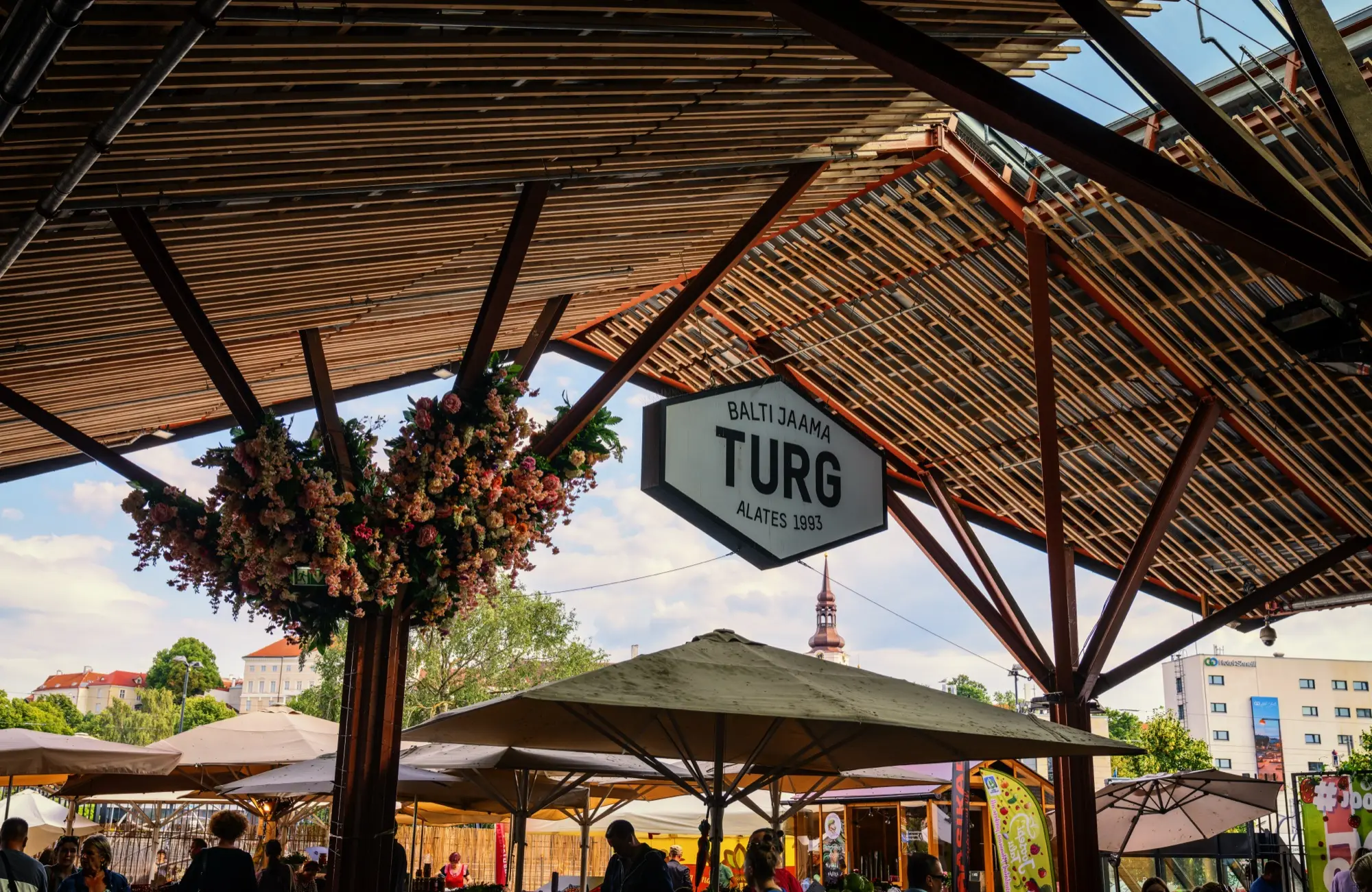
- Balti Jaam Market: Located at Kopli tn 1, housing nearly 300 traders on three floors, with a fish and meat hall and a street food area of nearly 20 places to eat. It opens Monday to Saturday 09:00 to 19:00 and Sunday 09:00 to 17:00.
- Tallinn Central Market: At Keldrimäe tn 9, trading since 1947, featuring a large meat hall and stalls of vegetables, fruit and berries. It opens daily 08:00 to 18:00.
Where to eat in Tartu and south Estonia
For travellers consulting a Tartu guide or heading further south:
- Café Werner: At Ülikooli tn 11, opened in 1895 by the confectioner Johann Werner and recognised as Tartu's oldest café, known for Viennese-style confectionery. Tartu has a long tradition of pastry making and was famous for its pastry shops centuries ago. It opens Monday to Friday 07:30 to 21:30, Saturday 09:00 to 21:30 and Sunday 09:00 to 21:00.
- A. Le Coq Beer Museum: Located in Tartu, telling the story of kvass.
- Tasty Tartu: Offers curated three-course menus at local restaurants throughout February and took first place in the 2025 European Cultural Tourism Awards.
- Summer food festivals: The Tartu Street Food Festival is on 25 to 26 June 2027 and the Tartu Food and Wine Festival on 6 to 7 August 2027.
- Kolkja Fish and Onion Restaurant: At Ranna tn 5 in Kolkja on the Onion Route by Lake Peipsi, cooking Old Believer dishes such as smoked fish, fish soup, onion soup and Old Believer pies, with samovar tea. It opens daily 12:00 to 18:00.
- Café Seto Tsäimaja: In Värska, next to the Värska Farm Museum, serving Seto food on handmade earthenware, open Monday to Saturday 11:00 to 17:00. Setomaa is known for curd dishes and honey cakes.
Estonian food at Christmas
The Christmas meal, usually eaten on Christmas Eve or Christmas night, is an important family event that dates back to pagan times. By old custom there were to be seven, nine or twelve dishes, for luck and a good harvest the next year. Food stayed on the table all night, and anything dropped under it was left for the spirits.
The staples of the Christmas table are verivorst, sült, sauerkraut, oven-roasted potatoes and pork, with lingonberry sauce and pickled pumpkin on the side. Blood sausage with sauerkraut and lingonberries remains the traditional Christmas dish, and many Estonians consider it the national dish.
Gingerbread (piparkook) is the favourite seasonal dessert, sold decorated at bakeries, cafés and the Tallinn Christmas Market. A winter treat is gingerbread with mulled wine, alcohol-free or with an extra shot of Vana Tallinn. Many restaurants prepare special Christmas menus, and Visit Estonia advises calling ahead to reserve a table. Tartu Christmas City runs from 29 November 2026 to 10 January 2027, and Gingerbread Mania, an exhibition of art made only of gingerbread by about a hundred artists, runs from 3 December 2026 to 6 January 2027.