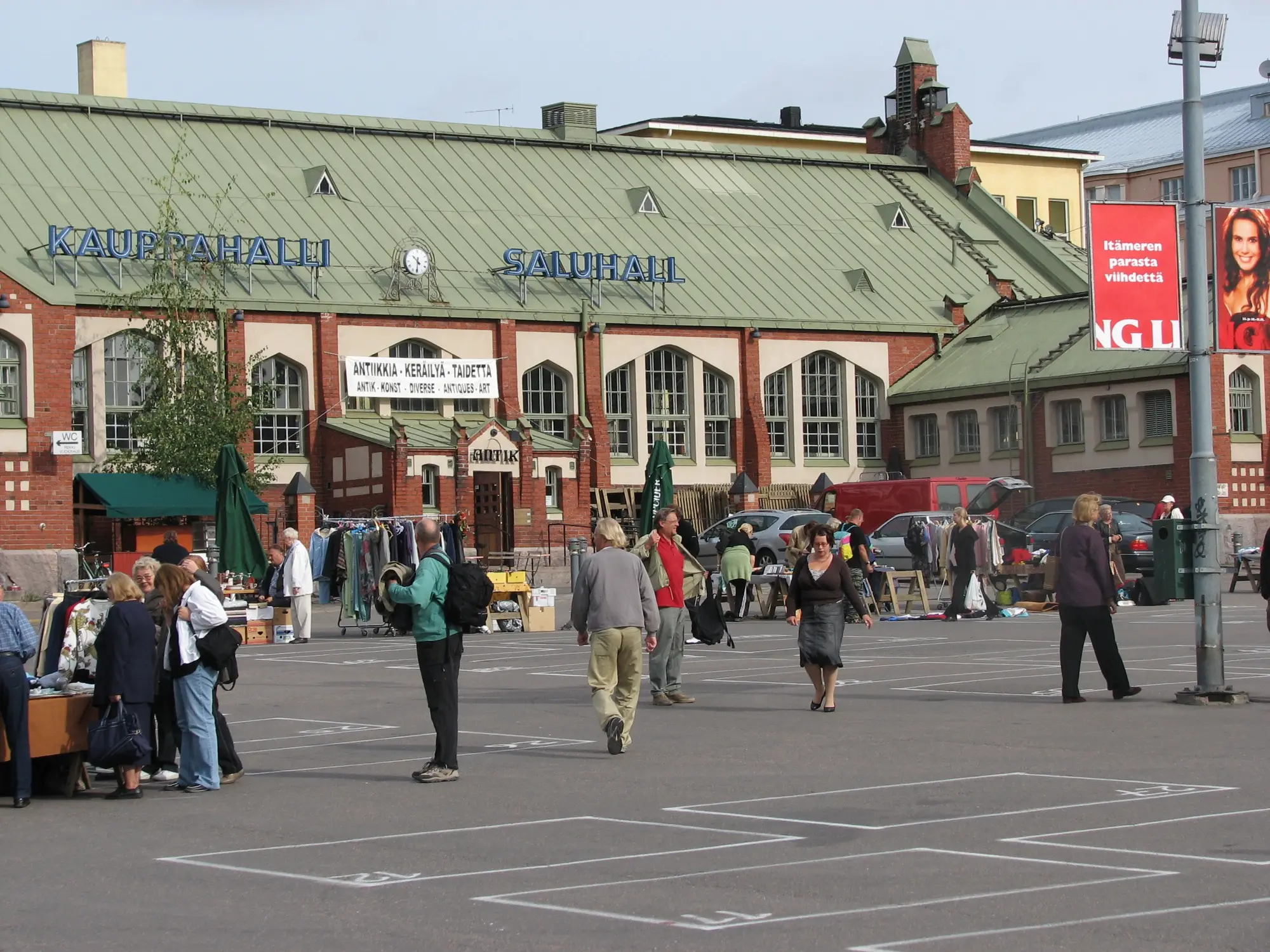

Flea markets and thrift stores in Finland, known locally as a kirpputori or simply a kirppis, range from indoor self-service halls to charity outlets and seasonal open-air squares. Whether you are hunting for vintage glassware or renting a table to sell off household clutter, the shopping model and legal protections differ from conventional retail.
How a Finnish self-service kirpputori works
At an indoor self-service flea market (itsepalvelukirpputori), private individuals sell their second-hand goods as customers of the company that runs the market. The business provides floor space, shelves and tills, while individual table renters stock and arrange their own items. The operating company must make sure the goods left for sale are monitored appropriately and may be liable for losses caused by theft.
Many of these self-service markets rely on an online reservation system such as Kirppari-Kalle, which is used in over 300 stores across the country. Through this software, sellers book their table online, price their products online, print barcoded price tags, and track their sales in real time on the web or in a mobile app while the hall staff handle checkout transactions.
What to look for: Iittala, Arabia, Marimekko and Artek
Classic Finnish design objects circulate widely through second-hand channels, though specialised shops offer curated selections if you want to avoid searching through mixed stalls. Exploring these venues alongside regular furniture shops in Finland can help you source domestic design classics for a fraction of new retail prices.
In Helsinki, Fasaani Antiikki sells antique furniture and homeware from Finnish brands such as Artek, Arabia, Iittala and Marimekko. Nearby, the second-hand design store Kaunis Arki stocks Finnish industrial art objects dating from the 1920s to the 1970s. For collectors focusing specifically on iconic wooden furniture and lighting, Artek 2nd Cycle in Helsinki operates as Artek's own platform for pre-loved Finnish design, buying and selling rediscovered furniture, lighting and other everyday objects.
Charity shops, reuse centres and outdoor markets
Beyond private self-service halls, donation-funded charity chains, municipal reuse centres and open-air markets provide widespread second-hand shopping opportunities across the country, keeping the general cost of living in Finland manageable for everyday outfitting:
- SPR Kontti: Run by the Finnish Red Cross, the SPR Kontti chain operates second-hand department stores in 12 localities across Finland. Espoo has two shops; the others are situated in Helsinki Itäkeskus, Joensuu, Kuopio, Lahti, Lappeenranta, Oulu, Pori, Rovaniemi, Tampere, Turku and Vantaa. Kontti also runs an outlet and an online shop, with all proceeds directed to Red Cross relief work in Finland and abroad.
- Pääkaupunkiseudun Kierrätyskeskus: This enterprise distributes no profit to its owners and maintains 14 second-hand shops across the capital region in Helsinki, Espoo and Vantaa. The shops sell, and also give away free of charge, all kinds of household goods, clothes and furniture, alongside bicycles repaired in the organisation's own bike workshop.
- Fida: As one of the largest Finnish chains of charity second-hand stores, Fida sells clothing, accessories, furniture, home décor, and sports and hobby equipment. Helsinki features numerous Fida locations extending from Hakaniemi out to Vuosaari.
- UFF: UFF runs dedicated second-hand and vintage clothing shops catering to the whole family across Helsinki, Espoo, Vantaa, Turku, Tampere, Jyväskylä and Oulu. During UFF's Tasarahapäivät flat-price campaigns, every item in the store receives a maximum price cap that drops every day or two; in the 5–18 November 2026 round, this ceiling fell progressively from €10 down to €1.
- Hietsu Flea Market: Outdoor market culture peaks during the warmer months. As featured in many itineraries for things to do in Helsinki, the Hietsu Flea Market on Hietalahti Market Square ran in summer 2026 from 23 May to 30 August on Saturdays and Sundays from 9.00 to 15.00, providing free entry and hosting up to 80 flea market stalls.
Consumer rights and the €5,000 Vero rule when selling your own things
Before buying or selling at a kirpputori, you must understand how consumer legislation and taxation treat second-hand transactions between private individuals.
According to the Finnish Competition and Consumer Authority (KKV), goods bought at a self-service flea market count legally as purchases made from a private individual. Consequently, the Sale of Goods Act applies to these transactions rather than the Consumer Protection Act. If a product turns out to be defective, the buyer cannot turn to the Consumer Advisory Services for resolution. Instead, the buyer should first complain directly to the individual seller about the defect. If that fails to resolve the issue, the buyer can then take the matter to the District Court.
When clearing out your own property, personal sales are subject to specific tax thresholds set by the Finnish Tax Administration (Vero). Capital gains, calculated as the selling price minus the original purchase price, from selling your own or your family's ordinary used household goods, including clothes, are exempt from capital gains tax up to €5,000 per calendar year. Capital gains tax is charged only on the portion of gains exceeding €5,000 within that calendar year.