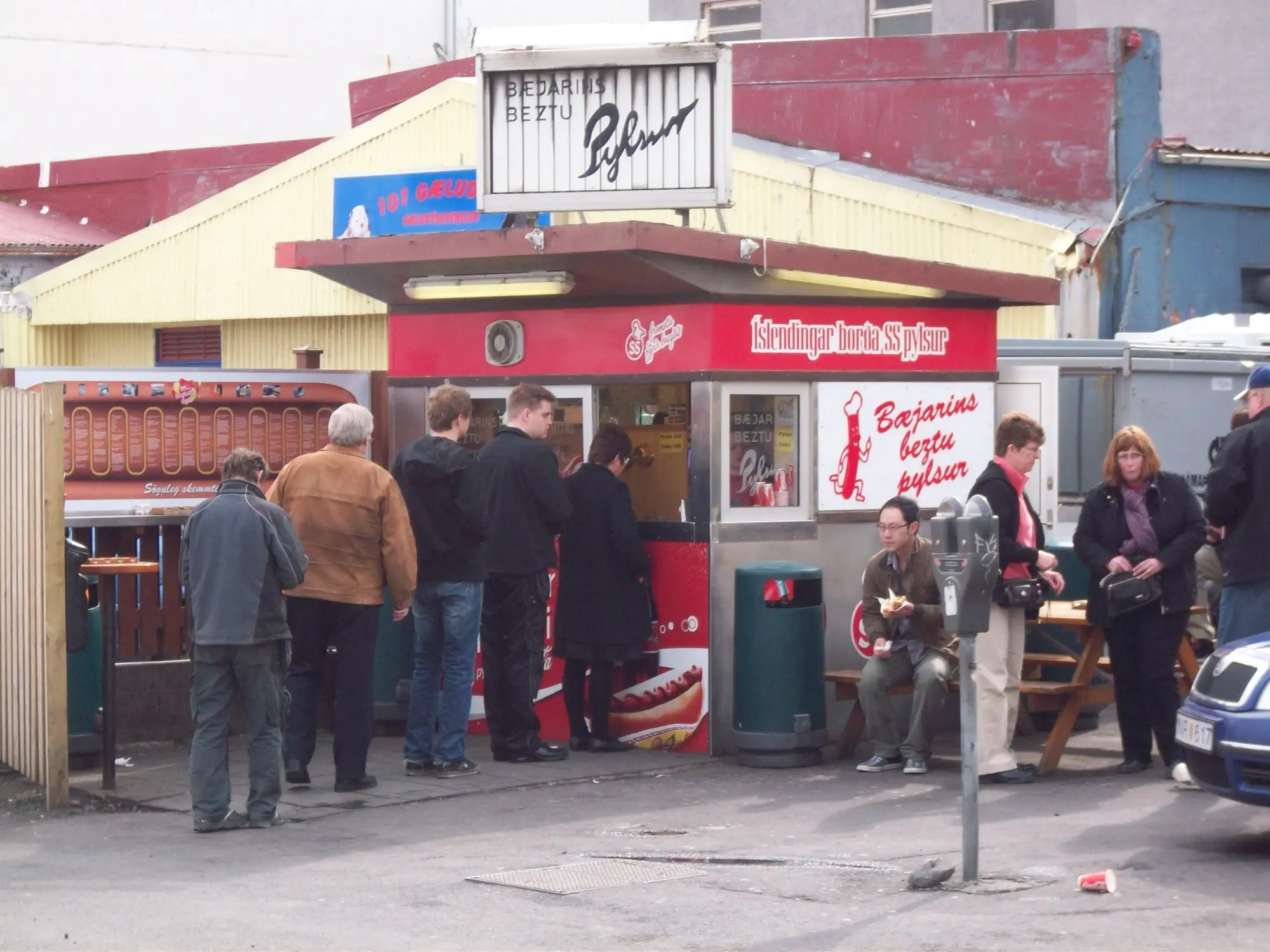

The traditional Icelandic foods to try are kjötsúpa (lamb soup), hangikjöt, the hot dog (pylsur), plokkfiskur, rúgbrauð, flatkökur, harðfiskur, skyr, langoustine soup, hákarl, þorramatur, kæst skata, kleinur, ice cream and brennivín.
1. Kjötsúpa: lamb soup, and every family's own recipe
Kjötsúpa (meat soup) is an Icelandic lamb soup made with potatoes, carrots and turnips. It is a staple especially in the cold months, and some versions add rutabaga or leeks. Visit Iceland states that every Icelandic family has its own recipe, passed down through generations. The tourism board describes Icelandic lambs as grass-fed and free-roaming, feeding on wild herbs.
In Reykjavík, Kaffi Loki states that its lamb roams free during the summer, and its menu features Icelandic lamb meat soup. For bowls made to age-old recipes, Visit Reykjavík directs visitors to Fjörukráin at Hotel Viking. Inside Hlemmur Mathöll, a food hall situated in an old bus terminal, Visit Iceland points visitors to Fjárhúsið for locally sourced lamb and traditional dishes.
2. Hangikjöt: smoked lamb for Christmas Eve and open sandwiches
Hangikjöt (hung meat) is lamb smoked over birch wood or dried sheep dung. It is traditionally served on Christmas Eve, boiled and eaten cold alongside a hot béchamel-style sauce, green peas and boiled potatoes. Some servings also include pickled red cabbage.
Availability depends on where you look. Visit Reykjavík notes that it is usually served in the Christmas season but can be found in Reykjavík all year. Conversely, Visit Iceland's Christmas guide says hangikjöt is hard to find on restaurant menus and suggests ordering a leg of lamb instead. For those wanting a taste in the city, Visit Reykjavík points to Jómfrúin, where the smoked lamb is sliced and served on an open sandwich. Jómfrúin is a Danish smørrebrød (open sandwich) restaurant located at Lækjargata 4 in central Reykjavík, open every day from 11:00 to 22:00, which offers a style familiar to those reading about Danish food.
3. Pylsur: the hot dog, one with everything
An Icelandic pylsa (hot dog; plural pylsur) is made from a blend of lamb, pork and beef served in a soft bun. It is typically dressed with raw onions, crispy fried onions, ketchup, sweet brown mustard and remoulade.
Visit Iceland notes that the Bæjarins Beztu Pylsur stand has served hot dogs since 1937, advising customers to order eina með öllu (one with everything). According to the operator, Bill Clinton was offered a hot dog at the stand in 2004; being on a diet, he requested it with mustard only, and an order with mustard alone has since been called a Clinton.
Bæjarins Beztu operates 10 locations in the greater Reykjavík area, 2 on the southern peninsula and 1 in Hella. The original stand on Tryggvagata has been operating since 1937. Its opening hours are Sunday to Wednesday from 09:00 to 01:00, Thursday from 09:00 to 02:00, and Friday and Saturday from 09:00 to 06:00.
4. Plokkfiskur: the fish and potato stew
Plokkfiskur (plucked fish) originated as a way to use up leftover fish. Cooked cod or haddock and boiled potatoes are flaked into a creamy béchamel sauce, seasoned with onions and occasionally flavoured with curry powder. The dish is frequently served with rúgbrauð, a dense rye bread baked using geothermal heat.
Kaffi Loki, located across the street from Hallgrímskirkja at Lokastígur 28, is a home-style restaurant that serves classic Icelandic dishes and takes no table reservations. The restaurant features plokkfiskur on its Loki plate, which includes rye bread topped with plokkfiskur and smoked trout, flatbread served with smoked lamb, and dried fish with butter alongside a taste of fermented shark.
5. Rúgbrauð: dense rye bread baked with geothermal heat
Rúgbrauð is an Icelandic rye bread baked using geothermal heat, yielding a loaf that is dense, slightly sweet and moist. Visit Iceland notes that it often appears with smoked salmon or serves as the base for open sandwiches, much like traditional loaves detailed in guides to Finnish food. It is also the classic accompaniment to plokkfiskur.
At Laugarvatn Fontana, a geothermal bath at Hverabraut 1 in Laugarvatn, visitors can join a bakery tour showing rye bread baked in a geyser and taste it while it is still warm. Between 1 June and 30 September, these tours run daily at 10:15, 12:15, 14:15 and 16:15; during the rest of the year, departures are at 10:15, 11:45 and 14:30. Fontana notes that tours often sell out. Takeaway loaves depend on geyser activity and daily tour volumes, and the facility cannot ship bread. In Reykjavík, Kaffi Loki incorporates the bread into dessert, producing its own rye bread ice cream served with cream and rhubarb syrup.
6. Flatkökur: rye flatbread under smoked lamb
Flatkökur (flat cakes; singular flatkaka) are thin, round, unleavened rye breads. Visit Iceland states that they have been part of the local diet since the settlement of Iceland. Traditionally baked directly on hot stones or glowing embers, they are now commonly cooked on a cast iron pan or an electric hot plate. Flatkökur are served spread with butter and most famously topped with thin slices of hangikjöt. Kaffi Loki serves homemade flatbread paired with smoked lamb.
7. Harðfiskur: dried fish, eaten with butter
Harðfiskur (hard fish) consists of cod, haddock or wolffish that has been air-dried until it reaches the texture of jerky. It has been a staple of the Icelandic diet for centuries, preserved using only Arctic air and time, sharing preservation traditions with Norwegian food. It is commonly eaten spread with salted butter.
According to Visit Iceland, harðfiskur is sold across the country from petrol stations to gourmet shops. Visit Reykjavík notes that it is stocked in local markets and grocery stores and serves as a souvenir. It is also served at Kaffi Loki as part of the Loki plate.
8. Skyr: the dairy staple, part cheese and part yoghurt
Skyr is a traditional cultured dairy product. Visit Reykjavík notes that it has been an Icelandic dietary staple for over a thousand years. Visit Iceland describes it as similar to strained yoghurt, though technically classified as a soft cheese.
Traditionally, skyr is eaten with a sprinkle of sugar and a few berries. Modern servings in cafés and restaurants across Reykjavík often top it with fresh berries, rhubarb jam or honey, or incorporate it into desserts. Kaffi Loki serves traditional skyr with single cream and sugar, as well as a skyr cake garnished with cream and rhubarb syrup.
9. Langoustine soup: the soup Icelanders call lobster
Langoustines caught in local waters are frequently referred to as Icelandic lobster. Icelandic lobster soup is prepared with langoustine meat and finished with cream and herbs.
At Eyrarbraut 3a in the southern coastal village of Stokkseyri, the restaurant Fjöruborðið bills its offering as the most famous langoustine soup in Iceland. The establishment notes that advance table reservations are highly recommended throughout the year.
10. Hákarl: fermented shark, with a shot of brennivín
Hákarl is cured shark meat characterized by a sharp smell of ammonia. Visit Reykjavík explains that because the meat of the Greenland shark is toxic when fresh, it must be fermented and hung to dry for several months before it can be consumed safely. Visit Reykjavík traces hákarl back to the Viking age and notes that it is traditionally swallowed with a shot of brennivín (caraway schnapps).
Visit Iceland's traditional food guide notes that while fermented shark was once common in daily life, it is now a rare treat found only in select venues, such as Fjörukráin. Packaged hákarl is also sold in Reykjavík supermarkets. Kolaportið, which describes itself as Iceland's largest market, has operated by the old harbour at Tryggvagata 19 since 1989 and sells fermented shark from its market stalls on Saturdays and Sundays throughout the year. Kaffi Loki offers dedicated tasting portions of fermented shark served with a shot of brennivín. On the Snæfellsnes peninsula, the family-run Bjarnarhöfn Shark Museum continues the traditional curing process for Greenland shark and provides samples of hákarl paired with brennivín.
11. Þorramatur: the midwinter buffet of preserved food
During the old Nordic month of Þorri, which runs from mid-January to mid-February, communities hold midwinter feasts called þorrablót. These gatherings centre on þorramatur, a buffet of historically preserved foods. The selection includes dishes such as fermented shark, singed and boiled sheep's head (svið), and cured ram's testicles (súrsaðir hrútspungar). These cured items are typically eaten with rúgbrauð, butter and brennivín.
Visit Reykjavík advises visitors travelling during this midwinter window to attend a þorrablót or look for þorramatur at local restaurants. In Reykjavík, Kaffi Loki serves a variation via its Þór plate, which combines flatbread with sheep's-head jelly, mashed turnips and bean salad alongside rye bread with plokkfiskur and smoked trout.
12. Kæst skata: fermented skate on 23 December
Kæst skata (fermented skate) is described by Visit Iceland as the most perplexing of the nation's Christmas dishes. It is traditionally eaten on 23 December, St Thorlákur's Day, which commemorates the twelfth-century Icelandic saint who died on that date. The prepared skate possesses a pungent smell and strong taste, is typically washed down with strong liquor, and remains more popular among older generations.
13. Kleinur: twisted doughnuts, and the rest of the bakery counter
A kleina (plural kleinur) is an Icelandic pastry made from firm dough that is twisted into a bow shape and deep-fried; most are served plain, while some are dipped in chocolate. Ástarpungar (love balls) are prepared from a similar dough mixed with raisins and deep-fried. Kleinur, alongside thin pancakes (lummur) and waffles (vöfflur), are everyday fixtures in Icelandic homes, commonly served with coffee.
Bakery counters feature several traditional cakes:
- Hjónabandssæla (marriage bliss): Described by Visit Iceland as Iceland's favourite cake, consisting of rhubarb jam layered under an oat crumble. Despite the name, it is eaten year-round rather than strictly at weddings, with bakeries using individual recipes.
- Vínarterta: A multi-layered cake commonly prepared either with brown dough and white vanilla or buttercream, or with yellow dough and a rhubarb or plum filling.
- Sjónvarpskaka (TV cake): A sponge cake topped with caramelised coconut flakes. According to Visit Iceland, it dates to 1966, the year television broadcasting began in Iceland.
14. Ice cream, in any weather, and salty liquorice
Visit Reykjavík states that Icelanders eat ice cream regardless of cold weather, favouring flavours such as liquorice and rhubarb. Visit Reykjavík highlights the parlour at Perlan, which serves traditional as well as experimental varieties; the parlour opens daily from 11:00 to 21:00. Kaffi Loki also produces its own rye bread ice cream, served with cream and rhubarb syrup.
Confectionery heavily leans towards liquorice. Visit Iceland notes that most Icelanders are major consumers of liquorice throughout the year, adding that Icelandic liquorice carries a pronounced anise flavour and is significantly saltier than North American varieties.
15. Brennivín: the caraway schnapps
Brennivín is an Icelandic clear spirit flavoured with caraway seeds, which the brand identifies as one of the few spices that grow wild in Iceland. For context on this and other traditional spirits, read more about Icelandic drinks. The manufacturer notes that Brennivín was first brought to market in 1935 following the partial repeal of alcohol prohibition. It was originally packaged with a plain black label designed to look unappealing in order to limit consumer demand.
Prohibition in Iceland initially took effect in 1915. Although wine and spirits were re-legalised several decades later, beer remained banned for over 70 years until legalisation in 1989. Brennivín is distilled and bottled in Reykjavík by the beverage company Ölgerðin Egill Skallagrímsson. It remains the customary accompaniment to plates of þorramatur and bites of fermented shark.
Where to eat traditional Icelandic food in Reykjavík and Hafnarfjörður
Several dedicated venues in the capital region serve these historic foods:
- Kaffi Loki: Situated at Lokastígur 28 directly opposite Hallgrímskirkja, this home-style restaurant prepares classic staples, including its Loki and Þór tasting platters, lamb meat soup, flatbread with smoked lamb, and house-made rye bread ice cream. It operates daily from 8 am to 10 pm (kitchen closes at 21:30) and does not take table reservations.
- Jómfrúin: Located at Lækjargata 4 in central Reykjavík, this restaurant specializes in Danish smørrebrød and serves sliced hangikjöt on open rye sandwiches. It is open every day from 11:00 to 22:00.
- Bæjarins Beztu Pylsur: The main harbour stand at Tryggvagata has operated since 1937, serving lamb-based hot dogs with raw onions, fried onions, ketchup, mustard and remoulade. It opens Sunday to Wednesday from 09:00 to 01:00, Thursday from 09:00 to 02:00, and Friday to Saturday from 09:00 to 06:00.
- Fjárhúsið: Located inside the Hlemmur Mathöll food hall in the city's former bus station, this counter is highlighted by Visit Iceland for traditional dishes and locally sourced Icelandic lamb.
- Kolaportið: Located by the old harbour at Tryggvagata 19, this weekend market has operated since 1989 and bills itself as Iceland's largest market. Stalls sell traditional provisions, including portions of hákarl, on Saturdays and Sundays year-round.
- Perlan: Offers an extensive ice cream parlour operating daily from 11:00 to 21:00.
- Fjörukráin: Located at Víkingastræti 1-4 in Hafnarfjörður (roughly a 15-minute drive from central Reykjavík), this Viking-themed venue has served traditional Icelandic feasts from Viking-style trays since 1990. It prepares traditional kjötsúpa, alongside rare items such as hákarl. Fjörukráin is open daily from 11:30 for lunch and dinner.
Beyond Reykjavík: geyser bread, langoustine and the shark museum
Outside the capital, three specific regional locations offer notable traditional culinary specialities:
- Laugarvatn Fontana (Laugarvatn): Located at Hverabraut 1, this lakeside bath runs tours where rye bread is baked underground using geothermal steam and served warm. Tours depart daily at 10:15, 12:15, 14:15 and 16:15 between 1 June and 30 September, and at 10:15, 11:45 and 14:30 between 1 October and 31 May. The geothermal baths themselves open daily from 10:00 to 21:00 from 1 June to 30 September, and from 11:00 to 21:00 from 1 October to 31 May.
- Fjöruborðið (Stokkseyri): Located on the south coast at Eyrarbraut 3a, this restaurant serves what it claims is the most famous langoustine soup in Iceland. Advance table bookings are strongly advised year-round.
- Bjarnarhöfn Shark Museum (Snæfellsnes): Located about 25 minutes' drive from Stykkishólmur, this family estate continues the traditional curing and air-drying of Greenland shark. Tours typically last between 30 and 60 minutes and include a tasting of hákarl with brennivín. Normal opening hours are 10:00 to 17:00; however, the facility is closed from 19 October until spring, and reopens in April 2027. An on-site bistro serves traditional meals from June to August.
When planning day trips outside the capital to these sites, check Reykjavík's daylight hours to allocate enough driving time.
Icelandic food at Christmas
Icelandic holiday culinary lore is closely tied to the thirteen Yule Lads (jólasveinar), mischievous troll brothers from folklore who each have a signature trade that typically revolves around targeting specific seasonal foods.
Icelanders celebrate Christmas on the evening of 24 December. Most restaurants across the country close that evening and throughout 25 December, though a few high-end venues in Reykjavík remain open. Holiday operating hours vary at regional attractions; for instance, Laugarvatn Fontana operates special reduced hours from 11:00 to 16:00 on Christmas Eve and from 11:00 to 18:00 on New Year's Eve.
Key culinary traditions of the festive season include:
- Hangikjöt: Eaten on Christmas Eve, boiled and served cold alongside hot béchamel-style white sauce, green peas and potatoes. Visit Iceland notes that this dish is rarely found on standard restaurant menus, advising visitors to choose roast leg of lamb instead.
- Rjúpa (Ptarmigan): A game bird boiled and subsequently fried, served with red cabbage, potatoes and gravy. Because ptarmigan is protected by an annual hunting quota, it cannot be bought or sold commercially.
- Kæst skata: Pungent fermented skate served on 23 December for St Thorlákur's Day.
- Möndlugrautur (Rice pudding): Served cold or warm topped with whipped cream and chopped almonds. A single whole almond is hidden inside the serving pot, and family members guess who will receive it.
- Síld (Herring): Pickled or marinated herring, purchased from grocery stores and eaten atop dark rye bread throughout the Christmas period.
- Lakkrís toppar: Popular festive holiday cookies made from baked meringue folded with chocolate chips and chocolate-covered liquorice pieces.