
The ten Norwegian foods to try are fårikål, brunost, salmon, kjøttkaker, waffles, lefse, pinnekjøtt, lutefisk, rakfisk and tørrfisk. Fårikål belongs to autumn, pinnekjøtt and lutefisk to Christmas, and rakfisk peaks in Valdres in November.
1. Fårikål: the national dish, at its best in autumn
Fårikål (mutton in cabbage) consists of fresh mutton or lamb cooked with white cabbage and whole black peppercorns. The meat is not salted or dried before cooking. Listeners of NRK's radio show Nitimen voted fårikål Norway's national dish in 1972, and confirmed it in 2014 with 45% of the votes. The meal is usually eaten with boiled potatoes.
Autumn is the traditional fårikål season because that is when lambs are slaughtered. According to the food organisation Matprat, more than 70% of Norwegians eat the dish every autumn. Since 1998, fårikål has had its own official day on the last Thursday in September. If you plan your travels around the best time to visit Norway to coincide with fårikål day, you will find it served in schools, canteens, shopping centres, public squares, cafés, and restaurants, as well as in private homes.
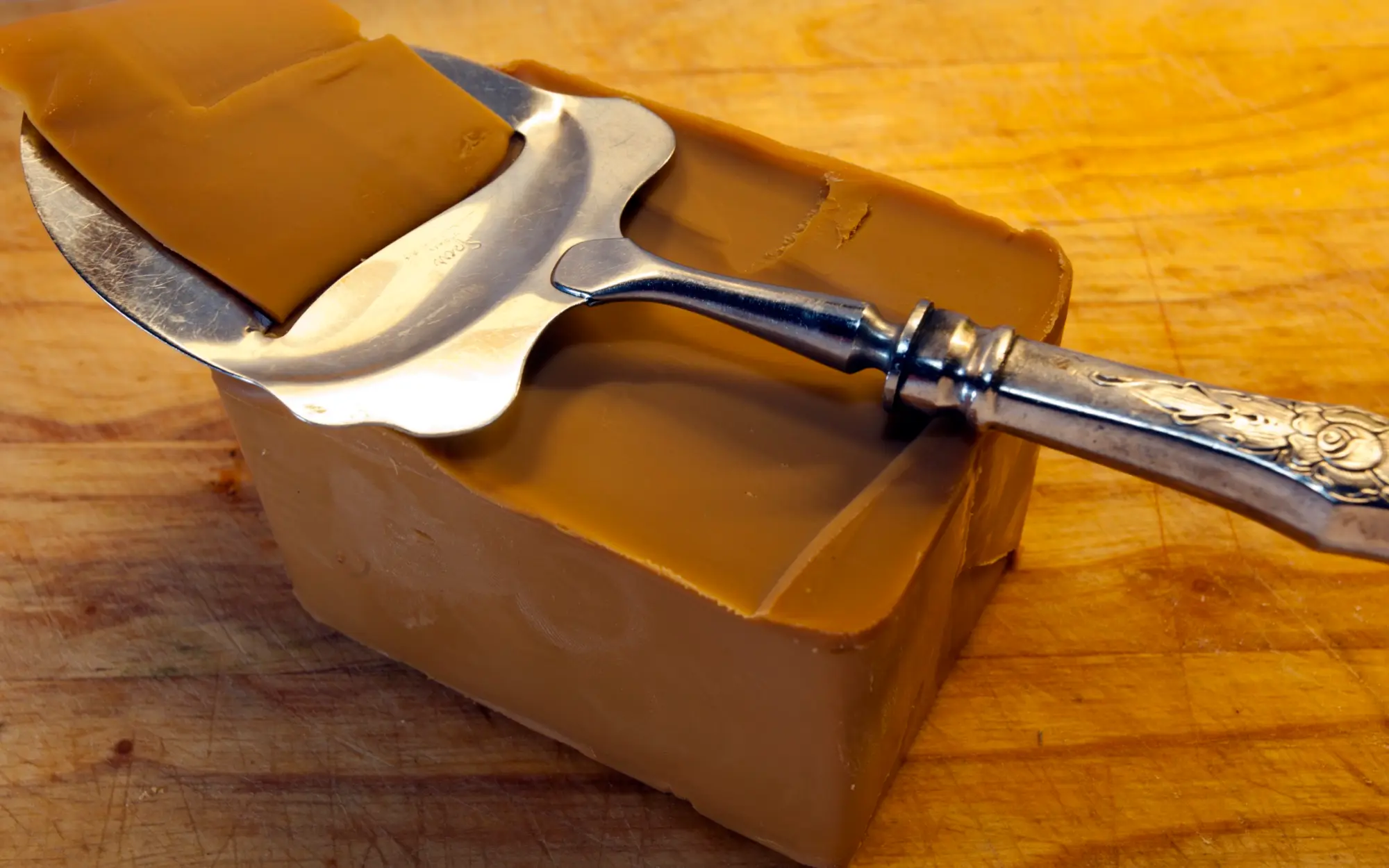
2. Brunost: sweet brown cheese, and the one to buy at a grocer
Brunost (brown cheese, also known as mysost or whey cheese) is made from boiled-down whey. It is sliced thin with a cheese plane and commonly eaten on waffles, bread, or crispbread. Boiling condenses the milk sugar into caramel, giving brunost a sweet flavour closer to caramel than conventional cheese, which often catches first-time visitors off guard. In eastern Norway, eating potato lefse spread with butter and brunost is common.
Gudbrandsdalsost is the most popular brown cheese in the country. It has a fat content of 35% of dry matter and was first created in the Gudbrandsdalen valley. The dairy cooperative TINE attributes the recipe to Anne Hov at the Solbråsetra mountain farm in 1863. TINE makes its version using a blend of cow's and goat's milk, producing a taste described as round, sweetish, and caramel-like. At the online grocery shop Oda, a 500 g block of TINE Gudbrandsdalsost Original G35 costs NOK 56.40.
3. Salmon: the fish Norway sells to the world
Norway is by far the world's largest producer of farmed salmon. In 2025, the country exported 1,414,909 tonnes of salmon valued at NOK 124.7 billion, representing the bulk of its NOK 181.5 billion total seafood export market. The Norwegian Seafood Council traces the origins of salmon sushi to a trade delegation sent to Tokyo in 1985, and estimates that roughly 30% of all Norwegian salmon is now consumed raw as sushi.
Domestic preparation includes gravlaks (cured salmon), which is raw fish preserved with salt, sugar, and spices, predominantly dill. It is served cold on open sandwiches or as a starter, regularly paired with mustard sauce.
Visitors can sample salmon and other seafood directly at the Fish Market (Fisketorget) in Bergen. The outdoor market stalls open for the season on 1 May. Next to it, Mathallen, the indoor food hall located in the same building as the local tourist information, remains open all year and houses restaurants serving fresh seafood meals. Travellers arriving via the scenic Oslo to Bergen train can reach both market areas on foot from the city centre.
4. Kjøttkaker: the everyday dinner that nearly won
Kjøttkaker (meat cakes) are small minced meat patties, typically made from beef, pork, or a mixture of both. During both the 1972 and 2014 public votes for Norway's national dish, kjøttkaker finished as fårikål's closest competitor.
The patties are served warm as an everyday dinner. They come coated in brown sauce, accompanied by boiled potatoes and lingonberry jam, and are often paired with stewed peas (ertestuing) or creamed cabbage.
5. Waffles: heart-shaped, with jam, sour cream or brunost
Norwegian waffles differ from other regional styles in shape and batter. The batter is prepared using eggs, milk, flour, and butter, often combined with regular cream or sour cream, and can be flavoured with cardamom. The typical Norwegian waffle is baked into connected heart-shaped sections. Today, the electric waffle iron is the most common cake iron found in private households.
Waffles are eaten warm or cooled, usually topped either with jam and sour cream, or with butter and sliced brown cheese. Similar sweet baked goods and batters appear across the Nordic region, as outlined in our guide to Finnish food.
6. Lefse: soft flatbread, sweet with coffee or round a hot dog
Lefse is a traditional category of flat, round, and typically soft griddle breads that are topped, folded, or rolled before eating. Recipes vary across the whole country, though western Norway, Trøndelag, and Nordland are notable for their wide variety of local variations.
When served alongside coffee, lefse is sweet, spread with butter, cinnamon, sugar, or brunost. Potato-based versions are eaten with savoury accompaniments. In eastern Norway, wrapping a cooked hot dog sausage inside a soft potato flatbread, known locally as a lompe, is an everyday street food tradition.
7. Pinnekjøtt: the west coast's Christmas Eve dinner
Pinnekjøtt (stick meat) is a festive dish made from salted and dried racks of lamb or mutton ribs, which can also be smoked. The dish takes its name from the traditional cooking method of steaming the cured meat over birch sticks placed at the bottom of a pot. The designation "Pinnekjøtt fra Norge" is legally protected, reserved exclusively for meat from animals born, raised, slaughtered, and processed in Norway.
Pinnekjøtt is served alongside mashed swede (kålrotstappe) and boiled potatoes. An Opinion survey conducted for Matprat in 2023 showed that 48% of people in Norway ate pork rib (ribbe) for Christmas Eve dinner, 38% ate pinnekjøtt, and 2% had lutefisk. Regional preferences are pronounced: between 70% and 80% of people in western Norway choose pinnekjøtt on Christmas Eve, while in eastern Norway, 70% to 80% opt for pork rib. The most typical foods of the Norwegian festive season remain pork rib, pinnekjøtt, lutefisk, and Christmas cod.
8. Lutefisk: a pre-Christmas dinner for the curious
Lutefisk (lye fish) has an extensive heritage documented as far back as the 1500s. It is prepared by rehydrating dried whitefish, most commonly cod, in cold water and lye, an alkaline solution originally extracted from birch wood ash. This chemical treatment alters the protein structure, giving the fish a gelatinous, soft texture.
Lutefisk is consumed across the entire country, primarily during pre-Christmas dinner gatherings with family or colleagues. Regional differences do not change the fish itself, but dictate the accompaniments. It is served hot, typically with bacon or diced pork belly, boiled potatoes, and stewed peas.
9. Rakfisk: fermented trout, best in Valdres in November
Rakfisk is freshwater fish, either trout or char, preserved using an ancient fermentation method that yields a sharp aroma and tender texture. It originated inland in Valdres, Telemark, and Østerdalen, but is now sold and eaten nationwide. The term "Rakfisk fra Valdres" is a protected geographical name: the product must be produced in the Valdres region from trout or rainbow trout, and is graded as mild, matured, or well matured.
Rakfisk is eaten cold without cooking, served with flatbread or potato lefse, sour cream, and sliced leek or red onion. It is commonly served alongside glasses of aquavit (akevitt) and beer. While many Norwegians eat rakfisk as part of their Christmas traditions, the village of Fagernes hosts the annual Norsk Rakfiskfestival on the first weekend of November, gathering over 100 food exhibitors. The festival dates for 2027 are 4 to 6 November. Unregulated home preservation carries risks; the few reported cases of botulism in Norway are often traced to rakfisk prepared privately at home.
10. Tørrfisk: Lofoten's dried cod
Tørrfisk (stockfish) is unsalted whitefish, primarily cod, hung outdoors to dry naturally in the wind and cold. In the Lofoten islands, processing takes place on wooden drying racks (hjell) between February and April. Stockfish has served as an essential trade commodity for Norway for more than a thousand years. Today, Italy remains the largest export market for Lofoten stockfish. The product received protected geographical status within Norway in 2007 and across the European Union in 2014.
Locals eat stockfish hard as a dry snack or rehydrate it for cooking. Restaurants in Norway serve prepared tørrfisk hot, accompanied by creamed carrots, bacon, and potatoes.
What Norwegian food costs
Eating in Norway requires budgeting, as grocery and restaurant retail rates exceed most European averages. According to a 2025 price comparison released by Eurostat, all member countries of the European Free Trade Association (Norway, Iceland, and Switzerland) recorded higher general price levels for food than countries in the EU. For broader background on trip expenses, check our guide on whether Norway is expensive.
On 10 November 2026, Statistics Norway announced that consumer prices for food and non-alcoholic drinks in October were 1.4% higher than the previous year. However, grocery prices declined in October for the third consecutive month, following a regular pattern where food rates fall gradually throughout the autumn.