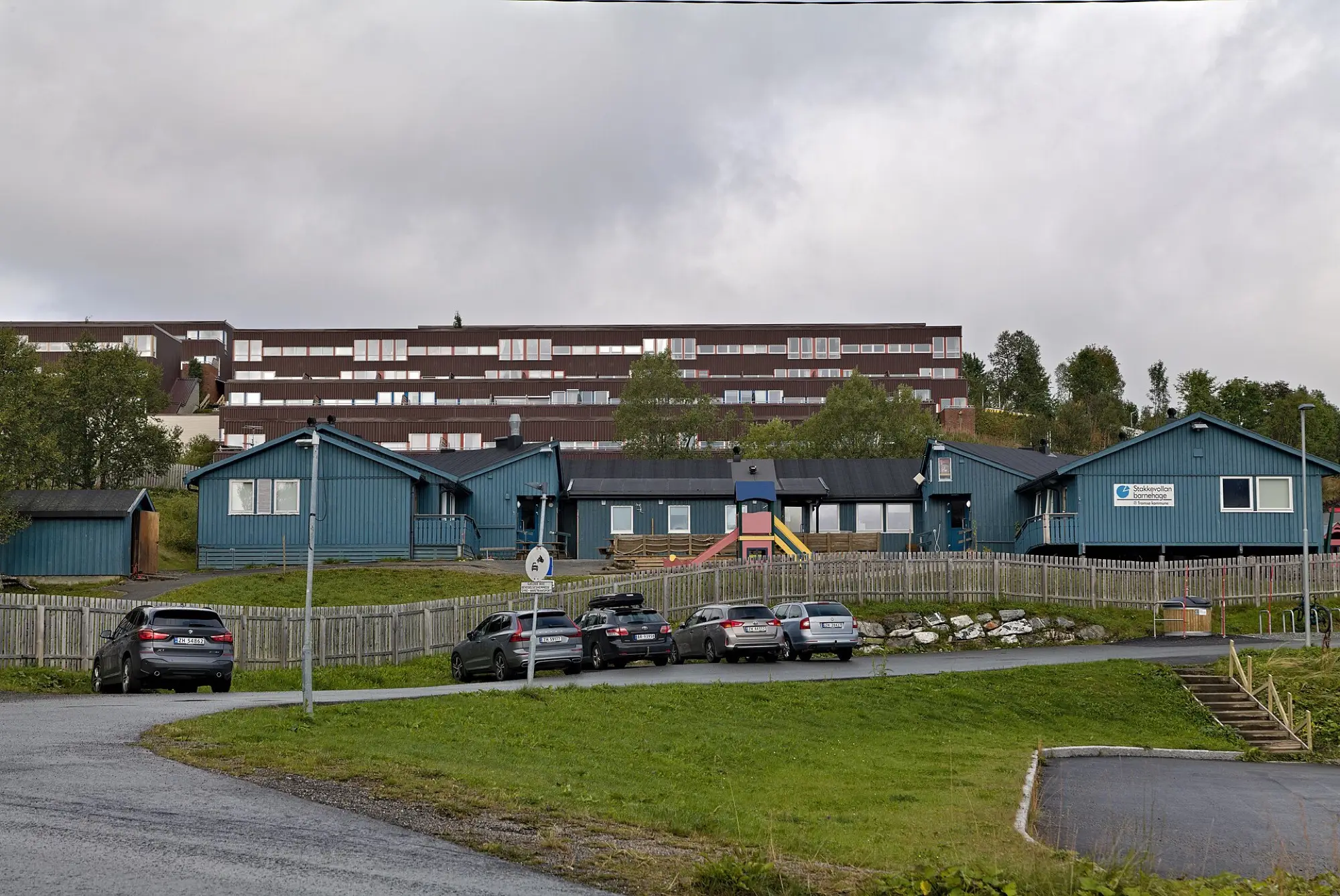
Kindergarten in Norway is a voluntary educational programme for children below school age. Under national rules, all public and private settings follow the same monthly fee caps and discount schemes, with the national maximum fee set at NOK 1,200 a month since 1 August 2025. Children who turn one by the end of November have a statutory right, on application, to a place in the municipality where they live.
The short answer
Kindergarten (barnehage) is a voluntary educational programme for children below school age. In 2025, 264,210 children attended kindergarten in Norway, representing 94.5% of all children aged 1 to 5. In Oslo there are both municipal and private kindergartens, and all follow a shared admission process.
The right to a place and when it starts
Under the Kindergarten Act, a child's statutory entitlement to a place depends on their date of birth:
- A child who turns one by the end of August in the year the family applies has, on application, a right to a place from August.
- A child who turns one in September, October or November of the year the family applies has a right to a place by the end of the month the child turns one.
The right is to a place in the municipality where the child lives. Each municipality sets its own application deadline for the admission round. The months before a kindergarten place starts are often covered under parental leave in Norway.
In Oslo, children born in December must apply before 1 March in the year they turn two, and are then guaranteed a place in August that year. In Oslo, the start date requested in the main round must be no later than 30 November. Children start compulsory primary school in the year they turn six, so kindergarten covers the years before that.
What kindergarten costs in 2026
The maximum fee (makspris) is set by the Storting, and a municipality may charge less. The maximum fee applies to all kindergartens, public or private. To see how these charges fit into household spending, read our overview of the cost of living in Norway.
| Rule or tier | National rate or discount |
|---|---|
| Standard maximum fee (from 1 August 2025) | NOK 1,200 a month |
| Least central municipalities (zones 5 and 6) | NOK 700 a month |
| Action zone (Finnmark and Nord-Troms) | Free |
| Second child discount | At least 30% reduction |
| Third and subsequent child discount | 100% reduction (free) |
| Low-income cap | Maximum 6% of household income |
| Free core time (from 1 August 2025) | Household income limit NOK 669,050 |
| Free core time (from 1 August 2026) | Household income limit NOK 692,465 |
From 1 August 2025 the national maximum fee is NOK 1,200 a month. In the least central municipalities (centrality zones 5 and 6 in Statistics Norway's index), the maximum fee was cut from NOK 1,500 to NOK 700 a month from 1 August 2025. In the municipalities of the action zone in Finnmark and Nord-Troms, kindergarten is free. As of January 2026, kindergarten was free in 34 municipalities.
The maximum fee is for a full-time place, which the regulation defines as an agreed 41 hours a week or more. A part-time place, under 41 hours a week, must cost less than a full-time place. Kindergartens may charge for food (matpenger) on top of the maximum fee, but the food charge must not exceed what the kindergarten actually spends on food and drink for the children.
The City of Oslo gives the maximum fee as NOK 1,200 a month, for both public and private kindergartens. Oslo's municipal kindergartens charge NOK 320 a month for daily meals; private kindergartens may charge a different amount, shown on their websites. In Oslo you pay in advance every month except July, which is free of charge. In January 2026 the average household paid NOK 997 a month for a kindergarten place, plus on average NOK 428 per child for food and other costs, according to Statistics Norway.
Discounts for siblings and low incomes
The municipality must give at least a 30% reduction for the second child and a 100% reduction for the third and any further children, if the siblings live together and attend kindergartens in the same municipality. The sibling discount (søskenmoderasjon) applies even if the children go to different kindergartens with different owners. In Oslo the sibling discount is applied automatically, with no application needed. At Oslo's NOK 1,200 fee, a 30% reduction leaves NOK 840 a month for the second child, before meals.
If the maximum fee is more than 6% of the household's total income, the municipality must reduce the fee so that no one pays more than 6% of their income per child, in public and private kindergartens. For the 2025/2026 kindergarten year the maximum fee totals NOK 13,200, so households with an income of NOK 220,000 or less in 2024 are entitled to a reduced fee.
Children aged 2, 3, 4 and 5, and children whose school start is deferred, who live in low-income households have a right to 20 hours a week in kindergarten free of charge (gratis kjernetid). As set out in Udir's regulations on parental payment, the income limit for free core time is NOK 669,050 from 1 August 2025 and NOK 692,465 from 1 August 2026. Free core time applies whether the child has a part-time or a full-time place; a family that uses only the 20 hours pays nothing.
Household income here means the household's total taxable personal and capital income; a household is spouses, registered partners or cohabitants. Student loans are not taxable income and are not counted. Applications for the income-based reduction and free core time are handled by the municipality where the child is registered in the population register. An application made before 1 August applies from 1 August for the kindergarten year; one made after 1 August applies from the first full month after you apply.
How to apply, with Oslo as the example
In Oslo you can apply to public and private kindergartens in one application, choosing up to seven, and the City of Oslo runs the admissions. Oslo's main application deadline is 1 March, with a supplementary deadline of 1 June for children who have a guaranteed place but did not apply by 1 March.
You can apply online in Oslo once you and your child have a national identity number (fødselsnummer) or a D-number, as explained in our guide to the D-number and national ID number in Norway. Electronic ID is recommended but not required. Without a Norwegian identity number you need a premade number for the application from the City of Oslo service centre.
The child must be a registered resident of Oslo before the first day of kindergarten. Many private kindergartens fill their places in spring and some require an August start, so Oslo recommends applying by 1 March for them. You can apply at any time, also after the deadlines, but many kindergartens may have no places left after the main round.
An offer arrives in your digital mailbox, and you must answer within 7 days or the place goes to another child. Oslo's municipal kindergartens require the child to start within one month of the start date in the offer letter; private kindergartens have their own rules. In Oslo, apply for a reduced fee within 2 weeks of accepting a place to have it on the first invoice; a later application takes effect on the next month's invoice, and Oslo renews it every year while the child attends. Oslo fetches the household's latest tax assessment from Skatteetaten; if you have not paid tax in Norway before, you must document your current income.
Who gets priority in Oslo
Some children get priority in Oslo's admissions; most priority groups need documentation no older than three months:
- The first priority group, which also applies to private kindergartens, is children with disabilities and children under a care order from the Child Welfare Services.
- Children with a sibling already in the municipal kindergarten they apply to are a priority group, with no documentation required.
- Children of single parents are a priority group, documented with a confirmation from Nav.
Among all other children, the oldest child in the age group gets an offer first; the age groups are 0 to 2 and 3 to 6 years.
Public, private, family and international kindergartens
Of Norway's 5,114 kindergartens in 2025, 49% were public. Private kindergartens may follow alternative approaches such as Montessori or Waldorf and sometimes have longer opening hours; they can be owned by businesses, companies (bedriftsbarnehage) or non-profit organisations. International kindergartens teach in English or other languages, and family kindergartens (familiebarnehager) are small settings run from private homes.
All kindergartens, public or private, must follow the national Framework Plan for the content and tasks of kindergartens, so the difference in practice between them is minimal. The municipality pays the kindergarten owner for the discounts, so they apply in private kindergartens too. Families comparing early education in the Nordic countries can also read about daycare in Finland.
Inside a Norwegian kindergarten
The law requires at least one employee per three children under three, and one employee per six children over three. A child counts as over three from August of the year they turn three. Oslo's guide states that there must also be one educational leader per 7 children under three and one per 14 children over three.
Norwegian is the main language in kindergartens, except in Sami kindergartens, and staff are trained to support children new to Norwegian. Younger children usually have an adaptation period (tilvenning) when they start, with support from staff and parents, and outdoor play is scheduled every day. The City of Oslo says children must take at least three weeks of holiday a year, and four weeks in all is recommended. Of the 264,210 children in kindergarten in 2025, 261,140 had a place of 41 hours a week or more.
Cash-for-care instead of a place
Cash-for-care benefit (kontantstøtte) from Nav can be granted for children aged 13 to 19 months who do not attend a publicly funded kindergarten full time. With no kindergarten time, the full cash-for-care benefit is NOK 7,500 a month per child, Nav's rate in effect since 1 August 2018. With a part-time place the benefit is reduced in steps; a place of 33 hours a week or more gives no cash-for-care benefit.
The benefit depends on the kindergarten time you have been granted, not the time the child actually spends there; a full-time place used one day a week gives no benefit. It is paid from the month the child turns 13 months up to and including the month the child turns 19 months, for at most 7 months. Generally both parent and child must live in Norway; people staying at least 12 consecutive months count as resident, and EEA workers may qualify sooner. The municipality sends Nav monthly updates on which children have been offered a place and for how many hours.
The tax deduction for childcare
For 2026 you can deduct documented childcare costs from general income, up to NOK 15,000 for one child plus up to NOK 10,000 for each additional child. The deduction (called the parental allowance) covers children aged 11 or under who live with you.
Day care is one of the expenses that qualify. Day-care centres must report what parents paid, so the deduction is normally pre-filled in the tax return, and you should check it is correct. Food costs, such as the kindergarten's meal charge, cannot be deducted.