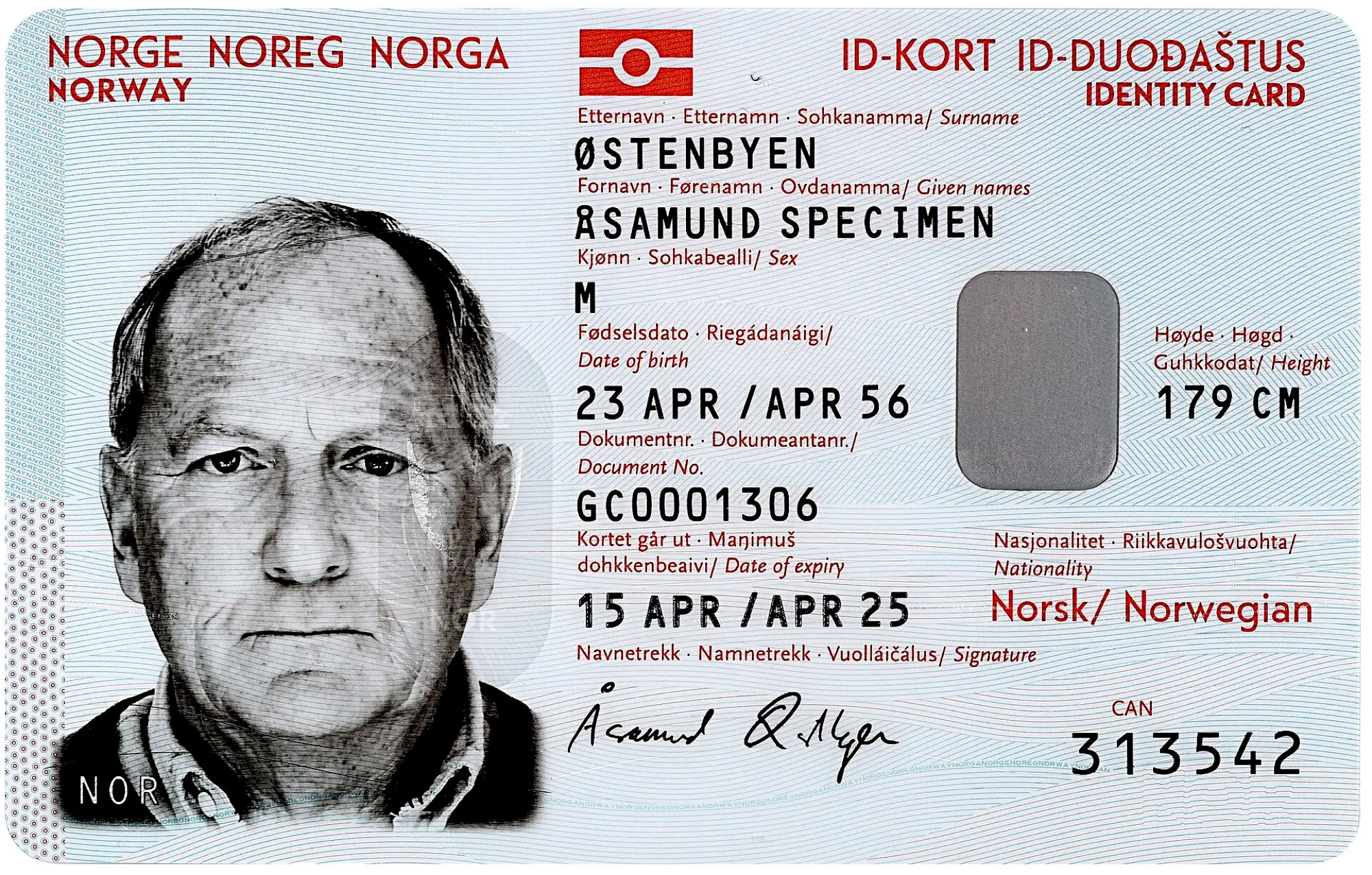
Norway is in the Schengen area, so visitors can stay up to 90 days in any 180-day period. Citizens of the EU/EEA, the United States, the United Kingdom, Canada, Australia and other countries on the exemption list need no visa. Everyone else applies for a Schengen visitor visa, which costs EUR 90 for adults and must be submitted in person, while longer stays require a residence permit.
Who needs a visa for Norway
Some people can visit Norway without a visa, but most people from countries outside the EU/EEA must apply for a visitor visa. Those who do not need a visa hold a passport from a country Norway has a visa exemption agreement with, hold a residence permit in an EU/EEA country, or hold a special passport.
Citizens of all EU/EEA countries need no visa. Nor do citizens of countries on the list published by the Directorate of Immigration (Utlendingsdirektoratet or UDI), which includes the United States, the United Kingdom, Canada, Australia, New Zealand, Japan, Brazil, Mexico, Singapore and Israel. Some nationalities, such as citizens of Serbia, Albania and Ukraine, are exempt only if they hold a biometric passport.
For citizens of the United States, UDI's guide confirms that they do not need a visa to visit Norway for up to 90 days. Because UDI's visit page asks for your citizenship and displays the specific rules for that nationality, it is the place to check your own passport.
You also need no visitor visa if you hold a valid residence permit or permanent residence permit in Norway, a valid D visa, or a residence permit in another Schengen country, provided you carry your residence card and passport. An EU/EEA national has the right to live, work and study in Norway.
The 90/180-day rule
Without a visa you can visit Norway and the rest of the Schengen area for up to 90 days in a period of 180 days, divided over several visits. The Schengen area comprises 29 European countries with normally no passport control between them, and a valid visa or residence permit in one country lets you visit the others. Besides Norway, the Schengen area includes Sweden, Denmark, Finland and Iceland, as well as Liechtenstein and Switzerland. Our Finland visa guide covers the same Schengen rules for Finland. When you enter and leave the area, you must show your passport.
With a residence permit in a Schengen country, you may visit other Schengen countries for up to 90 days in 180; time spent in the country that issued your permit does not count towards this allowance. Staying in the Schengen area for more than 90 days in 180 may count against future visa applications.
A visitor visa can be issued for one, two or multiple entries. The first visa granted is usually for one entry, and the application form and fee remain the same whichever you receive.
Visiting without a visa, what the border can ask for
Your passport must be valid for at least three months beyond the date you plan to leave Norway.
You must have enough money for your stay and your journey home. You can prove this using cash, a credit card, prepaid accommodation and transport, or a signed sponsorship form. Each case is assessed individually. As a guideline, NOK 300 a day is considered a sufficient minimum if you stay with family or friends, or in accommodation paid in advance. Without pre-booked or prepaid accommodation for the whole stay, the guideline is NOK 1,300 a day, and at least NOK 1,000 per person a day when several people travel together. For an overview of local expenses against these numbers, read is Norway expensive.
Usually you cannot work in Norway during a visit, which includes remote work; to work you need a residence permit. On a visit you may still check and answer e-mails, make calls and join digital meetings for an employer or your own business abroad, provided remote work is not the main purpose of the stay and creates no value in Norway. You cannot do remote work for an employer or client in Norway, or as part of running a business in Norway.
How to apply for a visitor visa
If you will visit several Schengen countries, you apply to the embassy or consulate of your main destination. According to the Norwegian consulate in New York, if no main destination can be determined, you apply to the country of first entry.
The application process has two parts: an online registration with the fee paid online, followed by an appointment in person at a VFS Global application centre in your home country or country of residence. After completing the online form and payment, you receive a confirmation e-mail and a file called Schengen.pdf, which you must print and sign in person.
At VFS Global, you hand in the application along with every document on the embassy checklist and give your fingerprints. VFS Global forwards the application to the embassy or consulate and serves as your main point of contact for questions. Someone living in Norway cannot apply on your behalf; they may assist with the online registration, but you must hand in the documents yourself.
Fingerprints are collected in person and stored in the Visa Information System (VIS), a database shared across the Schengen area. Children under 12 are among the few applicants exempt from fingerprinting. The Norwegian consulate in New York notes that fingerprints given to a Schengen country in the last 59 months may be reused if they can be retrieved.
You can submit a visitor visa application no earlier than six months before you travel. The consulate in New York advises applying as a rule no later than 15 days before travel, recommends allowing at least 4 weeks, and advises not buying a travel ticket until the visa is granted. In some countries, another Schengen state, mainly Denmark or Sweden, handles applications on Norway's behalf, in which case that country's fees apply.
Documents and travel insurance
You must submit every document listed on the checklist provided by the embassy responsible for the country where you live. For a visa, your passport must have been issued within the last ten years and remain valid for at least three months after the end of your visit.
Travel insurance is mandatory. It must cover medical treatment, emergency hospital care and repatriation for illness, injury or death, for an amount of at least EUR 30 000 across the entire Schengen area and for the full duration of your stay.
If you lack sufficient funds yourself, the person or company you visit must fill in a sponsorship form. When using the electronic sponsorship form, you will need its four-word sponsor code when submitting your application. If you are visiting an individual in Norway, you also require a written invitation from them. For tourism, you must normally have accommodation booked for the entire duration of your stay in the Schengen area. If the applicant is under 18, both parents or legal guardians must sign the application.
Visa fees and who pays nothing
The fees set for visitor visa applications depend on age and family ties.
| Category | Fee |
|---|---|
| Adults and children over 12 | EUR 90 |
| Children between 6 and 12 | EUR 45 |
| Children under 6 | No fee |
| Close family members travelling with or visiting an EU/EEA national | No fee |
| Applying to extend a visa after arriving in Norway | EUR 30 |
Pupils, students and teachers travelling on educational trips, as well as researchers, pay the fee during online registration and can request a refund during their embassy appointment. Submitting your application at a visa application centre incurs a service fee on top of the visa fee, plus a courier fee if the centre must dispatch documents to an embassy in another country. The visa fee can only be refunded if you have not yet attended your appointment and handed in the application; any refund must be requested directly from the embassy, not from UDI.
How long a decision takes
Most applications are decided by an embassy, either in your country of residence or in another country. If the embassy has doubts about an application, it forwards the file to UDI, and you are notified by e-mail or SMS.
| Deciding authority | Waiting time |
|---|---|
| Embassy in your country of residence | 15 days |
| Embassy in another country | 15 to 29 days |
| UDI | 45 days |
These waiting times are a guide only and were last updated on 29 October 2026, with the next update due on 26 November 2026. The waiting period begins when you hand in the application at an application centre, embassy or consulate. However, the consulate in New York states that its processing time is up to 45 days from when the physical application reaches the consulate, rather than from the online registration or the VFS Global appointment date. If an application is refused and you appeal, the appeal decision arrives within 6 months of the original application, occasionally a little later.
When evaluating an application, UDI assesses how likely you are to return home. It considers ties to your home country such as employment, property, a spouse, or family members you support. If your return appears unlikely, the application is normally refused.
Svalbard is outside Schengen
The Immigration Act does not apply to Svalbard, and foreign citizens need no visa or work and residence permit from Norway to travel there. To learn more about local regulations, read our Svalbard guide.
Although Svalbard is part of Norway, it sits outside the Schengen area. If you require a Schengen visa to enter Norway, you must ensure you obtain a visa valid for two or more entries so that you can return to mainland Norway after visiting the archipelago. Foreign nationals already staying on Svalbard can apply for a Schengen visa directly to the Governor of Svalbard (Sysselmesteren), booking an appointment by e-mail. Applications submitted to the Governor carry no visa fee.
Every traveller to Svalbard must carry a valid travel document. There is no requirement for passport validity beyond the arrival date, but the Governor recommends validity beyond departure because renewing a passport on Svalbard is difficult.
The Entry/Exit System and ETIAS
The Norwegian police state that the Entry/Exit System (EES) operates at all Schengen border crossings. Non-EU/EEA citizens on short stays are registered or checked in the system upon arrival in and departure from Norway. The European Commission outlines that the EES began operating progressively on 12 October 2025 and became fully operational on 10 April 2026. Since 10 April 2026, the system has replaced physical passport stamping, enabling border authorities to detect overstayers automatically. The EES collects facial images, fingerprints, dates and places of entry and exit, and records of entry refusals.
ETIAS is not yet in operation and no applications are collected. The European Commission will announce the start date several months in advance. Once introduced, ETIAS will serve as a travel authorisation for visa-exempt travellers on short stays of up to 90 days in 180. It is linked to the passport, is not a visa, and will not be required for EU/EEA citizens. The police state that an ETIAS application will cost EUR 20, with most applications processed within minutes. Once mandatory, visa-exempt travellers headed to Svalbard will also need an ETIAS authorisation for their transit through mainland Norway. Several unofficial websites exist, but there is only one official ETIAS website.
Staying longer, working or studying
You cannot work, including doing remote work, on a visitor visa, nor can you use a visitor visa to apply for a residence permit in Norway. Foreigners who want to work need a residence permit that grants working rights, such as a Norway work permit, which generally covers remote work as well.
A C visa represents the standard short-stay visa governed by uniform Schengen rules. Norway issues a D visa strictly as an entry visa, primarily to individuals who have just been granted a residence permit or who have lost their residence card. Parents visiting a child in Norway can apply for a specific residence permit allowing visits of up to nine months instead of applying for a visitor visa.