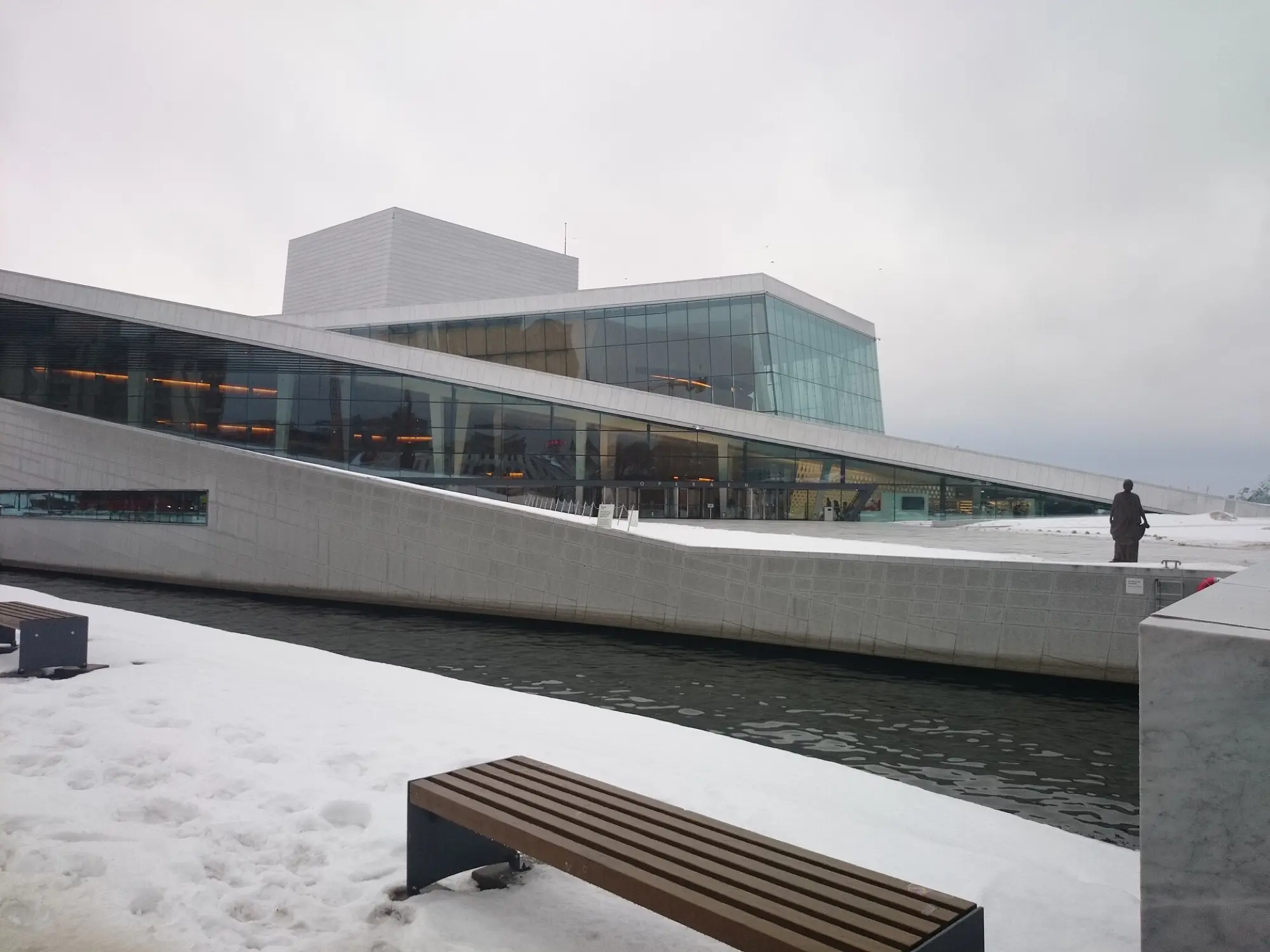

January is the coldest month in Oslo with a normal mean temperature of -2.3 °C, July is the warmest at 17.7 °C, and August is the wettest with 103 mm of precipitation. Daylight in Oslo runs from 5h 52m at the winter solstice to 18h 50m at the summer solstice.
Oslo weather at a glance
On Yr, the normal January mean temperature at Oslo (Blindern) is -2.3 °C and the normal January precipitation is 58 mm. In contrast, the normal July mean temperature at Oslo (Blindern) is 17.7 °C and the normal July precipitation is 87 mm. The normal July mean, 17.7 °C, sits 20 degrees above the normal January mean of -2.3 °C.
Precipitation patterns vary noticeably across the seasons. By the normals, March is the driest month at Blindern, recording 41 mm, while August is the wettest month with 103 mm. Taken together, the twelve monthly precipitation normals at Blindern add up to 837 mm a year.
Daylight hours change drastically between midsummer and midwinter. Computed on this site, on the summer solstice, 21 June, the sun rises in Oslo at 03:53 and sets at 22:43, providing 18h 50m of daylight. On the winter solstice, 21 December, the sun rises at 09:18 and sets at 15:11, leaving just 5h 52m of daylight.
Oslo weather by month: temperature, rain and daylight
The weather service Yr is run jointly by NRK and the Norwegian Meteorological Institute (MET Norway). Yr's official statistics for Oslo come from the Oslo (Blindern) measuring station, which sits at Blindern in Oslo at an elevation of 92 metres above sea level. MET Norway measures today's normal climate against the 1991-2020 normal period.
The daylight column in the table, computed on this site for daylight in Oslo, is sampled on the 1st of each month and on the four turning points of the year, in 2026, in Oslo local time including the summer-time change.
| Month | Normal mean temperature | Normal precipitation | Daylight on the 1st |
|---|---|---|---|
| January | -2.3 °C | 58 mm | 6h 06m |
| February | -2.0 °C | 46 mm | 8h 02m |
| March | 1.3 °C | 41 mm | 10h 32m |
| April | 6.2 °C | 48 mm | 13h 22m |
| May | 11.4 °C | 60 mm | 16h 02m |
| June | 15.3 °C | 80 mm | 18h 18m |
| July | 17.7 °C | 87 mm | 18h 40m |
| August | 16.5 °C | 103 mm | 16h 46m |
| September | 12.2 °C | 82 mm | 14h 06m |
| October | 6.6 °C | 93 mm | 11h 24m |
| November | 2.2 °C | 85 mm | 8h 40m |
| December | -1.4 °C | 54 mm | 6h 28m |
A normal monthly mean temperature averages day and night together, so afternoons are milder and nights colder than the figure shown in the table.
How far a real year strays from the normal
A single year can differ from the normal. January 2026 averaged -4.9 °C at Blindern, which was 2.6 degrees below normal, and February 2026 averaged -5.0 °C, running 3.0 degrees below normal. By contrast, December 2025 was mild and wet at Blindern, averaging 2.4 °C (3.8 degrees above normal) with 100.1 mm of precipitation against the normal 54 mm. July 2026 averaged 18.5 °C at Blindern, 0.8 degrees above the normal of 17.7 °C. Over the 13 months from October 2025 to October 2026, the temperature at Blindern ranged from -17.2 °C on 11 January to 32.9 °C on 15 July. Over that same 13-month stretch, the deepest snow measured at the station was 26.0 cm. The wettest month in those 13 months was October 2025, which saw 108.1 mm of precipitation, and the single wettest day was 5 October 2025, when 25.6 mm fell.
Winter in Oslo: December to February
Winter brings cold conditions and outdoor sports, as outlined in our guide to Oslo in winter. Daylight is limited early on, with 6h 28m on 1 December and 6h 06m on 1 January. Jul i Vinterland, the central Christmas market in Spikersuppa, runs from 7 November 2026 to 3 January 2027 and is closed on Christmas Eve; see Oslo Christmas markets for more options. In the last weeks before Christmas, shops stay open later and open on the last three Sundays before Christmas Eve. The Nobel Peace Prize is presented on 10 December, as noted in our guide to Oslo in December. Free skating is open at Spikersuppa, while Frogner stadion opens from November to mid-March for speed skating, bandy and public sessions. The city grooms roughly 350 kilometres of ski trails with machines and 100 kilometres with snowmobiles in the city and Marka (forest). The Korketrekkeren toboggan run covers about 2,700 metres with a drop of 255 metres.
Spring in Oslo: March to May
From 12 to 14 March 2027, the FIS World Cup in cross-country skiing, ski jumping and Nordic combined visits Holmenkollen. In 2026 the Bygdøy ferry ran from 14 March to 4 October. The Sørenga sjøbad (public sea bath) operates from 07:00 to 22:00 during the bathing season (1 April to 14 October) and from 07:00 to 16:00 in winter. On 1 May the sun rises at 05:12 and sets at 21:14 (16h 02m of daylight), meaning the sky is never dark enough for the aurora that night, as the sun does not dip more than 18° below the horizon. On 17 May, Constitution Day, children's parades run through the capital, starting from Akershus fortress at 10:00 and reaching City Hall square (Rådhusplassen) around 13:30. In 2027, Ascension Day falls on 6 May, Oslo's schools close on 7 May, and Whit Monday falls on 17 May. In 2026 Ruter's summer boat timetable ran from 16 May through August, adding line B1X to Hovedøya.
Summer in Oslo: June to August
Summer delivers long days, as detailed in our guide to Oslo in summer. On 1 June, the sun rises at 04:05 and sets at 22:23, giving 18h 18m of daylight without true darkness for aurora viewing. August is the wettest month by the normals at Blindern, with 103 mm of precipitation and a normal mean temperature of 16.5 °C. The City of Oslo measures bathing water temperature and quality at beaches from June to August, advising against swimming when values are too high. You can catch bus 30 to the beach at Huk, or take local ferries using a regular ticket or an Oslo Pass. Hovedøya is eight minutes from Aker Brygge by boat. Langøyene allows camping with a tent or hammock for up to two nights in the marked northern area. Major events include the Norway Cup from 31 July to 7 August 2027, and Øyafestivalen on 11 to 14 August 2027 and 9 to 12 August 2028.
Autumn in Oslo: September to November
Autumn brings cooling temperatures, shortening daylight and preparations for winter. Daylight drops from 14h 06m on 1 September to 8h 40m on 1 November. October averages a normal mean temperature of 6.6 °C and 93 mm of precipitation at Blindern. Seasonal facilities gradually wind down: the Bygdøy ferry concluded its 2026 season on 4 October, and toilets and drinking water at Langøyene close after week 40. Sørenga operates from 07:00 to 16:00 after 14 October. Weather permitting, the city starts laying the ice at Frogner stadion in the middle of October, taking about 2 to 3 weeks before it is ready. Skiing at Tryvann, 30 minutes from the city centre by car or metro, usually runs from November or December until Easter. Jul i Vinterland opens in Spikersuppa on 7 November 2026 and runs until 3 January 2027.
Best time to visit Oslo
Choosing when to visit depends on whether your trip centres on fjord activities or winter snow sports. For the warmest weather, July offers a normal mean temperature of 17.7 °C, along with 87 mm of normal precipitation. On 1 June Oslo has 18h 18m of daylight. May provides a normal mean temperature of 11.4 °C and 60 mm of precipitation, alongside the national celebrations on 17 May.
For snow sports, the season at Tryvann usually runs from November or December until Easter. The FIS World Cup takes place at Holmenkollen on 12 to 14 March 2027. For winter markets, Jul i Vinterland operates in Spikersuppa from 7 November 2026 to 3 January 2027. You can check our broader guide on the best time to visit Norway to coordinate travel plans across the country.
Ice, rain and swimming: practical notes
Even on gritted paths the city advises you to judge the conditions and wear spikes or ice grips. VisitOSLO warns of icy ground and suggests crampons, sold in pharmacies.
Swimming in the fjord, rivers and lakes is not recommended for 24 hours after heavy rain. Some beaches, especially on the fjord, have sharp stones and mussels in the water, so water shoes are recommended.