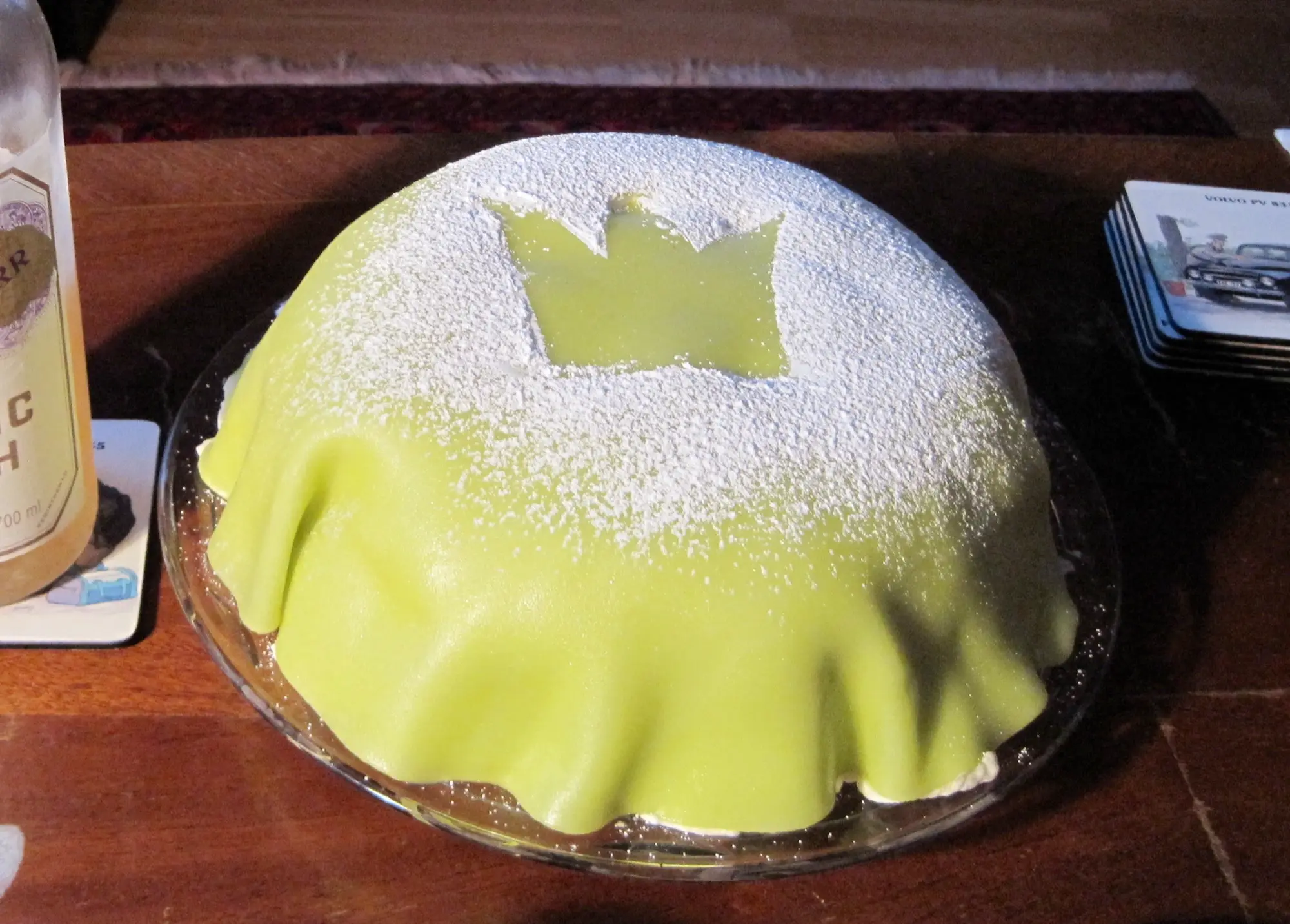

Swedish pastries form the core of daily coffee culture across Sweden. Start with the cinnamon bun (kanelbulle), followed by the cardamom bun, the cream-filled semla, princess cake, the saffron lussekatt, dense chocolate kladdkaka, the chokladboll, the classic seven kinds of cookies, Gothenburg's giant Hagabulle, and Skåne's crisp spettekaka. Each treat has its own traditional setting or season.
Swedish pastries at a glance
Visit Sweden says the average Swede eats cakes and pastries equal to 316 cinnamon buns a year. When you pause for fika, the baked treats known as fikabröd ("fika bread") became just as important over the years, along with the social side.
Here is an overview of the 10 pastries covered below:
| Pastry | What it is | When to eat it |
|---|---|---|
| 1. Cinnamon bun (kanelbulle) | Spiral wheat bun filled with cinnamon, sugar and butter | Cinnamon Bun Day, 4 October |
| 2. Cardamom bun (kardemummabulle) | Spiced wheat bun flavoured with cardamom | With fika |
| 3. Semla | Wheat bun with cream and almond paste | Fat Tuesday, 9 February 2027 |
| 4. Princess cake (prinsesstårta) | Sponge cake with cream, jam and green marzipan | With fika |
| 5. Saffron bun (lussekatt) | S-shaped saffron wheat bun | The weeks before Christmas |
| 6. Kladdkaka | Dense chocolate cake | With fika |
| 7. Chokladboll | Unbaked oat, cocoa, butter, sugar and coffee ball | With fika |
| 8. Seven kinds of cookies (sju sorters kakor) | Selection of traditional small biscuits | At a kafferep |
| 9. Hagabulle | Giant cinnamon bun from Café Husaren | With fika |
| 10. Spettekaka | Spit-baked crisp pyramid cake | With fika |
1. The cinnamon bun, kanelbulle
The kanelbulle is a spiral-shaped wheat bun filled with cinnamon, sugar and butter and topped with pearl sugar. It is sold in all bakeries and cafés. The cinnamon bun was first made after the First World War, but its ingredients (flour, sugar, egg, butter, cinnamon and cardamom) were expensive and hard to find, so it only became popular in the 1950s. According to Visit Sweden, Sweden's Home Baking Council, a group of baking-ingredient producers, made 4 October Cinnamon Bun Day (kanelbullens dag) in 1999.
2. The cardamom bun
The classic Swedish wheat bun dough is versatile. The bun also comes as a cardamom bun (kardemummabulle) and a vanilla bun (vaniljbulle). Cardamom buns use crushed cardamom seeds mixed through both the dough and the buttery filling, offering an aromatic alternative to cinnamon.
3. The semla
A semla is a wheat bun filled with cream and almond paste. It has existed in Sweden since the 16th century and was first eaten before the Lent fast. As part of annual Swedish traditions, semlor belong to Fat Tuesday (fettisdagen), which falls on 9 February in 2027.
4. Princess cake
Princess cake (prinsesstårta) has been one of Sweden's most popular cakes since the 1920s. It consists of layers of sponge, vanilla cream, raspberry jam and whipped cream domed under green marzipan, usually finished with a pink marzipan rose on top.
5. The saffron bun, lussekatt
The seasonal treats in winter are gingerbread biscuits and the S-shaped saffron bun, lussekatt. Flavoured with saffron, these yellow buns are traditionally kept for the weeks before Christmas and feature prominently during festivities for St Lucia day in Sweden.
6. Kladdkaka
Kladdkaka, which translates literally as "sticky cake", is a dense chocolate cake found in most Swedish cafés. It has a soft, gooey centre and is best served warm with whipped cream or vanilla ice cream.
7. The chokladboll
The chokladboll is a no-bake ball made of oats, butter, cocoa, coffee and sugar. Once mixed and shaped by hand, it is rolled in either desiccated coconut or crunchy pearl sugar.
8. The seven kinds of cookies
The custom of serving seven kinds of cookies (sju sorters kakor) dates from the late 19th century. Seven was said to be the right number for a gathering, as fewer would seem stingy and more boastful. According to Visit Stockholm, a kafferep (a semi-formal gathering popularised in the 1930s) should by tradition serve at least seven kinds of cookies, such as drömmar, hallongrottor, havreflarn, schackrutor, finska pinnar and bondkakor.
9. Gothenburg's Hagabulle
In Gothenburg's old quarter of Haga, Café Husaren produces a giant version of the cinnamon bun. Café Husaren's giant kanelbulle is, in Göteborg & Co's words, large enough to hide a child's face behind. The first Hagabulle was baked at Café Husaren in 1985. You can buy one directly at the counter at Haga Nygata 28.
10. Skåne's spettekaka
From the southern region of Skåne, spettekaka is a crisp pyramid cake baked on a spit and iced in white or pink. Layers of batter are piped slowly onto a rotating spit over heat, creating a dry, brittle structure meant to be sawn rather than sliced.
Where to buy the best cinnamon buns
If you want to sample standout buns in Sweden's two largest cities, several bakeries have established reputations for their craft.
Stockholm bakeries
- Café Saturnus: Located at Eriksbergsgatan 6 near Stureplan, this café has the city's most oversized cinnamon rolls. People visit to drink large bowls of latte with cinnamon rolls the café says are the biggest in town.
- Mr Cake: Run by two of Sweden's best-known bakers, this bakery mixes Swedish café culture with US-inspired pastries.
- Robin Delselius Bageri: This award-winning bakery offers traditional buns alongside a rotating bun of the month.
Gothenburg bakeries
- Konditori Brogyllen: This city bakery has made its moist cinnamon buns for over 20 years.
- Café Husaren: Located at Haga Nygata 28, this bakery's giant Hagabulle has drawn visitors since 1985.