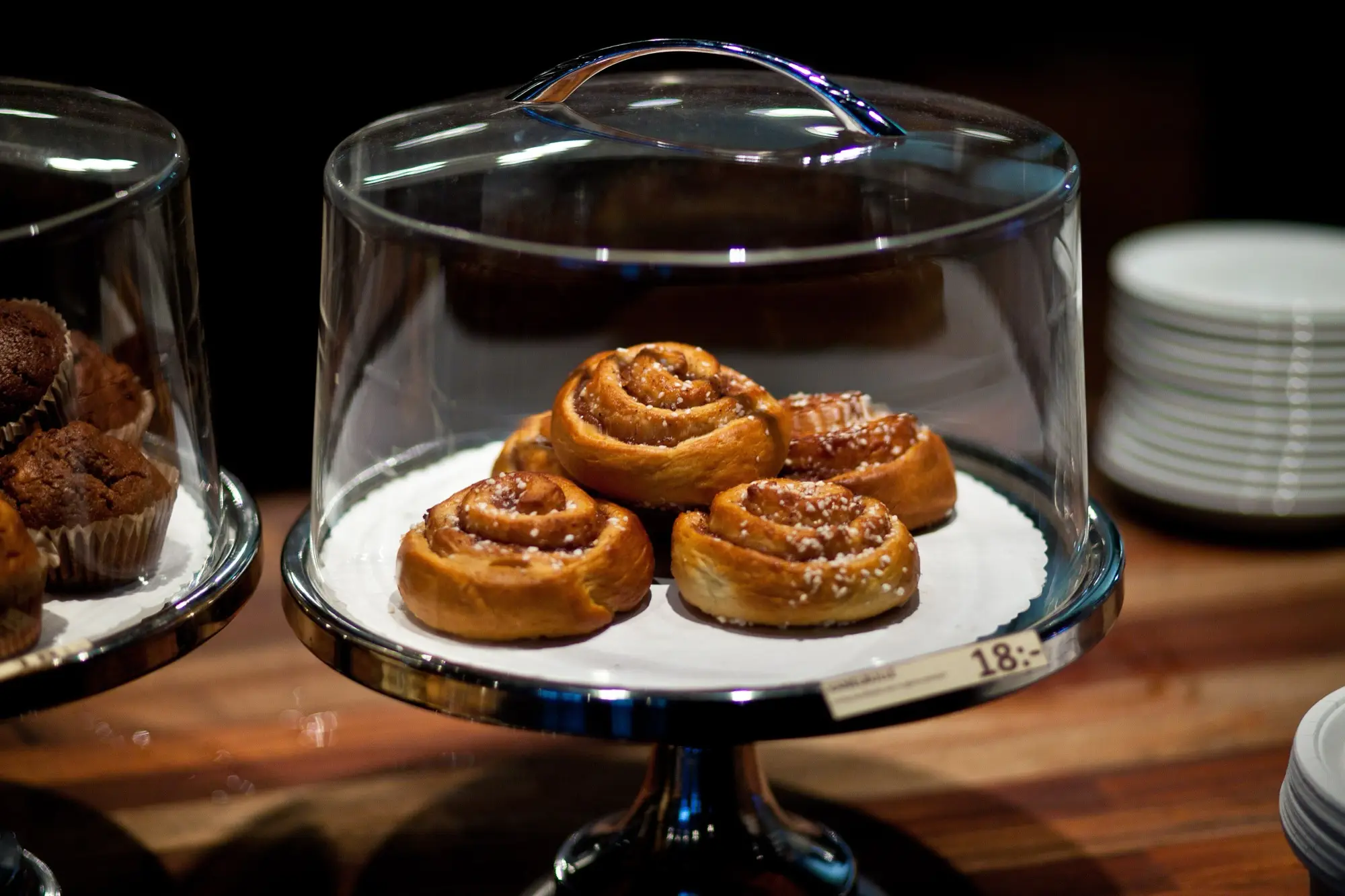

Fika is the Swedish coffee break, functioning as both a noun and a verb. It involves coffee, something sweet like a cinnamon bun, and above all, good company. Many Swedish workplaces schedule one or two fika breaks every single day.
What fika is
Fika is both a noun and a verb in Swedish. You can have a fika (ta en fika) or simply fika. The tradition usually involves coffee accompanied by something sweet. According to Visit Sweden, it represents a moment to pause, connect and recharge, often centring more on conversation and company than on the coffee itself. It can happen at any time of day.
Cinnamon buns (kanelbullar) remain the most popular accompaniment for coffee. Fika is also widely used as a relaxed alternative to dinner when asking someone on a date. While some people take a quiet break alone, it is widely considered a social ritual that is best shared. The word fik has entered everyday Swedish slang to describe a café, bakery or pastry shop, though the ritual can be as simple as colleagues chatting over a plain cup of coffee.
Where the word comes from
The word fika is believed to originate as a back-slang reversal of the syllables in kaffi, the historic spelling of coffee in Sweden, which is written as kaffe today. You can explore how such terms shape everyday life in this guide to Nordic words that explain the culture.
When coffee arrived in Sweden in the 18th century, the coffee itself was the fika. Over time, baked treats known collectively as fikabröd (fika bread) became just as integral to the custom, alongside the social gathering. The arrival of patisseries across Sweden in the 19th century established fika as a shared coffee-and-cake tradition among friends.
How to fika like a Swede
There are no strict rules to follow, but the essential guideline is not to rush. Fika is designed around slowing down and taking a genuine break from tasks. It can take place in an office, at home, in a café, indoors or outside.
If someone invites you to their home for fika, it is customary to bring cake or pastries along with you. It is standard etiquette to put your phone away and remain present in the conversation. You can read more about everyday social customs in this overview of Swedish etiquette for visitors. In working life, many Swedish employers schedule regular breaks into the daily routine, and some workplaces organise two a day, with one mid-morning and one in the afternoon. This practice is part of wider Swedish work culture: fika, flat structures and hours.
Five classic fika treats
Baked goods are a major element of broader Swedish food traditions. You can learn more about traditional baked items in this guide to Swedish pastries, buns and cakes. Classic options fall into five key categories alongside a historic cookie selection:
- Kanelbulle: A spiral-shaped wheat bun packed with cinnamon, sugar and butter, finished with crunchy pearl sugar on top. It is stocked in all Swedish bakeries and cafés, with dedicated variants such as the cardamom bun (kardemummabulle) and vanilla bun (vaniljbulle). The cinnamon bun has an official annual holiday, Cinnamon Bun Day, on 4 October.
- Prinsesstårta: Princess cake has been one of Sweden's most popular celebration cakes since the 1920s. It layers light sponge, vanilla cream, raspberry jam and whipped cream beneath a sheet of green marzipan, usually decorated with a small pink marzipan rose.
- Chokladboll: A rich, unbaked treat made by rolling oats, butter, cocoa, coffee and sugar into balls, coated in either desiccated coconut or pearl sugar.
- Kladdkaka: Translating as "sticky cake", this is a dense chocolate cake served in most Swedish cafés. It is best eaten warm with a side of whipped cream or vanilla ice cream.
- Sju sorters kakor: The tradition of serving seven kinds of cookies dates back to the late 19th century. Seven was viewed as the proper number to offer guests, as serving fewer seemed stingy while serving more was viewed as boastful. Visit Stockholm explains that a kafferep, an afternoon coffee gathering popularised in the 1930s, historically requires at least seven varieties, such as drömmar, hallongrottor, havreflarn, schackrutor, finska pinnar and bondkakor.
Where to fika in Stockholm
Stockholm contains numerous traditional bakeries and contemporary coffee shops scattered among the city's sights, which you can map out alongside other things to do in Stockholm. Visit Sweden pictures friends taking an outdoor fika in the orchards of Rosendals Trädgård in Stockholm. Below are nine cafés to visit across Sweden, with eight in Stockholm and one in Gothenburg.
1. Vete-Katten, Kungsgatan
Vete-Katten is an established coffee-and-pastry institution in central Stockholm serving traditional Swedish pastries. The business operates across six branches, and its original shop has remained open almost every day since 1928 at Kungsgatan 55.
2. Tössebageriet, Karlavägen
Tössebageriet has operated from the same address at Karlavägen 77 since 1920. Its seasonal semlor (cream and almond-paste buns) appear on the city's "best of" lists each year.
3. Saturnus, Eriksbergsgatan
Saturnus is situated at Eriksbergsgatan 6 close to Stureplan. The café is popular for its large bowls of café latte, served alongside cinnamon rolls that the café states are the largest in the city.
4. Chokladkoppen, Stortorget
Located at Stortorget 18 in Gamla stan (the old town), Chokladkoppen is a compact venue that was among the first openly LGBT-friendly establishments in Stockholm. It offers outdoor tables on the historic square during the summer months.
5. Skeppsbro bageri, Skeppsbron
Positioned along the waterfront at Skeppsbron 21 in Gamla stan, Skeppsbro bageri focuses entirely on organic bread and buns. The bakery mills all of its own organic flour directly on the premises.
6. Café Pascal, Norrtullsgatan
Café Pascal is located at Norrtullsgatan 4, one block from the Odenplan transit hub. The venue received the city's Gulddraken award for best café in Stockholm in 2019.
7. Gildas rum, Skånegatan
Gildas rum is situated at Skånegatan 79 in the SoFo district of Södermalm. Decorated to resemble an old-fashioned reading parlour, it serves home-baked cakes and offers outdoor seating out front in summer.
8. Fabrique, Lilla Nygatan
Fabrique operates as a local chain of wood-fired bakeries across central Stockholm, producing sourdough bread, buns and cakes by hand. In Gamla stan, you can visit their branches at Lilla Nygatan 12 and Slussplan 5.
9. Café Husaren, Gothenburg
For visitors exploring western Sweden, Café Husaren at Haga Nygata 28 in Gothenburg is home to the famous giant kanelbulle. According to the city's tourism organisation, the bun is large enough to hide a child's face behind. The original Hagabulle was first baked at Café Husaren in 1985. Inside, the shop maintains one of very few preserved ornate glass ceilings dating from 1896.
| Café | Address | Known for |
|---|---|---|
| Vete-Katten | Kungsgatan 55, Stockholm | Traditional Swedish baking operating since 1928 |
| Tössebageriet | Karlavägen 77, Stockholm | Established in 1920 and noted for its semlor |
| Saturnus | Eriksbergsgatan 6, Stockholm | Giant cinnamon rolls and bowls of café latte |
| Chokladkoppen | Stortorget 18, Stockholm | Early LGBT-friendly café with outdoor square seating |
| Skeppsbro bageri | Skeppsbron 21, Stockholm | Organic buns made from flour milled on site |
| Café Pascal | Norrtullsgatan 4, Stockholm | Gulddraken best café award winner in 2019 |
| Gildas rum | Skånegatan 79, Stockholm | Old-fashioned reading-room atmosphere in SoFo |
| Fabrique | Lilla Nygatan 12, Stockholm | Handcrafted sourdough and buns baked in wood-fired ovens |
| Café Husaren | Haga Nygata 28, Gothenburg | Giant Hagabulle created in 1985 beneath an 1896 glass roof |
Fika outdoors
Fika is a year-round tradition. According to Visit Sweden, hot coffee and a sweet pastry are considered especially welcome outside on a crisp winter day. For a remote example of this tradition, Visit Sweden highlights outdoor fika taking place in the snow at Huuva Hideaway in Liehittäjä, located in Swedish Lapland.