
When visiting Sweden, tip lightly or not at all, pay by card instead of euros, and take fika (coffee break) seriously. Take one bun rather than two, respect the limits of the right of public access, check for local fire bans, drive with headlights on and no more than 0.02% alcohol, and remember that drugs, cannabis included, are strictly illegal.
Swedish etiquette in short
Visitors often bring habits that do not fit local expectations. The Swedish concept of lagom roughly means "just the right amount". For Swedes, it is about doing things mindfully and avoiding excess, not doing less. Visit Sweden's guide to lagom highlights how this outlook shapes daily social life, from sharing food to spending time outdoors.
To navigate interactions easily, keep the following baseline customs in mind:
| Situation | What Swedes do |
|---|---|
| Restaurant bills | Round up slightly or leave no tip |
| Everyday purchases | Pay with a chip-and-PIN debit or credit card |
| Coffee time | Stop work for a shared break with a pastry |
| Serving food | Take one portion and leave or split the last piece |
| Social baking | Offer a balanced selection rather than an excessive spread |
| Countryside access | Roam freely while respecting land, wildlife and reserves |
| Outdoor cooking | Use designated fireplaces and verify local bans |
| Driving | Keep headlights on; the blood alcohol limit is 0.02% |
| Legal compliance | Follow strict zero-tolerance drug laws |
Here are the 9 mistakes visitors make most often, and what you should do instead.
1. Over-tipping
Tipping is less established in Sweden than in many countries. According to Visit Sweden's tipping advice, a tip is welcome but not expected, and nobody is likely to be offended if you do not tip. When a service charge is included, it is clearly shown on the bill.
In restaurants, people often simply round up. For instance, a SEK 280 bill becomes SEK 300. If you do want to tip for good table service, 10% of the bill is a nice tip that is easy to work out. You do not need to calculate large percentages at counters or bars.
2. Paying in cash or euros
Sweden is an EU member state but has not adopted the euro. Euros and other foreign currencies are generally not accepted in cash. If you arrive expecting to spend physical notes, you will find few places willing to take them.
Many businesses prefer or only take cards or mobile payment. Visa and Mastercard are widely accepted, though American Express is not accepted everywhere. Your cards need a chip and PIN to function at payment terminals. You will also see signs for Swish, a popular mobile payment app. However, Swish requires a Swedish bank account and personal identity number, so most tourists cannot use it. Plan to rely primarily on a major debit or credit card. If you are budgeting your expenses, see our guide on tourist prices and costs.
3. Skipping fika
In Sweden, fika is more than an informal cup of coffee; it is an established social institution. In many Swedish workplaces, two coffee breaks a day are an unwritten rule. Skipping these breaks can mean missing out on key team interactions and casual conversation. You can read more about daily workplace routines in our guide to Swedish work culture: fika, flat structures and hours.
When sitting down for coffee, kanelbullar (cinnamon buns) are the most popular item to have alongside it. You can learn more about where to take your break in our guide to fika in Sweden.
4. Taking the last bun
When a plate of pastries is set out, do not take multiple items at once or claim the final portion without checking. Lagom is not a strict rule but a compass for everyday decisions. In practice, it means taking one cinnamon bun, not two, so there is enough for everyone.
When only one pastry remains on the platter, Swedes do not take it whole. Instead, it is customary to split the last bun so that no single person deprives others of a share.
5. Bringing too few cookies, or too many
Social expectations around baking and hospitality have deep roots. The tradition of sju sorters kakor (seven kinds of cookies) dates from the late 19th century. Seven was said to be the right number for a gathering, as fewer would seem stingy and more boastful.
If you are baking or serving guests in a traditional setting, aiming for this balance honours the custom of modest generosity. You can read more about traditional bakes in our overview of Swedish pastries.
6. Treating the right of public access as a free-for-all
Sweden's national parks are free to enter, and allemansrätten (the right of public access) lets everyone enjoy nature freely. However, this freedom comes with clear restrictions explained by Visit Sweden's outdoor guidance.
Wild berries and mushrooms belong to the landowner, but the landowner may not stop people picking them where the right of public access applies. In contrast, no picking of mushrooms, berries, flowers, nuts or anything else is allowed in national parks or nature reserves.
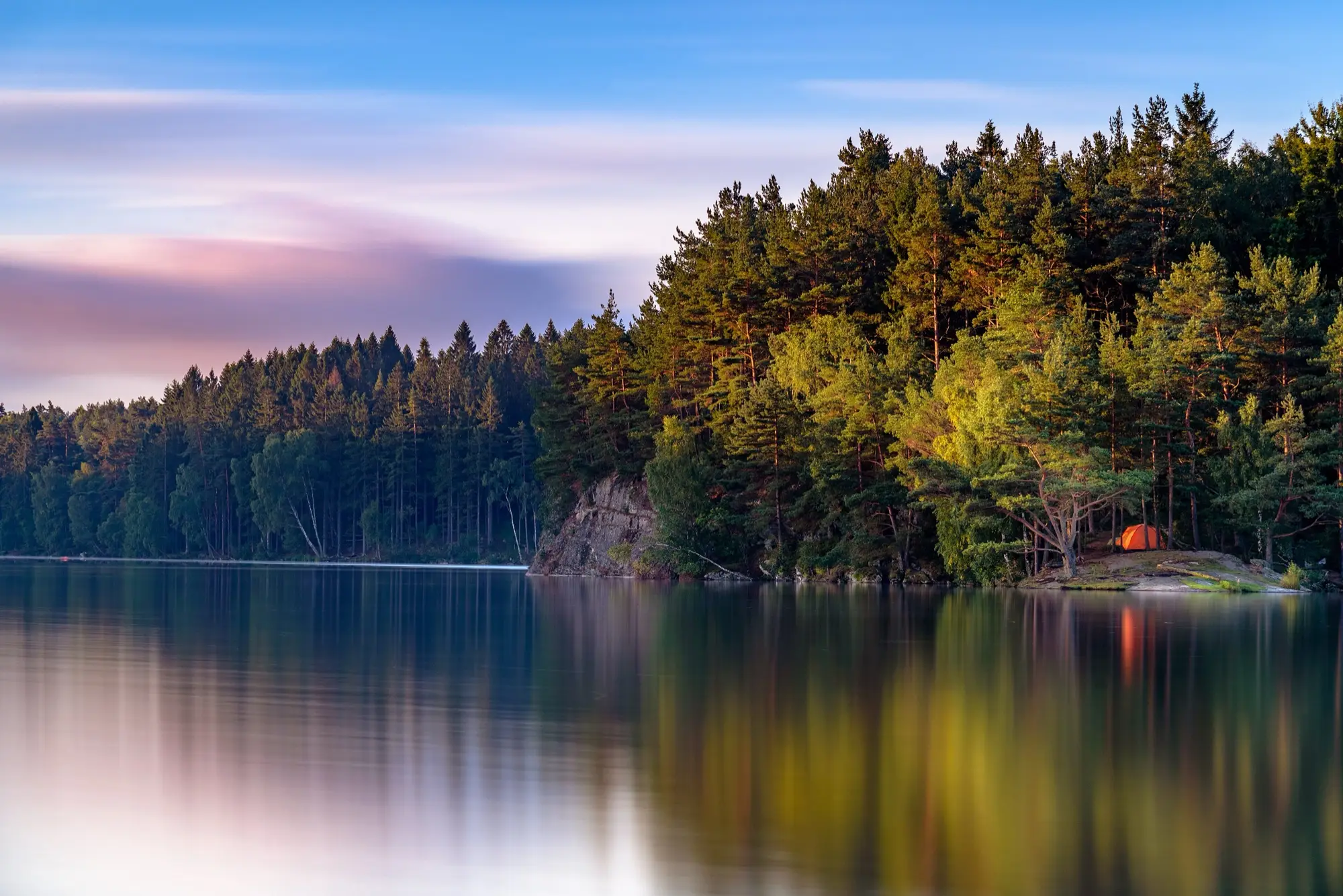
Camping has strict boundaries as well. You may choose your own wild camping spot as long as you do not disturb the landowner or damage nature. However, tents are generally not allowed on sports grounds or in national parks or nature reserves. Large groups must get the landowner's permission before setting up camp, and everyone must take every scrap of litter with them when leaving.
7. Lighting a fire without checking
The right of public access allows fires in the countryside only when it is safe to have them. Lighting an open fire during dry conditions can cause severe damage and break local laws.
Fire bans are issued often in spring, summer and autumn by county administrative boards and the fire brigade. It is up to you to find out where they apply before striking a match. When fires are permitted, use the existing barbecue areas and fireplaces provided in forests, by lakes and along hiking trails.
8. Driving the way you do at home
Headlights must be on at all times, even in broad daylight. The blood alcohol limit is 0.02%, and the drink-driving laws are strictly enforced.
From 1 December to 31 March, cars must have winter tyres. Wildlife is another real hazard on rural roads: in the countryside, moose and deer may cross the carriageway, especially at dawn and dusk. For detailed highway regulations and preparation tips, read our guide to driving in Sweden.
9. Assuming the law works like home
Swedish legal standards are exceptionally strict in certain areas, particularly regarding narcotics and sexual offences. If you are reviewing general safety conditions, consult our report on whether Sweden is safe.
All illegal drugs, cannabis included, are strictly prohibited even in small amounts. Jail sentences of up to 10 years and heavy fines apply to drug offences. Airport authorities scan transit baggage too, so having drugs in transit luggage is detected and penalised. In addition, paying for sex is illegal in Sweden, and from 1 July 2025 that includes paying for sexual acts online.