
Eleven words explain Nordic culture: sisu, löyly, kaamos and kalsarikännit from Finland; fika, lagom and allemansrätten from Sweden; friluftsliv and koselig from Norway; hygge from Denmark; and janteloven from Denmark and Norway. Finland's terms cover resilience, sauna steam, polar night and solitary evenings in. Sweden's words balance coffee breaks, moderation and outdoor access. Norway and Denmark focus on open-air life, cosiness, warmth and literary rules against standing out.
1. Sisu (Finland): perseverance when it counts
Sisu is a Finnish word for a combination of resilience and perseverance, according to ThisisFINLAND, the website of the Finnish Ministry for Foreign Affairs. The word comes from a Finnish root meaning "inner" or "inside", which is why it is sometimes translated as "guts" or "inner strength". There is no single English equivalent; determination, guts, hardiness, courage and willpower are the usual attempts. The ministry's official sisu emoji calls it "the feeling of perseverance" and quotes the Finnish saying about going through even a grey rock. In a book on sisu reviewed by ThisisFINLAND, sisu is an action-oriented mindset you do not brag about; you let your actions do the talking. ThisisFINLAND gives swimming in icy water, with a sauna nearby to warm up afterwards, as an example of sisu in practice.
2. Löyly (Finland): the point of the sauna
Löyly is the soft steam that rises from the sauna stove, and it is the focus of a Finnish sauna, which typically runs at 70 to 90°C. General etiquette guides, such as our overview of Finland etiquette, note how communal sauna spaces function. When others are on the benches, ask before throwing water on the stones; the phrase is "Saako heittää löylyä?" ("May I throw steam?"). Löyly is also the name of a modern public sauna in Helsinki, which Visit Finland calls iconic. To learn more about local traditions and clothing rules, read our guide to the Finnish sauna.
3. Kaamos (Finland): the sunless season in Lapland
Kaamos is the polar night, the season when the sun does not rise in the far north; it occurs only above the Arctic Circle. In Utsjoki on Finland's northern border kaamos lasts almost two months; in Sodankylä, close to the Arctic Circle, four days. You can check the current conditions via our live daylight tracker for Utsjoki. Kaamos is rarely pitch black; sunlight still reaches the upper atmosphere, and blue twilight is typical of the polar night in northern Finland. Southern Finland has no polar night, but in Helsinki the shortest day of the year is under six hours long.
4. Kalsarikännit (Finland): a night in, alone
Kalsarikännit is staying in for a drink at home in your underwear, with no intention of going out. The term combines kalsari (underwear) and kännit (drunkenness). Major international media picked the word up from Finland's official emoji set, and ThisisFINLAND posted a pronunciation video in February 2017. Finland was the first country to publish its own set of country-themed emojis; the collection has 60 illustrations explaining hard-to-describe Finnish emotions, words and customs.
5. Fika (Sweden): the coffee break as a social ritual
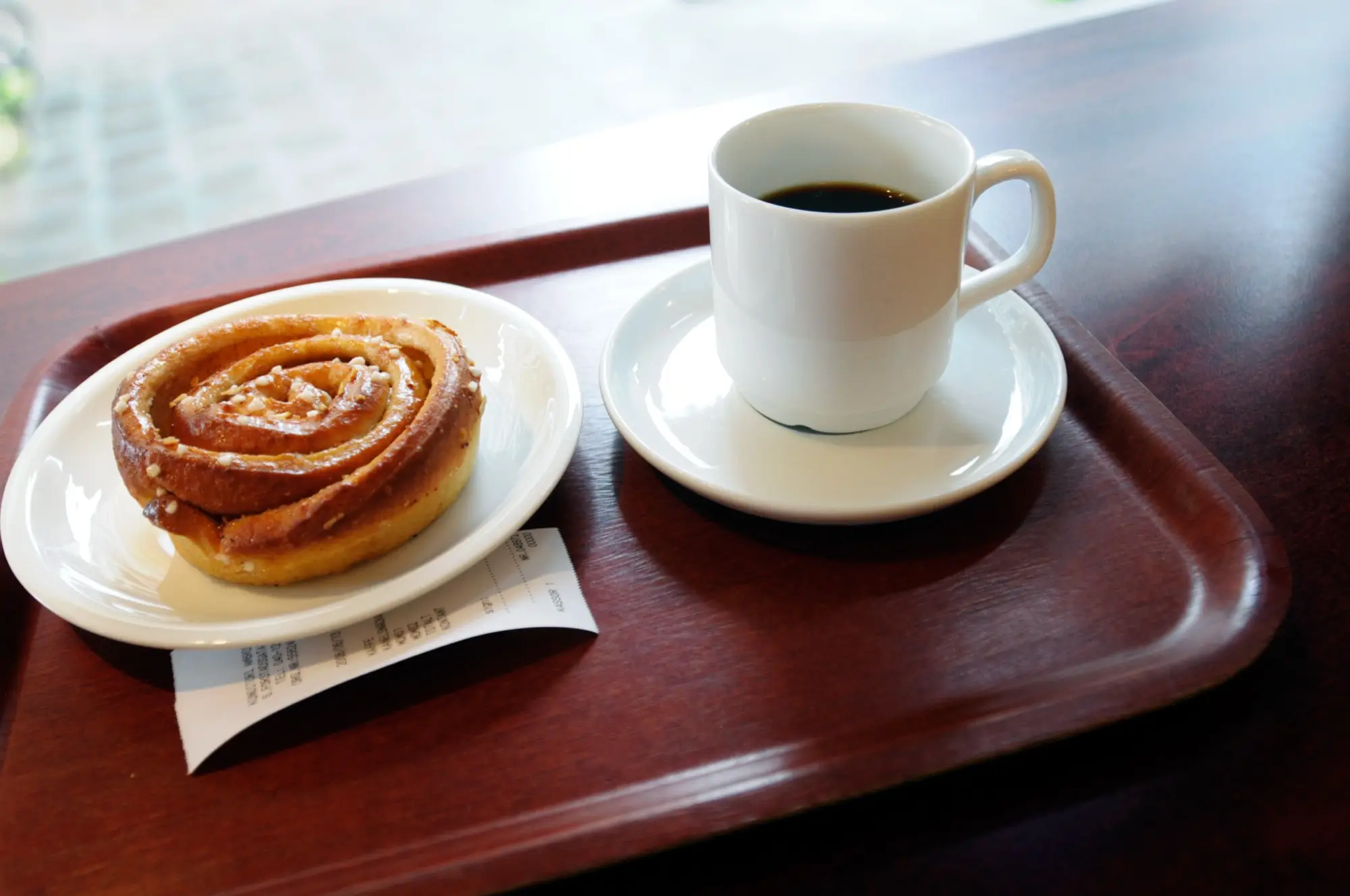
Fika is the social Swedish coffee break, functioning as both a noun and a verb: you can "ta en fika" (have a fika) or simply "fika". The word is believed to reverse the syllables of kaffi, the old spelling of coffee, which reached Sweden in the 18th century. Fika usually means freshly brewed coffee with something sweet, most often cinnamon buns (kanelbullar), and it is more about the company than the coffee. Many Swedish workplaces schedule fika into the day, and some have two, mid-morning and afternoon. If you are invited to someone's home, it is customary to bring cake or pastries. Rosendals Trädgård, a garden café in Stockholm, is one of the places Visit Sweden shows for an outdoor fika. For suggestions on where to experience it, see our guide to fika in Sweden and 9 cafés to try it.
6. Lagom (Sweden): just the right amount
Lagom is a Swedish concept with no direct English translation that roughly means "just the right amount", not too much and not too little. The word comes from an old form of lag, meaning law or common-sense law, hinting at what is appropriate. Lagom is not about doing less but about doing things mindfully and avoiding excess; it is a guide for daily choices, not a strict rule. An everyday example is taking one cinnamon bun, not two, so there is enough for everyone, and splitting the last one. The same idea explains the Swedish custom of serving exactly seven types of cookies at social gatherings; fewer would be stingy and more showing off. Travellers preparing for local interactions can learn other helpful expressions in our list of basic Swedish phrases.
7. Allemansrätten (Sweden): the right to roam, with Finland's and Norway's versions
Allemansrätten is Sweden's right of public access, literally translating as "the all man's right". It is a principle protected by law that gives everyone in Sweden the freedom to roam in nature, with responsibility for nature, wildlife and landowners. The right lets you pitch two to three tents for a night or two; large groups need the landowner's permission. National parks and nature reserves have their own rules that may restrict the right, and tents are generally allowed only at designated sites there. In Sweden fires are allowed under the right only when conditions are safe, and existing barbecue areas and fireplaces are recommended. When meeting landowners or locals across Sweden, you will often encounter familiar family names from our guide to Swedish names and the most common surnames.
Similar rights exist across the borders, as detailed in our guide to Sweden vs Norway:
- Finland: Known as jokaisenoikeudet, "everyman's rights", which lets anyone living in or visiting Finland roam, forage and fish with a line and rod. In Finland, building a campfire is not included in everyman's rights.
- Norway: Known as allemannsretten, set out in the Outdoor Recreation Act (friluftsloven), covering the right to pass through, to stay and to harvest.
8. Friluftsliv (Norway): time outdoors as part of ordinary life
Friluftsliv is being outdoors, especially in forest and field, to unwind or to exercise, according to the Bokmål dictionary definition. The first part, friluft, means "fri luft", open or free air. Norway's Outdoor Recreation Act exists to protect the natural basis of friluftsliv and the public's right to move and stay in nature, as a health-promoting leisure activity. Under the Act a tent must be at least 150 metres from an inhabited house or cabin, and you may stay no more than 2 days in one place without the owner's consent, except on high mountains or far from settlement.
9. Koselig (Norway): cosy places and kind people
Koselig is an adjective describing something that creates or is marked by a snug, friendly atmosphere or well-being, such as a cosy living room. Pronounced [ko:`s(ə)li] according to the Norwegian Academy's dictionary, it is formed from the verb kose (to make cosy) with the suffix -lig. Said of a person, koselig means pleasant, likeable or friendly. The Bokmål dictionary defines koselig as "that comes with kos", with the examples a cosy home, a cosy gathering and a nice guy.
10. Hygge (Denmark): unhurried time with people you care about
Hygge is the practice of creating a warm atmosphere and enjoying the good things in life with good people, which happens all year round. Pronounced "hoo-gah", it translates roughly to "cosiness", though it means more than that, according to VisitDenmark. Hygge is usually informal time with family or close friends, often at home over a meal, with no agenda; the word dates back to around 1800 in its present meaning. Hygge was added to the Oxford English Dictionary in 2017. The high season of hygge is Christmas, with candles, lights and mulled wine, known locally as gløgg, at Tivoli Gardens and in Copenhagen's streets. For visitors, denmark.dk suggests a candlelit dinner in a historic restaurant such as Duus Wine Cellar in Aalborg, in a building from 1624, a sunny day at Tivoli, or a walk on Jutland's west-coast beaches.
11. Janteloven (Denmark and Norway): a novelist's ten rules against standing out
Janteloven is a literary term for a law of ten commandments, petty rules for how to live that the small-town collective forces on the individual. The Law of Jante is not a statute; it was first used by Aksel Sandemose in his 1931 novel En sjømann går i land and developed in En flyktning krysser sitt spor (1933). Jante is the name of the small Jutland town where the novels' main character, Espen Arnakke, grows up. Sandemose was a Danish-Norwegian writer who grew up in Nykøbing Mors, the outward model for Jante; he moved to Norway in 1930 and soon wrote in Norwegian.
What these words have in common
The Norwegian Academy's dictionary defines allemannsrett as legally regulated access to use land you do not own, such as free passage in outlying land and picking mushrooms and berries. Visit Sweden says fika can happen at work, at home or in a café, indoors or out in nature. According to VisitDenmark, hygge did not originate in Danish but in Old Norwegian, and first appeared in Danish writing around the end of the 18th century. Today, the Norwegian Academy's dictionary glosses the noun kos with the word hygge.