
Finnish food is not a cuisine of dishes so much as a cuisine of ingredients: rye, potatoes, fish from cold water, forest berries, mushrooms, reindeer, and dairy in more forms than seem necessary. Most of it is plain, and the best of it is extremely good. A visitor's problem is mainly finding it. Restaurants in Helsinki lean international, and the traditional food lives in market halls, lunch canteens, bakeries and people's kitchens.
What follows is what to eat, where you will actually find it, and what it costs.
The everyday things
Ruisleipä, rye bread. Sour, dense, dark, and on the table at every meal. It was voted Finland's national food in 2017, the country's centenary year, and it has its own day on 28 February. The two shapes to know are the flat round loaf with a hole in the middle (reikäleipä), originally hung on a pole to dry, and the thin crisp näkkileipä. Eat it with butter and cheese, or with a slice of cold-smoked salmon. The supermarket staples are Reissumies and Fazer's Puikula; better loaves come from market-hall bakeries.
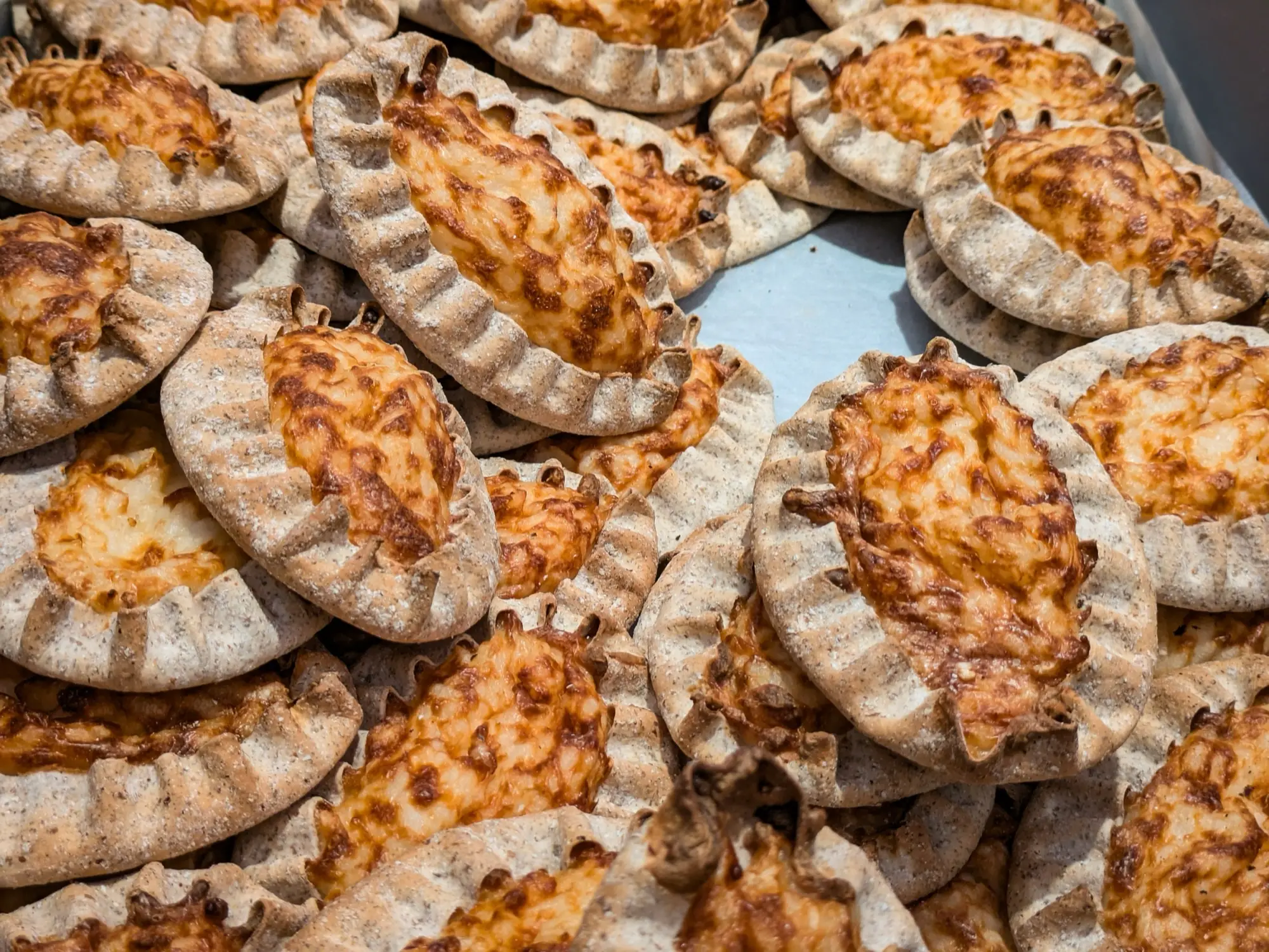
Karjalanpiirakka, Karelian pie. A thin rye crust crimped around rice porridge, sometimes potato or millet, baked hot and eaten with munavoi, butter mashed with chopped boiled egg. It is an EU Traditional Speciality Guaranteed, as are the Savonian fish-in-bread kalakukko and the farmhouse beer sahti. Supermarket packs are labelled riisipiirakka, rice pie. The ones you want are warm from a market-hall bakery or a café.
Lohikeitto, salmon soup. Salmon, potato, leek and dill in a milky or creamy broth. It is the most reliable thing on a Finnish menu, on the lunch list of half the cafés in the country, and it is the dish most visitors want again at home. Served with rye bread and butter.
Poronkäristys, sautéed reindeer. Thinly shaved frozen reindeer fried in butter and simmered until tender, served on mashed potato with lingonberries, and ideally a pickled gherkin. It is the Lapland dish, and it is on most restaurant menus in Rovaniemi. The meat itself, Lapin Poron liha, is an EU Protected Designation of Origin. Dried and cold-smoked reindeer are protected too, and are the most portable gift you can take home from Lapland.
Fish. Cold-smoked and salt-cured salmon (graavilohi), hot-smoked salmon from a market stall, fried vendace (muikku) with garlic mayonnaise at a summer fair, and Baltic herring (silakka), either fried or pickled in a dozen ways. Pickled herring on new potatoes with dill is the taste of a Finnish summer.
Salmiakki. Salty liquorice flavoured with ammonium chloride. You will either hate it on the first try or come round to it on the third, and you will find it in ice cream, chocolate and vodka shots as well as in the sweets aisle. Buy a mixed bag and share it; watching your friends taste it is half the point.
Korvapuusti. The cinnamon bun, "slapped ear" in Finnish because of its shape, with cardamom in the dough. A pulla with a cup of light-roasted coffee is the country's standard afternoon snack.
Leipäjuusto. Baked squeaky cheese, sometimes called bread cheese, eaten warm with cloudberry jam. It squeaks against your teeth. It is usually sold in supermarket dairy sections, and served warm at cafés in the north.
Eating out: lunch is the meal
Finland eats its main meal at lunch, and the lounas is how visitors on a budget can eat well. Almost every restaurant, from a workplace canteen to a hotel dining room, puts out a weekday lunch at midday: a buffet or a choice of two or three dishes, with salad, bread, a drink and often coffee included. The menu changes daily and is posted on the door or on a lunch website.
There is an official anchor for what lunch costs. The Tax Administration's 2026 rules for employer lunch benefits set the ordinary range between €8.80 and €14.00 a meal, and lunch vouchers top out at €14.00. That is not a price list, but it is the band the tax office treats as an ordinary working lunch, and it is a fair guide. Eat out at lunch, cook at dinner.
In the evening, the traditional food turns up on the menus of a smaller number of restaurants, often built around seasonal Nordic ingredients at tasting-menu prices. The cheap evening options are pizza, kebab and burgers, which Finland takes seriously.
Market halls
The market hall (kauppahalli) is the easiest place to eat traditional food in a city. Each has fishmongers, butchers, bakeries and a few small restaurants serving salmon soup and fried fish at lunch.
- Old Market Hall, Helsinki (Vanha kauppahalli). On the harbour by the Market Square. Open Monday to Saturday 8–18 and Sunday 10–17, although individual stalls keep their own hours. The most touristy and the most convenient.
- Hakaniemi Market Hall, Helsinki. Where people from the neighbourhood actually shop. It reopened after a long renovation in April 2023. Open Monday to Saturday 8–18, with an upper floor that keeps shorter hours.
- Tampere Market Hall. The place to try mustamakkara, Tampere's black blood sausage, with lingonberry jam. Open weekdays 9–18 and Saturdays 9–16, closed on public holidays.
- Turku Market Hall. Opened in 1896, and one of the oldest market halls in Finland. Open Monday to Friday 8–18 and Saturday 8–16, closed on Sundays.
In summer, the outdoor market squares take over, with new potatoes, peas in the pod, strawberries and smoked fish from the stalls. Pea pods are eaten raw, like crisps.
Seasonal food
Finnish food changes with the calendar more than most, and a lot of it is only on sale for a few weeks.
- February. Runeberg's torte, a small cylindrical cake with almond, rum or arrack and raspberry jam, for the poet's day on 5 February. It is sold from January. Laskiaispulla, a cardamom bun filled with jam or almond paste and whipped cream, for Shrovetide.
- Easter. Mämmi, baked rye and malt pudding, dark brown and eaten cold with cream and sugar. It divides Finns about as much as it divides visitors.
- Midsummer. New potatoes with dill and pickled herring, grilled sausage, strawberries.
- Summer. Strawberries from the market, then bilberries (mustikka) in July and August. Under everyman's right, anyone may pick wild berries and mushrooms in the forest, as long as they are not protected species. Cloudberries (lakka) grow on northern bogs and cost more than any other berry at the market. The berry and mushroom picking guide has the details.
- Crayfish season. Crayfish fishing opens on 21 July at noon and closes at the end of October. August is crayfish party (rapujuhlat) month: boiled crayfish with dill, toast, and a shot of vodka per claw, in theory.
- Autumn. Lingonberries, chanterelles and ceps; game; the Baltic herring market on Helsinki's Market Square in October. The events calendar lists it when it is on.
- Christmas. The Christmas table: baked ham, rutabaga, carrot and potato casseroles, beetroot salad (rosolli), rice porridge with a hidden almond, and prune pastry stars (joulutorttu).
Prices in a supermarket
Shelf prices at a Prisma in Helsinki on 27 September 2026:
| Item | Price |
|---|---|
| Rye bread, Reissumies, 12 pieces (705 g) | €1.99 |
| Rye bread, Fazer Puikula, 500 g | €1.95 |
| Milk, low-fat, 1 litre | €0.95 |
| Coffee, Kulta Katriina, 500 g | €7.69 |
| Salmon fillet, boneless, per kg | €18.90–29.80 |
| Rice pies, 6 | €1.26–2.29 |
For a fuller picture of what living here costs, including rent and transport, see the cost of living in Finland.
Alcohol and Alko
Alcohol is where Finland's prices, and its rules, are most noticeable.
What a supermarket sells. Ordinary shops, kiosks and petrol stations may sell fermented drinks up to 8% alcohol (beer, cider, most long drinks, and some wines) and other drinks up to 5.5%. They may sell them only between 9:00 and 21:00. After nine in the evening, the beer aisle stays open but the tills will not sell you a can.
Everything stronger comes from Alko, the state retailer. Since the Alcohol Act change of 3 July 2026, Alko stores may open every day of the year between 9:00 and 21:00, and some have started opening on Sundays. Hours are set per store, so check the one near you before planning a Sunday.
Age and ID. You can buy drinks up to 22% at 18 and anything at 20. Alko checks ID from anyone who looks under 30. It accepts a passport, a photo identity card, or a physical driving licence from the EU and a handful of other countries, including the UK and the USA. It does not accept a phone, a student card or a military ID. The same applies at the supermarket till for beer.
Restaurants. Bar prices are high, which is one reason so much Finnish drinking happens at home or at the cottage.
If you only eat five things
- Salmon soup with rye bread, at a market hall at lunchtime.
- A warm Karelian pie with egg butter.
- Sautéed reindeer with mash and lingonberries, in Lapland.
- A cinnamon bun with coffee, mid-afternoon, anywhere.
- Whatever is in season: new potatoes and herring in June, crayfish in August, bilberry pie in late summer, Runeberg's torte in February.
Then finish in a sauna, which is how most Finnish summer evenings with this kind of food end.