
Nine mistakes visitors often make in Denmark are walking or cycling wrong in the bike lanes, boarding without a ticket, over-tipping, paying with the wrong money, binning deposit bottles, treating Christiania as a place to buy cannabis, smoking indoors, ignoring the rules in the countryside, and the flag.
Following local conventions helps you avoid basic misunderstandings across the country. If you also visit Sweden, you can consult our guide to Swedish etiquette for expectations on the other side.
Bike lanes: keep right and signal
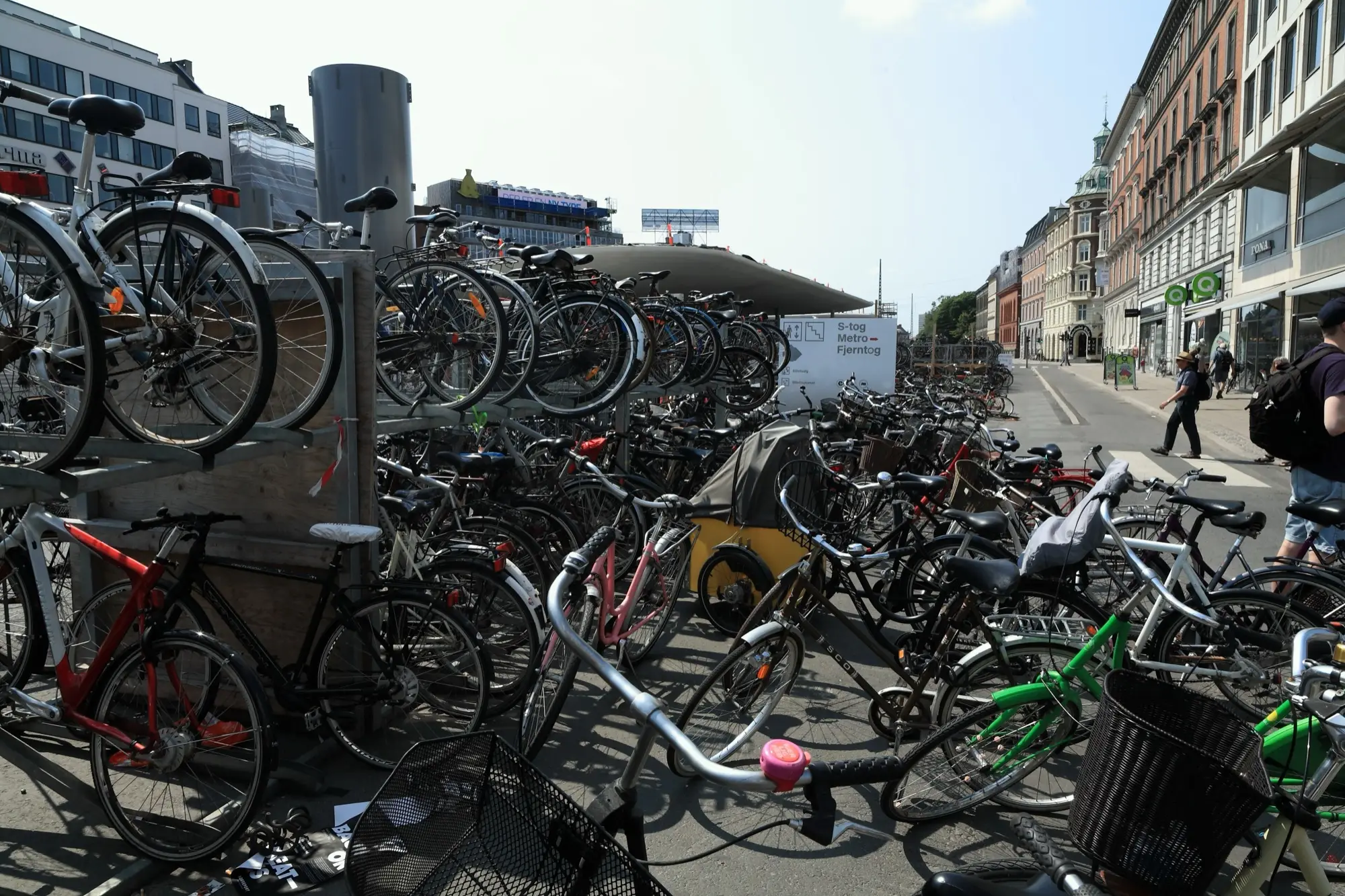
VisitCopenhagen notes that life in Copenhagen is lived on a bicycle, in sun, rain or snow, and the sheer number of bikes on the streets can overwhelm a first-time visitor. According to VisitCopenhagen's bike culture guide, the city has more bikes than inhabitants and 382 kilometres of cycle tracks.
When cycling yourself, VisitCopenhagen's rules are to leave your phone in your pocket, use lights when it is dark, and keep right unless passing. Signal your movements clearly: extend your right hand to turn right, extend your left hand to turn left, and raise your left hand to indicate you are coming to a stop. When turning left, VisitCopenhagen says to use two crossings. If you are new to cycling here, VisitCopenhagen advises avoiding the morning rush hour from 7.00 to 9.00 and the afternoon rush hour from 15.00 to 17.00, as well as the larger streets and the inner city where bike lanes become hectic. You can find more city navigation advice in our wider guide to Copenhagen.
Buying a ticket before you board
VisitCopenhagen says you must buy your ticket at the station before entering the train or metro.
From the airport arrival hall, the metro runs directly to Kongens Nytorv or Nørreport every four minutes, taking less than 15 minutes. Even when transferring straight from a flight, purchase your transport pass before going onto the platforms. Those planning to combine multiple museum visits and transport trips can look at the Copenhagen Card to cover travel requirements. The train to Malmö departing from Copenhagen Central Station also needs a ticket bought before boarding, VisitCopenhagen says.
Tipping: service is included
Visitors frequently tip as they would at home, but VisitDenmark says service charges are included in hotel, restaurant and taxi bills across the country.
If you feel the service was great you may tip, but how much is entirely up to you. According to VisitDenmark's travel FAQ, there is no set etiquette for tipping in Denmark. You do not need to calculate a fixed percentage at the end of a meal.
Paying: kroner and cards
The currency is the Danish krone (DKK), which is divided into 100 øre.
VisitCopenhagen says most places accept euros and some accept US dollars and Norwegian and Swedish kroner, but the exchange rate is not to your benefit. Paying in the local currency prevents poor conversions. Take note that the 1000 DKK banknote is no longer in use from May 2025, VisitCopenhagen says. For cashless payments, VisitDenmark says many smaller shops and supermarkets do not accept international credit cards, so carry some kroner as well for day-to-day purchases.
Bottles and cans: the deposit
Do not throw empty drinks containers into public litter bins. Dansk Retursystem says the Danish deposit mark always shows a series of dots under two arrows in a circle, printed directly on the bottle or can or on a small sticker. When you buy these items, you pay a refundable deposit called pant.
According to Dansk Retursystem's deposit guide, the refund values are:
- Pant A is DKK 1.00 (glass bottles and aluminium cans under 1 litre)
- Pant B is DKK 1.50 (plastic bottles under 1 litre)
- Pant C is DKK 3.00 (bottles and cans of 1 to 20 litres)
Bottles without a deposit mark, such as the standard green beer bottle, are refillable, and their deposit is refunded too. Dansk Retursystem says 92% of bottles and cans with a deposit mark were returned in 2024. Read more about local beverages in our guide to Danish drinks.
Christiania: a home, not a cannabis market
VisitCopenhagen describes Christiania as a free town and alternative community in central Copenhagen since the early 1970s. You can explore it alongside other districts covered in our overview of Copenhagen neighbourhoods.
It is not legal to buy cannabis, in Christiania or anywhere else in Denmark. On 6 April 2024 Christiania's residents dug up the cobblestones on Pusher Street to mark the end of the open drug market, VisitCopenhagen says. VisitCopenhagen's guidelines are to respect residents, community and nature, since Christiania is a home, not just a place to visit. Do not peep into windows, follow local signs, and use the bins provided. Be considerate with photographs and respect the areas where photography is prohibited.
Smoking indoors
Smoking is against the law in indoor public places in Denmark except in special smoking booths. This ban includes restaurants, cafés, bars, public transport and taxis.
There is one exception: you may smoke in bars or cafés with an alcohol licence if they are smaller than 40 square metres. Outside of these small venues, expect strict indoor bans, and note that most hotels are non-smoking. If purchasing supplies, keep in mind that tobacco is only sold to people aged 18 or older.
The countryside: posts, paths and private land
When exploring nature, pay attention to trail boundaries and local signage. VisitDenmark's rule of thumb is that red posts mark public forests and green posts private land, and that forests can be closed in the hunting season.
You may go on foot on uncultivated land such as meadows, cliffs, coasts and beaches, pushing your bike. Cycling must be on designated roads and trails. If you want to stay overnight: to stay on public forest or uncultivated land you must be at least 50 metres from the nearest building, or 150 metres on private ground.
The Dannebrog and Danish society
VisitDenmark says flying the Dannebrog, the red and white national flag, is an important symbol of pride. Flags on public buildings fly at half-mast on national days of mourning. The flag is also used to celebrate everyday occasions, so you may see it as decoration at birthdays and on Christmas trees.
In general public life, VisitDenmark calls Denmark an egalitarian society where no person is more important than the next and everyone is treated with respect. Danish society is secular and tolerant, with a strong tradition of freedom of speech, VisitDenmark says.