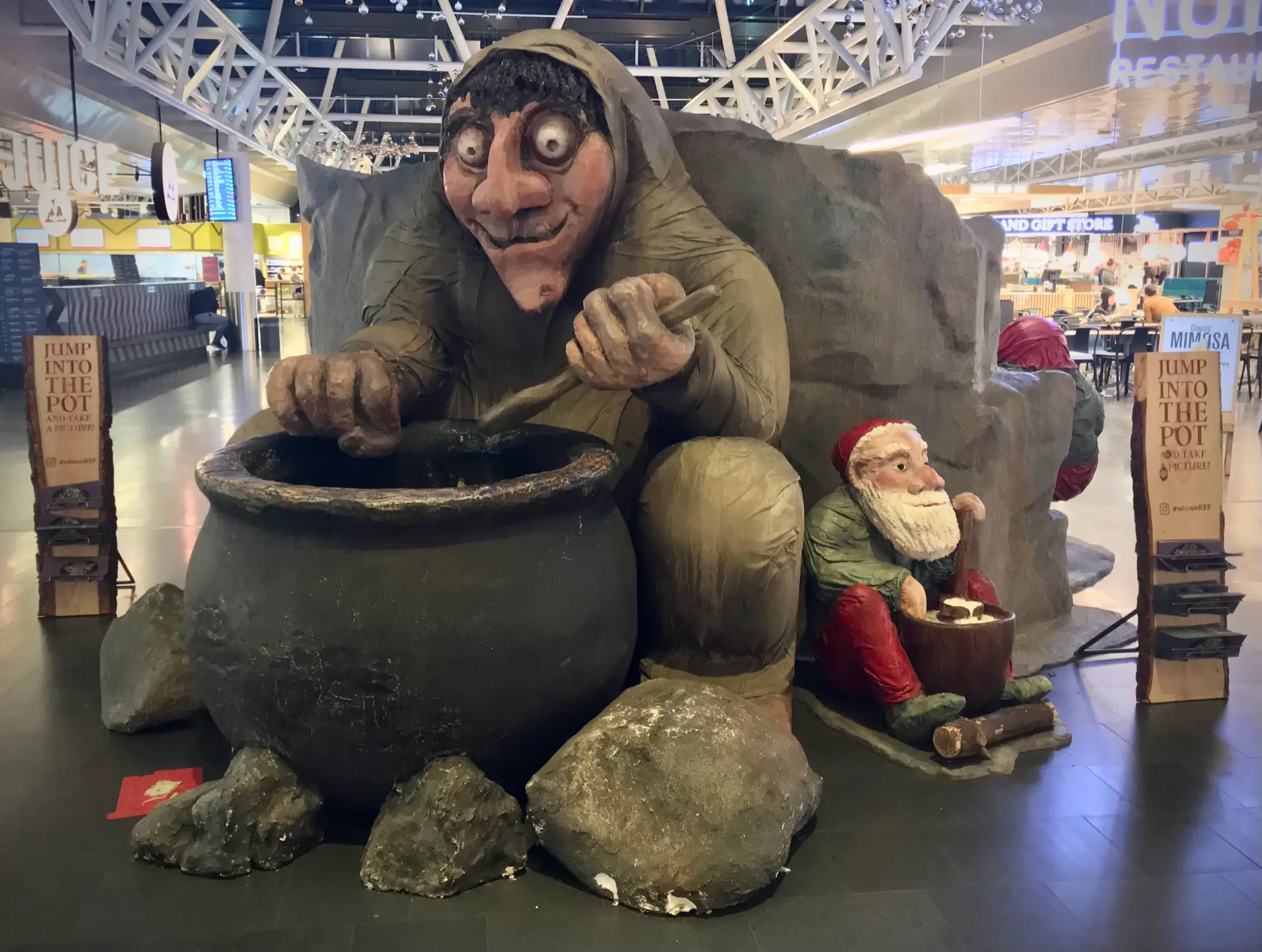

Icelanders celebrate Christmas on the evening of 24 December, beginning formally when church bells chime at 18:00. The holiday season opens earlier in December with the staggered arrival of 13 mischievous figures, peaks with family feasts on Christmas Eve, and concludes on 6 January. Visitors will find that public life largely halts from midday on 24 December until 27 December, requiring advance planning for food, buses, and public baths.
The 13 Yule Lads: one a night from 12 December
Visit Iceland says children put shoes in their bedroom window for 13 days in the hope of getting presents from the mischievous Yule Lads. According to Visit Iceland's guide to the troll family, the first Yule Lad, Sheep-cote Clod, arrives 13 nights before Christmas on 12 December, and the last, Candle Beggar, arrives on 24 December, the day Icelanders celebrate Christmas. Each stays among people for 13 days, so the first leaves on 25 December and the last leaves on 6 January, Þrettándinn ("the thirteenth"), which marks the end of the Christmas season in Iceland.
Visit Iceland calls these pranksters jólasveinar (Yule Lads) in Icelandic, noting that each has a particular craving that usually shows in his name. Visit Iceland's note to children is to keep a shoe on the window from 11 to 24 December. Visit Reykjavík says a well-behaved child finds a small gift in the shoe on the windowsill, whilst a naughty one may find a potato. Visit Reykjavík also describes how the figures softened over time, changing from frightening beings into playful tricksters and eventually beloved visitors. Read more about each figure in our guide to the 13 Yule Lads.
In Visit Iceland's order of appearance, the thirteen arrive and depart on the following dates:
- Sheep-cote Clod (Stekkjastaur): 12 to 25 December
- Gully Gawk (Giljagaur): 13 to 26 December
- Stubby (Stúfur): 14 to 27 December
- Spoon Licker (Þvörusleikir): 15 to 28 December
- Pot Licker (Pottasleikir): 16 to 29 December
- Bowl Licker (Askasleikir): 17 to 30 December
- Door Slammer (Hurðaskellir): 18 to 31 December
- Skyr Gobbler (Skyrgámur): 19 December to 1 January
- Sausage Swiper (Bjúgnakrækir): 20 December to 2 January
- Window Peeper (Gluggagægir): 21 December to 3 January
- Door Sniffer (Gáttaþefur): 22 December to 4 January
- Meat Hook (Ketkrókur): 23 December to 5 January
- Candle Beggar (Kertasníkir): 24 December to 6 January
Visit Reykjavík spells the twelfth Ketkrókur, Meat Hook, who uses a hook to snatch meat from cupboards and chimneys from 23 December to 5 January. Visit Iceland says that in December the brothers make Dimmuborgir at Lake Mývatn in north Iceland their base.
In the capital, the National Museum of Iceland's Christmas programme, published 18 November 2026, has the Yule Lads greet visitors at 11:00 every day from 12 to 24 December, each on the day he leaves a gift in the shoe. At weekends the museum's Yule Lads are joined by one of the jólaskellur, their sisters. The museum is located at Suðurgata 41 in Reykjavík, open daily 10 to 17 over the holidays, with entry free for children under 18.
Grýla and the Yule Cat
In the folklore retold by Visit Iceland, the 13 brothers live in the mountains with their mother Grýla and her husband Leppalúði. Grýla comes down only at Christmas, looking for misbehaving children to carry off in her sack. Visit Iceland notes that icicles are called grýlukerti in Icelandic, meaning Grýla's candles.
Visit Iceland describes the Yule Cat (Jólakötturinn) as a large, vicious cat with glowing eyes that prowls the mountains on Christmas night, searching for people who have not received new clothes. Visit Reykjavík says the tale now lives on more playfully, serving as a reminder to give socks, mittens or something warm.
In Reykjavík, an illuminated sculpture of the Yule Cat stands on Lækjartorg in the city centre. The city switched its lights on at 5 pm on Saturday 14 November 2026. The city's Yule Cat is about 5 metres tall and 6 metres wide, illuminated by 6,500 LED lights, and was first put up in 2018.
Þorláksmessa, 23 December: the day of the skate
Kæst skata (fermented skate) is the most perplexing of Iceland's Christmas dishes in Visit Iceland's words, and is traditionally eaten on 23 December, St Thorlákur's Day (Þorláksmessa). The day is named after Thorlákur, the Icelandic saint who died on that date in the 12th century. The skate smells and tastes strong, is usually eaten with strong liquor, and is more popular among older generations. Visit Reykjavík says the smell of skata fills the air on 23 December and many restaurants serve it for lunch.
Reykjavík's public facilities adjust their schedules for the feast day. The city's 2026 holiday table opens Reykjavík's swimming pools from 06:30 to 18:00 on Þorláksmessa, 23 December. At the National Museum of Iceland, the 2026 programme includes Þorlákstíðir, the office of St Þorlákur, sung by Voces Thule at 15:00 on 23 December.
Christmas Eve: Christmas begins at 18:00
Visit Iceland states that Icelanders celebrate Christmas on the evening of 24 December. Visit Reykjavík notes that as church bells ring across Reykjavík at 18:00 on Christmas Eve (aðfangadagur jóla), the city seems to pause, and this is the moment Christmas truly begins. Presents are usually opened after dinner on Christmas Eve, when most Icelanders celebrate Christmas.
Public operations stop early in the day. Reykjavík's pools open from 08:00 to 13:00 on Christmas Eve in the city's 2026 holiday table. Grocery stores are generally open until noon on 24 December, closed on the 25th, and open again on the 26th or 27th. Most restaurants are closed on the evening of 24 December and the following day, though in Reykjavík a number of high-end places stay open.
The Christmas table
Holiday dining centers on specific meats and side dishes. Hangikjöt (smoked lamb) is traditionally served on Christmas Eve, boiled and eaten cold with a hot béchamel-style sauce, peas and potatoes. Visit Iceland notes that hangikjöt is hard to find on restaurant menus and suggests ordering a leg of lamb instead. Visit Reykjavík says the Christmas Eve feast often features hangikjöt, hamborgarhryggur (glazed pork roast) or rjúpa (ptarmigan). You can read more about typical local flavours in our guide to Icelandic food.
Ptarmigan is boiled, then fried, and served with red cabbage, potatoes and gravy. The wild bird is protected with a yearly hunting quota, and the dish is not sold commercially. Pickled or marinated herring (síld) is eaten on rye bread at Christmas and sold in most supermarkets.
For dessert, rice pudding (möndlugrautur) is topped with whipped cream and chopped almonds; a single whole almond goes into the pot, and everyone guesses who has it. Visit Reykjavík describes laufabrauð (leaf bread) as very thin discs of dough carved with patterns and fried crisp, and calls making it a family ritual. At Árbær Open Air Museum's Christmas programme, visitors can see leaf bread decorated and taste hangikjöt at Hábær. Visit Reykjavík calls malt and appelsín Iceland's beloved Christmas drink; see our overview of Icelandic drinks for more on local beverages. In the weeks before Christmas, locals gather for jólahlaðborð, festive buffets that restaurants across the city offer, often shared among colleagues and friends.
Jólabókaflóð: the Christmas book flood
Visit Iceland says giving books for Christmas has been an Icelandic tradition for decades, meaning many books are published before Christmas when sales peak. Because Iceland's population was too small to support year-round publishing, publishers historically flooded the market with new titles as the year came to an end. Every year since 1944, the Icelandic book trade has published a catalogue called Bókatíðindi, sent to every household in mid-November, which people use to order books for friends and family. Jólabókaflóð ("the Christmas book flood") names that entire retail cycle.
This practice has become an established custom: books are exchanged on Christmas Eve, followed by spending the rest of the evening, and often the next day, reading, forming a key part of wider Icelandic culture. The Icelandic Publishers Association (Félag íslenskra bókaútgefenda) publishes Bókatíðindi and runs the Icelandic Literature Prize as well as the book festival in Harpa. Bókatíðindi 2026 lists the main books of the year 2026; its website is updated all year, and the printed edition appears in mid-November. The association listed the Harpa book festival (Bókahátíðin í Hörpu) on 21-22 November.
What closes on 24, 25 and 26 December
Visit Reykjavík states that Christmas Eve (24 December), Christmas Day (25 December) and Boxing Day (26 December) are significant holidays when many businesses close or keep reduced hours, though restaurants, hotels, pools and tour companies often maintain holiday schedules. From 27 December, most of the city goes back to its regular rhythm.
According to Visit Iceland's holiday advice, grocery stores are generally open until noon on 24 December, closed on the 25th, and open again on the 26th or 27th. Visit Iceland advises booking restaurants in advance, especially on 24, 25, 26 and 31 December and 1 and 2 January, when some venues may be closed or keep limited hours. Most restaurants close on the evening of 24 December and throughout 25 December, though several high-end Reykjavík establishments remain open.
City public services run on limited schedules:
- Swimming pools: In the city's 2026 holiday table, every Reykjavík pool is closed on Christmas Day (jóladagur), 25 December, and open from 11:00 to 17:00 on Boxing Day (annar í jólum), 26 December.
- Buses: For Christmas 2025, Strætó ran capital-area buses on Christmas Eve to a Saturday timetable, with the last trips of the day departing around 15:00. On Christmas Day and Boxing Day in 2025, buses ran to a Sunday timetable. Strætó publishes the new season's timetable nearer the date.
New Year's Eve: Áramótaskaupið, bonfires and fireworks
Visit Reykjavík says that by 22:00 (10 pm) on New Year's Eve the streets empty as residents watch Áramótaskaupið, the annual television comedy show reviewing the year gone by. Just before midnight, fireworks go up across Reykjavík. Visit Reykjavík explains there is no single official municipal display; the fireworks are sold directly by local search-and-rescue teams. Visit Iceland suggests walking up to Hallgrímskirkja, Perlan, or any elevated spot in the capital area around midnight to watch the citywide display.
Bonfires (áramótabrennur) take place earlier in the evening. For New Year's Eve 2025, the city listed ten bonfires, each lit at 20:30, with details published in the city news on 29 December 2025. The 2025 list featured two large bonfires, on the north side of Geirsnef and at Gufunesbær, alongside smaller fires at Ægisíða, Skerjafjörður, below Laugarásvegur 18 in Laugardalur, and north of Rauðavatn. The city publishes its bonfire schedule nearer the date. Officials check the weather forecast before noon on New Year's Eve and do not light the fires if the wind exceeds 10 m/s; walking to the sites is recommended. Fireworks and rocket flares are banned at the bonfires, but sparklers and hand flares are permitted.
Fireworks usage is governed by strict rules under Iceland's fireworks regulation (no. 414/2017):
- Retail sale of category 2 and category 3 fireworks to the public is permitted only from 28 December to 6 January, both days included, while category 1 fireworks may be sold all year.
- General use of fireworks is likewise restricted to 28 December to 6 January, both days included, except for category 1.
- Even within that window, discharging fireworks is banned from 22:00 to 10:00 the following morning, except on New Year's night.
- Ísland.is specifies the buyer's minimum age as 16 for category 2 fireworks and 18 for category 3. Sales points operated by the search-and-rescue association Slysavarnafélagið Landsbjörg opened on 28 December 2025.
Public services again alter their schedules for the holiday. Reykjavík's pools open from 08:00 to 13:00 on New Year's Eve (gamlársdagur), 31 December, and from 13:00 to 17:00 on New Year's Day 2027. On New Year's Eve in 2025, Strætó buses ran to a Saturday timetable with the final services around 15:00, followed by a Sunday timetable on New Year's Day, 1 January.
Þrettándinn, 6 January: the thirteenth day and the last Yule Lad
Reykjavík city says that on Þrettándinn, Candle Beggar (Kertasníkir), the last of the Yule Lads, leaves the towns to return to the mountains, officially ending the Christmas season. Visit Iceland notes that the thirteenth is normally celebrated with bonfires, leftover fireworks, and in some towns a parade of elves and trolls.
On Þrettándinn, Tuesday 6 January 2026, Reykjavík held a single bonfire at Gufunesbær, starting its programme from 18:00 with the Yule Lads in attendance; there was no fire at Ægisíða. The 2026 event at Gufunesbær finished with a fireworks display at 19:00, and visitors were asked to park at Rimaskóli or Gylfaflöt and walk. Under Iceland's national fireworks regulation, 6 January is the final day category 2 and 3 fireworks can be sold or used by the public.
If you are in Reykjavík for Christmas
Winter visitors planning for Iceland in December can explore seasonal festivities across the capital. You can browse regional craft stalls by visiting the Reykjavík Christmas markets. Reykjavík City Museum runs its holiday programme at Árbær Open Air Museum on Sunday 13 December and 20 December from 13:00 to 16:00. At the National Museum of Iceland, the 2026 Christmas programme features daily visits from the Yule Lads at 11:00 between 12 and 24 December. The giant LED Yule Cat can be viewed in the city centre on Lækjartorg, lit from mid-November onwards.
Because commercial activity decreases dramatically around the holidays, plan transport, sightseeing and meals well ahead. Consult our guides to daylight in Reykjavík and checking the Reykjavík northern lights when organizing outdoor excursions. Most importantly, follow Visit Iceland's advice to book dining reservations early, especially for 24, 25, 26 and 31 December, as well as 1 and 2 January, when many kitchens remain closed.