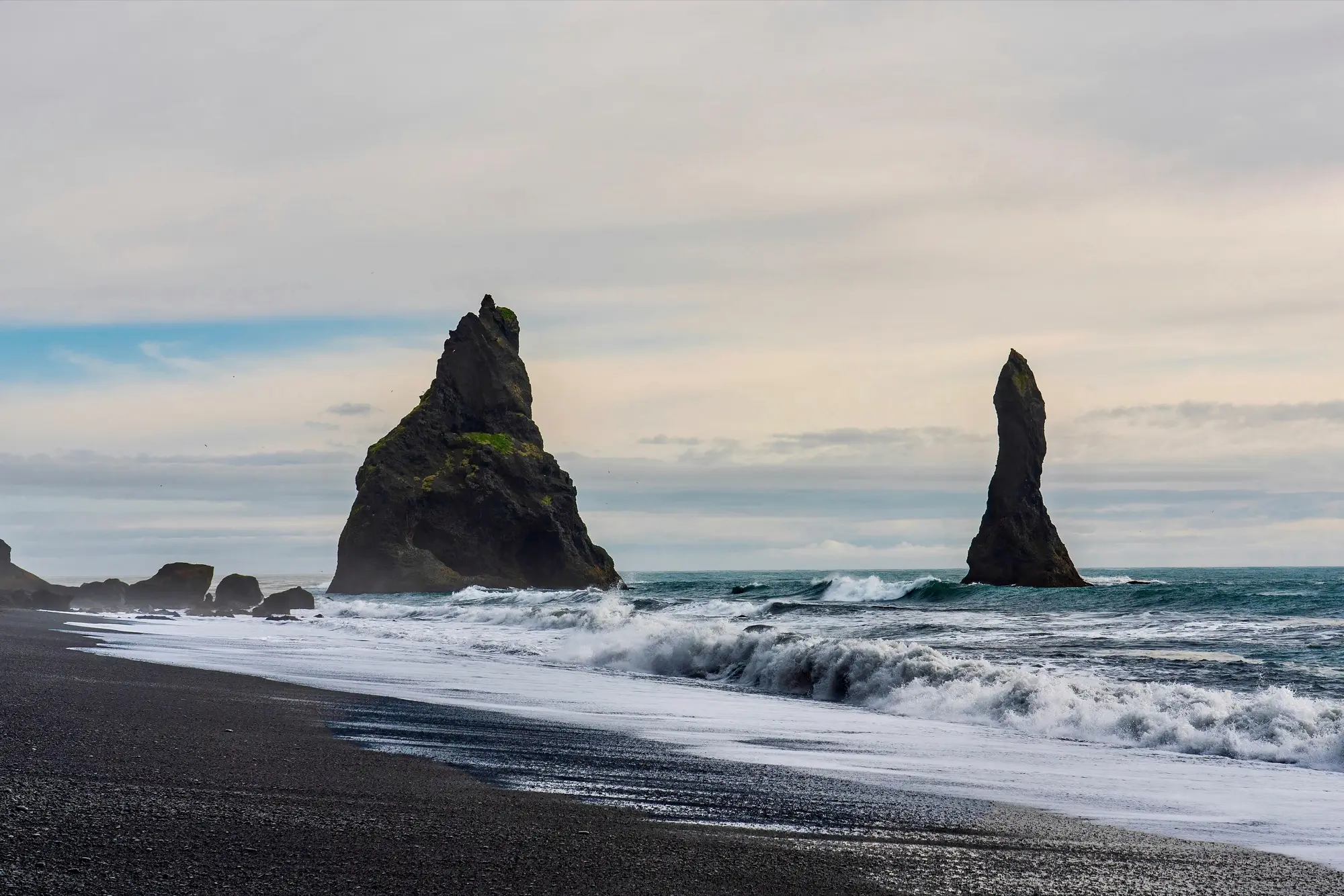

Reynisfjara, by Vík on the south coast, is Iceland's best-known black sand beach, with basalt columns and the 66-metre Reynisdrangar stacks, and it is dangerous: sneaker waves come with no warning and lives have been lost; check the warning lights at the entrance, and on orange stay at least 25 metres from the sea.
What Reynisfjara is
Visit Iceland calls Reynisfjara Iceland's best-known black sand beach, framed by basalt columns and the Reynisdrangar sea stacks. The Reynisdrangar stacks are 66-metre rock pillars rising out of the sea. According to Visit South Iceland, these stacks share the same geological origin as Reynisfjall, a 340-metre tuff (consolidated volcanic ash) mountain located beside Vík.
Reynisfjall formed during an eruption under a glacier in the penultimate ice age. The mountain consists of irregular layers of tuff, pillow lava, and columnar basalt. Down on the shore, basalt formations are visible at the south end of the mountain, along with a cave named Hálsanefshellir.
Why the beach is dangerous: sneaker waves
Safetravel states that the beach is dangerous because of sneaker waves and falling rocks from the cliff. Sneaker waves get their name because they arrive with zero warning. Among gentle waves, one will suddenly surge far higher than expected and travel much further than ordinary waves.
There are no rules to them: a sneaker wave can strike at any time, even after a long period of small waves. A single surge can sweep an adult out to sea in seconds. Safetravel notes that lives have been lost at Reynisfjara. Visit South Iceland explains that the waves are deceiving and have caused the death of a number of visitors in recent years, even in the best of weather. Because of this, visitors are asked to keep a good distance from the sea.
The warning lights and what each colour means
Safety signs and warning lights operate at the entrance to the beach. Safetravel asks visitors to take note of the conditions there. Look at the lights and at Safetravel's page on the day, as conditions can change fast.
| Light colour | Hazard level | What to do |
|---|---|---|
| Yellow | Moderate | Stay alert and cautious. |
| Orange | Considerable | Stay well away from the water; stay at least 25 metres from the sea. |
| Red | Severe | The beach is closed, but you can stay at the designated viewing area. |
Local safety officers may close the beach at short notice. Safetravel asks visitors to respect closures.
The four safety rules
Safetravel's rules are:
- Stay well back from the water's edge.
- Never turn your back on the sea.
- Keep children with an adult.
- Beware of falling rock near the cliff.
Check driving in Iceland for speed limits and road rules on the Ring Road before setting out.
Getting there
Visit Iceland puts Vík about 190 km from Reykjavík. Vík breaks up the drive east and is close to Reynisfjara, which makes it a natural stop on the south coast and in a week-long south-coast plan. Visit South Iceland lists the beach under road number 1, the Ring Road, with postal code 871.
Strætó lists regional route 52 as running between Höfn and Reykjavík along the south coast. Scheduled stops on route 52 include Hvolsvöllur, Skógar, and Vík (Vík í Mýrdal). If you stay overnight nearby, check tonight's aurora verdict for Vík.
Dyrhólaey next door
The Environment Agency of Iceland describes Dyrhólaey as a 120-metre-high tuya (a volcano formed beneath a glacier) formed in at least two eruptions around 100,000 years ago.
Dyrhólaey was protected in 1978 for its natural beauty and its birdlife, and a ranger lives there all year. For birdwatching across the country, see details on where and when to see puffins.