Norway has no digital nomad visa. According to the Norwegian Directorate of Immigration (Utlendingsdirektoratet, or UDI), there is no specific residence permit for remote work, and working remotely from Norway generally requires a permit that gives you the right to work, except for EU/EEA citizens. What exists instead are self-employed permits, the special legal status of Svalbard, and strict limits on what visitors may do.
For travellers seeking dedicated remote work arrangements, looking at the Estonia work permit and digital nomad visa routes provides a useful nearby comparison.
Is there a digital nomad visa for Norway
UDI says there is no specific residence permit for remote work in Norway. As a general rule, working remotely in Norway requires a residence permit that gives you the right to work remotely in Norway.
The Immigration Act (utlendingsloven) states that a foreigner who will work, paid or unpaid, or run a business in Norway must hold a residence permit that grants that right. Furthermore, the work chapter of the Immigration Regulations (utlendingsforskriften) lists permit types such as skilled workers, seasonal workers, self-employed contractors, and self-employed business owners; none of these categories is a remote-work or nomad permit.
What counts as remote work, and what a visitor may do
UDI counts it as remote work when you work off-site, for example from a hotel or a home, for a Norwegian or foreign employer. As a general rule, you cannot work for your employer in your home country while you are in Norway on a visit or holiday.
On a visit, you may still do some remote work for an employer abroad or your own business abroad, such as:
- Checking and answering email
- Making phone calls
- Joining online meetings
The condition is that remote work is not the main purpose of the stay, that it creates no value in Norway, and that it is not connected to Norway. A visitor cannot do remote work for an employer or client in Norway, or as part of running a business in Norway.
Visitors, with or without a visa, may stay in the Schengen area at most 90 days in any 180-day period. Time spent on a residence permit in Norway or another Schengen country is not counted toward this limit. More details on entry allowances are explained in our guide to the Norway visa rules and fees. The Immigration Act requires a residence permit to stay longer than three months even without working, and time spent in another Schengen country counts as time in Norway.
The self-employed permit for your own business in Norway
Under the Immigration Act, a foreigner aged 18 or over who will run a lasting independent business in Norway can get a residence permit if an economic basis for the business is shown. UDI grants this permit if it is necessary for setting up and running the business that you live in Norway and take an active part in running it.
The main conditions are:
- The business must normally be your own sole proprietorship (enkeltpersonforetak); it cannot be a limited company (aksjeselskap).
- You can only work in this business and cannot take other work, including remote work.
- The work in the business must require skilled worker qualifications, meaning a completed vocational programme of at least three years at upper secondary level or a university or university college degree.
- Without formal education, special qualifications from long experience can count, generally requiring at least six years of work experience, though UDI notes that many such applications are rejected.
- It must be likely that the business will give you a profit (business income) of at least NOK 341 373 a year before tax. To assess how that baseline fits local expenses, review our breakdown of the cost of living in Norway.
The Immigration Regulations add that a self-employed person's living must essentially be secured through the business itself. Money from public grant schemes can count when the economic basis of the business is assessed. If the business needs a permit from a public authority, you must hold it or hold a confirmation from that authority that it will be granted.
The self-employed permit is granted for one year at a time, and after three years you can apply for permanent residence. The permit is tied to that specific business; work as an employee on top can be allowed only when special reasons call for it. Family members of a self-employed permit holder can apply for family immigration to live with them in Norway. For an overview of other pathways, see our overview of moving to Norway.
What the self-employed application needs, and the fee
UDI's checklist sets specific administrative requirements for self-employed applicants. You must provide a detailed description of the business, including an assessment of the market and sales potential for your product or service and your specific role in it. The application must state the business name and where the business premises are located.
Financial documentation depends on the operational stage of the enterprise:
- A newly established business must hand in a budget showing all expected expenses and income for the first year alongside the expected profit before tax.
- An established business must submit its accounts and business bank account statements for the past 12 months.
You must document somewhere to live in Norway, which requires a written rental contract if you rent. If you apply from within Norway, you must show you are there legally, for instance on a visitor's visa. If you apply in a country other than your home country, you must show that you have held a residence permit there for the last six months. The application fee in work cases, covering both types of self-employed permits, is NOK 6 300.
The contractor permit for a business based abroad
The contractor permit is designed for a self-employed person with an established business abroad who holds a contract to carry out an assignment for a business in Norway. As detailed on UDI's contractor permit page, the business abroad must normally be a sole proprietorship.
Specific rules govern the contracting arrangement:
- The Norwegian client must have a registered business address in Norway and cannot be a staffing company.
- The assignment must, as a rule, be for one specific enterprise.
- Your pay for the assignment must not be poorer than is normal in Norway, and your skilled worker qualifications must be relevant to the work.
- The Immigration Regulations require the contract to pay at least the salary requirement that applies to skilled workers, which relates to the standards set out for a Norway work permit.
- Assignments other than the one in the contract, or work for another enterprise, require a new residence permit.
- You may not work remotely unless that work is part of the job the permit was granted for.
The contractor permit is granted for two years at a time, up to six years in total. After six years, you must live outside Norway for two years before you can apply again. Time spent on a contractor permit does not count toward a permanent residence permit. If the assignment lasts more than six months, a spouse or cohabitant and children can apply for family immigration.
Svalbard, where no permit is needed
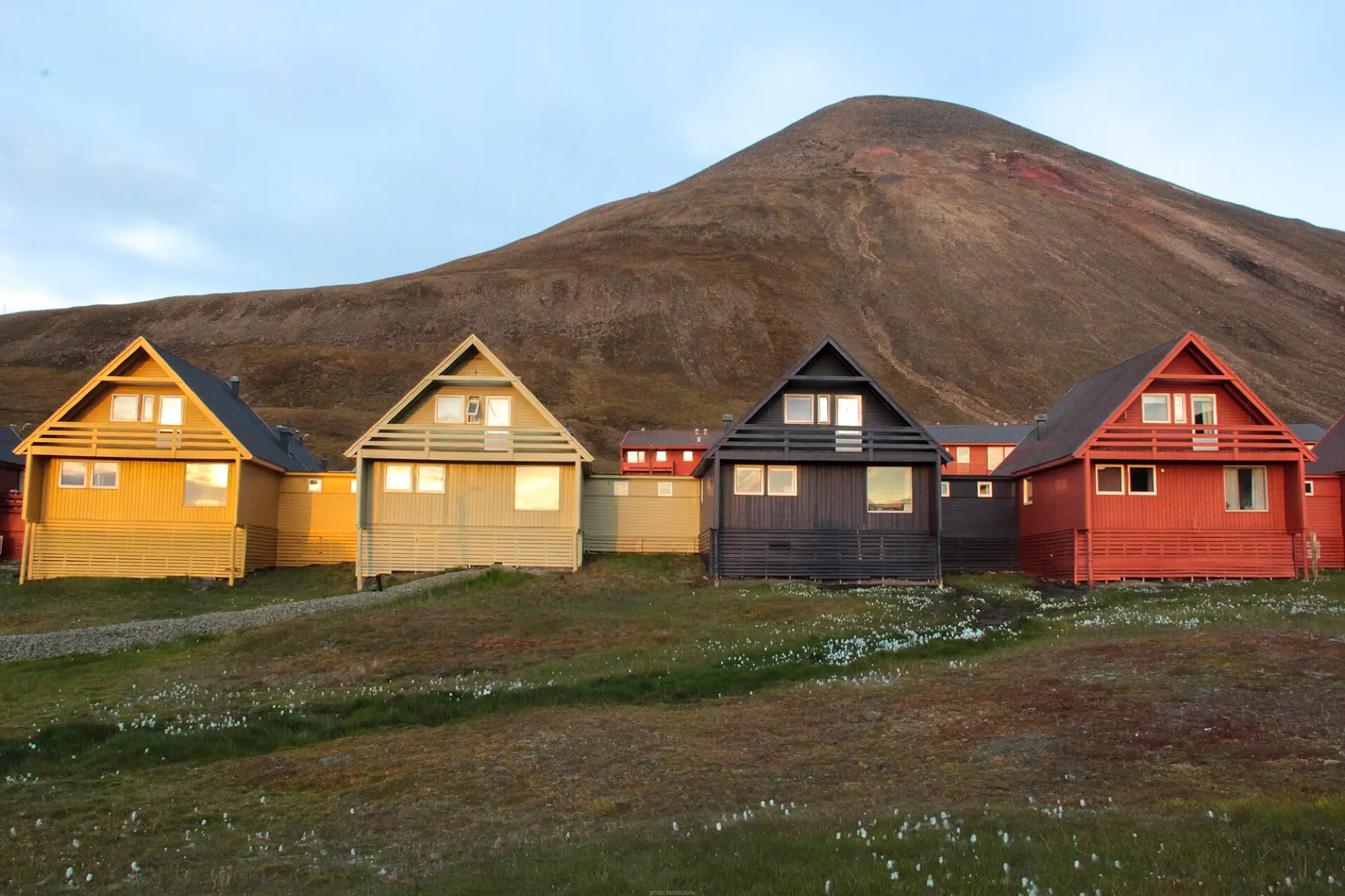
Norway's Immigration Act does not apply to Svalbard. Svalbard is a special territory of Norway, which holds sovereignty over the archipelago under the Svalbard Treaty. Foreigners need no visa and no work or residence permit from the Norwegian authorities to travel to or stay on Svalbard.
Even so, everyone who stays must meet strict practical criteria:
- Everyone who stays must have the means to live on Svalbard, and the Governor of Svalbard (Sysselmesteren) can turn away people who do not.
- Under the applicable regulation, the Governor may turn a person away on arrival or later if they are presumed not to have enough means to stay or to support themselves lawfully.
- The Governor advises getting work and housing before arriving, and the Governor does not arrange jobs.
- Most housing is owned by employers and offered to their staff; finding housing without a job is difficult, and housing prices are very high.
- Longyearbyen's local government states that you must be able to support yourself and your family for the entire stay. There are no social services on Svalbard, and you must have a place to live.
- Living on Svalbard does not qualify you for residence or citizenship in Norway.
- Svalbard is outside the Schengen area. Anyone who requires a Schengen visa must hold one to travel via mainland Norway, and must have a double-entry visa to return through the Schengen area.
- To become a Longyearbyen resident, you must plan to live there for at least six months and apply to the tax office for a D number (D-nummer) within eight days of arriving. You can find more details on this process in our guide to the D-number and national ID number in Norway.
- The only bank on Svalbard closed on December 31, 2020, making opening a Norwegian bank account from the archipelago more complicated.
When Norway or Svalbard taxes your income
You become tax resident in Norway if you stay more than 183 days in a 12-month period, or more than 270 days in a 36-month period. A tax resident is liable to pay tax to Norway on all Norwegian and foreign income and wealth. For general mainland rates, consult our guide to Norway income tax.
Mainland tax residency is calculated using strict measures:
- Every day in Norway counts, including part days; the days need not be consecutive, and the reason for the stay does not matter.
- If you stay more than 183 days in your first year, you are tax resident from the first day.
- If the 183 days are split between two income years, you become tax resident from 1 January of the second year.
- You can stay an average of 90 days a year in Norway without becoming tax resident.
- Even without tax residence, you can owe Norwegian tax on income and wealth sourced from Norway, such as pay issued by a Norwegian organisation.
On Svalbard, pay for work done locally is taxable to Svalbard when the stay lasts at least 30 consecutive days. A stay of at least 12 months makes you tax resident on Svalbard from the start. For the 2026 income year, Svalbard's withholding rates on salary are 8 percent up to 12 times the National Insurance basic amount (grunnbeløpet, or G) and 22 percent above it, plus 7.6 percent national insurance contributions.
EU/EEA citizens can simply move
Citizens of the European Union (EU) and European Economic Area (EEA) are exempt from the rule that foreigners working in Norway must hold a residence permit that grants the right to work, whether that work is remote or local.
An EEA citizen holding a valid passport or national ID card has a right of residence for up to three months. Beyond three months, an EEA citizen keeps the right of residence as long as they meet one of these conditions:
- They are employed or self-employed in Norway.
- They have sufficient means to support themselves and hold health insurance covering all risks during their stay.
An EEA citizen staying for more than three months must register with the authorities within three months of their entry date.