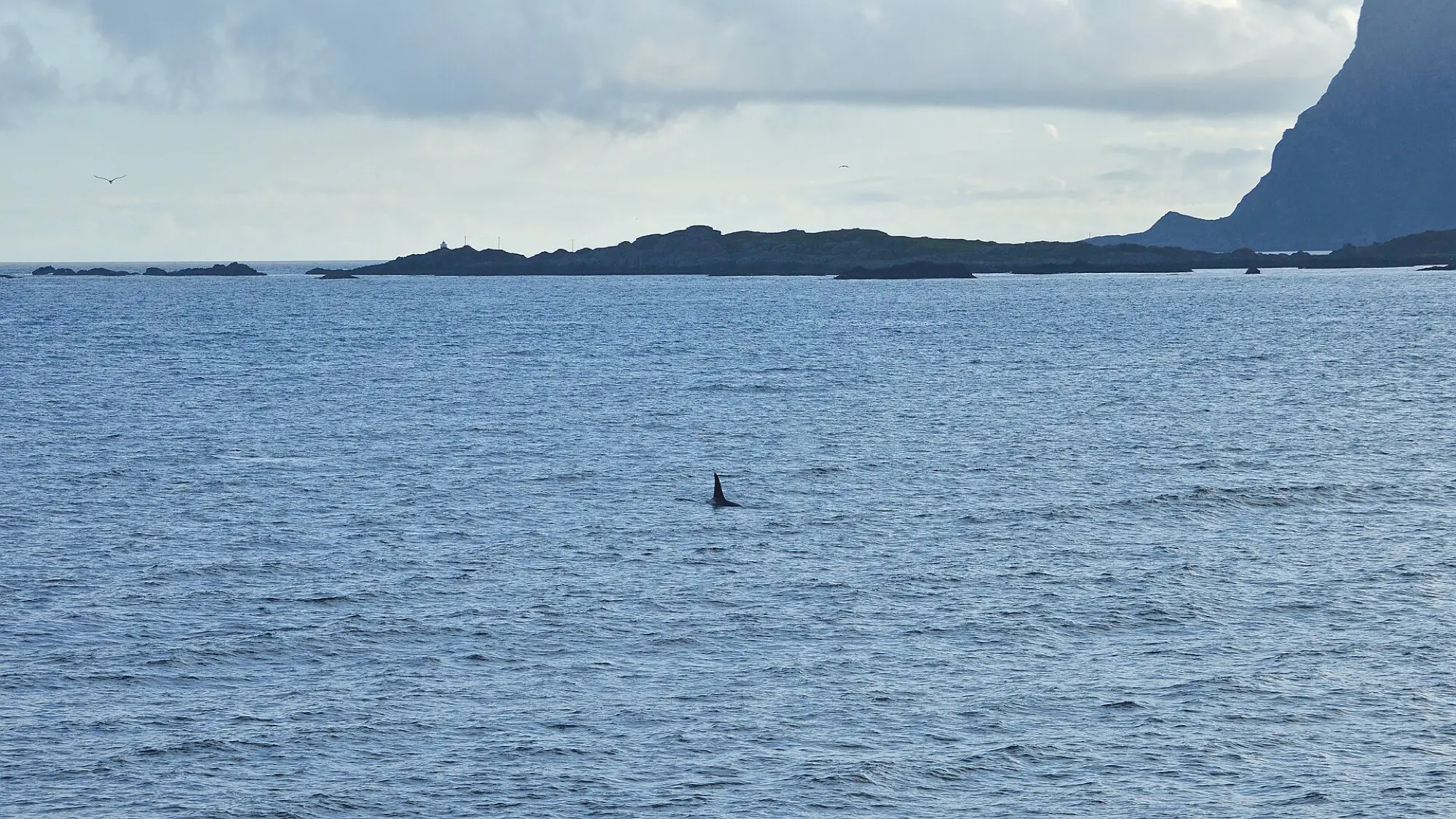

Norway offers whale watching across four distinct bases depending on the time of year and the species you want to see. Tromsø and the fjords to its north host orcas and humpback whales in winter, usually from early November to the end of January according to Visit Tromsø. Andenes provides sperm whale safaris all year round, Stø runs full-day summer tours from 1 June to 31 August, while Lofoten has no dedicated operators and Senja has a single summer boat.
Four places at a glance
Whale watching in Norway depends on migratory patterns and underwater geography. Visit Tromsø notes that the winter season in the Tromsø region generally runs from early November until the end of January, though timing varies yearly. Whalesafari Andenes reports that sperm whales stay near Andenes all year, with up to 10 species visible over the twelve months. In contrast, Visit Lofoten states that no activity providers in Lofoten offer whale safaris, meaning any sightings there happen entirely by chance.
| Place | Season | Main whales | Trip length | Price (from) | If no whales are seen |
|---|---|---|---|---|---|
| Tromsø | Early Nov – end Jan | Orcas, humpbacks | 7 to 10 hours | NOK 1990 (Brim) / NOK 2095 (Rødne) | Free ticket on next available trip (Rødne); free rebooking (Arctic Whale Tours); no money back (Brim) |
| Andenes | All year | Sperm whales | 1.5–2.5 hours (RIB) / 3–4 hours (ship) | NOK 1690 | Free trip on next available departure or any time in future |
| Stø | 1 June – 31 August | Sperm whales, mixed species | 6–8 hours (7 hours listed) | NOK 1750 | Free new trip within 12 months |
| Senja | 1 May – 30 September | Not stated | 3.5–4 hours | Not stated | Not stated |
1. Tromsø and the fjords to the north: orcas and humpbacks in winter
In the winter months, orcas and humpback whales follow schools of herring into northern Norwegian fjords. The Institute of Marine Research notes that large numbers of whales gather around fishing vessels during the winter herring fishery in the fjords of Troms. In recent years, the fjords around Skjervøy and Kvænangen, north of Tromsø, have been important feeding grounds. Whalesafari Andenes states that most orcas and humpbacks appear from mid-October to the end of January around Alta and Skjervøy.
Feeding locations can shift between seasons. In the winter of 2026 to 2027, Brim Explorer reported that most herring and whales moved into Altafjord, leaving only a few whales on the eastern side of Kvænangen near Skjervøy. In an update dated 18.11.2026, Whalesafari Andenes said the whales have moved, that trips can only be booked in Alta, not Skjervøy, and that it will decide in late January 2027 whether to offer Skjervøy trips in the 2027/28 season.
Excursions departing from Tromsø are full-day undertakings. Operators run full-day boat trips directly from Tromsø harbour, combined coach-and-boat excursions, or tours starting locally in Skjervøy or Alta for independent travellers. Visit Tromsø reminds visitors that there is never a guarantee of sightings, even at the peak of the season. Rødne notes that humpbacks and orcas are the most common animals seen, alongside occasional fin whales, minke whales and porpoises. You can combine these marine trips with other regional activities covered in our guide to Tromsø in winter.
Choosing a boat from Tromsø
Three operators provide departures directly from the quays in Tromsø:
- Rødne Fjord Cruise: Operates a fast catamaran featuring heated indoor lounges and outdoor decks. The tour departs from Nerstrandakaia dock, lasts 7 to 8 hours, and was priced from NOK 2095 when checked. Rødne states that whales follow herring into these waters from late October to mid-January. Complimentary tea and coffee are served, and food is sold on board.
- Brim Explorer: Runs silent whale watching aboard custom-built hybrid-electric vessels departing daily at 09:00 from Kaigata 6, beside Skarven, running from 1 Oct 2026 to 31 Jan 2027. The tour lasts 9 to 10 hours. An adult ticket costs NOK 1990, rising to NOK 2189 during the peak Christmas period between 11 Dec 2026 and 10 Jan 2027. Brim does not use buses or rigid inflatable boats (RIB). Transit takes roughly 3 to 4 hours each way, allowing about an hour with the animals. Brim switches to its electric motor near the whales, and about 15% of the tour is on the electric engine. Brim reports sightings on 95% of departures last season.
- Arctic Whale Tours: Operates MS Alba, a 26-metre catamaran built in 1975 that features updated engines and an underwater hydrophone. The vessel accommodates up to 90 guests (with a minimum sailing requirement of 20). Departures run November to January, leaving Fr. Nansens plass 1 at 08:30 and lasting around 8 hours, give or take an hour. Tea, coffee and biscuits are provided, but full meals are not included.
If you are organising a longer stay in town, browse our selection of things to do in Tromsø or plan your evenings with the Tromsø northern lights guide.
Going north on your own: Skjervøy and Alta
Travelling directly to Skjervøy or Alta allows you to board day boats closer to where the whales feed.
- Driving to Skjervøy: The shorter driving route heads through Lyngen and requires two ferry crossings, covering about 160 km in roughly four hours, depending on ferry timing. The alternative land-only route follows the E6 via Nordkjosbotn and Skibotn, covering around 250 km in approximately four hours during normal conditions.
- Public transport to Skjervøy: Public buses operated through the Svipper journey planner take four to five hours and usually involve a change of vehicle. In the whale season, Best Arctic operates the Whale Route, a dedicated direct bus connecting Tromsø and Skjervøy along the E6; it takes about four hours each way between October or November and the end of January, but does not bundle a safari ticket. Svipper express boat line 3 runs from Prostneset in Tromsø to Skjervøy in two to three hours, typically leaving in the afternoon or evening; seat access is guaranteed only if you purchase a ticket beforehand for that exact departure.
- Tours in Alta and Skjervøy: Whalesafari Andenes operates winter RIB tours out of Alta and Skjervøy from mid-October to the end of January, priced from NOK 2250 for passengers aged 8 and above. Alta check-in takes place at Havneveien 10 at 08:45 for whale watching and 08:30 for snorkelling. Alta features its own airport, as outlined in our overview of Alta. For visitors based in Tromsø who wish to see Altafjord, Brim Explorer sells a combined package that travels from Tromsø by coach to Altafjord for the boat tour, lasting around 13.5 hours.
2. Andenes: sperm whales all year
Andenes sits on the northern tip of Andøya in the Vesterålen archipelago. Off Andenes, at the tip of Andøya, the continental shelf drops to over 1,000 metres just off the coast, which is why sperm whales are there all year.
Whalesafari Andenes provides two boat options. Its open RIB excursions run throughout the year for passengers aged 8 and older, lasting 1.5 to 2.5 hours and starting from NOK 1690. The main RIB season runs from June to September, with reduced departures in winter due to shorter daylight. From May to September, the company also sails M/S Reine, a conventional ship excursion taking 3 to 4 hours with no age limit, also priced from NOK 1690. Passengers on M/S Reine receive hot vegetable soup and warm drinks on the return leg. All safari tickets include entry to the on-site whale exhibition. Visitors must check in at the Andenes centre 45 minutes prior to departure.
Arctic Whale Tours likewise operates a 3 to 5 hour summer safari out of Andenes harbour between May and September. Visit Lofoten says operators at Andenes can offer whale safaris with a 95% chance of seeing whales. On 4 June 2027, The Whale, a new knowledge and experience centre about whales, opens to the public in Andenes.
Getting to Andenes
You can fly to Andenes all year from Bodø, Tromsø or Evenes with SAS-Widerøe, and in summer directly from Oslo with Norwegian. Coastal ships operated by Hurtigruten and Havila call at Risøyhamn in southern Andøya.
During the summer months, Torghatten operates a ferry between Gryllefjord on Senja and Andenes as a summer-only route with no advance booking. Visit Senja notes this crossing runs from mid-May to late September, warning that long queues and missed departures are common in high season. Road connections between the hubs are detailed in our guide on travelling from Tromsø to Lofoten.
From Svolvær, reaching Andenes takes just over three hours by rental car or regional bus. Best Arctic sells a 14-hour return day excursion from Svolvær on the Arctic Route coach for NOK 3690 (minimum age 8). The package departs Svolvær centre at 07:35, incorporates a 35-minute ferry crossing, provides a 2 to 3 hour RIB safari in Andenes (13:00 to 16:15), and returns passengers to Svolvær at 21:30 without meals included.
3. Stø: a full day at sea from Vesterålen
Stø is a working fishing village of roughly 200 residents situated in Øksnes municipality in Nordland. Arctic Whale Tours runs its daily summer whale safari from Stø harbour from 1 June to 31 August. Read more about the region in our guide to Vesterålen and Andøya.
The safari departs daily at 10:00 (check-in closes at 09:15) and spends 6 to 8 hours at sea, accommodating up to 60 passengers aboard Blasius II, a 22-metre catamaran equipped with a heated indoor lounge. Note that the vessel is not wheelchair accessible. Onboard catering includes hot soup with bread, tea, coffee and hot chocolate. Tickets can be cancelled free of charge up to 24 hours prior to departure. Visit Lofoten lists this Stø safari at 7 hours for NOK 1750.
Blasius II sails to the deep waters along the continental shelf edge, where crews look for sperm whales, orcas, pilot whales, minke whales, humpbacks, fin whales, white-sided dolphins and harbour porpoises. The cruise also sails to the waters around Anda, one of northern Norway's most important seabird colonies, observing birdlife from the water without landing. The nearest grocery stores are in Myre, about 15 minutes by car.
Reaching Stø requires flying to Stokmarknes or Evenes. Driving times are roughly 1 hour 15 minutes from Sortland and 3.5 hours from Evenes. Travellers arriving from Lofoten can take vehicle ferries into Melbu or Stokmarknes.
4. Lofoten and Senja: by chance, or on a summer boat
Visit Lofoten confirms that no commercial activity providers operate dedicated whale watching from Lofoten ports. Spotting a pod from a sea safari in Henningsvær or during a Trollfjord cruise is down to pure luck. Visit Lofoten directs tourists who want reliable safaris to Andenes, roughly 211 km from Svolvær, a route you can combine with our Lofoten 5-day itinerary.
On neighbouring Senja, Senja by Heart operates the MS Wilsgård Explorer from 1 May to 30 September. Carrying a maximum of 12 guests (with a required minimum of 6), the vessel sails about an hour offshore to reach the deep whale waters off Senja and Andøy. The round trip lasts 3.5 to 4 hours. You can read more about planning a stay on the island in our Senja travel guide. The seasonal ferry between Gryllefjord on Senja and Andenes runs 2 to 3 times per day between mid-May and late September.
Swimming and snorkelling with orcas: what the rules say
All whale watching in Norwegian waters falls under national law via the regulation on whale safari (forskrift om utøvelse av hvalsafari, FOR-2019-12-05-1651). In force since 5 December 2019 and amended from 1 November 2022, the law governs activity to ensure operations are safe, sustainable and gentle, avoiding any disturbance to marine mammals.
The statutory rules establish clear baselines:
- The regulation explicitly defines whale safari as all activity aimed at observing whales in their natural habitat, specifically including swimming, diving and paddling.
- Carrying out a whale safari in a manner that disturbs whales in their natural habitat is forbidden.
- Boats participating in whale safaris may not come closer than 0.2 nautical miles (370 metres) to any fishing vessel, seine net or fixed fishing gear.
- Persons swimming, diving or paddling are forbidden closer than 0.4 nautical miles (740 metres) to fishing boats, seine nets or fixed gear.
- Breaches can lead to an administrative infringement fine, while deliberate or negligent violations are punished under the Marine Resources Act.
Snorkelling close to orcas remains commercially available, but is subject to strong scrutiny. Whalesafari Andenes sells winter dry-suit snorkelling trips with orcas in Alta from NOK 3600 (minimum age 15, accompanied by an adult). However, Visit Tromsø explicitly discourages all in-water activities. Entering Arctic fjords alongside feeding whales creates serious hazards: humpbacks lunge upwards in groups during bubble-net feeding, and orcas move through carousel feeding bait balls, creating a real risk of collision. Entering the water involves cold water, poor underwater visibility and fast-changing winter weather, and requires a dedicated rescue diver on standby.
Brim Explorer's own count of boats around the whales west of Skjervøy, from 23 October 2025 to 15 January 2026, found on average 9 to 14 boats at once around the same group of whales (peaking at 23 boats), with 8 out of 10 craft positioned under 100 metres from the animals. Visit Tromsø notes that boats cutting across moving whales to help swimmers see them seriously disturbs the animals. In response, Brim Explorer, Best Arctic, Norwegian Travel and Visit Tromsø-Region have asked the authorities for an operator licensing scheme with rules for behaviour around whales, a speed limit where whales are, and a ban on snorkelling close to whales. Visit Tromsø's 2017 guidelines are voluntary best practices rather than legally binding regulations.
How a responsible whale-watching boat behaves
Visit Tromsø's whale-watching guidelines outline specific codes of conduct to reduce vessel impact:
- No more than 3 vessels should observe the same group of whales simultaneously.
- When several boats are waiting, each vessel should restrict its time on the scene to a maximum of 30 minutes.
- Vessels waiting their turn should stay more than 500 metres from the whales where possible.
- Boats should approach slowly from the side and slightly behind, never head-on and never cutting across the path of travel. Speeds should drop below 5 knots within 300 metres, transitioning to minimum operating speed from 100 metres and idle speed from 50 metres.
- If an animal approaches a vessel on its own, the skipper should put the engine in neutral.
- Sonar and active echo-sounders should be switched off near feeding groups.
- Crews should never encircle whales or attempt to attract or touch them using food, sounds or lights.
- If a group displays signs of stress or evasion, such as sharp changes in heading, speed or unusually long dives, the boat should move on.
If you see no whales
Policy responses vary significantly if a tour fails to locate whales during your trip:
- Rødne Fjord Cruise: Provides a complimentary voucher for the next available safari departure within the same operating season, subject to empty seats. No cash refund is issued if you cannot attend another date. If harsh weather blocks transit to the offshore feeding grounds, Rødne operates an alternative coastal fjord cruise and refunds 50% of your ticket; if conditions cancel the trip entirely, you receive a full refund or date change.
- Arctic Whale Tours: Issues a "whale pass" valid for a free rebooking if neither whales nor dolphins are spotted. For winter safaris out of Tromsø, the rebooking pass can be redeemed during the current or subsequent winter season, subject to availability. At Stø, the policy grants a free repeat trip within 12 months.
- Whalesafari Andenes: If the boat does not find whales during an Andenes trip, guests receive a free ticket valid for the next available departure or for any date in the future. However, for their winter RIB tours in Skjervøy and Alta, Whalesafari explicitly notes that tight capacity limits mean they cannot issue return vouchers or replacement trips.
- Brim Explorer: Says it is not able to give money back if no whales are seen on an executed tour. In instances where severe weather prevents sailing, Brim offers an alternate departure date, a shortened tour in sheltered waters, or a complete financial refund.
What to wear and how to plan
Spending seven to ten hours on open Arctic waters demands serious insulation. Visit Tromsø advises wearing warm layers, winter boots, a woollen hat and mittens, pointing out that temperatures at sea can be very cold. If you choose an open RIB excursion, the operator provides an insulated, water-repellent thermosuit and life vest.
Whalesafari Andenes says weather can cancel trips in winter and recommends building a buffer day or two into your northern itinerary. If you are prone to motion sickness, note Brim Explorer's advice that the trip can be wavy at times, making seasickness pills advisable before boarding. On non-safari days, consider local land-based excursions such as husky and reindeer tours in Tromsø.