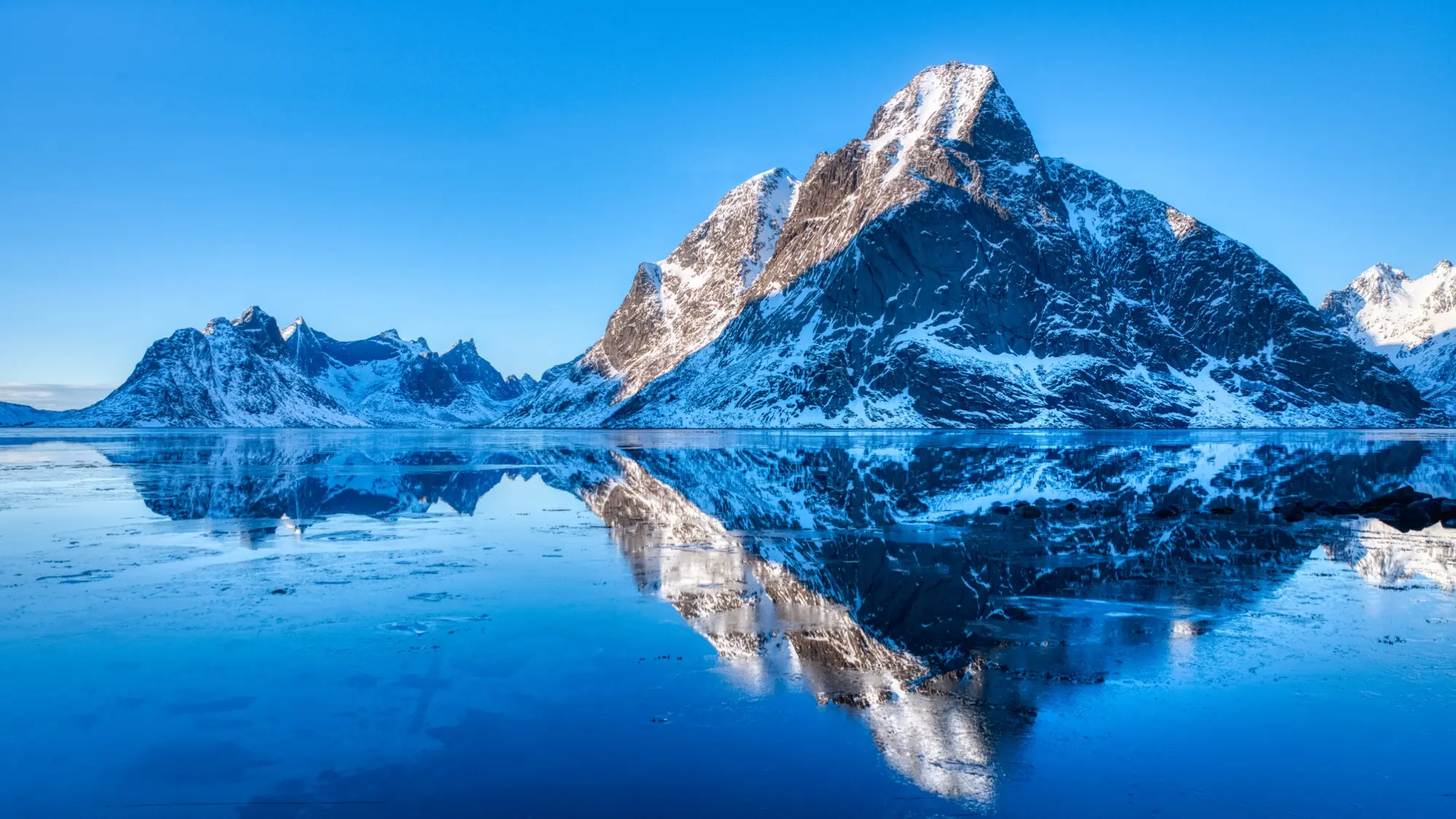

A complete Lofoten trip runs along the E10 through ten main stops from east to west: Svolvær, Henningsvær, Eggum, the Lofotr Viking Museum at Borg, Haukland and Uttakleiv beaches, Nusfjord, Kvalvika, Hamnøy and Reine, Sakrisøy, and Å with its Stockfish Museum. Most visitors reach the islands by taking the Bodø-Moskenes ferry, flying Widerøe into Svolvær or Leknes, or driving the E10 mainland connection.
A practical 5-day grouping divides the stops logically along the road:
- Day 1: Svolvær and Henningsvær
- Day 2: Eggum, Lofotr Viking Museum, and the beaches at Haukland and Uttakleiv
- Day 3: Nusfjord and Kvalvika
- Day 4: Hamnøy, Sakrisøy, and Reine
- Day 5: Å
1. Svolvær: Lofoten's largest town and its main way in
Svolvær is Lofoten's largest town, situated between the mountains and the sea, and is home to around 5,000 residents according to Visit Lofoten. The town's name originates from the Old Norse svalr (chilly) and vær (fishing village). Svolvær received its first legal status as a fishing and trading centre in 1918.
The world championship in cod fishing, VM i skreifiske, has taken place in Svolvær every year since 1991. The event is usually held in the third week of March and gathers around 600 anglers. For air access, Widerøe operates flights from Bodø to Svolvær Airport (SVJ), which is located about ten minutes from the town centre, as well as to Leknes Airport (LKN) further west.
2. Henningsvær: the fishing village with the football pitch on its own island
Henningsvær is located 25 km from Svolvær. It is a fishing village composed of several small islands connected by bridges, with a population of just over 500 people. Its football pitch sits at the furthest point of the settlement on its own separate island, surfaced with artificial turf that is played on all year round.
Visit Lofoten notes that the ground is one of the most famous football fields in the world when measured by photographs, and asks all visitors to respect the local community and follow drone regulations. Because village streets are narrow, drivers are instructed to leave vehicles in one of the large car parks and proceed through the village on foot. Just past the football field, an elevated area offers a practical vantage point for photographing the northern lights away from street lighting.
3. Eggum: an amphitheatre rest area facing the open ocean
The fishing village of Eggum stands alone on the seaward side of Vestvågøy. Its rest site along the Norwegian Scenic Route is arranged in the shape of an amphitheatre facing the open ocean, accompanied by a dedicated car park. Beside the parking area is Markus Raetz's sculpture Hode (Head), which forms part of the Skulpturlandskap Nordland art project. The public toilets at Eggum operate from early May to early October.
4. Lofotr Viking Museum at Borg: the reconstructed chieftain's longhouse
Borg was once home to one of the most powerful Viking chieftain estates in the Nordic region. Today, the museum features the world's longest reconstructed longhouse. The site is located directly on the E10, 14 km north of Leknes.
From 1 November to 31 December 2026, the museum opens on Wednesdays and Saturdays from 11:00 to 17:00, remaining closed on Saturday 26 December 2026. Admission prices from 16 September to 31 December 2026 are:
- Adults: NOK 210
- Seniors and students: NOK 200
- Children (aged 6 to 15): NOK 160
- Children under 6: free
- Family ticket (2 adults and 3 children): NOK 620
The previous exhibition dating from 2011 is undergoing renewal, with a new exhibition scheduled to open in December.
5. Haukland and Uttakleiv: two beaches on the north side of Vestvågøy
Haukland beach lies in the middle of Lofoten on the northern coast of Vestvågøy, a 10-minute drive from Leknes. Voted the most beautiful beach in Norway, it allows visitors to park directly beside the sand. Hauklandstranda serves as a rest area off the Norwegian Scenic Route, offering toilet facilities that remain open all year round. From Haukland, an old coastal road leads around the mountain to Uttakleiv.
Uttakleiv is a small settlement with 22 permanent residents. In 2005, The Times named Uttakleiv beach Europe's most romantic beach. Free vehicle access and parking are not permitted. Uttakleiv uses an automatic number-plate recognition system with the following fees:
- Cars: NOK 60 per started 3 hours
- Campervans: NOK 100 per started 3 hours
- Maximum rate: NOK 300 per 24 hours
To budget for entrance and parking fees across the country, check the breakdown on whether is Norway expensive?.
6. Nusfjord: one of Norway's oldest preserved fishing villages
Nusfjord is one of the oldest and best-preserved fishing villages in Norway. Today it operates as an open-air museum preserving an old-fashioned general store, a cod liver oil factory, a smithy, and a sawmill. The settlement is the most famous village in Flakstad municipality, which has 1280 inhabitants. To reach Nusfjord, leave the E10 halfway between Napp and Ramberg and continue down the county road for 6 kilometres.
7. Kvalvika and Ryten: the beach hike, 3 to 5 hours
The Kvalvika and Ryten route requires 3 to 5 hours and is classified as moderate to challenging. The trail spans 3 km down to Kvalvika beach or 3.5 km up to the summit of Ryten at 543 metres above sea level. The standard hiking season runs from spring to autumn; snowshoes or skis are required during winter. Visible ground wear affects the route as close to 90,000 hikers complete the trail each year.
The Innersand car park at the Ryten trailhead provides drinking water and a toilet. Parking charges start at NOK 100 for cars and motorhomes. The nearest grocery shops are located in Ramberg, 7 km from the start of the trail.
8. Hamnøy and Reine: the red cabins under the peaks
Hamnøy is a small fishing community known for its traditional red rorbuer (fishermen's cabins), having earned coverage in both National Geographic and Condé Nast Traveler.
Reine serves as the administrative centre of Moskenes municipality and has approximately 300 residents. The village is spread across an archipelago connected by road bridges. Reinehalsen, a rest area at the base of Reinebringen, is an established viewpoint overlooking Reine and the entrance to Reinefjorden. The Sherpa-built stone staircase up Reinebringen is accessible only during the summer and autumn seasons; review the route requirements on the Norway famous hikes guide. Looking across the surrounding landscape, Hermannsdalstind is the highest peak in the Moskenes area at 1029 metres.
9. Sakrisøy: the island between Hamnøy and Reine
Occupying the outer islands of the chain, Hamnøy and Sakrisøy are linked to Reine by a sequence of small bridges. The craggy peaks encircling Reinefjorden rise immediately behind the water and island crossings.
10. Å and the Stockfish Museum: the end of the E10
Å marks the western terminus of the E10 at the southern end of Moskenesøya, with a local history dating back to the early 19th century. The village contains Europe's oldest fish oil factory, established in 1850.
The Norwegian Fishing Village Museum in Å is a short 3-minute walk from the main car park just after the tunnel. From 1 October to 6 December 2026 the museum is open daily 09:00 to 15:00 and adult admission is NOK 125; it is closed from 7 December to 2 January 2027. The museum bakery, with a wood-fired stone oven from 1878, is open from mid-May to the end of October.
Located 30 seconds before the turn into central Å, the Lofoten Stockfish Museum occupies an old fish landing station right beside the water. It documents how Arctic cod is transformed into stockfish, Norway's oldest export. The exhibits trace the work from landing the catch to packaging dried fish into 25 kg or 50 kg bundles for overseas shipping. Stockfish from Lofoten is an EU-protected designation of origin, matching the status granted to products like Roquefort and Chablis. The museum opens all year with extended summer hours, and regular guided tours are available. To read about the culinary heritage of dried cod, see the overview of Norwegian food.
How to get to Lofoten: the Bodø-Moskenes ferry
The direct crossing between Bodø and Moskenes is the fastest ferry connection to Lofoten, taking approximately 3.5 hours. An indirect alternative running via the islands of Røst and Værøy takes around 7 hours. Foot passengers and vehicles can use both services.
Advance booking is not compulsory, as operators only make a portion of vehicle and passenger deck capacity reservable online. Pre-booked crossings must be paid at the time of reservation through the Torghatten website. Reservation surcharges are:
- Adult foot passenger: NOK 65
- Vehicle up to 6 metres: NOK 130
Passengers who hold a reservation must arrive in the designated "reserved/prepaid" vehicle lane at least 45 minutes before departure. Foot passengers travelling without an advance reservation travel free of charge and simply need to arrive at the terminal prior to departure. The full vehicle fare for a petrol, diesel, or hybrid car up to 6 metres long is NOK 605.
Summer capacity on this crossing is heavily strained. Passengers heading to Røst and Værøy receive priority boarding. Torghatten advises travellers making the crossing between Bodø and Moskenes to book direct sailings to prevent being left behind at the pier.
Flying to Svolvær or Leknes with Widerøe
Widerøe runs multiple daily flights between Bodø and the regional airports in Svolvær (SVJ) and Leknes (LKN). During the summer season, the airline also operates direct connections to Lofoten from Oslo Gardermoen and Bergen.
Travel can also be arranged via Harstad/Narvik Airport Evenes (EVE), which is situated 170 km east of Svolvær and accepts direct international flights from several European cities. Norwegian operates daily direct flights throughout the year from Oslo Gardermoen to both Bodø and Evenes.
Driving and the bus along the E10
The E10 highway runs all the way from Luleå in northern Sweden to Å in southern Lofoten. From Harstad or Narvik, motorists join the islands via the Lofast mainland road link. Most islands are linked by bridges and road tunnels, spanning 163 km on the E10 between Fiskebøl and Å. The longest section underground is the undersea Nappstraum tunnel, measuring 1776 metres. Local driving requires no interior ferry crossings between Fiskebøl in the north and Moskenes in the south.
The official Norwegian Scenic Route Lofoten extends 230 km from Raftsundet to Å along the E10, with signed side trips to Henningsvær, Eggum, Unstad, Uttakleiv, Vikten, Nusfjord, and Grunnfør. Driving directly via the E10 allows you to reach the archipelago without car ferries. By road, the drive from Evenes Airport to Svolvær takes roughly two and a half hours in normal conditions, taking longer in winter. For public transport users, bus 300, the Lofoten Express (Lofotekspressen), runs direct routes from Narvik and Evenes all the way to Å.
Lofoten in winter
The winter season in Lofoten extends from November through March, with conditions and snow depths changing between years. The period of most reliable snow occurs between January and March. Because of the moderating influence of the Gulf Stream, typical daytime temperatures register between -5°C and 5°C, dropping to between -5°C and -10°C during clear, settled cold spells.
From January to April, migrating skrei (Arctic cod) arrive to spawn in the waters of the Vestfjord, and catches are hung outdoors on wooden drying racks to produce stockfish. Car rental providers supply vehicles equipped with winter tyres, which frequently feature metal studs. Studded tyres are legally permitted in Nordland county from 16 October through 30 April.
The E10 serves as the single arterial corridor through the archipelago. High-wind conditions can cause exposed infrastructure, such as the Gimsøy bridge, to close to traffic. Drivers must never stop their cars in traffic lanes to take photographs. Travellers should always incorporate contingency buffer time during winter, as adverse weather regularly delays or cancels both flight and ferry departures.
Northern lights in Lofoten
For the 2026–27 season, calculations on this site show that astronomical darkness returns to Lofoten between 1 September and 15 September and concludes between 15 March and 1 April. Nightly hours of astronomical darkness include:
- 15 September: 2h 20m
- 15 November: 11h 44m
- 15 December: 13h 20m
- 15 March: 5h 30m
Before heading out, consult the Lofoten northern lights guide to check tonight's sky verdict and set up an automated alert for active auroral conditions.