
On DMI's 1991-2020 normal for Tórshavn the monthly mean runs from 4.0 °C in February to 11.2 °C in August, average daily highs peak at 13.3 °C in August, January is the wettest month at 167.3 mm and June the driest at 63.1 mm; the weather is changeable and windy all year.
Faroe Islands weather in short: mild, wet, windy and changeable
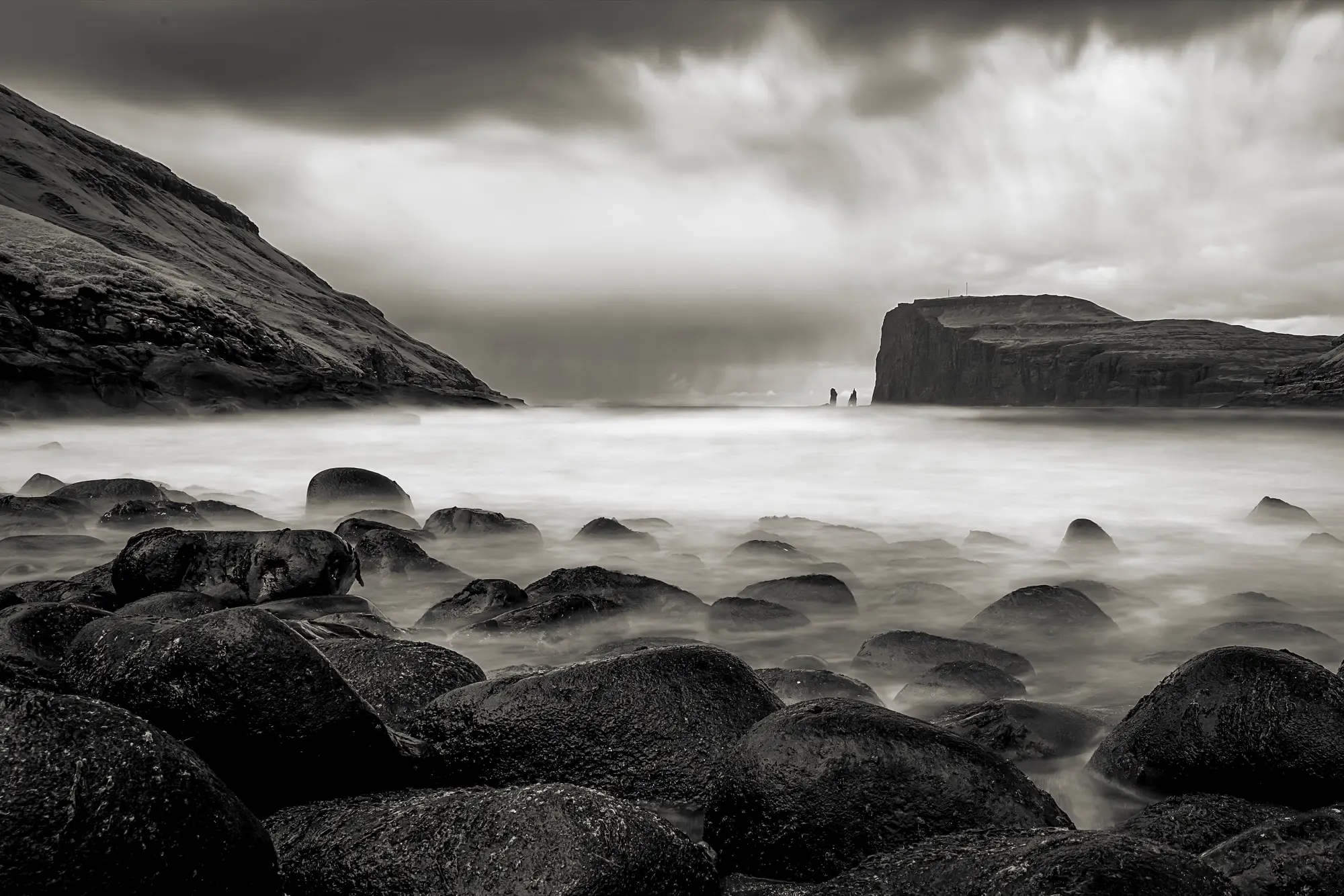
Visit Faroe Islands sums up the weather at 62 degrees north in one word, changeable, and quotes the local saying that if you don't like the weather, you should wait five minutes. The Faroe Islands have a subpolar oceanic climate, and the Gulf Stream keeps temperatures relatively mild all year despite the latitude. Over 1991-2020 the Tórshavn station recorded an annual mean temperature of 6.8 °C, 1,320 mm of precipitation a year and an average of 869 sunshine hours. Tórshavn has 35 snow days a year on average.
Visit Faroe Islands gives summer (June to August) as 10 to 13 °C, with the best hiking conditions, still windy with occasional fog, and the peak tourist season. Winter (November to March) is given as 3 to 7 °C, with Atlantic storms possible and occasional snow. Visit Faroe Islands says 26 degrees has been recorded once, and that it is not the norm. To plan around the seasons, read about the best time to visit the Faroe Islands. For a wider comparison across the region, see the guides to Denmark weather by month and Iceland weather by month, or return to the main Denmark hub and the Faroe Islands travel guide.
Average temperature, rain and sunshine by month
| Month | Mean (°C) | Average high (°C) | Average low (°C) | Precipitation (mm) | Days with precipitation | Sunshine (hours) |
|---|---|---|---|---|---|---|
| January | 4.3 | 6.2 | 2.1 | 167.3 | 20.7 | 29.8 |
| February | 4.0 | 6.0 | 1.6 | 131.2 | 17.3 | 53.0 |
| March | 4.3 | 6.4 | 2.0 | 129.5 | 18.9 | 91.5 |
| April | 5.5 | 7.6 | 3.2 | 95.4 | 14.7 | 116.2 |
| May | 7.1 | 9.3 | 5.0 | 70.3 | 12.2 | 157.8 |
| June | 9.1 | 11.3 | 7.3 | 63.1 | 9.2 | 135.4 |
| July | 10.8 | 12.9 | 9.1 | 71.2 | 11.0 | 106.9 |
| August | 11.2 | 13.3 | 9.3 | 93.4 | 12.9 | 101.6 |
| September | 10.0 | 11.9 | 8.1 | 118.1 | 15.9 | 88.9 |
| October | 7.8 | 9.6 | 5.7 | 146.8 | 19.0 | 59.7 |
| November | 5.8 | 7.6 | 3.6 | 155.2 | 19.8 | 38.6 |
| December | 4.5 | 6.5 | 2.2 | 157.7 | 20.4 | 22.7 |
These figures are DMI's 1991-2020 climate normal for the Tórshavn station, with sunshine figures covering 2007-2020. The Tórshavn measuring station is 55 m above sea level. Trap Føroya warns that the Tórshavn figures represent the rest of the islands only to some degree, because the climate can differ considerably locally. Visit Faroe Islands says July is generally the warmest month, whereas DMI's normal has August a little warmer than July at Tórshavn.
Why the weather differs between islands and heights
Coastal areas typically get about 1,000 mm of rain a year, while the central parts of the islands can get up to 4,000 mm. The temperature drops by about 0.65 °C for every 100 m of height, so the low-lying parts have a temperate climate and the high ground an arctic one. Tórshavn often has fog in late summer, which cuts its sunshine hours at that time of year. Visit Faroe Islands says the weather can vary significantly between islands. You can drive into a tunnel in thick fog and come out the other side a few minutes later into bright sunshine.
Wind and storms
Visit Faroe Islands says strong wind can overturn cars and fling bicycles and sheep, and often leads to cancelled and delayed ferries and buses. Annual mean wind speeds measured at different stations range from 4 to 10 m/s. In the Christmas hurricane of 1988 a mean wind speed of 59 m/s over ten minutes was measured at the Norðadalsskarð mountain pass; hurricanes have a mean wind speed of at least 32.6 m/s. Turbulence at Vágar airport is well known, and pilots may wait for the wind to settle or the visibility to improve before descending to land.
January: the wettest month
DMI's 1991-2020 normal for Tórshavn gives January a mean temperature of 4.3 °C, an average daily high of 6.2 °C, an average daily low of 2.1 °C and 167.3 mm of precipitation on 20.7 days with precipitation. The sunshine normal gives January 29.8 hours of sunshine. Visit Faroe Islands gives winter (November to March) as 3 to 7 °C, with Atlantic storms possible and occasional snow. Snow is possible but rarely lasts long at sea level, and wind is common all year.
February: the coldest month on the averages
DMI's 1991-2020 normal for Tórshavn gives February a mean temperature of 4.0 °C, an average daily high of 6.0 °C, an average daily low of 1.6 °C and 131.2 mm of precipitation on 17.3 days with precipitation. The sunshine normal provides 53.0 hours of sunshine. Visit Faroe Islands gives winter as 3 to 7 °C, noting that Atlantic storms remain possible alongside occasional snow across the islands.
March: still winter on the averages
DMI's 1991-2020 normal for Tórshavn gives March a mean temperature of 4.3 °C, an average daily high of 6.4 °C, an average daily low of 2.0 °C and 129.5 mm of precipitation on 18.9 days with precipitation. Sunshine reaches 91.5 hours on the 2007-2020 normal. Visit Faroe Islands counts March as part of winter (3 to 7 °C), with potential Atlantic storms and occasional snow.
April: spring and drier days
DMI's 1991-2020 normal for Tórshavn gives April a mean temperature of 5.5 °C, an average daily high of 7.6 °C, an average daily low of 3.2 °C and 95.4 mm of precipitation on 14.7 days with precipitation. The sunshine normal records 116.2 hours of sunshine. Visit Faroe Islands gives spring (April to May) as 5 to 9 °C, unstable but improving, with puffins starting to return.
May: the sunniest month
DMI's 1991-2020 normal for Tórshavn gives May a mean temperature of 7.1 °C, an average daily high of 9.3 °C, an average daily low of 5.0 °C and 70.3 mm of precipitation on 12.2 days with precipitation. May records 157.8 hours of sunshine, making it the sunniest month on the averages. Visit Faroe Islands describes spring conditions as 5 to 9 °C, unstable but improving, with puffins continuing to return.
June: the driest month
DMI's 1991-2020 normal for Tórshavn gives June a mean temperature of 9.1 °C, an average daily high of 11.3 °C, an average daily low of 7.3 °C and 63.1 mm of precipitation on 9.2 days with precipitation, making it the driest month of the year. The sunshine normal gives 135.4 hours. Visit Faroe Islands gives summer (June to August) as 10 to 13 °C, offering the best hiking conditions, still windy with occasional fog, during the peak tourist season.
July: summer, with fog on the coast
DMI's 1991-2020 normal for Tórshavn gives July a mean temperature of 10.8 °C, an average daily high of 12.9 °C, an average daily low of 9.1 °C and 71.2 mm of precipitation on 11.0 days with precipitation. Sunshine hours stand at 106.9. Visit Faroe Islands gives summer as 10 to 13 °C, with the best hiking conditions, windy intervals and peak visitor numbers. Visit Faroe Islands says July is generally the warmest month. Tórshavn often has fog in late summer, which cuts its sunshine hours.
August: the warmest month on DMI's normal
DMI's 1991-2020 normal for Tórshavn gives August a mean temperature of 11.2 °C, an average daily high of 13.3 °C, an average daily low of 9.3 °C and 93.4 mm of precipitation on 12.9 days with precipitation. August records 101.6 hours of sunshine on the 2007-2020 normal. Visit Faroe Islands gives summer as 10 to 13 °C, with the best hiking conditions, occasional fog, wind and the peak tourist season.
September: autumn and more rain
DMI's 1991-2020 normal for Tórshavn gives September a mean temperature of 10.0 °C, an average daily high of 11.9 °C, an average daily low of 8.1 °C and 118.1 mm of precipitation on 15.9 days with precipitation. Sunshine totals 88.9 hours. Visit Faroe Islands gives autumn (September to October) as 7 to 11 °C, featuring dramatic skies and increasing rainfall.
October: wetter, darker skies
DMI's 1991-2020 normal for Tórshavn gives October a mean temperature of 7.8 °C, an average daily high of 9.6 °C, an average daily low of 5.7 °C and 146.8 mm of precipitation on 19.0 days with precipitation. Sunshine drops to 59.7 hours. Visit Faroe Islands gives autumn as 7 to 11 °C, with dramatic skies and increasing rainfall.
November: storms possible
DMI's 1991-2020 normal for Tórshavn gives November a mean temperature of 5.8 °C, an average daily high of 7.6 °C, an average daily low of 3.6 °C and 155.2 mm of precipitation on 19.8 days with precipitation. Sunshine normal figures record 38.6 hours. Visit Faroe Islands marks the onset of winter (November to March) with temperatures from 3 to 7 °C, occasional snow and Atlantic storms possible. See the guide to what is open in winter and the daylight for travelling at this time.
December: the least sunshine
DMI's 1991-2020 normal for Tórshavn gives December a mean temperature of 4.5 °C, an average daily high of 6.5 °C, an average daily low of 2.2 °C and 157.7 mm of precipitation on 20.4 days with precipitation. Sunshine totals 22.7 hours, the lowest monthly average. Visit Faroe Islands lists winter temperatures as 3 to 7 °C, with Atlantic storms possible. Snow is possible but rarely lasts long at sea level, and wind is common all year.
What to pack for Faroese weather
For hiking, sturdy waterproof boots and hiking trousers are a must, and even in town a waterproof jacket is a good idea. A thick jumper, hat and gloves can be a good idea even in summer, especially out at sea on a boat trip. Fog can come down suddenly, so check the local weather before you go hiking. Rain showers are frequent but usually short-lived, and it rarely rains heavily all day.