
Nine mistakes tourists make in Norway are tipping as at home, expecting beer after 20:00 or on a Sunday, drinking in a park or on the bus, expecting shops to open on Sundays, boarding without a ticket, camping too close to houses, lighting a fire in summer, leaving a DNT cabin as you would a hostel, and flying a drone in a national park.
Norway etiquette in short
In Oslo, VisitOSLO notes that tipping is not required, as a tip for excellent service is always appreciated but never expected. Alcohol sales in ordinary shops cut off early by law: municipalities can adjust times, but shops may never sell beer after 20:00 on weekdays or after 18:00 on the day before a Sunday or public holiday. On Sundays and public holidays, the law protects helligdagsfred (holiday peace), meaning no one may cause improper noise. Out in nature, camping or sleeping out must happen more than 150 metres away from any inhabited house or cabin. In summer, the national fire prevention regulation forbids lighting a fire in or near forest and other uncultivated land between 15 April and 15 September.
1. Tipping as you would at home
VisitOSLO states that tipping is not required in Oslo; a tip for excellent service is always appreciated but never expected. Norway enforces strict pricing transparency under the national price information regulation (prisopplysningsforskriften). Every price a business states must include VAT and public charges. A restaurant, café, or pub must post dated prices that you can easily see before entering the venue, and those posted sums must already include any mandatory entry charge. You do not need to calculate gratuity when the bill arrives, though leaving extra for good service remains an option. For a full breakdown of payment customs and card use, see the guide to money and tipping in Norway.
2. Expecting to buy beer late or on a Sunday
Supermarkets in Norway do not sell alcohol around the clock. The Alcohol Act (alkoholloven) sorts drinks into three categories: group 1 covers drinks over 2.5% and at most 4.7% alcohol, group 2 spans over 4.7% and under 22%, and group 3 covers 22% to 60%. The law sets basic hours for selling group 1 drinks in supermarkets between 08:00 and 18:00, shortening to 15:00 on the day before a Sunday or public holiday. While local municipalities can alter these hours, shops may never sell beer past 20:00 on weekdays or past 18:00 on the day before a Sunday or public holiday. On Sundays, public holidays, 1 May, and 17 May, grocery shops sell no beer at all.
Wine, spirits, and strong beer belonging to groups 2 and 3 can only be purchased in shops run by AS Vinmonopolet, the state monopoly retailer, apart from a few special licences. Vinmonopolet shops operate between 08:30 and 18:00, and from 10:00 to 16:00 on the day before a Sunday or public holiday. They close entirely on Sundays, public holidays, 1 May, 17 May, and Christmas Eve. Age restrictions also apply: group 3 spirits cannot be sold or served to anyone under 20, while group 1 and group 2 drinks (beer and wine) require a minimum age of 18.
3. Drinking a beer in the park or on the bus
Drinking beer in the street, sitting with drinks in a municipal park, or having a cider on a bus breaks Norwegian statutory law. Under section 8-9 of the Alcohol Act on Lovdata, it is forbidden to drink alcohol in a street, square, road, park, or any other public place, unless the venue holds a licence. The statutory ban applies equally to passenger transit. The law bans drinking your own alcohol on ships, planes, trains, buses, and other domestic public transport vehicles.
4. Expecting the shops to open on a Sunday
Under the Public Holidays Act (helligdagsfredloven), every ordinary Sunday is classified as a public holiday (helligdag), alongside New Year's Day, Christmas Day, Boxing Day, and the Easter, Ascension, and Whitsun holidays. From midnight to midnight on these days, and after 16:00 on Easter Saturday, Whitsun Eve, and Christmas Eve, the statute establishes holiday peace (helligdagsfred), barring anyone from creating improper noise. Retail shops selling to consumers must stay closed on these dates, and must shut by 16:00 on Christmas Eve, Easter Saturday, and Whitsun Eve. Between 06:00 and 13:00 on a public holiday, public shows, performances, and sports competitions are forbidden, barring exemptions like exhibitions and 1 or 17 May events.
The law permits specific exceptions to the closure rule. Kiosks and grocery shops with at most 100 square metres of sales space may open, petrol stations up to 150 square metres can trade, and campsite shops may serve customers during the camping season. Venues in areas designated as typical tourist destinations by the county governor, as well as ordinary cafés and restaurants, may also open. Standard shops may open on the last three Sundays before Christmas Eve, but only between 14:00 and 20:00. You can learn more about how public life adapts to these days in the guide to Norwegian culture.
5. Boarding the bus or tram without a ticket
Boarding public transport before securing a valid fare means you can be fined. On Ruter networks across Oslo and Akershus, which cover trams, buses, and the metro, you must buy your ticket before stepping onto the vehicle and before crossing the fare control zone at a metro station. Purchasing a ticket as ticket inspectors step aboard is considered invalid. For travellers arriving from the airport, the Oslo Airport to city centre guide covers buying the right ticket from Oslo Airport.
Travelling without a valid fare incurs an adult penalty of NOK 1,200 if paid by card to the inspector on the spot, or NOK 1,470 if issued as an invoice. The Ministry of Transport sets these fee rates. Leaving your phone or travel card behind means you pay the fee, even if you bought a valid ticket. You bear the personal responsibility of maintaining sufficient battery charge and an active internet connection to present your ticket. As a general rule, Ruter does not refund penalty fees when proof of purchase is submitted afterwards.
6. Camping too close to someone's house
Norway's right to roam (allemannsretten) gives everyone the right to walk freely and stay where they like in nature, whoever owns the land. The Norwegian Environment Agency explains that the right applies strictly to uncultivated land (utmark). Cultivated ground and the private land surrounding dwellings (innmark) are excluded. You may cross cultivated fields only from 15 October to 29 April when the surface is frozen or covered with snow.
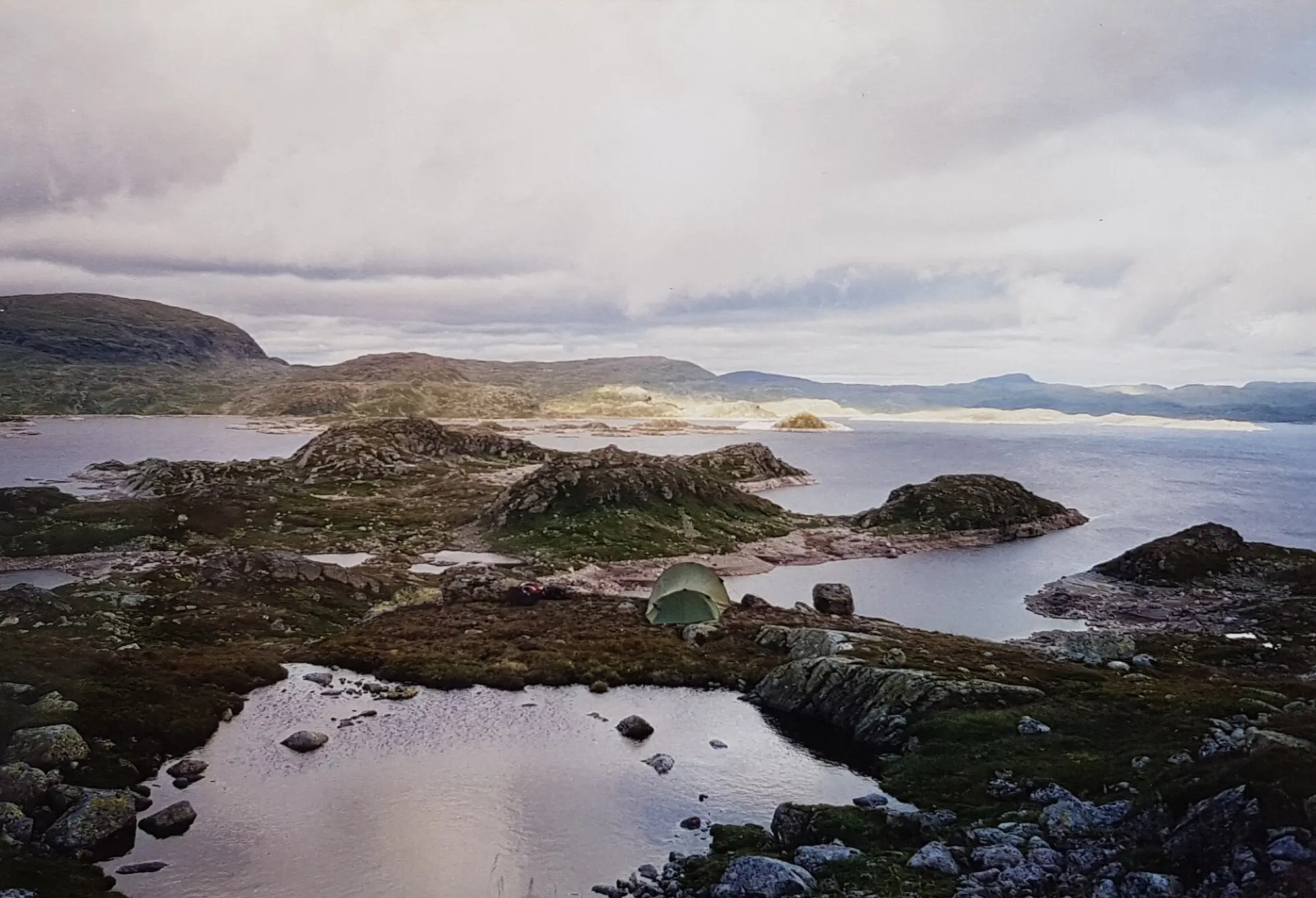
When camping or sleeping out under the sky, you must pitch your tent more than 150 metres from any inhabited house or cabin. If you plan to pitch in one location for more than two nights, you must obtain permission from the landowner, unless you pitch in the high mountains or far from populated settlements. The right to roam requires considerate, careful conduct that avoids damage, nuisance, or litter, and it does not cover motor vehicles like snowmobiles, freshwater fishing, hunting, or e-bikes. In Nordland, Troms, and Finnmark, landowners of cloudberry-producing ground may expressly ban picking, though anyone may pick cloudberries to eat on the spot. Learn where the parks are and how to reach them in the guide to Norway national parks.
7. Lighting a campfire in summer
Lighting a fire in or near forest in summer breaks the fire prevention regulation unless an exception applies. Under section 3 of the fire prevention regulation (forskrift om brannforebygging), it is forbidden from 15 April to 15 September to light an open fire in or near forest and other uncultivated land. The rule applies across the country. You may only light a fire during this statutory window if the municipality has granted permission, if local municipal regulations expressly permit it, or if the fire obviously cannot start a wider blaze.
When seasonal wildfire danger escalates, a municipality can issue a blanket outdoor fire ban across its area at any time of year, lasting up to 60 days at a time. A fire must not be left until it is completely out. The Norwegian Environment Agency also instructs visitors never to light a fire on bare rock surfaces, because the heat can crack the stone.
8. Treating a DNT cabin like a hostel
Self-service and no-service DNT cabins remain locked with a standard DNT key, and at least one member of your travel party must be a registered DNT member to unlock and stay at the facility. As soon as you arrive at a self-service or no-service cabin, you must sign the physical cabin register with your name and membership number, regardless of whether you booked a bed online beforehand. You pay for your stay and any provisions used via the DNT app using a card or Vipps, with the funds going to the local association running the cabin.
Guests must observe quiet hours between 23:00 and 06:00. Before departing, you must clean every room your party used, remake the bed, carry in a supply of firewood for the next arrivals, turn off the gas canisters, and secure all windows and exterior doors. Guests must read the specific rubbish rules posted at each cabin; at many huts, including the cabins in Oslomarka, you must pack out and carry all personal rubbish home. A detailed look at keys and provisions is in the guide to DNT cabins.
9. Flying a drone in a national park
Flying a drone is forbidden as a rule inside national parks and the large protected landscape areas, and in some nature reserves. The Norwegian Environment Agency states that drones are forbidden as a rule across national parks and large protected landscape areas to protect wildlife and preserve outdoor quiet. Each protected territory has an individual protection regulation; wherever a local regulation bans drones, the prohibition covers both taking off from within the border and flying into the airspace from outside, whether flying for hobby or commercial purposes. Many nature reserves also prohibit drones, often in areas important for birds, and any reserve regulation that restricts model aircraft automatically bans drones as well. Even outside protected zones, pilots must ensure flights do not disturb birds or other animals.
The Civil Aviation Authority sets standard flight requirements. Visitors may fly in the open category if registered as a drone operator; EU citizens already registered at home do not need to register again in Norway, but must mark their craft with their operator number. Before operating with an onboard camera or recording equipment, you must register the use of photos, video, and sensors with the Norwegian National Security Authority. All operators must hold valid liability insurance, unless flying an aircraft under 250 grams in the open category. Before taking off, check the operational airspace at dronesoner.no.
All nine at a glance
| Mistake | Legal or official rule | Key figure |
|---|---|---|
| 1. Tipping as you would at home | Tips are not expected; posted prices include VAT, charges, and entry fees | Oslo advice from VisitOSLO |
| 2. Expecting to buy beer late or on a Sunday | Supermarkets sell group 1 drinks only; Vinmonopolet handles stronger alcohol | In shops: never past 20:00 weekdays, 18:00 before Sundays; no Sunday sales |
| 3. Drinking a beer in the park or on the bus | Alcohol consumption is prohibited in public places and transit without a licence | Section 8-9 of the Alcohol Act |
| 4. Expecting the shops to open on a Sunday | Shops selling to consumers must close, with exceptions such as small grocery shops and kiosks | Shops closed on Sundays and public holidays, with exceptions; shops may open 14:00 to 20:00 on the last three Sundays before Christmas Eve |
| 5. Boarding the bus or tram without a ticket | You must purchase your ticket before boarding or entering the metro zone | NOK 1,200 on the spot; NOK 1,470 by invoice |
| 6. Camping too close to someone's house | Tents and sleeping gear must stay in uncultivated areas far from residences | More than 150 metres from inhabited dwellings |
| 7. Lighting a campfire in summer | Open fires near forests and uncultivated lands are barred by regulation | Forbidden from 15 April to 15 September |
| 8. Treating a DNT cabin like a hostel | Visitors clean up after themselves, replenish wood, and respect quiet hours | Quiet hours from 23:00 to 06:00 |
| 9. Flying a drone in a national park | Drones are forbidden by default across national parks and large landscapes | Prohibited as a rule across national parks |