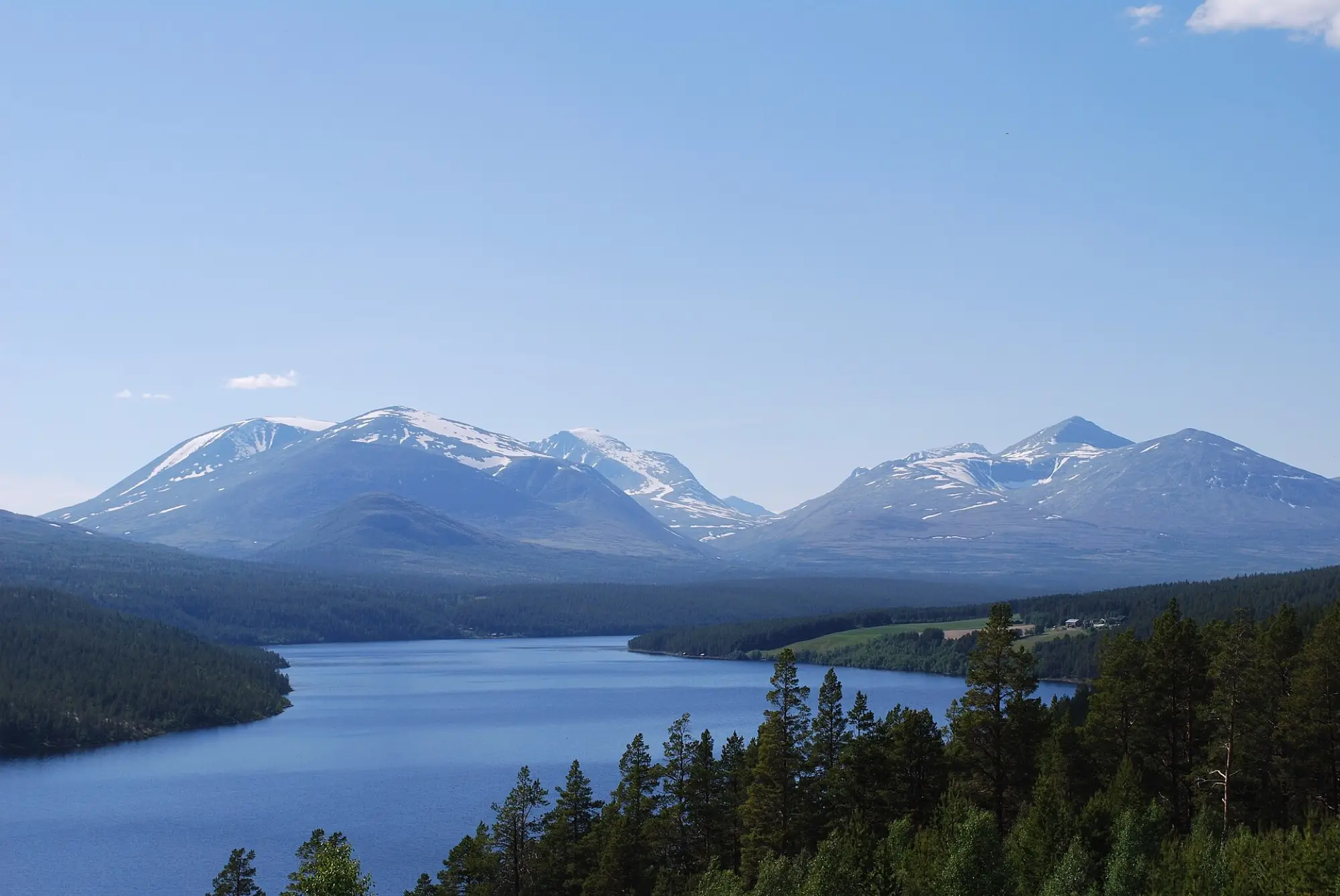

Norway has 48 national parks, 41 on the mainland and seven on Svalbard; Rondane was the first, in 1962. The ten key parks across the mainland are Jotunheimen, Rondane, Hardangervidda, Dovrefjell-Sunndalsfjella, Jostedalsbreen, Folgefonna, Lofotodden, Ånderdalen, Saltfjellet-Svartisen and Femundsmarka. Many of the buses and boats to the trailheads run only in summer, so check schedules before travelling.
Norway has 48 national parks, and Rondane was the first
According to Statistics Norway, 41 national parks sit on the Norwegian mainland, covering 9.8 per cent of the land area (updated 8 April 2026). Statistics Norway also counts 7 national parks on Svalbard, protected under the Svalbard Environmental Protection Act. That makes 48 national parks in all, 41 on the mainland and 7 on Svalbard.
Norway's first national park, Rondane, was created in 1962. By area, Hardangervidda is the largest national park on the Norwegian mainland, and it has the largest herds of wild reindeer in Europe. The right to roam applies in protected areas too, but a park's protection rules can exclude some activities, so check them when in doubt. In Lofotodden, for example, you may travel freely and pitch a tent, but drones are not allowed and cycling is allowed only on certain trails.
1. Jotunheimen: Norway's highest peaks, by bus to Gjendesheim
Jotunheimen National Park was created in 1980 and has 1151 km² of land. Jotunheimen has the highest concentration of peaks over 2,000 metres in Norway, and the Norwegian Trekking Association (Den Norske Turistforening, or DNT) calls it the country's most visited national park.
Gjendesheim, at the eastern end of Lake Gjende, can be reached by road all year and is the most common starting point for the Besseggen ridge walk, one of Norway's famous hikes. In the summer season scheduled buses run to Gjendesheim; timetables vary through the season, and departures are on Entur. Arrive at Gjendesheim by bus and the lodge gives you a green travel voucher worth NOK 100 for food, soft drinks or activities. In summer, bus route 203 runs between Lom and Leirvassbu, in the middle of the DNT trail network. Gjendesheim, Fondsbu, Leirvassbu and Glitterheim can be reached by car in summer; Gjendesheim is reachable all year.
Glittertind, Norway's second-highest mountain at 2,457 m, is a 6 km demanding hike from Glitterheim, with a final stretch over its snow and ice cap. From Sognefjellshytta an 11 km hike leads to Fannaråken (2,068 m) and Fannaråkhytta, the highest staffed lodge in Norway.
The Gjende boat runs daily between Gjendesheim, Memurubu and Gjendebu from June to October, connecting with the buses, and can carry your luggage ahead. In November the summer buses and the Gjende boat are not running.
2. Rondane: the first national park, by train to Otta
Rondane was protected in 1962, enlarged in 2003, and has 963 km² of land.
Otta has train and bus connections. In summer a local bus runs between Otta, Mysusæter and Spranget several times a day, timed to meet the trains. For summer 2026, Rondvassbu named the bus as route 205 from Otta via Mysusæter to Spranget, running until 16 August. Rondvassbu has no road access; from Spranget it is a 6 km walk, about 1.5 hours. Bikes can be rented at Spranget for the gravel road, about 30 minutes by bike, at NOK 130 one way for adults and NOK 80 for children under 15. DNT's Rondvassbu page says that from summer 2027 Spranget is closed to parking and the nearest car park is at Mysusæter. Hjerkinn station, between Rondane and Dovrefjell, has daily trains from Oslo and Trondheim, and red-marked trails start at the station.
Storronden (2138 m) is one of the shorter summit hikes from Rondvassbu, 8.5 km there and back, graded demanding.
DNT runs eight cabins in Rondane, three staffed and five self-service. At Rondvassbu a bed in a dormitory with DNT full board costs NOK 1130 for a member and NOK 1475 for a non-member. You can consult costs in Norway when budgeting your accommodation. Rondvassbu's 2026 summer season ran from 19 June to 13 September, and its winter season from 27 February to 6 April.
3. Hardangervidda: the largest park, with Finse on the railway
Hardangervidda National Park was created in 1981 and has 3422 km² of land, in Telemark, Buskerud and Vestland. Hardangervidda is Northern Europe's largest high mountain plateau; the east and middle are flat, the west is hillier, with the Hardangerjøkulen glacier in the northwest. The plateau is wild reindeer habitat, and the animals are very sensitive to disturbance. If you meet wild reindeer, stay on marked trails, stand still and let them move away, use binoculars and keep your distance.
The Oslo to Bergen train stops at Finse, next to the staffed Finsehytta lodge, which serves as the main start for routes south across Hardangervidda in summer and winter. Daily express buses between Oslo and Haugesund stop at Haukeliseter Fjellstue, the main entry point from the south. Buses run from Oslo to Rjukan with a change at Notodden; from the Hydroparken stop it is a 1.5 km walk to the Krossobanen cable car up to the plateau. In summer, bus route 991 runs between Geilo and Eidfjord over Hardangervidda on Route 7, stopping at several trailheads.
DNT's "cabin to cabin by train" route runs 36.9 km in two days from Finse station to Haugastøl station, graded moderate, with no car needed.
Most self-service DNT cabins are open all year, but those in Jotunheimen, Skarvheimen, Hardangervidda and some other mountain areas close from 15 October until mid-February or early March; staffed lodges open in summer, and some in winter.
4. Dovrefjell-Sunndalsfjella: musk oxen near Hjerkinn station
Dovrefjell-Sunndalsfjella National Park was created in 2002 and has 1693 km² of land in Møre og Romsdal, Trøndelag and Innlandet. It replaced the original Dovrefjell National Park of 1974. The Snøhetta massif peaks at 2,286 metres.
The wild reindeer visitor centre lies between Hjerkinn station and the E6. Hjerkinn can be reached by train. Snøhetta is reached by a summer shuttle bus from Hjerkinn to the DNT cabin Snøheim, five times a day, followed by a marked 6 km climb of 800 metres. Viewpoint Snøhetta is a 1.5 km gravel trail of 20 to 30 minutes from its car park, and it closes at the first snowfall of autumn to protect wild reindeer and musk oxen.
The Musk Ox Trail, opened in summer 2017, is a set of circular routes of 4.5 to 15 km from Kongsvoll or Grønbakken, with good chances of seeing musk oxen. You must keep at least 200 m from musk oxen. A guided musk ox safari from Grønbakken near Oppdal meets at 09:30, normally lasts 4 to 6 hours over about 8 to 12 km, and has a minimum age of 6.
Dovrefjell has 10 DNT cabins.
5. Jostedalsbreen: the glacier bus to Nigardsbreen
Jostedalsbreen National Park was created in 1991 and has 1310 km² of land. Jostedalsbreen is the largest glacier in mainland Norway and mainland Europe, about 60 km long, and around half the park is covered by glaciers.
The Glacier Bus runs daily from Sogndal to the Nigardsbreen glacier in Jostedalen, past Breheimsenteret; Fjord Norway lists its period as 23 June to 31 August. On the timetable Fjord Norway lists, it leaves Sogndal Skysstasjon at 08:35 and reaches Nigardsbreen at 10:05; the return leaves Nigardsbreen at 16:55 and is back in Sogndal at 18:35.
From the car park at Nigardsbrevatnet it is a little over an hour's walk to the Nigardsbreen viewpoint; the Brevegen toll road there is closed in winter. A boat crosses Nigardsbrevatnet between June and September, depending on the water level, with no booking; you still walk about 40 minutes at the end. To go onto a glacier, or right up to it, go with a guide who can judge the conditions; ice can fall without warning.
Breheimsenteret, the visitor centre with a view of Nigardsbreen, is open every day from 1 May to 30 September; the exhibition costs NOK 125 for adults.
6. Folgefonna: a glacier day trip from Bergen without a car
Folgefonna National Park was created in 2005 and has 545 km² of land. Folgefonna is the southernmost glacier in Norway and the third largest on the mainland, and it is the core of the park.
Without a car, a package booked as one trip goes from Bergen bus station to Norheimsund, by fjord boat to Herand, then by bus up the 19 km Folgefonna road to the old summer ski centre. Visit Hardanger gives the bus-and-boat package season as 22 June to 9 August. Buer farm near Odda, off route 13, is the starting point for hikes to the Buer glacier.
The guided blue-ice hike on the Juklavass glacier takes about four hours, with equipment included; the minimum age is ten. The walk to Bondhusvatnet, a glacier lake near Sundal in Kvinnherad, is short, not demanding and possible all year.
DNT has 4 cabins in the park: Fonnabu, Holmaskjer, Breidablikk and Sauarbrehytta.
The glacier season usually lasts into October; from mid-July more blue ice shows through the snow.
7. Lofotodden: the boat from Reine to Bunes beach
Lofotodden National Park was created in 2018 and has 73 km² of land and 13 km² of sea. The park runs along the outer, west side of Moskenesøya, with pointed peaks, narrow fjords and white sand beaches.
Bunes beach can only be reached by boat, with daily departures from Reine across the Reinefjord to Vindstad; tickets are in the Reis Nordland or Entur app, and you cannot take a car. You can check the Lofoten travel guide for connections to Reine.
From the pier at Vindstad the path to Bunes beach is 2.8 km one way, an easy walk of 2 to 4 hours there and back; there are no shops in Vindstad. DNT suggests the walk from Torsfjord to Kvalvika, a white sand beach between steep mountains, as a family hike. Camping is allowed at Bunes beach, but not near Helvetestinden, because of rockfall. Dogs must be on a leash from 1 April to 20 August, and cycling is not allowed on the trails from Torsfjorden to Kvalvika or from Bunesfjorden to Bunessanden.
Visit Lofoten gives the Bunes season as April to October. The park visitor centre at Kirkeveien 52 in Reine is open all year, from 09.00 to 20.00 between 20 June and 31 August and from 10.00 to 17.00 the rest of the year.
8. Ånderdalen: old pine forest on Senja, reached by car
Ånderdalen, created on 6 February 1970, is the oldest national park in Troms; after its last enlargement in 2018 it covers 133.9 km² of Senja. The park protects old-growth pine forest over 500 years old, birch woodland, rivers, waterfalls and lakes.
Plan to drive. The easiest start, the national park car park opposite Norwegian Wild in Tranøybotn, is about one hour's drive southwest of Finnsnes. Motor vehicles are banned inside the park.
From the Tranøybotn car park, with toilets, a gravel track runs about two kilometres to the park boundary, with picnic benches and fire pits; continue towards Åndervatnet or loop back over the hills. In winter the park is used for backcountry skiing and snowshoeing; Kvænan (964 m), the third-highest mountain on Senja, is a popular ski summit.
Inside the park there are no shelters other than the Ånderbu hut and Åndergammen, a traditional turf hut. The Ånderdalen visitor centre is in the Sážžá Senja nature centre and museum in Øverbotn; stop there first.
On Senja dogs must be on a lead from 1 April to 20 August, and campfires are allowed from 15 September to 15 April.
9. Saltfjellet-Svartisen: the Arctic Circle by train, a glacier by boat
Saltfjellet-Svartisen National Park was created in 1989 and has 2102 km² of land. It encompasses a mountain plateau crossed by the Arctic Circle as well as Engenbreen (also spelt Engabreen), an arm of Svartisen, Norway's second-largest glacier.
Lønsdal station on Saltfjellet, on the Nordland Line between Trondheim and Bodø, is the first station north of the Arctic Circle; it does not sell tickets. To reach Engenbreen without a car, buses run along County Road 17 from Bodø or Ørnes and Forøy to Holandsvika, several times a day. The shuttle boat Isprins crosses the Holandsfjord in about 10 minutes in the summer months.
The Telegraph Route is an easy hike along the disused telegraph line over Saltfjellet, through the national park. At the coast, the Braset viewpoint on County Road 17 looks across the Holandsfjord to Engenbreen. From the quay after the boat crossing, you can rent a bike for the 3 km gravel road; the marked hike to Engenbreen, Norway's lowest-lying glacier, is 4.6 km one way, about 3 hours, graded moderate.
The DNT cabin Lønsstua can be reached directly by train, since most trains stop at Lønsdal; check before you buy. It is a base for treks into Saltfjellet or towards Sulitjelma, and there is no food at the cabin.
There is no winter marking and winter days are short; the ski season runs from March to about June.
10. Femundsmarka: train to Røros, then the Femund II
Femundsmarka was protected in 1971, enlarged in 2003, and has 573 km² of land in Innlandet and Trøndelag. The operator of the Femund II gives Lake Femunden as 203 km² and 60 km long.
The easiest way in is the Røros Line train, with daily departures from Oslo and Trondheim, then bus 540 to Synnervika pier, about 40 minutes. The Femund II will sail again in spring, summer and autumn 2027; it leaves Synnervika every morning at 9:00, with a bus from Røros station at 8:15, and stops along the way so you can hike before the return.
From Elgå a 10.5 km gravel road leads to the staffed Svukuriset cabin, an easy bike ride each way. Malmveien, a historic route from Røros to Langen Gjestegård, is a 49.9 km cabin-to-cabin hike of 3 days, graded medium.
DNT has one staffed and seven self-service cabins in Femundsmarka.
How DNT cabins work
DNT has three kinds of cabin: staffed, self-service and unserviced. Booking ahead is possible at many self-service and unserviced cabins but not required; everyone who arrives gets a place to sleep. Cabins can be seen on a map and booked at hyttebestilling.dnt.no.
The DNT key costs NOK 100 and is only for DNT members; it is sold at staffed lodges and DNT offices. At DNT cabins you need a sleeping liner rather than a sleeping bag; the cabins have duvets, pillows and mattresses. At Rondvassbu a bed in a dormitory with DNT full board costs NOK 1130 for a member and NOK 1475 for a non-member.
DNT trails are marked with a red T on cairns and rock faces; still carry a paper map. Most self-service DNT cabins are open all year, but those in Jotunheimen, Skarvheimen, Hardangervidda and some other mountain areas close from 15 October until mid-February or early March; staffed lodges open in summer, and some in winter.
The right to roam and the mountain code
Under the right to roam (allemannsretten), as Miljødirektoratet explains it, you may camp at least 150 metres from the nearest inhabited house or cabin. Staying more than two days in one place needs the landowner's permission, except in the high mountains or far from settlements. Lighting a fire in or near woodland and other uncultivated land is banned from 15 April to 15 September without the municipality's permission, unless it clearly cannot cause a fire; never light one on bare rock. Everyone using the right to roam must be considerate and careful, clear up after themselves and take care with fire.
The Norwegian Mountain Code (fjellvettreglene) is a set of safety rules for anyone going into the mountains. Be prepared for bad weather and frost even on short trips; the weather changes quickly in the mountains. Don't be ashamed to turn around: choose your best alternative long before anyone in the group is exhausted. If an accident happens, alert the police on 112.
All ten parks at a glance
| Park | Area (km², land) | Gateway without a car | Season to know | A DNT cabin or base |
|---|---|---|---|---|
| Jotunheimen | 1151 | Bus to Gjendesheim (summer) | Bus departures on Entur; Gjende boat June–October | Gjendesheim |
| Rondane | 963 | Train to Otta, then bus to Spranget | Bus 205 until 16 August 2026; Rondvassbu summer season 19 June–13 September 2026 | Rondvassbu |
| Hardangervidda | 3422 | Train to Finse station | Self-service cabins close 15 October until mid-February or early March | Finsehytta |
| Dovrefjell-Sunndalsfjella | 1693 | Train to Hjerkinn station, then shuttle bus to Snøheim | Shuttle bus runs in summer; Viewpoint Snøhetta closes at first snowfall | Snøheim |
| Jostedalsbreen | 1310 | Glacier Bus from Sogndal to Nigardsbreen | Glacier Bus listed for 23 June–31 August; visitor centre 1 May–30 September | Breheimsenteret |
| Folgefonna | 545 | Bus and boat package from Bergen bus station | Package listed for 22 June–9 August; glacier season into October | Fonnabu |
| Lofotodden | 73 | Boat from Reine to Vindstad | Bunes boat season April–October; visitor centre open all year | Visitor centre in Reine |
| Ånderdalen | 133.9 | Drive, about one hour from Finnsnes | Campfires allowed 15 September–15 April; skiing in winter | Ånderbu hut |
| Saltfjellet-Svartisen | 2102 | Train to Lønsdal station; bus to Holandsvika for Engenbreen | Ski season March to about June; Holandsfjord ferry in summer months | Lønsstua |
| Femundsmarka | 573 | Train to Røros, then bus 540 to Synnervika | Femund II sails spring, summer and autumn 2027 | Svukuriset |